Early Influences & Artistic Formation: From Realism to Impressionism
Théo van Rysselberghe’s artistic path was not one of immediate revelation, but rather a gradual unfolding shaped by the prevailing currents of his time and a keen sensitivity to light and color. Born in Ghent in 1862 into a bourgeois French-speaking family, he initially embraced the established traditions of Belgian Realism. His early works, such as Self-portrait with pipe (1880), demonstrate a meticulous attention to detail and a somber palette characteristic of the period. However, even within these initial explorations, a nascent desire for capturing fleeting moments and atmospheric effects began to emerge. A pivotal shift occurred with paintings like Child in an open spot of the forest (1880), where a softening of form and a more vibrant use of color hinted at his growing fascination with Impressionism.
Van Rysselberghe’s formal training at the Academy of Ghent under Theo Canneel, followed by studies at the Académie Royale des Beaux-Arts in Brussels under Jean-François Portaels, provided him with a solid foundation in technique. Yet, it was Portaels' own orientalist paintings—his depictions of North Africa—that exerted a particularly strong influence on the young artist. This early exposure to exotic locales and vibrant light would later prove instrumental in shaping his artistic vision, prompting his first journeys to Morocco in 1882.
The Embrace of Neo-Impressionism: Discovering Seurat and Pointillist Technique
 Wikipedia: Théo van Rysselberghe
Théophile "Théo" van Rysselberghe (23 November 1862 – 13 December 1926) was a Belgian neo-impressionist painter, who played a pivotal role in the European art scene at the turn of the twentieth century. == Biography == === Early years === Born i...
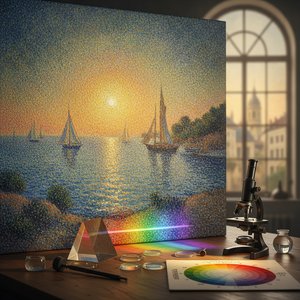
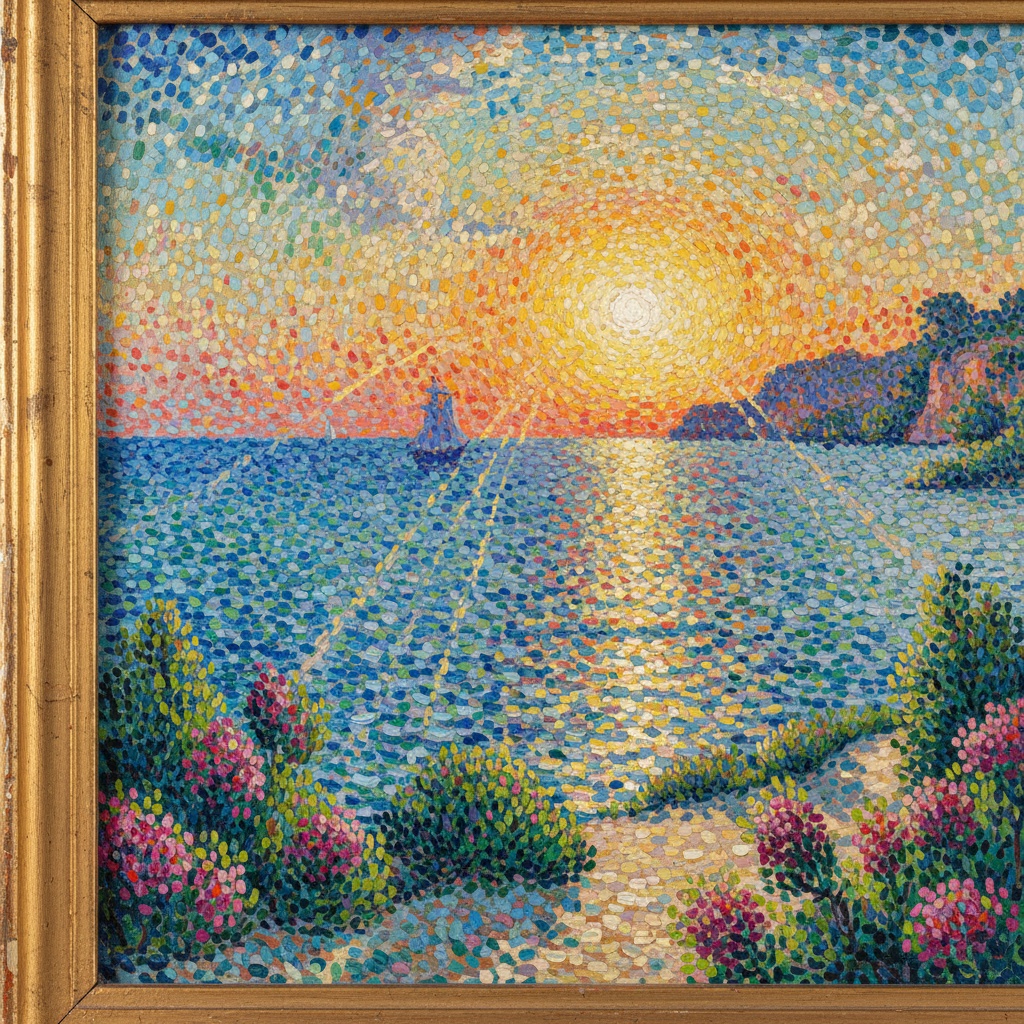
While Impressionism offered a liberation from academic constraints, Van Rysselberghe’s pursuit of capturing light and atmosphere led him down an even more radical path: Neo-Impressionism. A crucial turning point came during a visit to Paris in 1887, where he encountered the work of Georges Seurat. Though initially met with mixed reception at the Les XX exhibition that year, Seurat’s groundbreaking painting, La Grande Jatte, profoundly impacted Van Rysselberghe. He recognized in Seurat's meticulous application of pointillism—the technique of applying small, distinct dots of color to create an optical mixture—a scientific approach to capturing luminosity and a means of achieving unprecedented vibrancy.
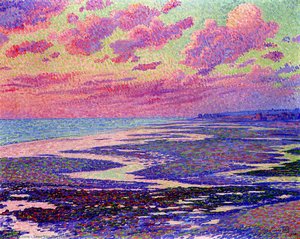
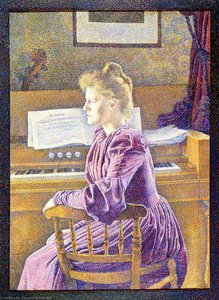
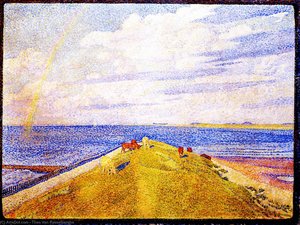
Abandoning the more spontaneous brushwork of Impressionism, Van Rysselberghe embarked on a dedicated exploration of pointillist principles. He meticulously studied Seurat’s theories of color perception and began to apply them with increasing sophistication in his own work. This wasn't merely a technical shift; it represented a fundamental change in his understanding of how light interacts with the canvas, transforming his paintings into shimmering surfaces alive with optical energy.
Les XX and the Avant-Garde Circle: Collaboration, Innovation, and Van Rysselberghe’s Role
 Wikipedia: Les XX
Les XX (French: Les Vingt, pronounced [le vɛ̃]; lit. 'The 20') was a group of twenty Belgian painters, designers and sculptors, formed in 1883 by the Brussels lawyer, publisher, and entrepreneur Octave Maus. For ten years, they held an annual exhibit...
Van Rysselberghe was not a solitary innovator; he thrived within a dynamic network of artists and intellectuals. As one of the founding members of Les XX in 1883—a group initially comprised of twenty Belgian painters, designers, and sculptors—he played a pivotal role in introducing avant-garde ideas to Belgium. The society’s annual exhibitions became a crucible for experimentation, showcasing not only the work of its core members but also inviting international artists like Camille Pissarro, Claude Monet, and Paul Gauguin to participate.
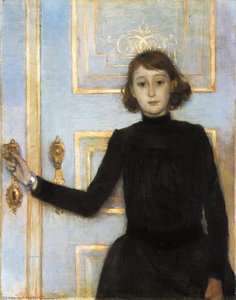
Les XX was more than just an exhibition space; it fostered a spirit of collaboration and intellectual exchange. Van Rysselberghe’s involvement extended beyond his own paintings, as he actively championed the work of fellow artists and contributed to the group's broader mission of challenging artistic conventions. His portrait of Octave Maus, the lawyer and art lover who served as secretary for Les XX, exemplifies this period—a striking depiction that captures both the sitter’s personality and the dandyish aesthetic favored by the circle.
Moroccan Journeys & The Influence of Light and Color
Van Rysselberghe's three journeys to Morocco between 1882 and 1888 were transformative, profoundly shaping his artistic sensibility. These weren’t simply expeditions for exotic subject matter; they were immersive experiences dedicated to understanding the nuances of light and color in a radically different environment. He meticulously documented everyday life—street scenes, kasbah interiors, bustling souks—capturing the vibrant energy and unique atmosphere of Moroccan culture.
The intense sunlight of Morocco proved particularly captivating for Van Rysselberghe. It challenged his existing understanding of light and shadow, forcing him to develop new techniques for rendering its effects. Paintings like Arabian street cobbler (1882) and Resting guard (1883) demonstrate his early attempts to capture the brilliance and clarity of Moroccan light, foreshadowing his later embrace of Neo-Impressionism. These works weren’t merely depictions of a foreign land; they were explorations of fundamental artistic principles.
Masterpieces of Luminosity: Examining Key Paintings by Théo van Rysselberghe
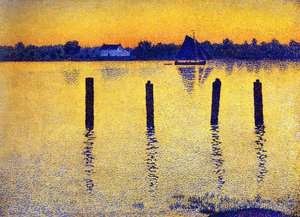
Van Rysselberghe's mature work is characterized by a masterful command of pointillist technique and an unwavering dedication to capturing luminosity. Summer Afternoon (also known as Apres-Midi d'ete) exemplifies his ability to create serene, atmospheric scenes filled with shimmering light. The painting depicts women enjoying each other’s company in a tranquil setting, their forms dissolving into a tapestry of vibrant dots.
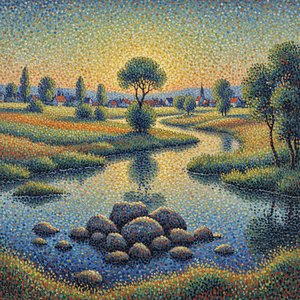
Similarly, The Promenade (also known as The Stroll, Women on the Beach) showcases his skill in depicting movement and atmosphere. The figures strolling along the beach are rendered with delicate precision, bathed in the warm glow of sunlight. Even landscapes like Canal in Flanders demonstrate his pointillist mastery, transforming a seemingly ordinary scene into a vibrant celebration of light and color.
Van Rysselberghe's Legacy: Impact on Modern Art and Continued Appreciation
Though perhaps less widely recognized than some of his contemporaries, Théo van Rysselberghe played a crucial role in the development of modern art. His embrace of Neo-Impressionism helped to introduce this innovative technique to Belgium and beyond, influencing generations of artists. He wasn’t simply a follower of Seurat; he adapted pointillist principles to his own unique vision, creating paintings that are both scientifically rigorous and emotionally resonant.
Today, Van Rysselberghe's work continues to captivate audiences with its shimmering surfaces and vibrant colors. While many of his masterpieces remain in private collections, they offer a compelling glimpse into the artistic ferment of the late 19th and early 20th centuries. At ArtsDot, we are proud to offer high-quality reproductions of Van Rysselberghe’s most iconic paintings, allowing art lovers around the world to experience the beauty and luminosity of his work firsthand. Explore our collection today and discover the captivating world of this pioneering Belgian artist.