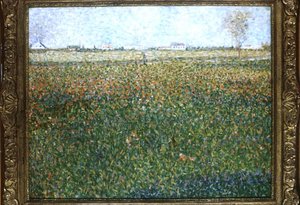
The Dawn of Division: Impressionism’s Dissatisfaction & Seurat’s Vision
The late 19th century Parisian art world was a crucible of innovation, yet beneath the shimmering surfaces of Impressionism lay a growing discontent. While artists like Monet and Renoir sought to capture fleeting moments of light and atmosphere, a younger generation, led by Georges Seurat, questioned the very foundations of their approach. Impressionism’s spontaneity, its embrace of subjective perception, began to feel… insufficient. Seurat wasn't rejecting Impressionism outright; rather, he believed it lacked a scientific rigor, a systematic understanding of how color and light truly interacted with the human eye. He envisioned a new method – one grounded in optical theory, precise calculation, and an almost mathematical application of paint. This quest for order within perceived chaos would birth Pointillism, a technique that initially shocked and then captivated the art world.
Seurat’s early training provided a solid foundation in traditional drawing techniques, but his intellectual curiosity led him to explore treatises on color theory – the writings of Charles Henry, Eugène Chevreul, and Ogden Rood. These texts proposed that colors weren't inherent properties of objects, but rather sensations created by the eye and brain when exposed to different wavelengths of light. He began to believe that juxtaposing pure pigments—unmixed dots of color—would create a more vibrant and luminous effect than blending them on a palette. This wasn’t simply about aesthetics; it was an attempt to unlock the very mechanisms of visual perception, to paint not what the eye *saw*, but how the eye *interpreted* light.
A Scientific Palette: Color Theory, Optics, and the Foundations of Pointillism
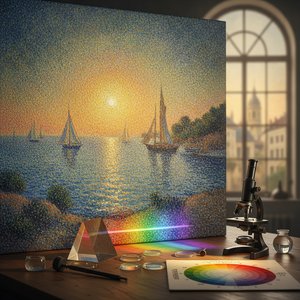
The core principle underpinning Pointillism lies in the phenomenon of optical mixture. Unlike additive color mixing (like combining lights), where colors blend directly, subtractive mixing (traditional painting) relies on pigments absorbing certain wavelengths and reflecting others. Seurat theorized that by applying tiny dots of pure color side-by-side, the viewer’s eye would perform its own blending process at a distance. This resulted in a perceived luminosity and intensity unattainable through conventional methods. He meticulously studied complementary colors – those opposite each other on the color wheel (red/green, blue/orange, yellow/violet) – understanding that their juxtaposition heightened visual impact.
This wasn’t merely an artistic whim; it was informed by a deep engagement with scientific principles. Seurat believed that by controlling the size and density of these dots, he could manipulate the viewer's perception, creating a shimmering effect akin to the way light itself behaves. His paintings weren’t intended as spontaneous expressions but rather as carefully constructed optical machines designed to stimulate specific responses in the observer’s eye. The influence of contemporary scientific diagrams and charts is palpable in his compositions – a deliberate attempt to present painting as a form of visual research.
The Technique Unveiled: Mastering ‘Mélange Optique’ – Dots, Brushstrokes, and Composition
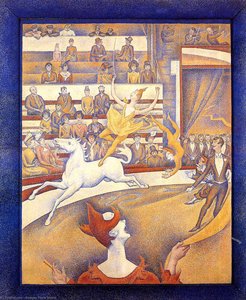
Executing Pointillism was an arduous undertaking. Unlike the fluid brushwork of Impressionism, it demanded painstaking precision and unwavering patience. Seurat abandoned traditional blending altogether, instead applying countless tiny dots of pure color with a small brush. He often worked on canvases primed with a reddish-brown ground, which subtly influenced the overall tonality and added depth to his compositions. The process wasn’t random; each dot was carefully placed in relation to its neighbors, considering hue, saturation, and value.
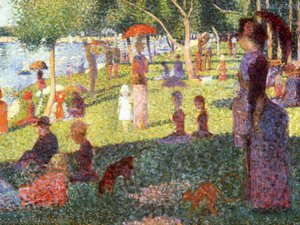
His masterpiece, A Sunday on La Grande Jatte, exemplifies this meticulous approach. The painting isn't simply a depiction of a leisurely afternoon; it’s a complex optical experiment. Seurat carefully layered dots of complementary colors to create a sense of vibrancy and movement. He also paid close attention to composition, using geometric forms and patterns to structure the scene. The result is a work that feels both static and dynamic, simultaneously precise and shimmering with life. The term “mélange optique” – optical mixture – perfectly encapsulates this deliberate process.
Beyond Seurat: Signac, Luce, and the Expansion of Neo-Impressionist Principles
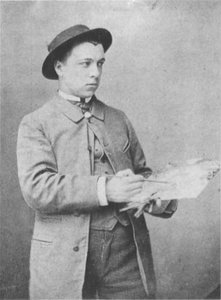 Paul Signac
Discover Paul Signac (1863-1935), a key Neo-Impressionist painter & master of Pointillism. Explore vibrant coastal scenes, harbor views & his influence on modern art at ArtsDot!
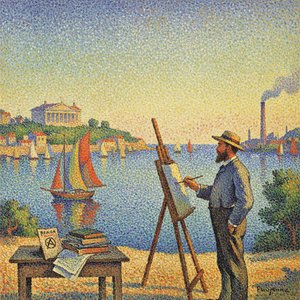
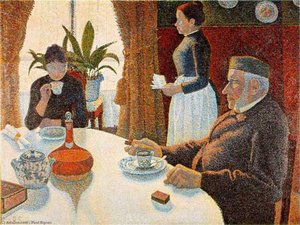
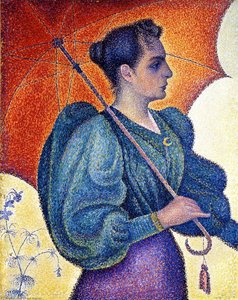
While Seurat is rightfully considered the founder of Pointillism, his ideas were embraced and expanded upon by a circle of fellow artists. Paul Signac became a devoted follower and champion of the technique, refining it further and advocating for its theoretical underpinnings. Signac’s work often focused on coastal scenes and harbor views, utilizing vibrant colors and geometric forms to capture the luminosity of light on water. He rejected the label “Pointillist,” preferring “Neo-Impressionist” – a term that emphasized the movement's scientific foundations.
Maximilien Luce also played a crucial role in popularizing Pointillism, applying the technique to scenes of Parisian life and landscapes. Unlike Seurat’s more contemplative approach, Luce often infused his paintings with a sense of social commentary, depicting working-class subjects and urban environments. These artists weren't simply replicating Seurat’s style; they were adapting it to their own artistic sensibilities and exploring its broader potential. They formed a cohesive group, exhibiting together and promoting their shared vision of a scientifically grounded art.
Reception & Resistance: Critical Responses to a Revolutionary Style
The initial reception to Pointillism was largely negative. Critics derided the technique as tedious, mechanical, and lacking in artistic expression. The tiny dots were often dismissed as childish or amateurish, and many struggled to understand the underlying principles of optical mixture. The paintings were seen as cold and calculated, devoid of the emotional warmth associated with Impressionism. Art critics coined mocking terms like “dotters” to belittle the artists’ efforts.
However, a small but dedicated group of supporters recognized the revolutionary potential of Pointillism. Writers like Félix Fénéon championed Seurat's work, highlighting its scientific rigor and innovative approach to color. Over time, as more people began to understand the principles behind the technique, appreciation for Pointillism grew. The movement’s emphasis on order, precision, and optical effects resonated with a new generation of artists seeking alternatives to Impressionism’s subjectivity.
A Lasting Radiance: Pointillism's Influence on Modern Art and Beyond
Despite its relatively short lifespan as a distinct movement, Pointillism exerted a profound influence on the development of modern art. Its emphasis on color theory and optical effects paved the way for Fauvism, with artists like Matisse experimenting with bold, non-naturalistic colors. The technique also influenced abstract art, inspiring artists to explore the expressive potential of pure form and color.
Even beyond painting, Pointillism’s principles have found applications in other fields, such as printing and digital imaging. The concept of using small dots to create a larger image is fundamental to many modern technologies. Today, Pointillism continues to captivate audiences with its unique beauty and intellectual depth. It stands as a testament to the power of scientific inquiry, artistic innovation, and the enduring allure of light and color. Explore the masterpieces of Seurat, Signac, and their contemporaries at ArtsDot.com, where you can discover hand-painted reproductions that capture the vibrancy and precision of this revolutionary art movement.