The Genesis of Pointillism: From Impressionism to Scientific Precision
 Wikipedia: Pointillism
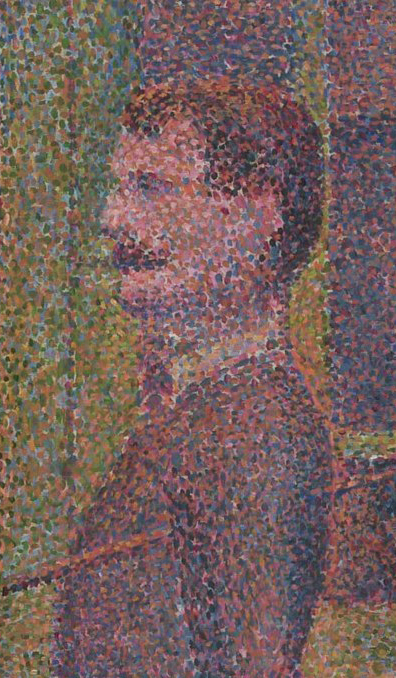
Pointillism (, also US: ) is a technique of painting in which small, distinct dots of color are applied in patterns to form an image. Georges Seurat and Paul Signac developed the technique in 1886, branching from Impressionism. The term "Pointillism...
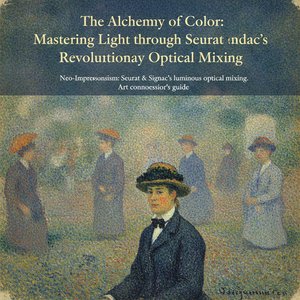
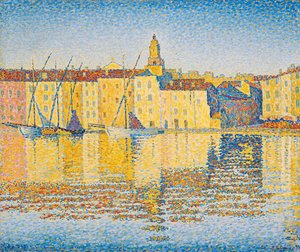
The late 19th century witnessed a seismic shift in the art world, a move away from the representational towards explorations of light, color, and perception. While Claude Monet and his contemporaries captured fleeting moments with broad brushstrokes, a new generation sought a more systematic approach. Paul Signac, initially captivated by Impressionism, found himself drawn to the rigorous theories of optical mixing championed by Georges Seurat. This wasn’t merely a stylistic divergence; it was a philosophical one. Signac, like Seurat, believed that color wasn't inherent in objects but rather constructed within the eye and brain of the viewer. The foundation of this belief lay in scientific treatises on optics and color theory – Michel Eugène Chevreul’s work on simultaneous contrast being particularly influential. This pursuit of a ‘scientific’ painting led to Pointillism, a technique demanding meticulous application of tiny, distinct dots of pure color, intended to blend optically when viewed from a distance. It was a radical departure, born not of intuition alone but of deliberate experimentation and a desire to unlock the very mechanisms of visual perception.
Signac’s Palette of Beliefs: Anarchism, Color Theory & Social Utopias
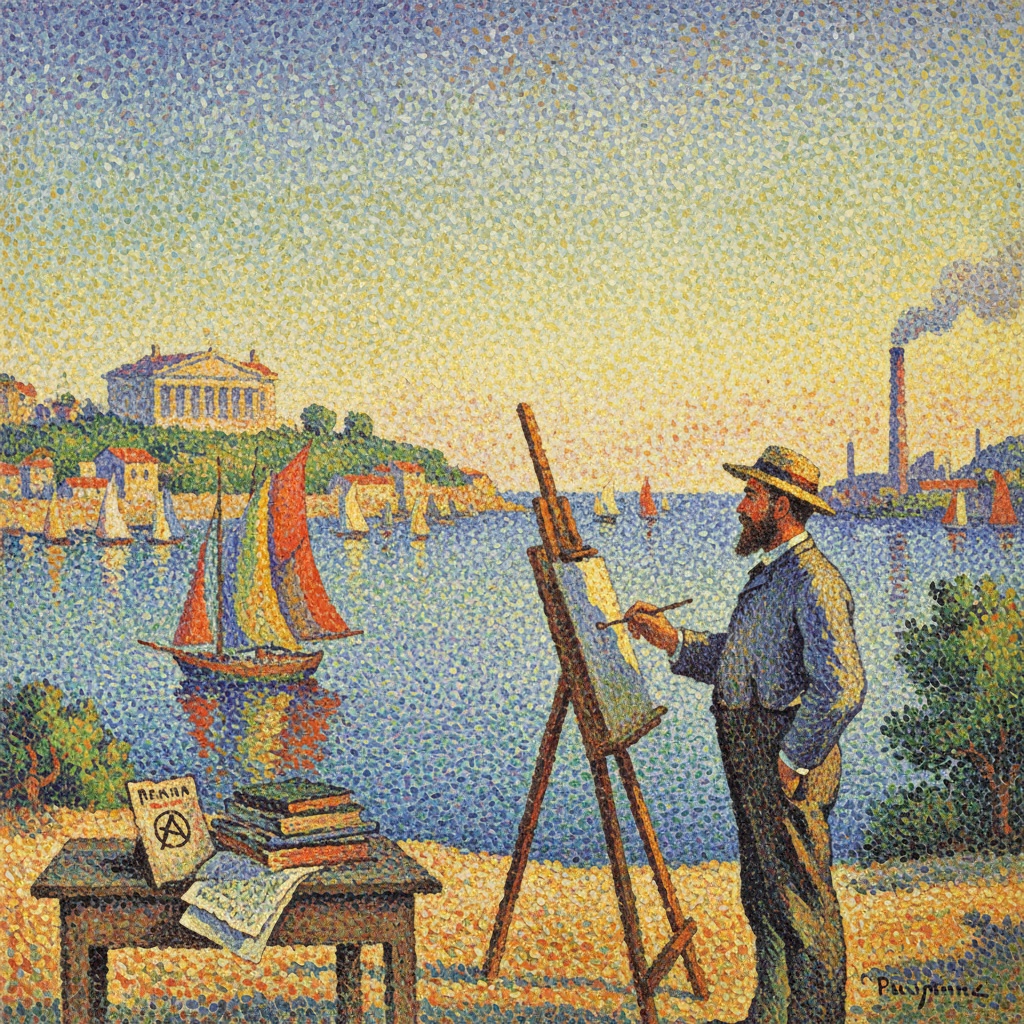
To understand Signac's art fully is to recognize its inextricable link with his political convictions. A staunch anarchist, he envisioned a society founded on principles of freedom, equality, and communal living. This utopian ideal wasn’t merely a personal philosophy; it permeated his artistic practice. Signac believed that the harmonious application of color – the careful balance and juxtaposition of hues – mirrored the harmony he sought in society. His paintings weren't simply aesthetic exercises but visual metaphors for a more equitable world. He actively participated in anarchist circles, contributing to journals and advocating for social change. This commitment is subtly woven into his subject matter: scenes of working-class life, bustling ports representing international solidarity, and idyllic coastal landscapes suggesting a peaceful coexistence with nature. The vibrant energy of his palette wasn’t accidental; it was a deliberate attempt to evoke feelings of optimism and collective joy. He saw in the Mediterranean light – particularly around Collioure and St. Tropez – a symbol of liberation and renewal.
Coastal Visions and Harbor Scenes: Exploring Signac's Signature Style
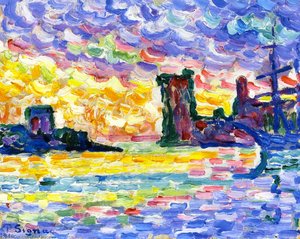
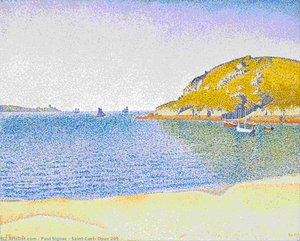 Port of Saint-Cast
Discover Paul Signac’s ‘Port of Saint-Cast,’ a vibrant Neo-Impressionist masterpiece! Explore Pointillism's beauty & technique in this Brittany coastal scene. #art #signac #neoimpressionism
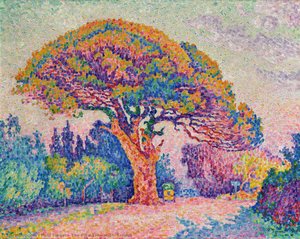
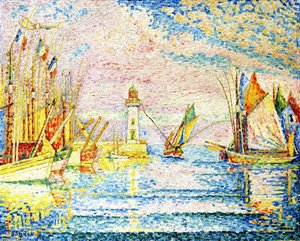
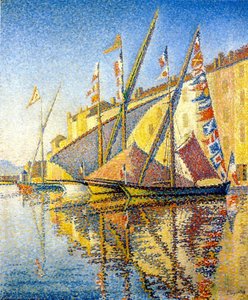
Signac’s artistic output is overwhelmingly defined by his depictions of coastal scenes and harbors. He wasn’t simply documenting these locations; he was transforming them into idealized visions, imbued with symbolic meaning. The Pine Tree at St. Tropez, for example, isn't just a beautiful rendering of a sun-drenched landscape; it’s an exploration of light and shadow, form and color, executed with the precision of Pointillism. Similarly, The Town Beach, Collioure, Opus 165 captures the vibrancy of coastal life but also hints at a sense of community and leisure. His harbors – like Port of Saint-Cast – are bustling with activity, representing international trade and connection. These scenes often feature sailboats, which held particular significance for Signac; they symbolized freedom, independence, and the pursuit of new horizons. He masterfully employed divisionism to create a shimmering effect on water, capturing the play of light and reflection with remarkable accuracy. The careful arrangement of colors wasn’t random but meticulously planned to achieve maximum visual impact.
Beyond the Dots: Technique, Composition, and the Neo-Impressionist Aesthetic
While Pointillism is often the first thing associated with Signac, it's crucial to understand the broader aesthetic principles that underpinned his work. He wasn’t simply applying dots haphazardly; each mark was carefully considered in relation to its surrounding colors and the overall composition. He studied classical painting techniques, incorporating elements of Japanese prints – particularly their flattened perspective and bold color palettes – into his own style. Signac also paid close attention to the golden ratio and other principles of mathematical harmony, believing that these structures could enhance the visual appeal of his paintings. His compositions are often characterized by a sense of balance and order, even amidst the apparent chaos of bustling scenes. He deliberately avoided mixing colors on the palette, preferring instead to allow the viewer’s eye to perform this function. This technique resulted in a unique luminosity and vibrancy that distinguished Neo-Impressionism from its Impressionist predecessor. The effect is not merely optical; it's also emotional – a sense of energy and vitality conveyed through the careful arrangement of color.
Signac as a Theorician: Influencing a Generation of Artists
Following Seurat’s untimely death in 1891, Signac became the leading advocate for Neo-Impressionism. He dedicated himself to codifying its principles and disseminating them through writings and exhibitions. His book, *From Eugène Delacroix to Neo-Impressionism*, remains a seminal text on the movement, outlining its theoretical foundations and artistic techniques. Signac wasn’t merely an artist; he was a teacher, a scholar, and a passionate advocate for his vision. He mentored numerous artists, including Henri Matisse and Albert Dubois-Pillet, helping to spread the principles of Pointillism throughout Europe. His influence extended beyond painting, impacting other art forms such as decorative arts and architecture. Signac’s legacy lies not only in his stunning paintings but also in his ability to articulate a coherent artistic philosophy that resonated with a generation seeking new ways to represent the world. He demonstrated how art could be both scientifically rigorous and emotionally expressive, paving the way for future explorations of abstraction and color theory.