Beyond the Brushstroke: The Emergence of Neo-Impressionism
In the vibrant, bustling atmosphere of late 19th-century Paris, a quiet revolution was unfolding, one that would fundamentally alter our understanding of visual reality. While the Impressionists had already broken the shackles of academic tradition by capturing the fleeting, spontaneous essence of light and movement, a new group of thinkers emerged with a more disciplined ambition. This was the dawn of Neo-Impressionism, a movement that sought to move beyond the mere impression of a moment toward a structured, almost mathematical exploration of perception. Unlike their predecessors, who utilized loose, expressive brushstrokes to mimic the transient nature of atmosphere, these artists looked toward the laboratory and the treatise to find a more permanent truth.
The movement was not merely an aesthetic choice but a philosophical shift. The Neo-Impressionists renounced the perceived randomness of spontaneous painting in favor of a measured, analytical technique. They were driven by the belief that art could be governed by principles as precise as those found in physics or music. This era marked a transition from the emotional spontaneity of Monet and Renoir to a more cerebral approach, where beauty was seen as an emergent property of harmony, form, and calculated color. It was a period where the artist’s studio began to mirror the scientist's laboratory, seeking to decode the very mechanics of how light interacts with the human eye.
The Physics of Color: Understanding Chromoluminarism and Optical Mixing
At the heart of this revolution lay a profound fascination with the science of optics. The Neo-Impressionists were deeply influenced by contemporary scientific writings on color theory, specifically the groundbreaking treatises of scholars such as Michel Eugène Chevreul, Charles Henry, and Ogden Rood. These thinkers had demonstrated that colors do not exist in isolation but are profoundly affected by their neighbors through a phenomenon known as simultaneous contrast. This realization led to the development of chromoluminarism, a technique designed to maximize the luminosity of the canvas by treating color as a component of light itself.
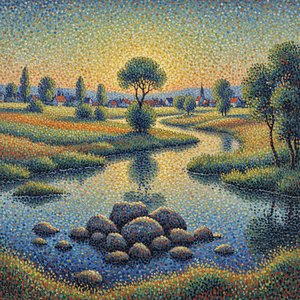
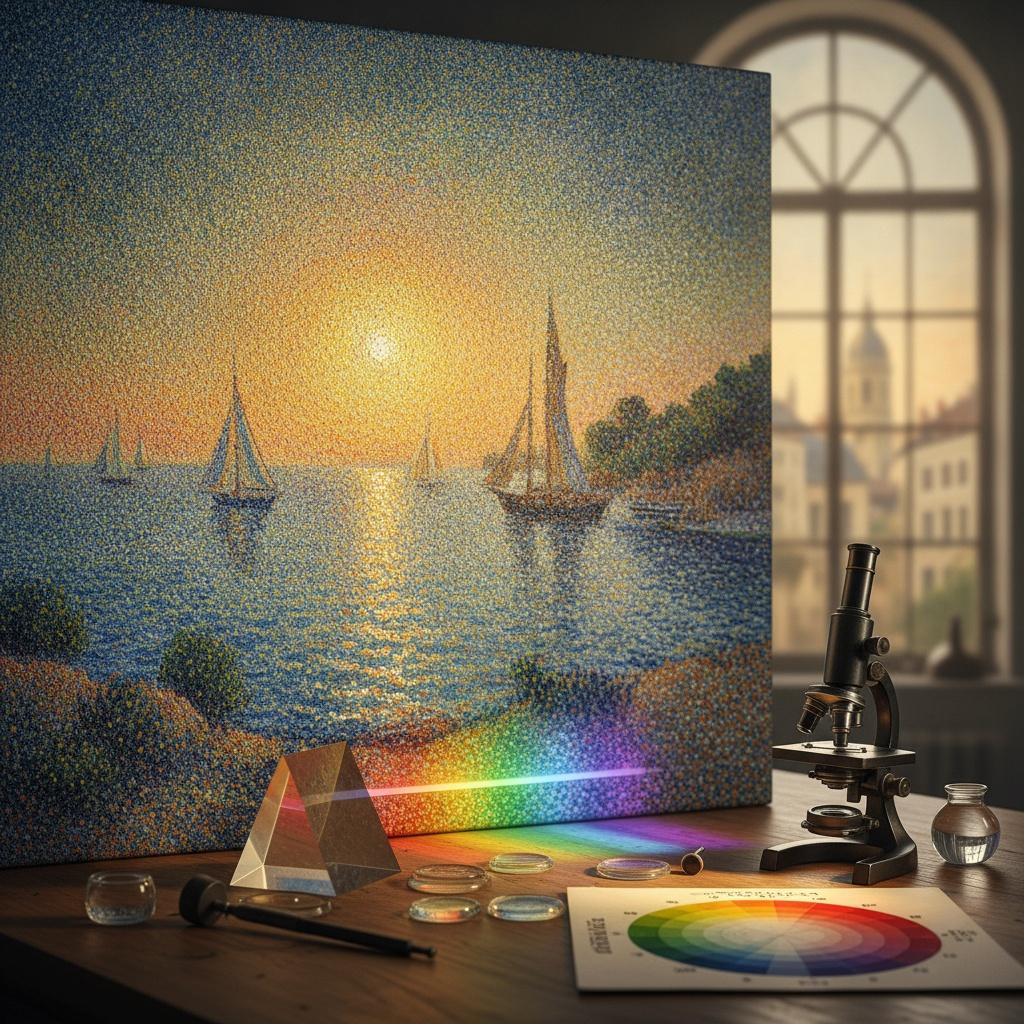
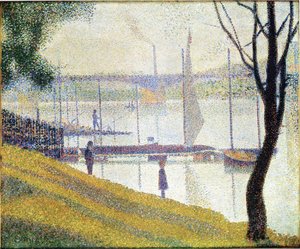
The core innovation was the concept of mélange optique, or optical mixing. Rather than blending pigments on a traditional palette—a process that often results in a loss of brilliance and a "muddy" appearance—the Neo-Impressionists applied tiny, distinct touches of pure, unblended pigment side by side. The intention was for the colors to be reconstituted within the viewer's eye rather than on the canvas surface. When viewed from a sufficient distance, these separate dots of color merge into a single, vibrant hue that possesses a pulsating, shimmering energy far greater than any pre-mixed paint could achieve. This method allowed the artists to capture a high-definition visual experience, creating a sense of light that felt as though it were vibrating with life.
Georges Seurat: The Methodical Visionary of Light
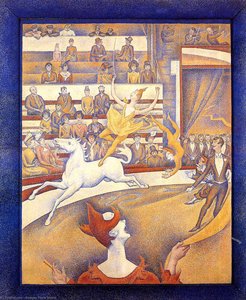
No figure embodies this scientific approach more completely than Georges Seurat. Born in Paris in 1859, Seurat possessed an intense curiosity and a disciplined temperament that set him apart from the more bohemian members of the avant-garde. His training at the École des Beaux-Arts provided him with a rigorous foundation in classical drawing and anatomy, yet his spirit was fundamentally restless, seeking to apply this academic precision to the modern, changing world of France. Seurat did not merely want to paint what he saw; he wanted to paint the very process of seeing.
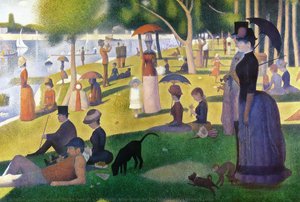
His most iconic achievement, A Sunday on La Grande Jatte (1884–86), stands as a monumental testament to his methodical vision. In this masterpiece, Seurat transformed a common scene of Parisian leisure into a structured exploration of light and form. Every figure, every shadow, and every ripple in the water was meticulously constructed through thousands of individual points of color. While some critics at the time found his approach overly rigid or "mechanical," Seurat’s work achieved a profound sense of stillness and eternal grace. He proved that by applying scientific rigor to the canvas, an artist could capture not just a fleeting moment, but the very essence of light's permanence.
Pixels Before Pixels: The Scientific Foundations of Pointillist Technique
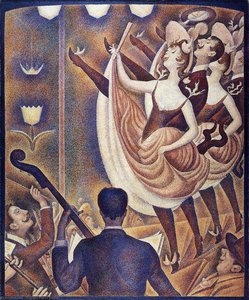
Long before the digital age introduced the concept of the pixel, Seurat and his contemporary Paul Signac were experimenting with a primitive form of digital imagery through Pointillism. This technique—the application of precise dots of paint—served as the physical manifestation of their theoretical beliefs. By breaking down an image into its most fundamental color components, they created a system that functioned much like a modern screen, where tiny units of light combine to form complex images. This was a radical departure from the continuous tones of traditional oil painting.
The technique required immense patience and a deep understanding of color relationships. An artist had to consider how a dot of orange would interact with an adjacent dot of blue to create a perceived neutral grey, or how complementary colors could be used to heighten the brilliance of a sunlit landscape. This meticulous application of pigment created what has been described as a "high-voltage" energy on the canvas. The separation of color through individual strokes—often referred to as Divisionism—allowed for a level of luminosity that felt revolutionary, providing a blueprint for much of the graphic design and modern aesthetics that would follow in the 20th century.
The Enduring Legacy: From 19th-Century Science to Modern Visual Perception
The impact of Pointillism and Neo-Impressionism extends far beyond the late 19th century. The movement’s emphasis on the science of perception paved the way for much of modern art, influencing everything from the structural explorations of Cubism to the vibrant energy of Fauvism. By treating the canvas as a site of optical experimentation, Seurat and Signac challenged the viewer to become an active participant in the creation of the image, completing the painting within their own minds.
Today, we see the echoes of this revolution in our digital interfaces, where pixels serve the same purpose of optical reconstruction that Seurat’s dots once did. For the modern art enthusiast, studying Pointillism is an invitation to rediscover the magic of light and the profound complexity of human vision. It reminds us that art is not merely a reflection of reality, but a sophisticated dialogue between the physical world and the perceiving mind.
At ArtsDot.com, we celebrate this enduring legacy by bringing these historical masterpieces into the modern home. Our collection features exquisite, hand-painted oil reproductions of iconic works like those of Seurat and Signac, meticulously crafted by artists who understand the importance of texture, light, and the visible brushstroke. Whether you seek a museum-quality reproduction of A Sunday on La Grande Jatte or wish to transform a personal memory into a Neo-Impressionist masterpiece through our custom services, we are dedicated to preserving the soul of art history for generations to come.