The Fin de Siècle Mood: A World on the Brink
"Fin de siècle" (French: [fɛ̃ də sjɛkl] ) is a French term meaning 'end of century', a phrase which typically encompasses both the meaning of the similar English idiom turn of the century and also makes reference to the closing of one era and onset o...
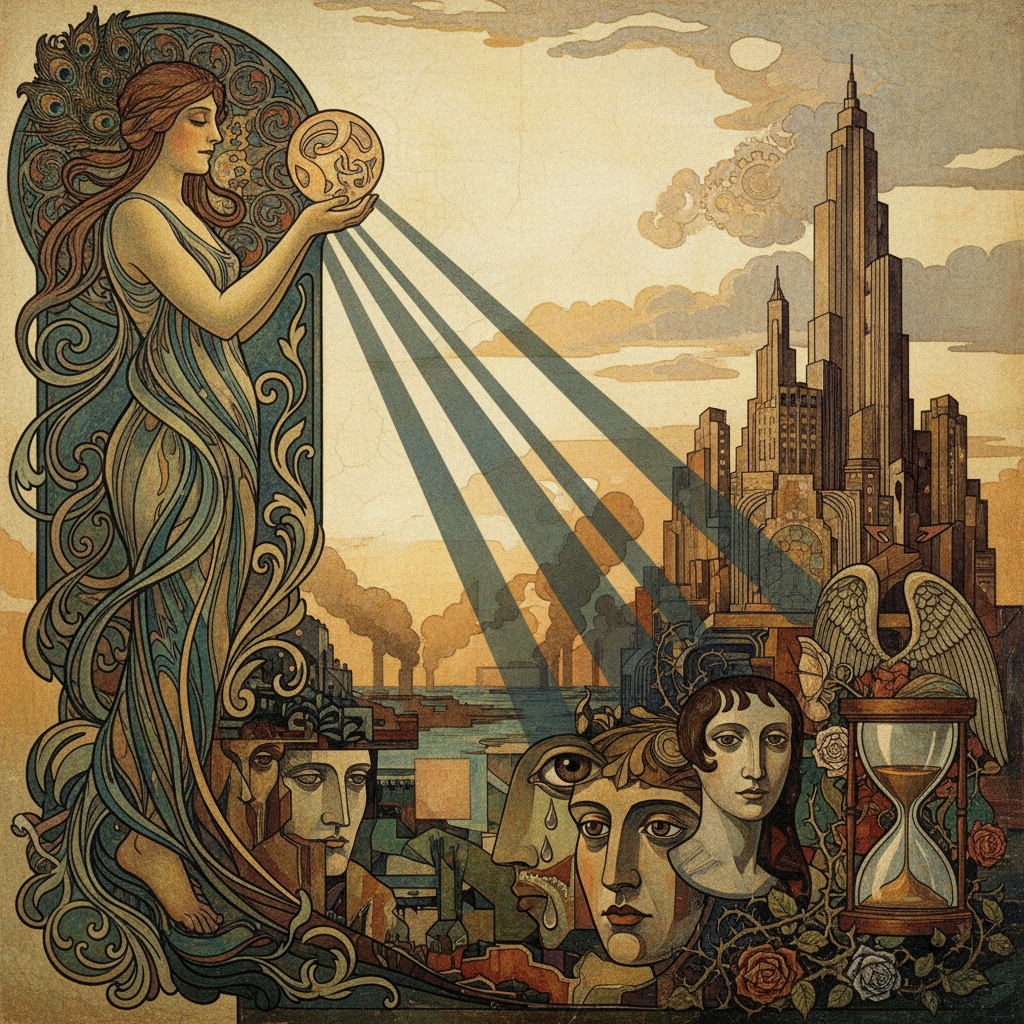
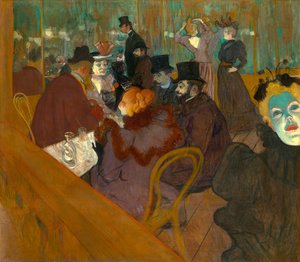
The closing decades of the nineteenth century, a period known as the Fin de siècle – literally, “end of the century” – were steeped in a unique and complex atmosphere. It was an era defined by both profound optimism fueled by scientific advancement and a pervasive sense of decay, uncertainty, and even dread. The rapid industrialization, urbanization, and social upheaval had shaken the foundations of traditional society, leaving many questioning established norms and searching for new meaning. This psychological climate profoundly impacted the art world, giving rise to movements that rejected realism in favor of exploring inner states, symbolism, and subjective experience. A feeling of ennui, a weariness with the material world, permeated intellectual circles, fostering a fascination with the irrational, the decadent, and the mysterious. It was a time when artists felt acutely the weight of history while simultaneously anticipating an uncertain future – a tension that would be powerfully expressed in their work.
Impressionism's Legacy & The Rise of Subjectivity
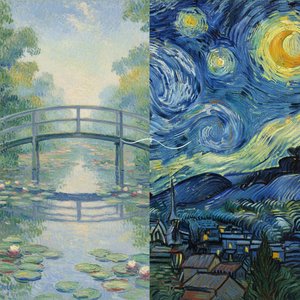
The Impressionist movement, with its focus on capturing fleeting moments of light and color, had irrevocably altered the course of painting. However, by the 1880s, a new generation of artists began to feel constrained by what they perceived as Impressionism’s limitations – its emphasis on optical observation at the expense of deeper emotional or symbolic content. While appreciating the technical innovations of painters like Monet and Renoir, these artists sought to move beyond mere representation and explore the subjective realm of personal experience. They questioned whether painting should simply reflect *what* was seen, or rather *how* it was felt. This shift in focus marked a crucial turning point, paving the way for Post-Impressionism – a term coined by critic Roger Fry to encompass the diverse artistic responses that emerged in the wake of Impressionism’s initial fervor. It wasn't a unified style, but rather a collection of individual approaches united by a common desire to infuse art with greater meaning and emotional resonance.
Symbolism in Paint: Evoking Inner Worlds and Mythologies
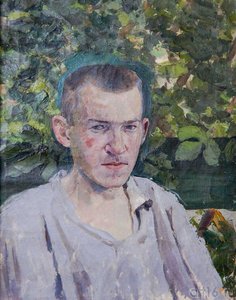 viktor elpidiforovich borisov musatov
Explore Viktor Borisov-Musatov's (1870-1905) dreamy Russian Symbolist paintings. Discover his unique blend of Post-Impressionism, decorative style & evocative landscapes.
Central to this shift was the embrace of Symbolism – an artistic movement that sought to express abstract ideas and emotions through evocative imagery, often drawing upon mythology, dreams, and religious themes. Artists like Viktor Borisov-Musatov exemplified this approach, creating ethereal landscapes populated by melancholic figures lost in contemplation. His paintings are not depictions of specific places but rather atmospheric evocations of mood and memory, imbued with a sense of longing and spiritual yearning. The use of simplified forms, muted colors, and decorative patterns contributed to the dreamlike quality of his work. Félix Vallotton, while also engaging with Post-Impressionist techniques, explored Symbolism through more stark and unsettling imagery, often depicting intimate scenes charged with psychological tension. His woodcuts, in particular, are renowned for their striking contrasts and ambiguous narratives, inviting viewers to delve into the complexities of human relationships. The power of artistic symbol lay not in literal representation but in its ability to hint at deeper truths and unspoken emotions.
Post-Impressionist Pioneers: Cézanne, Van Gogh, Gauguin & Seurat
Post-Impressionism (also spelled Postimpressionism) was a predominantly French art movement which developed roughly between 1886 and 1905, from the last Impressionist exhibition to the birth of Fauvism. Post-Impressionism emerged as a reaction agains...
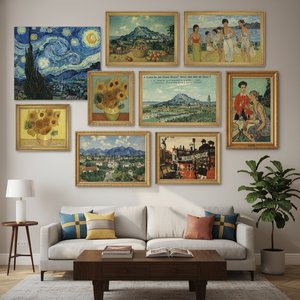
The term Post-Impressionism encompasses a remarkable array of individual talents. Paul Cézanne, often considered the “father” of the movement, embarked on a systematic exploration of form and structure, seeking to create paintings that were not merely imitations of nature but rather constructions based on geometric principles. His still lifes and landscapes are characterized by their solidity, order, and deliberate distortion of perspective – qualities that would profoundly influence the development of Cubism. Vincent van Gogh, driven by an intense emotionality, used vibrant color and expressive brushstrokes to convey his inner turmoil and his profound connection to nature. Paintings like “Starry Night” are not simply depictions of landscapes but rather powerful expressions of psychological states. Paul Gauguin, disillusioned with European society, sought refuge in the exotic landscapes of Tahiti, where he created paintings that celebrated primitive cultures and explored themes of spirituality and sensuality. Georges Seurat, meanwhile, pursued a more scientific approach, developing the technique of Pointillism – meticulously applying tiny dots of pure color to create luminous effects. Each artist, while distinct in their style and subject matter, shared a commitment to pushing the boundaries of painting beyond the limitations of Impressionistic naturalism.
Beyond France: Symbolism’s Reach Across Europe (Rusiñol & Musatov)
While France served as the epicenter of these artistic developments, the influence of Symbolism and Post-Impressionism extended far beyond its borders. In Spain, Santiago Rusiñol emerged as a leading figure in Catalan Modernisme, creating evocative landscapes and portraits that captured the spirit of his region. His work often explored themes of solitude, melancholy, and the beauty of nature, reflecting a similar sensibility to that of Musatov. Rusiñol’s paintings are characterized by their delicate brushwork, muted colors, and atmospheric effects, inviting viewers to immerse themselves in a world of poetic contemplation. The spread of these ideas across Europe demonstrates the widespread desire for artistic innovation and a rejection of traditional academic styles. Artists throughout the continent were grappling with similar questions about the nature of reality, the role of emotion, and the search for meaning in a rapidly changing world.
The Enduring Influence of a Revolutionary Era
The legacy of Symbolism and Post-Impressionism is immeasurable. These movements laid the groundwork for many of the major artistic developments of the twentieth century, including Expressionism, Fauvism, and Cubism. The emphasis on subjective experience, emotional expression, and abstract form profoundly influenced generations of artists, liberating them from the constraints of realism and paving the way for new modes of visual representation. The works created during this period continue to resonate with audiences today, offering a glimpse into the anxieties, aspirations, and artistic innovations of a world on the cusp of modernity. At ArtsDot.com, we are dedicated to bringing these masterpieces closer to you through high-quality reproductions that capture the essence and emotional depth of these iconic paintings. Explore our collection today and discover the enduring power of Symbolism and Post-Impressionism.