The Belle Époque’s Last Gasp: A Cultural Landscape on the Brink
The Belle Époque (French pronunciation: [bɛlepɔk]) or La Belle Époque (French for 'The Beautiful Era') was a period of French and European history that began after the end of the Franco-Prussian War in 1871 and continued until the outbreak of World W...
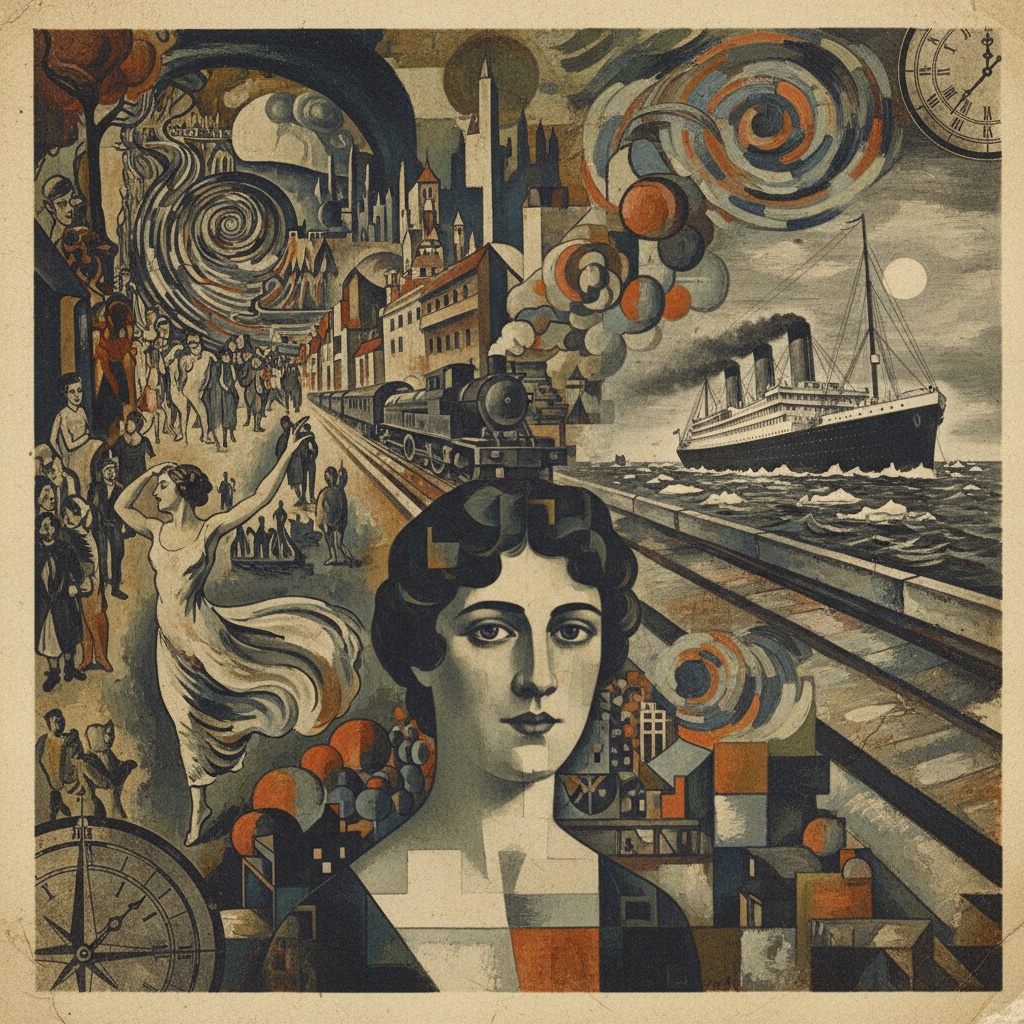
The years preceding the First World War, collectively known as the Belle Époque, often conjure images of Parisian cafes, extravagant balls, and a burgeoning optimism fueled by technological advancement. Yet beneath this glittering surface lay currents of unease, a premonition of upheaval that subtly permeated artistic expression. 1912, in particular, stands as a critical juncture – not merely a continuation of the era’s aesthetic pleasures but a year where those pleasures began to fracture, giving way to new modes of seeing and representing the world. It was a moment poised between the security of tradition and the unsettling promise of modernity, a tension acutely felt by artists across disciplines. The established order, while still dominant, faced increasing scrutiny, prompting explorations into subjectivity, abstraction, and the very nature of perception. This wasn’t simply about stylistic innovation; it reflected a deeper societal shift—a questioning of values, beliefs, and the foundations upon which European civilization rested.
Cubism's Bold Leap Forward: Picasso and the Fragmentation of Form in 1912
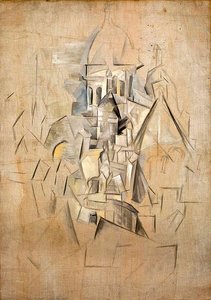 Le Sacre-Coeur
Explore Pablo Picasso's revolutionary 'Le Sacré-Cœur,' a pivotal Cubist masterpiece from 1910. This dynamic, geometric abstraction captures the spirit of Belle Époque Paris and Picasso’s groundbreaking artistic evolution. Own a stunning reproduction ...
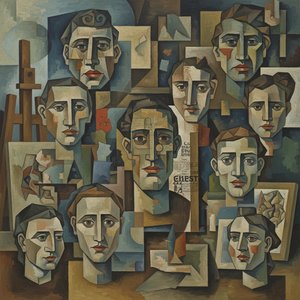
Pablo Picasso, already a revolutionary force by 1912, epitomized this artistic ferment. While his earlier works hinted at the deconstruction of form, it was during this period that Cubism truly solidified its radical departure from representational painting. Le Sacré-Cœur, though completed slightly before 1912, embodies the spirit of this evolution – a dynamic geometric abstraction that dismantles traditional perspective and presents multiple viewpoints simultaneously. This wasn’t merely an exercise in formal experimentation; it was a deliberate attempt to capture the complexity of modern experience, where reality is rarely singular or static. The painting reflects the bustling energy of Belle Époque Paris, but filters it through a fractured lens, mirroring the anxieties and uncertainties of the age. The influence of African masks and Iberian sculpture, visible in the simplified forms and distorted features, further challenged conventional notions of beauty and representation. Picasso wasn’t simply depicting what he *saw*; he was conveying how he *felt* about what he saw—a subjective interpretation that paved the way for countless artistic innovations to follow.
Matisse and Fauvism: Color as Emotion and the Pursuit of Modernity
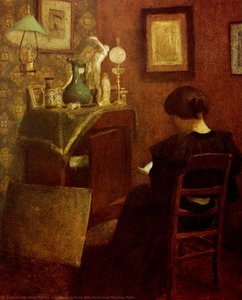 La Liseuse Huile sur Bois Musée d'art Moderne, Paris
Featured in Matisse's early career, it was purchased by the French State in 1896.
Henri Matisse, alongside Picasso, played a pivotal role in dismantling academic traditions. While Cubism focused on form, Matisse championed color as the primary vehicle for emotional expression. His early career works, such as La Liseuse Huile sur Bois Musée d'art Moderne, Paris, demonstrate a growing liberation from naturalistic representation. Purchased by the French State in 1896, this piece foreshadows the bold palettes and simplified forms that would define Fauvism. Matisse sought to create paintings that were not imitations of reality but rather evocations of feeling—pure visual sensations divorced from narrative or descriptive constraints. This pursuit of “intense emotion” through color was a direct response to the perceived artificiality of modern life, a yearning for authenticity and immediacy in an increasingly industrialized world. The vibrant hues weren’t arbitrary; they were carefully chosen to create harmonious compositions that resonated with the viewer on a visceral level.
Beyond Painting: Art Nouveau’s Flourishing Legacy and Hector Guimard’s Parisian Vision
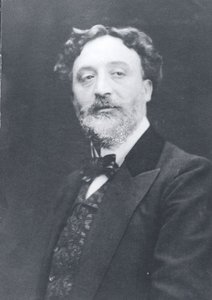 Hector Guimard
Discover Hector Guimard (1867-1942), a leading French Art Nouveau architect renowned for his iconic Paris Metro entrances & organic, flowing designs. Explore his buildings, furniture, and the legacy of this pivotal figure in early modernism.
While painting underwent radical transformations, other artistic disciplines also flourished during this period. Art Nouveau, reaching its zenith in the early 20th century, offered an alternative aesthetic—one characterized by organic forms, flowing lines, and a celebration of craftsmanship. Hector Guimard, perhaps the most recognizable figure associated with Art Nouveau architecture, left an indelible mark on Paris with his iconic Metro entrances. These structures weren’t simply functional; they were works of art in their own right—intricate ironwork designs that seamlessly blended form and function. Guimard's work reflected a desire to integrate art into everyday life, to elevate the mundane through beauty and elegance. The swirling motifs and naturalistic details offered a respite from the increasingly rigid structures of modern urbanism, a reminder of the organic world in an age of industrialization.
Portraying a World in Transition: Boldini, Stewart, and the Luminist Aesthetic
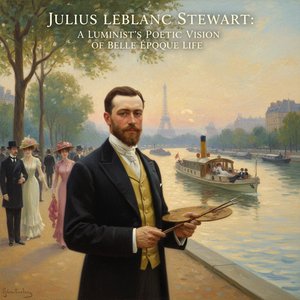 Julius Leblanc Stewart: A Luminist’s Poetic Vision of Belle Époque Life
Explore the captivating world of Julius Leblanc Stewart, a master of Luminism renowned for his Belle Époque portraits and serene landscapes. Discover his artistic journey & legacy with ArtsDot.
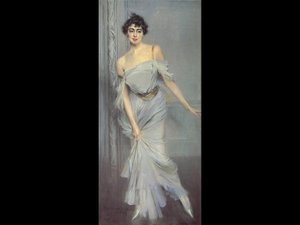
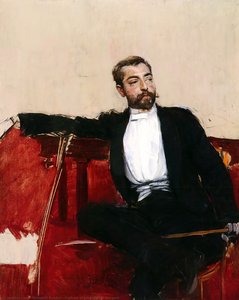
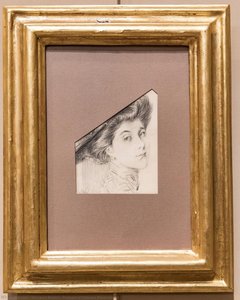
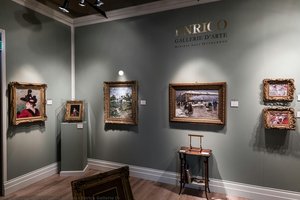
The shift towards modernity wasn’t solely defined by abstraction or stylistic rebellion. Artists like Giovanni Boldini and Julius Leblanc Stewart explored alternative paths, capturing the nuances of Belle Époque society through portraiture and landscape painting respectively. Boldini's portraits, renowned for their elegance and sophistication, reflected the cult of personality that permeated the era—a fascination with individual style and social status. His signature brushwork, characterized by loose strokes and a sense of movement, conveyed not just physical likeness but also the sitter’s inner character. Stewart, on the other hand, embraced Luminism, capturing the serene beauty of landscapes bathed in soft light. His paintings offered a contemplative escape from the bustle of urban life, a celebration of nature's tranquility. Both artists, though distinct in their approaches, shared a commitment to capturing the fleeting moments and subtle emotions that defined the Belle Époque experience.
The Seeds of Change: Symbolism and the Precursors to Abstract Expressionism
Modernism was an early 20th-century movement in literature, visual arts, performing arts, and music that emphasized experimentation, abstraction, and subjective experience. Philosophy, politics, architecture, and social issues were all aspects of thi...
Underlying these diverse artistic movements was a broader current of philosophical and intellectual inquiry. Symbolism, rejecting Realism’s emphasis on objective representation, sought to explore the inner world—the realm of dreams, emotions, and spiritual experiences. While not as visually dominant in 1912 as Cubism or Fauvism, Symbolism laid the groundwork for later abstract movements. The focus on subjective experience and the rejection of traditional forms paved the way for artists to delve deeper into the subconscious mind. This exploration of inner states, coupled with the growing anxieties about modernity, ultimately led to the emergence of Abstract Expressionism in the post-war era—a movement that fully embraced non-representational art as a means of conveying profound emotional truths. The year 1912, therefore, wasn’t simply an isolated moment in art history; it was a crucial turning point—a year where the seeds of change were sown, ultimately blossoming into the radical artistic innovations of the 20th century.
Discover these masterpieces and more at ArtsDot.com, where history comes alive through stunning reproductions and expert analysis.