The Parisian from Philadelphia: Stewart’s Early Life and Artistic Formation
The Hudson River School was a mid-19th-century American art movement embodied by a group of landscape painters whose aesthetic vision was influenced by Romanticism. Early on, the paintings typically depicted the Hudson River Valley and the surroundi...
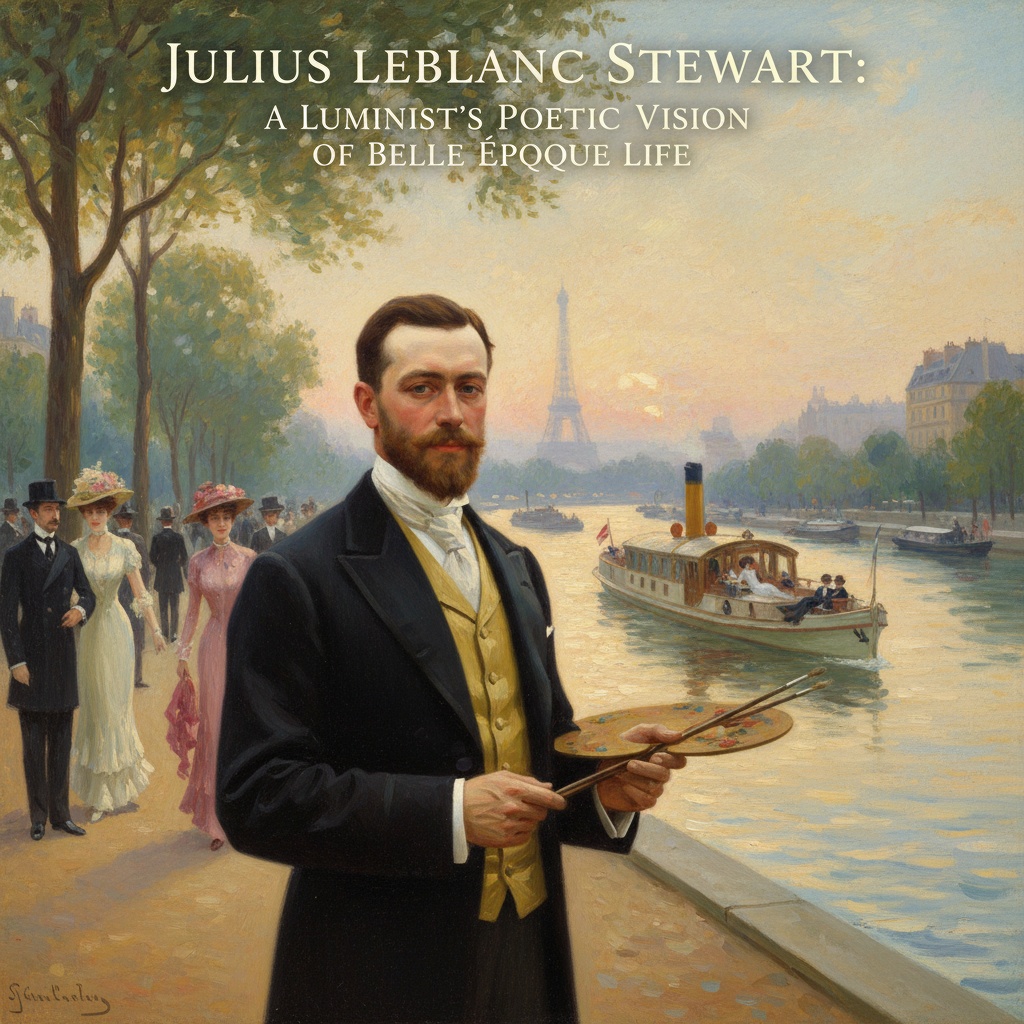
Julius Leblanc Stewart, a name perhaps less immediately recognizable than his contemporaries John Singer Sargent or Mary Cassatt, nevertheless occupies a fascinating niche in the pantheon of 19th-century American artists. Nicknamed “the Parisian from Philadelphia,” this moniker speaks volumes about his trajectory – a life deeply rooted in American wealth yet irrevocably shaped by the artistic currents of France. Born in 1855 into a family that would soon relocate to Paris, Stewart’s upbringing was one of privilege and exposure. His father, William Hood Stewart, wasn't merely a businessman; he was an avid collector, a discerning patron who fostered early relationships with luminaries of the Barbizon school and Marià Fortuny, effectively laying the foundation for his son’s artistic education. This immersion in a world of established artists and innovative techniques proved pivotal. Unlike many American painters who sought European training as a temporary sojourn, Stewart became thoroughly integrated into Parisian society, a status that would profoundly influence both his subject matter and style.
Stewart's formal studies began with Eduardo Zamacois, a Spanish painter whose influence is discernible in the early vibrancy of Stewart’s palette. He later enrolled at the prestigious École des Beaux-Arts under Jean-Léon Gérôme, a master known for his meticulous realism and historical scenes. However, it was Raymondo de Madrazo who arguably left the most lasting impression, instilling in Stewart a refined technique and an appreciation for elegant composition. This early training wasn’t simply about mastering brushstrokes; it was about cultivating a sensibility – a keen eye for detail, a love of luxurious textures, and an understanding of how to capture the fleeting moments of modern life.
Barbizon Influences and the Embrace of Realism
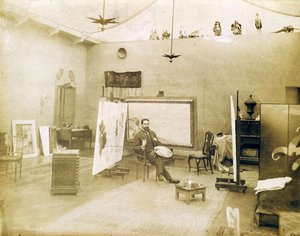 Julius LeBlanc Stewart
Julius LeBlanc Stewart (1855-1919): "Parisian from Philadelphia" famed for Belle Époque portraits, Orientalist scenes & yachting life. A contemporary of Sargent with Barbizon influences.
The Barbizon school, with its emphasis on direct observation of nature and rejection of academic artifice, cast a long shadow over Stewart’s development. While he didn't strictly adhere to their plein-air practices, the Barbizon artists instilled in him a commitment to realism – not merely photographic accuracy, but a truthful depiction of light, atmosphere, and the everyday world. This influence is subtly present in his early landscapes, which, though often overshadowed by his later portraiture, reveal a sensitivity to natural form and color. However, Stewart wasn’t content with simply replicating nature; he sought to imbue it with a sense of elegance and refinement, a distinctly Parisian sensibility.
This fusion of Barbizon realism with a more sophisticated aesthetic led him towards a style that celebrated the beauty of modern life – the opulent interiors, fashionable gatherings, and leisurely pursuits of Belle Époque society. He wasn’t interested in grand historical narratives or allegorical symbolism; his focus was on capturing the fleeting moments of pleasure and social interaction. This shift reflects not only his personal inclinations but also the broader artistic trends of the time, as artists increasingly turned their attention to the realities of contemporary life.
Portraits of an Era: Capturing Belle Époque Society
 Wikipedia: Julius LeBlanc Stewart
Julius LeBlanc Stewart (September 6, 1855, Philadelphia, Pennsylvania — January 4, 1919, Paris, France), was an American artist who spent his career in Paris. A contemporary of fellow expatriate painter John Singer Sargent, Stewart was nicknamed "the...
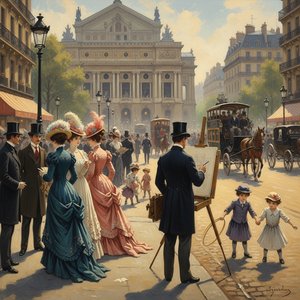
Stewart’s true mastery lay in portraiture. He became a sought-after artist among the Parisian elite, capturing the likenesses of actresses, celebrities, aristocrats, and prominent social figures. His paintings weren't simply representations of physical appearance; they were carefully constructed narratives that revealed something about the sitter’s personality, status, and lifestyle. Works like The Hunt Ball, with its inclusion of recognizable faces – Lillie Langtry among them – transformed his canvases into social documents, inviting viewers to engage in a form of celebrity spotting.
What distinguished Stewart's portraits was his ability to create an atmosphere of intimacy and elegance. He excelled at depicting the sumptuous interiors of Parisian homes, using rich colors and delicate brushstrokes to convey a sense of luxury and refinement. His compositions were often complex, featuring multiple figures engaged in lively conversation or leisurely activities. This wasn’t merely about showcasing wealth; it was about capturing the social dynamics of an era – the flirtations, rivalries, and subtle power plays that defined Belle Époque society.
Beyond Portraiture: Yachting Scenes and Outdoor Nudes
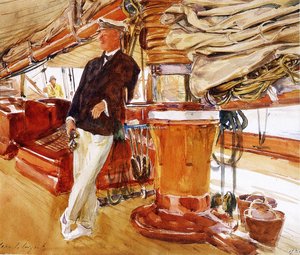
While best known for his portraits, Stewart also explored other genres with considerable skill. His series of paintings aboard James Gordon Bennett Jr.’s yacht Namouna demonstrate a mastery of marine painting, capturing the energy and excitement of life at sea. These works weren’t simply depictions of yachts and sailing; they were celebrations of leisure, adventure, and the opulent lifestyle enjoyed by the wealthy elite. The play of light on water, the billowing sails, and the vibrant colors of the Mediterranean create a sense of movement and vitality.
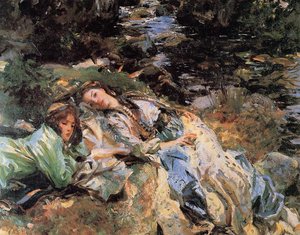
Later in his career, Stewart turned to painting outdoor nudes, often set in lush landscapes reminiscent of classical mythology. These works reveal a renewed interest in form and composition, influenced perhaps by his earlier training. Paintings like La Clairiere (The Glade) showcase his ability to capture the beauty of the human body in harmony with nature, evoking a sense of tranquility and sensuality. This shift suggests a desire to explore more timeless themes, moving beyond the specificities of contemporary society.
Luminist Qualities in Stewart's Work: Light, Atmosphere, and Tranquility
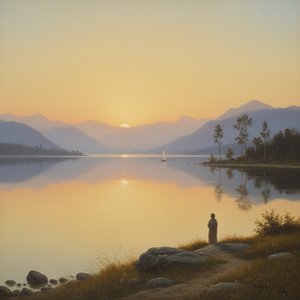
Although not typically categorized as a pure Luminist painter, Stewart’s work exhibits several qualities associated with this American landscape movement. His meticulous attention to light – the way it filters through trees, reflects on water, or illuminates faces – is central to his aesthetic. He employed aerial perspective and subtle gradations of tone to create a sense of depth and atmosphere, often minimizing visible brushstrokes to achieve a smooth, luminous surface. This emphasis on light and atmosphere contributes to the overall feeling of tranquility that pervades many of his paintings.
The serene quality of his yachting scenes and outdoor nudes particularly exemplifies these Luminist tendencies. The calm waters, soft skies, and gentle light create a sense of peaceful contemplation. While Stewart’s work lacks the stark simplicity often associated with Luminism – he was more interested in depicting complex social interactions than pristine landscapes – it shares a similar commitment to capturing the beauty and stillness of nature. His paintings offer a glimpse into a world of refined elegance and leisurely pursuits, bathed in a soft, ethereal light.
Stewart’s Legacy and Enduring Appeal
Julius Leblanc Stewart may not be a household name, but his work continues to captivate art lovers with its exquisite detail, elegant compositions, and insightful portrayal of Belle Époque society. His paintings offer a unique window into a bygone era – a world of opulent interiors, fashionable gatherings, and leisurely pursuits. He was, as one critic aptly described him, “the Parisian from Philadelphia,” an artist who successfully bridged the gap between American wealth and European sophistication.
Today, Stewart’s works are held in prominent museums around the world, including the Los Angeles County Museum of Art and the Wadsworth Atheneum. ArtsDot offers high-quality reproductions of his masterpieces, allowing art enthusiasts to experience the beauty and elegance of his paintings firsthand. Whether you're drawn to his portraits of Parisian celebrities or his serene landscapes, Stewart’s work is sure to inspire and delight. Explore our collection today and discover the captivating world of this remarkable artist.