The Dawn of Disquiet: Europe on the Brink in 1908
 Wikipedia: Art
Art is a diverse range of cultural activity centered around works utilizing creative or imaginative talents, which are expected to evoke a worthwhile experience, generally through an expression of emotional power, conceptual ideas, technical proficie...
The year 1908 hangs suspended between eras, a fragile moment poised on the cusp of monumental change. While the Belle Époque continued to shimmer with its gilded glamour, beneath the surface lay currents of unrest and uncertainty. Political tensions simmered across Europe – from Austro-Hungarian annexation of Bosnia to growing nationalist movements – creating an atmosphere of foreboding that would soon erupt into global conflict. This was a period of rapid industrialization, urbanization, and scientific discovery, yet also one marked by social inequality and philosophical questioning. The established order felt increasingly precarious, and this sense of unease found its echo in the burgeoning art world, particularly within the radical new movement known as Fauvism.
The traditional academic styles, with their emphasis on realism and historical narrative, began to feel inadequate for expressing the complexities of modern life. Artists sought new ways to convey not just *what* they saw, but *how* they felt about what they saw – a shift in focus that would fundamentally alter the course of art history. The prevailing mood wasn’t one of optimism or celebration; rather, it was characterized by introspection, anxiety, and a yearning for something beyond the confines of conventional representation.
Fauvism's Explosive Birth: A Rejection of Convention
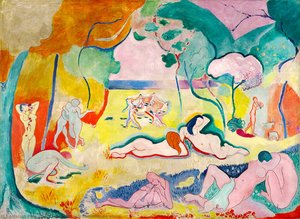
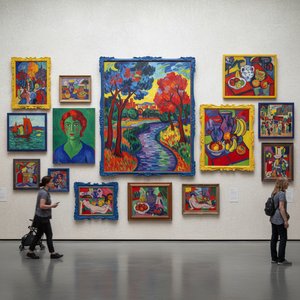 Fauvism's Bold Vision: 10 Masterpieces That Revolutionized Modern Art |
Explore the revolutionary world of Fauvism! Discover 10 masterpieces by Matisse, Derain & Vlaminck that defined this bold art movement. Find museum-quality reproductions and vibrant canvas prints to elevate your home decor at .
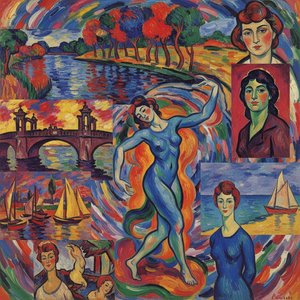
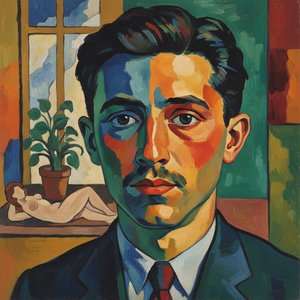
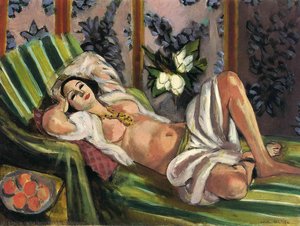
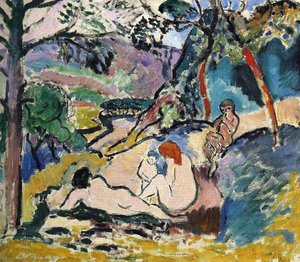
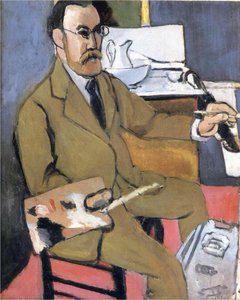
Into this volatile climate burst Fauvism – “Wild Beasts” as they were derisively dubbed by critics at the 1905 Salon d’Automne. Led by Henri Matisse, André Derain, Maurice de Vlaminck, and Raoul Dufy, these artists shocked audiences with their audacious use of color. It wasn't merely a matter of brighter hues; it was a deliberate rejection of naturalistic representation in favor of pure, expressive color applied with unrestrained energy. Brushstrokes were visible, forms simplified, and perspective often distorted – all in service of conveying emotion and sensation.
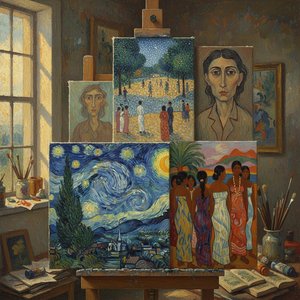
The influence of Post-Impressionists like Van Gogh and Gauguin is undeniable. They had already begun to liberate color from its descriptive function, using it instead as a vehicle for personal expression. But the Fauves took this experimentation even further, stripping away all pretense of objective reality and embracing a subjective vision that prioritized feeling over fidelity. This was not about painting what things *looked* like; it was about painting how they *felt*. The initial reaction was often hostile – critics accused them of crudeness, barbarism, and lacking technical skill. Yet, this very rawness, this unapologetic embrace of emotion, proved to be the movement’s greatest strength.
Matisse and 'Grand Intérieur Rouge': Capturing Parisian Life in a New Light
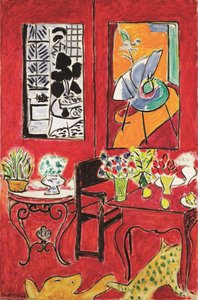 Grand Intérieur rouge Huile sur Toile Paris, Musée national d'Art Moderne
Explore Henri Matisse’s "Grand Intérieur rouge" – a vibrant Fauvist masterpiece! Discover its bold colors, dynamic composition & intimate Parisian scene at the Musée National d'Art Moderne.
Henri Matisse stands as the central figure of Fauvism, and his 1908 painting “Grand Intérieur Rouge” exemplifies the movement’s key characteristics. The work depicts a domestic scene – a room bathed in an almost hallucinatory red light. While seemingly simple in subject matter, the painting is anything but conventional. Matisse eschews traditional perspective and modeling, instead flattening the space and using bold, arbitrary colors to create a dynamic composition.
The vibrant reds dominate the canvas, creating a sense of warmth and intimacy, yet also hinting at an underlying tension. The figures are reduced to simplified forms, their faces almost mask-like, suggesting a detachment from reality. This isn’t a literal depiction of a room; it's a distillation of Matisse’s emotional response to the space – a memory, a feeling, a fleeting impression captured in pure color and form. The painting is not about recreating the *appearance* of Parisian life but rather conveying its *atmosphere*, its energy, its underlying anxieties.
Beyond Impressionism: The Fauves’ Bold Palette and Brushwork
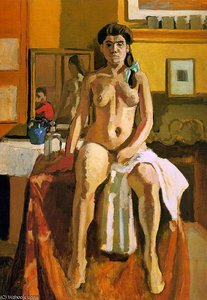
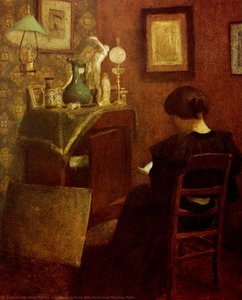 La Liseuse Huile sur Bois Musée d'art Moderne, Paris
Featured in Matisse's early career, it was purchased by the French State in 1896.
What truly set the Fauves apart was their revolutionary approach to color and brushwork. Unlike the Impressionists who sought to capture fleeting moments of light and atmosphere through delicate, broken brushstrokes, the Fauves employed bold, often jarring combinations of colors applied with thick, impasto strokes. They weren’t interested in blending or softening edges; instead, they embraced the physicality of paint itself.
“La Liseuse”, an earlier work by Matisse, demonstrates his growing fascination with color as a structural element. While still rooted in traditional representation, the painting foreshadows the Fauves’ later experiments with flattened space and arbitrary color choices. The use of complementary colors – oranges and blues, reds and greens – creates a sense of visual tension and vibrancy. This wasn't simply about aesthetics; it was about exploring the expressive potential of color itself, its ability to evoke emotion and create a powerful visual impact.
The Sociopolitical Canvas: Reflecting Anxiety and Change
While often described as purely aesthetic, Fauvism cannot be divorced from the sociopolitical context in which it emerged. The movement’s rejection of convention can be seen as a reflection of broader anxieties about modernity – a sense that traditional values were crumbling and that the world was becoming increasingly fragmented and uncertain. The bold colors and distorted forms may have been an attempt to grapple with these feelings, to express the disorientation and unease of living in a rapidly changing world.
The simplification of forms and rejection of naturalistic representation can also be interpreted as a response to the rise of photography. With the advent of photography, artists no longer needed to focus on accurately depicting reality; instead, they could explore more subjective and expressive modes of representation. The Fauves embraced this freedom, using color and form to create works that were not about replicating the world but rather interpreting it.
Legacy of 1908: How the Seeds of Modern Art Were Sown
Although short-lived – lasting only from approximately 1905 to 1908 – Fauvism had a profound impact on the development of modern art. It paved the way for subsequent movements like Expressionism and Cubism, liberating artists from the constraints of traditional representation and encouraging them to explore new forms of expression.
The legacy of Matisse and the Fauves continues to resonate today. Their bold use of color, their emphasis on subjective experience, and their willingness to challenge convention remain a source of inspiration for artists around the world. At ArtsDot.com, we are proud to offer museum-quality reproductions of these iconic works, allowing you to bring the energy and vibrancy of Fauvism into your own home. Explore our collection today and discover the enduring power of this revolutionary art movement – a testament to the human spirit’s capacity for innovation and expression.