Early Influences & The Foundations of Matisse’s Style
 Wikipedia: Henri Matisse
Henri Émile Benoît Matisse (French: [ɑ̃ʁi emil bənwa matis]; 31 December 1869 – 3 November 1954) was a French visual artist, known for both his use of colour and his fluid and original draughtsmanship. He was a draughtsman, printmaker, and sculptor, ...
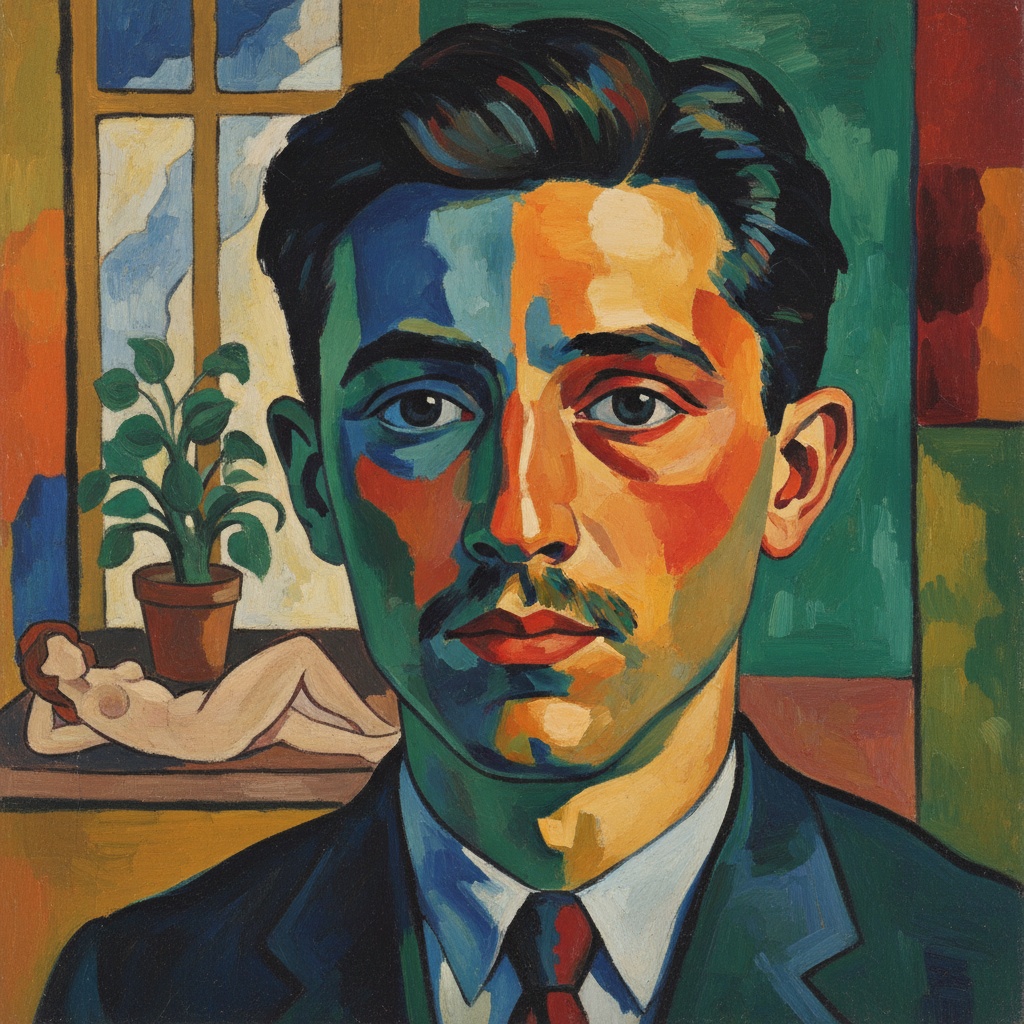
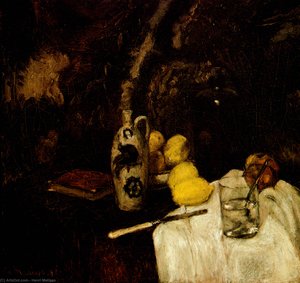
Henri Émile Benoît Matisse, a name synonymous with vibrant color and audacious form, didn't emerge fully formed as the revolutionary artist we know today. His journey began in the conservative world of 19th-century France, initially steered towards a career in law. However, a chance encounter with painting during convalescence after an appendicitis attack ignited a passion that would irrevocably alter the course of art history. Early works reveal a proficiency in traditional techniques – still lifes and landscapes executed with careful detail – yet even then, a nascent desire for expressive color hinted at the radical path he would soon forge. Influenced by masters like Jean-Baptiste-Siméon Chardin, admired for his subtle realism and luminous quality, and Nicolas Poussin, whose compositions emphasized clarity and order, Matisse laid the groundwork for his future innovations. A pivotal moment arrived with his exposure to Impressionism through John Russell in 1896, a shock that initially repelled him but ultimately unlocked a new understanding of light and color’s potential. This period wasn't merely about acquiring skill; it was about absorbing traditions before dismantling them.
The Fauvist Revolution: Breaking with Tradition
Fauvism ( FOH-viz-əm) is a style of painting and an art movement that emerged in France at the beginning of the 20th century. It was the style of les Fauves (French pronunciation: [le fov], the wild beasts), a group of modern artists whose works emph...
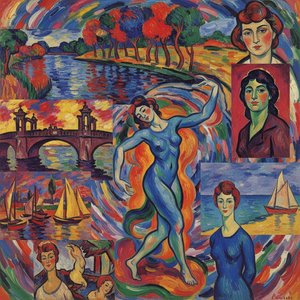
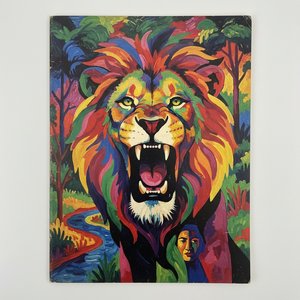
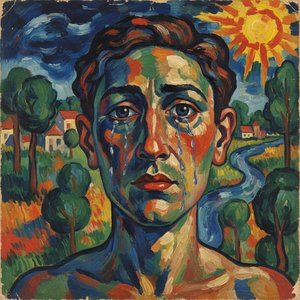
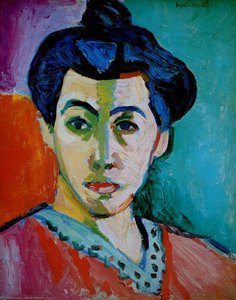
By the turn of the 20th century, Matisse found himself at the epicenter of a burgeoning artistic rebellion – Fauvism, meaning “wild beasts.” The movement exploded onto the Parisian art scene in 1905 at the Salon d’Automne, shocking audiences with its unrestrained use of color and seemingly crude brushwork. Paintings like “Woman with a Hat,” initially met with derision, became emblematic of this new aesthetic. Alongside André Derain, Maurice de Vlaminck, and others, Matisse rejected the Impressionist pursuit of capturing fleeting moments of light in favor of an intensely subjective experience of color itself. This wasn’t about depicting reality accurately; it was about conveying emotion through pure chromatic expression. The landscapes of Collioure, bathed in the intense Mediterranean sun, provided fertile ground for experimentation. The brushstrokes became bolder, more liberated, and the colors – often applied directly from the tube – were deliberately discordant, challenging conventional notions of harmony. While short-lived as a formal movement, Fauvism’s impact was profound, paving the way for subsequent explorations of abstraction and non-representational art.
Color as Subject: Exploring Matisse's Palette and Techniques
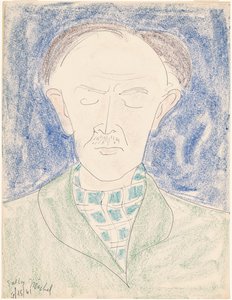 Milton Avery
Discover Milton Avery (1885-1965), a pivotal American Modernist painter celebrated for his luminous color, simplified forms & evocative landscapes. Influenced by Matisse, he paved the way for Abstract Expressionism.
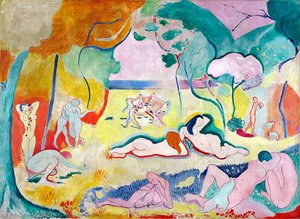
For Matisse, color wasn’t merely an element *of* painting; it *was* the subject. He famously declared, “Color exists in itself, possessing its own beauty.” This philosophy drove his relentless experimentation with palette choices and compositional strategies. He didn’t seek to replicate naturalistic hues but rather to create harmonious relationships between colors that evoked specific emotions or sensations. Complementary color pairings – orange against blue, purple against yellow – were employed strategically to generate visual vibration and energy. His Moroccan travels profoundly influenced this approach, exposing him to a rich tapestry of vibrant textiles and intense light. He meticulously studied the interplay of hues, often creating flat planes of pure color that defined space and form. Works like “The Joy of Life” exemplify this mastery, showcasing a dynamic composition where figures are interwoven with lush foliage rendered in bold, non-naturalistic colors. This wasn’t arbitrary; Matisse understood the psychological impact of color, using it to create a sense of exuberance and vitality.
Beyond Representation: Simplification, Pattern, and Harmony
As Matisse matured, his artistic vision evolved beyond simply shocking audiences with bold color. He began to explore simplification as a means of achieving greater expressive power. Forms were reduced to their essential elements, lines became more fluid, and decorative patterns played an increasingly important role in his compositions. This wasn’t about abandoning representation entirely but rather about distilling it down to its most fundamental components. “The Red Studio,” for example, is a testament to this approach – a seemingly simple interior scene transformed into a powerful meditation on color and space through the flattening of perspective and the emphasis on decorative motifs. He sought a harmonious balance between intuition and precision, carefully orchestrating each element within the canvas to create a sense of visual unity. This pursuit of harmony extended beyond painting itself; Matisse collected Islamic art and textiles, drawn to their intricate patterns and vibrant colors, which further informed his aesthetic sensibility.
Late Works & Legacy: Paper Cut-Outs and Enduring Influence
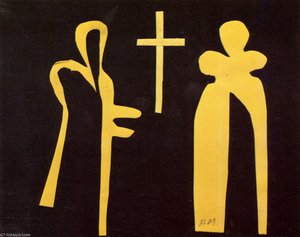
Ill health in his later years presented Matisse with a new challenge – the inability to paint as he once did. However, this limitation proved to be remarkably liberating, leading to the creation of his iconic paper cut-outs. Using brightly colored sheets of paper, he created dynamic compositions that retained the vibrancy and expressive power of his earlier work. These weren’t merely decorative exercises; they represented a culmination of his lifelong exploration of color, form, and pattern. The *Chapelle du Rosaire de Vence*, a sacred space adorned with these cut-outs, stands as a testament to his artistic vision – a harmonious synthesis of light, color, and form. Matisse's influence on subsequent generations of artists is immeasurable. From Milton Avery’s luminous landscapes to the Color Field painters who explored the expressive potential of pure color, his legacy continues to resonate today. He demonstrated that art wasn’t about replicating reality but about creating a new one – a world imbued with beauty, emotion, and vitality.
Matisse’s Impact on Subsequent Artists and Movements
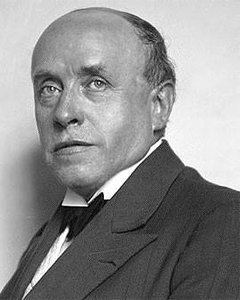 Georges Rouault
Discover Georges Rouault (1871-1958), a French Expressionist painter renowned for his emotive religious scenes, bold colors & depictions of marginalized figures. Explore his unique stained-glass inspired style.
Henri Matisse's revolutionary approach fundamentally altered the trajectory of modern art. His emphasis on color as an independent force, his simplification of form, and his pursuit of harmonious composition resonated deeply with artists seeking new modes of expression. Milton Avery, for instance, openly acknowledged Matisse’s influence, adopting a similar luminous palette and simplified forms in his evocative landscapes. The Color Field painters, such as Mark Rothko and Barnett Newman, built upon Matisse's exploration of color’s emotional power, creating large-scale abstract works that prioritized pure chromatic experience. Even artists outside the realm of painting – sculptors like Georges Rouault, with their bold colors and emotive religious scenes – were influenced by his expressive use of hue. Matisse didn’t simply create beautiful paintings; he liberated color from its traditional constraints, paving the way for a new era of artistic experimentation and self-expression. His work continues to inspire artists today, reminding us that art is not about what we see but how we feel. Explore the world of Matisse further with ArtsDot.com, where you can discover high-quality reproductions of his masterpieces and delve deeper into the history of modern art.