The Genesis of Landscape: From Symbolic Representation to Observational Detail
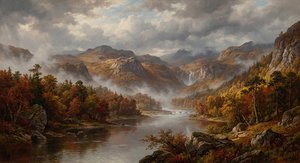
Landscape painting, also known as landscape art, is the depiction in painting of natural scenery such as mountains, valleys, rivers, trees, and forests, especially where the main subject is a wide view—with its elements arranged into a coherent compo...
For millennia, the depiction of nature within art remained largely subordinate to human narratives – a backdrop for mythological events, religious scenes, or portraits of power. Early landscapes weren’t about *the* landscape itself; they were about what happened in it. Consider the ancient Roman frescoes preserved in Pompeii, idyllic but ultimately serving as settings for figures and stories. Or the detailed backgrounds within early Renaissance paintings, meticulously rendered yet existing to enhance the central subject matter. The concept of a landscape as an independent entity worthy of artistic exploration was slow to emerge. The earliest stirrings can be found in Chinese ink painting traditions – shan shui, or “mountain-water” – where vast vistas were imbued with philosophical and spiritual meaning, representing harmony and the Dao. However, this tradition developed along a distinctly different path than that of Western art, prioritizing abstraction and suggestion over direct representation. The crucial shift towards recognizing landscape as a subject in its own right began to take hold during the Renaissance, fueled by advancements in perspective and a growing interest in naturalism. Artists like Leonardo da Vinci, while primarily known for portraiture, demonstrated an acute observational skill that laid the groundwork for future generations to focus on the intricacies of the natural world.
Romantic Visions: Nature as Sublime & Spiritual Force
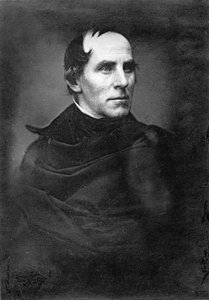
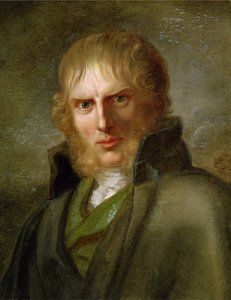 Caspar David Friedrich
Caspar David Friedrich (1774-1840): German Romantic painter of evocative landscapes & symbolic art exploring nature, spirituality & the sublime. Pioneer of the movement.
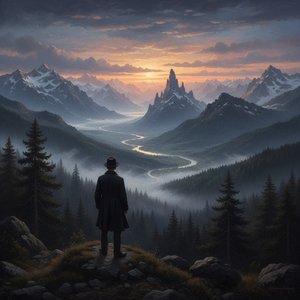
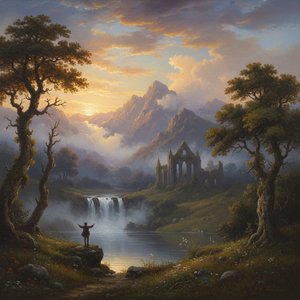
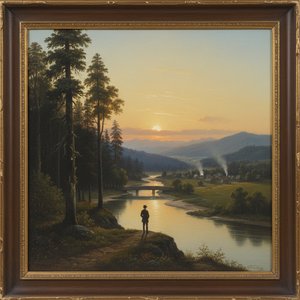
The 18th and early 19th centuries witnessed a seismic shift in artistic perception with the rise of Romanticism. Rejecting the Enlightenment’s emphasis on reason, Romantics turned inward, prioritizing emotion, intuition, and the power of individual experience. And nowhere was this more profoundly expressed than in their depictions of nature. Artists no longer sought to simply *represent* landscapes; they aimed to evoke a feeling – awe, terror, melancholy, or spiritual transcendence. Caspar David Friedrich, arguably the most iconic Romantic landscape painter, masterfully captured this shift. His works, such as “The Solitary Tree” and “Easter Morning,” are not merely depictions of trees or dawn; they are meditations on solitude, faith, and the overwhelming power of the natural world. Friedrich’s use of atmospheric perspective – the subtle blurring of distant forms to create a sense of depth – draws the viewer into the scene, fostering an intimate connection with the landscape. The figures within his paintings are often small and contemplative, dwarfed by the immensity of nature, emphasizing humanity's insignificance in the face of the sublime. This concept of the sublime—the experience of awe mixed with terror—became central to Romantic aesthetics. Other key figures like William Turner explored similar themes, albeit through a more dramatic and expressive use of color and light.
The Hudson River School & American Transcendentalism: Painting the New World
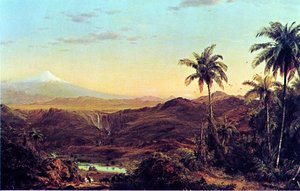
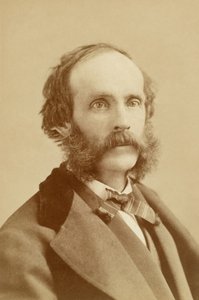 Frederic Edwin Church
Discover Frederic Edwin Church (1826-1900), a master of the Hudson River School! His breathtaking landscapes, detailed realism & dramatic light capture the spirit of 19th-century America.
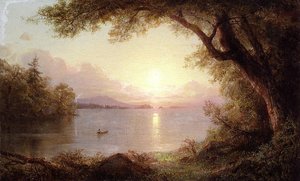
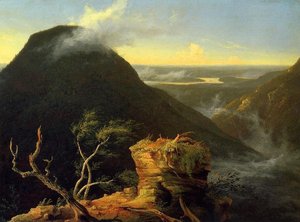
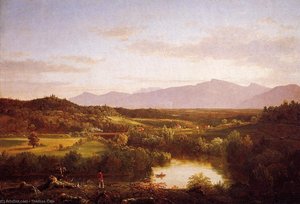
Across the Atlantic, a distinctly American strain of Romantic landscape painting emerged with the Hudson River School. Artists such as Frederic Edwin Church and Thomas Cole were captivated by the vastness and untamed beauty of the North American wilderness. Cole’s “Tree in the Catskills” exemplifies this fascination – a stunning portrayal of nature's grandeur, imbued with both beauty and a sense of melancholy. The Hudson River School painters weren’t simply documenting scenery; they were creating national icons, celebrating the unique character of the American landscape. Their work was deeply intertwined with the Transcendentalist movement, which emphasized the inherent goodness of humanity and nature, and the importance of individual intuition. Like Friedrich, these artists often included small figures within their landscapes to emphasize scale and evoke a sense of wonder. However, they also focused on meticulous detail, capturing the specific flora and fauna of the American wilderness with remarkable accuracy. Church’s paintings, in particular, are known for their dramatic light effects and breathtaking realism.
Beyond Realism: Impressionism and Post-Impressionism's Embrace of Natural Light & Color
 Nature's Canvas: 10 Masterpieces & Art for Your Home | ArtsDot
Explore 10 breathtaking artworks celebrating nature's beauty! From Monet’s water lilies to Van Gogh’s sunflowers, discover the stories behind iconic landscape paintings & find museum-quality art reproductions for your home at ArtsDot.com.
As art moved into the latter half of the 19th century, the focus shifted once again. While rejecting the overt symbolism of Romanticism, artists like Monet, Van Gogh, and Cézanne continued to be deeply influenced by nature. The Impressionists sought to capture fleeting moments in time – the play of light on water, the shifting colors of a field of flowers. Monet’s water lilies are perhaps the most iconic example of this pursuit, capturing not just the appearance of nature but also the *experience* of being immersed within it. Van Gogh's landscapes, while still rooted in observation, were imbued with intense emotion and expressive brushwork. His sunflowers aren’t simply depictions of flowers; they are vibrant expressions of his inner turmoil and passion. Post-Impressionist artists like Cézanne explored the underlying structure of nature, breaking down forms into geometric shapes and challenging traditional notions of perspective. While their approaches differed significantly, both Impressionism and Post-Impressionism demonstrated a continued fascination with capturing the beauty and complexity of the natural world.
Contemporary Dialogues with Nature: Art Reflecting Environmental Concerns
Today, contemporary artists continue to engage with nature in profound and often challenging ways. However, their perspectives are shaped by a growing awareness of environmental issues – climate change, deforestation, pollution, and species extinction. Many artists use their work to raise awareness about these concerns, prompting viewers to reconsider their relationship with the natural world. Some artists create immersive installations that simulate natural environments, while others utilize found objects and recycled materials to highlight the impact of human activity on the planet. The focus has shifted from celebrating nature’s beauty to confronting its fragility. This contemporary dialogue often incorporates elements of activism and social commentary, challenging viewers to consider their own role in protecting the environment. Artists are exploring themes of loss, resilience, and the interconnectedness of all living things.
Cultivating Your Own Eden: Bringing Nature’s Beauty Home Through Art
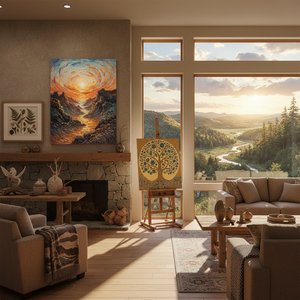
The enduring appeal of nature in art lies in its ability to evoke a sense of peace, wonder, and connection. Whether you are drawn to the sublime landscapes of Friedrich, the American vistas of Church, or the vibrant colors of Van Gogh, bringing these images into your home can transform your living space into a personal sanctuary. At ArtsDot.com, we offer museum-quality reproductions of iconic artworks, allowing you to experience the beauty and power of nature firsthand. From handmade oil paintings meticulously crafted by skilled artists to stunning giclée prints on canvas, we provide a range of options to suit your taste and budget. Our team of art experts is also available for free consultations, offering personalized guidance on style advice, size recommendations, and framing options. Explore our extensive collection today and discover the perfect artwork to cultivate your own Eden – a space where you can connect with nature’s beauty and find inspiration in its enduring power.