The Rise of German Romanticism: A Cultural Shift
German Romanticism (German: Deutsche Romantik) was the dominant intellectual movement of German-speaking countries in the late 18th and early 19th centuries, influencing philosophy, aesthetics, literature, and criticism. Compared to English Romantici...
The late 18th and early 19th centuries witnessed a seismic shift in European thought, a reaction against the Enlightenment’s emphasis on reason and scientific rationalism. This burgeoning movement, known as Romanticism, prioritized emotion, individualism, and the sublime power of nature. While England and France each developed distinct strains of this aesthetic philosophy, it was in Germany that Romanticism truly took root, blossoming into a dominant intellectual force that profoundly impacted art, literature, music, and even political discourse. Unlike its English counterpart’s focus on pastoral beauty, German Romanticism grappled with the intangible—the spiritual, the mystical, and the often-turbulent inner life of the individual. This was a period marked by disillusionment with the increasingly materialistic world, a yearning for authenticity, and a rediscovery of the past, particularly the medieval era which was perceived as a time of greater cultural unity and religious fervor.
Early German Romantics like Wilhelm Heinrich Wackenroder and Friedrich Schleiermacher sought to synthesize art, philosophy, and science, believing that true understanding lay in experiencing the world holistically. This quest for integration led them to explore folklore, mythology, and the power of imagination as pathways to deeper truths. However, this initial phase, often referred to as *Frühromantik* or Jena Romanticism, soon gave way to a more complex exploration of tension—the conflict between the everyday and the irrational, the conscious and the subconscious. The political landscape also played a crucial role; the Napoleonic invasions and subsequent fragmentation of Germany fueled a growing sense of national identity and a desire for cultural self-determination.
Friedrich's Early Life & Influences: From Grief to Artistic Calling
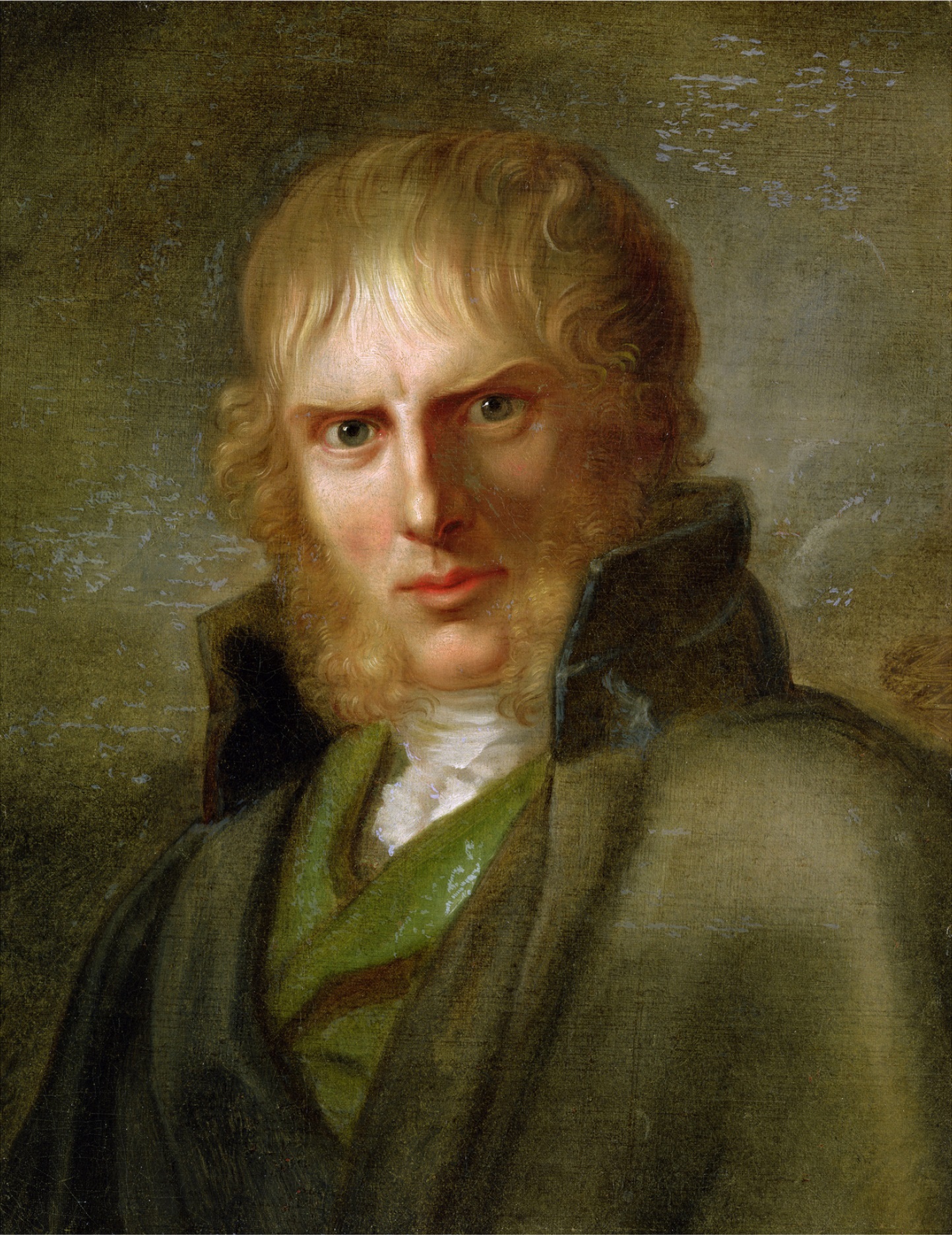 Wikipedia: Caspar David Friedrich
Caspar David Friedrich (German: [ˌkaspaʁ ˌdaːvɪt ˈfʁiːdʁɪç] ; 5 September 1774 – 7 May 1840) was a German Romantic landscape painter, generally considered the most important German artist of his generation, whose often symbolic, and anti-classical wo...
Caspar David Friedrich was born in 1774 in Greifswald, a coastal town in Swedish Pomerania. His upbringing was steeped in the strict Lutheranism of his father, Adolf Gottlieb Friedrich, a candle-maker and soap boiler. While accounts vary regarding the family’s financial circumstances, it is clear that Friedrich experienced loss early in life—the death of his mother at age seven, followed by the passing of two sisters. However, the most formative tragedy occurred in 1787 when his brother Johann Christoffer drowned after falling through the ice of a frozen lake, an event many scholars believe profoundly shaped Friedrich’s artistic sensibility. This early exposure to mortality and the fragility of life instilled within him a deep sense of melancholy and a preoccupation with themes of death, transience, and spiritual longing.
Friedrich's formal art education began in 1790 under Johann Gottfried Quistorp at the University of Greifswald. Quistorp encouraged sketching from life, fostering Friedrich’s keen observation skills. Through Quistorp, he encountered the work of Adam Elsheimer, a 17th-century German artist known for his religious subjects set within dramatic landscapes and nocturnal scenes. This proved to be a pivotal influence, shaping Friedrich's early style. He later studied in Copenhagen (1794–1798), where he absorbed the techniques of Dutch landscape painting, but it was his exposure to the theologian Ludwig Gotthard Kosegarten that truly solidified his artistic direction. Kosegarten’s belief that nature was a revelation of God resonated deeply with Friedrich, providing a philosophical framework for his future work.
Decoding the Symbolism: Key Themes in Friedrich’s Landscapes
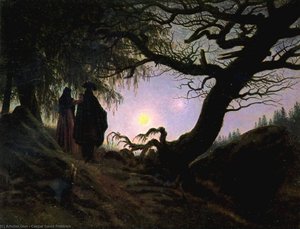
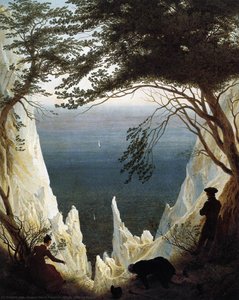
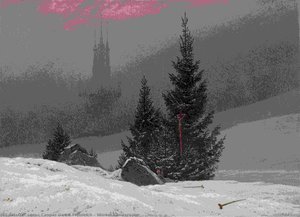
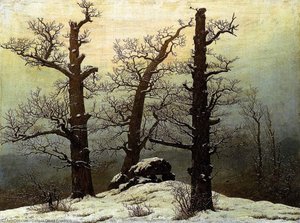
Friedrich's paintings are rarely straightforward depictions of natural scenes; they are imbued with profound symbolism and emotional resonance. He wasn’t interested in merely replicating what he saw, but rather in conveying a subjective experience—a feeling, a spiritual state, or a meditation on the human condition. Recurring motifs such as solitary figures silhouetted against vast landscapes, barren trees, Gothic ruins, morning mists, and dramatic skies all serve to evoke a sense of awe, melancholy, and the sublime. The mountains, for example, often represent aspiration and transcendence, while forests symbolize mystery and the untamed power of nature.
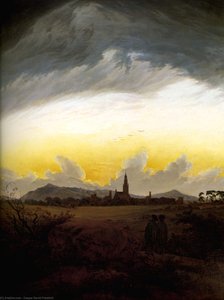
The use of light is particularly significant in Friedrich’s work. Sunrises and sunsets are not simply aesthetic effects but rather metaphors for spiritual awakening or the passage of time. The presence—or absence—of religious symbols, such as crosses or church spires, further complicates the interpretation of his paintings. While he often employed Christian iconography, it was rarely presented in a conventional manner. Instead, these elements were integrated into the landscape itself, suggesting that God’s presence is not confined to traditional religious spaces but rather permeates all of creation. Art historian Christopher John Murray aptly described how Friedrich's figures, diminished in scale amidst expansive landscapes, direct “the viewer’s gaze towards their metaphysical dimension.”
The 'Rückenfigur' and the Contemplative Viewer: An Exploration of Perspective
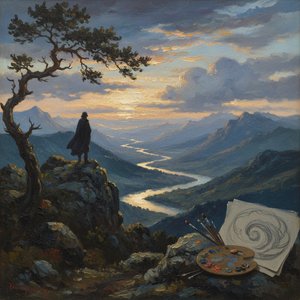
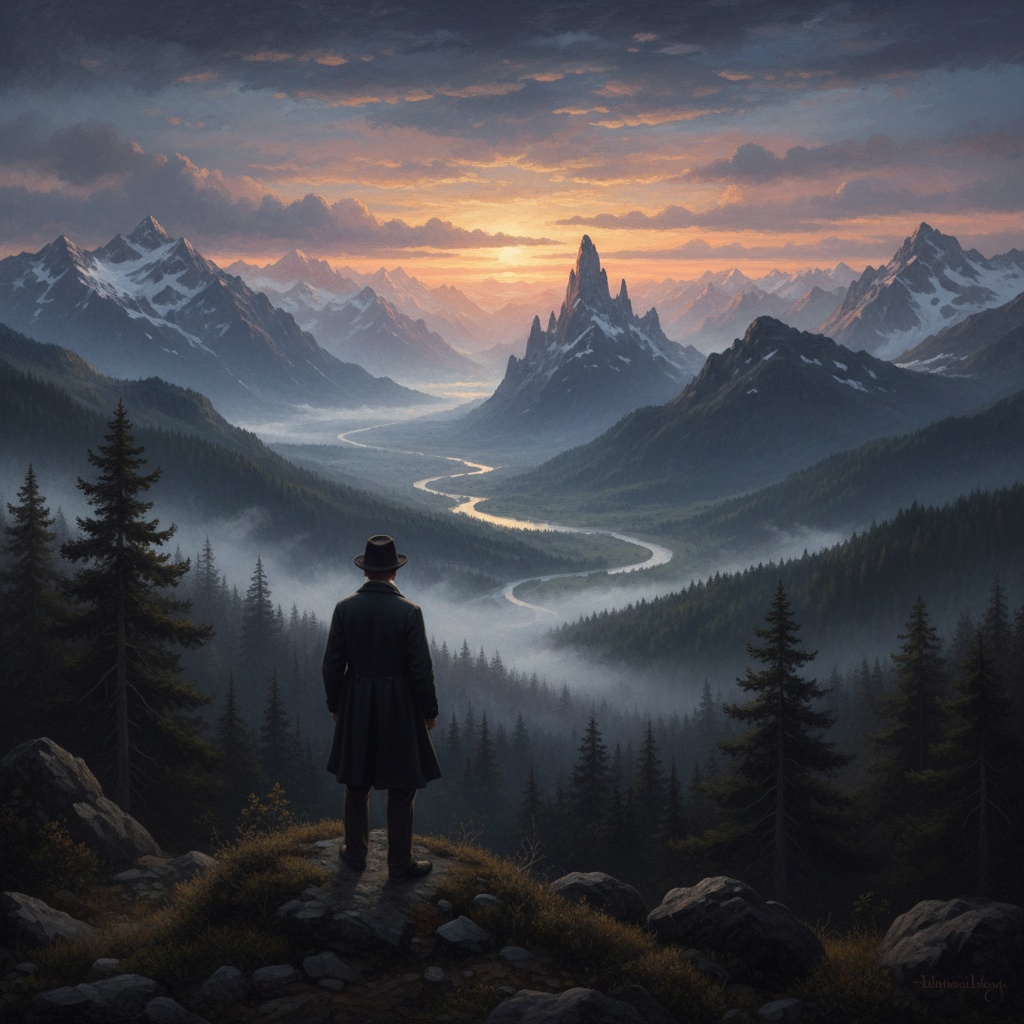
Perhaps the most iconic element of Friedrich’s oeuvre is the *Rückenfigur*—a figure seen from behind, gazing out at a vast landscape. This motif appears repeatedly throughout his career, inviting the viewer to identify with the solitary wanderer and share in their contemplative experience. The *Rückenfigur* isn't simply an observer; they are a conduit, mediating between the viewer and the immensity of nature. By obscuring the figure’s face, Friedrich encourages us to project our own emotions and thoughts onto them, transforming the painting into a mirror reflecting our inner selves.
The perspective employed in these works is also crucial. Friedrich often used a high horizon line and deep spatial recession, creating a sense of distance and isolation. This technique not only emphasizes the scale of nature but also diminishes the importance of human presence within it. The viewer is positioned as an outsider, looking *into* the landscape rather than being directly immersed in it. This deliberate distancing fosters a feeling of reverence and encourages contemplation—a quiet introspection on our place in the universe. It’s not about conquering or controlling nature, but about acknowledging its power and accepting our own limitations.
From Renown to Obscurity & Rediscovery: The Evolving Legacy of Friedrich
Friedrich achieved considerable renown early in his career, with contemporaries like David d'Angers praising him for discovering “the tragedy of landscape.” However, his work fell from favor during the latter part of his life. As Germany moved towards modernization in the 19th century, a new sense of urgency and realism characterized its art, and Friedrich’s contemplative depictions of stillness came to be seen as products of a bygone age. He died in relative obscurity in 1840, largely forgotten by the artistic establishment.
The early 20th century brought about a remarkable rediscovery of his work, beginning with an exhibition of thirty-two paintings in Berlin in 1906. His art resonated deeply with Expressionist artists who appreciated its emotional intensity and subjective vision. Later, Surrealists and Existentialists found inspiration in Friedrich’s exploration of the subconscious and the human condition. However, the rise of Nazism in the 1930s saw a resurgence in his popularity for problematic reasons—his paintings were often interpreted as promoting German nationalism. Following World War II, this association led to a decline in his reputation once again, but ultimately, Friedrich’s enduring artistic merit prevailed. Today, he is widely regarded as the most important German artist of his generation and a pivotal figure in the history of Romanticism.
Friedrich's Enduring Influence on Modern Art & Beyond
Caspar David Friedrich’s impact extends far beyond the confines of 19th-century art. His subtle color palettes, emphasis on light, and exploration of psychological themes paved the way for numerous artistic movements in the modern era. The visual minimalism of his paintings—often confusing to contemporary audiences—influenced artists seeking to convey profound ideas with simplicity and restraint. His use of dramatic perspectives and misty landscapes continues to inspire photographers, filmmakers, and digital artists today.
Moreover, Friedrich’s focus on the individual's relationship with nature remains remarkably relevant in our increasingly disconnected world. In an age dominated by technology and urban sprawl, his paintings serve as a powerful reminder of the beauty, mystery, and spiritual power that can be found in the natural realm. ArtsDot.com offers high-quality reproductions of Friedrich’s masterpieces, allowing you to experience the sublime landscapes and contemplative themes firsthand. Explore our collection today and discover the enduring legacy of this iconic German artist—a testament to the transformative power of art and the profound connection between humanity and nature. You can find his most famous paintings like Wanderer Above the Sea of Fog, Chalk Cliffs on Rügen or The Cross in the Mountains (The Tetschen Altar).