The Dawn of Disruption: Manet & the Seeds of Modernism
The story of modern art isn’t a sudden revolution, but rather a gradual fracturing—a series of deliberate cracks appearing in the edifice of tradition. While pinpointing an exact genesis is impossible, many trace its roots back to Édouard Manet, a figure who, beginning in the 1860s, didn't merely depict scenes of modern life, but fundamentally altered *how* art was made and perceived. Manet’s audacity lay not in what he painted—often everyday subjects like picnics or portraits—but in his rejection of established academic conventions. He abandoned traditional perspective and modeling, choosing instead to emphasize the flatness of the canvas itself. This wasn't a lack of skill; it was a conscious decision to draw attention to the artifice of representation, to remind viewers they were looking at a constructed image, not a window onto reality. His work, like Le Déjeuner sur l’herbe and Olympia, scandalized Salon audiences precisely because they dared to acknowledge their own materiality, their status as objects created by an artist's hand. This initial disruption paved the way for subsequent generations to question not just *what* was represented, but the very nature of representation itself.
Abstraction’s Ascent: From Cubism to Kandinsky’s Spiritual Forms
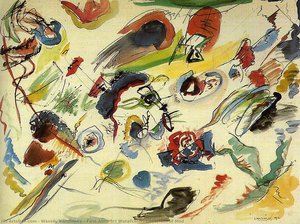
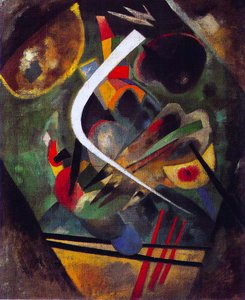
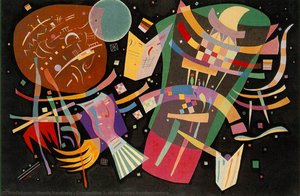
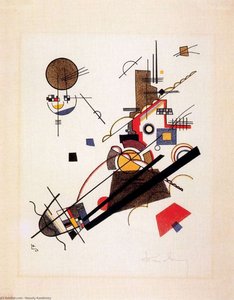
The early 20th century witnessed an explosion of experimentation as artists sought to move beyond representational accuracy. Cubism, pioneered by Pablo Picasso and Georges Braque, was a particularly radical departure. By fracturing objects into geometric forms and presenting multiple perspectives simultaneously, Cubists challenged the single viewpoint that had dominated Western art for centuries. This wasn’t simply about depicting things differently; it was an attempt to capture the underlying structure of reality, to represent the totality of experience rather than a fleeting moment. However, abstraction didn't stop at representing objects in new ways—it eventually sought to eliminate representation altogether. Wassily Kandinsky, a key figure in this development, believed that art should be driven by inner necessity, by spiritual and emotional impulses. His paintings, characterized by vibrant colors and dynamic compositions, aimed to evoke feelings directly, bypassing the need for recognizable forms. Kandinsky’s theoretical writings, particularly Concerning the Spiritual in Art, articulated a belief in the power of color and form to communicate universal truths, establishing a link between art and the realm of the subconscious.
Urban Visions: Capturing the Energy of the 20th Century City
The rapid industrialization and urbanization of the late 19th and early 20th centuries profoundly impacted artistic sensibilities. The city became a symbol of both progress and alienation, a chaotic landscape teeming with energy and anonymity. Artists responded to this new reality in diverse ways. Futurism, originating in Italy, celebrated the dynamism of modern technology and the speed of urban life. Futurist paintings often depicted machines, movement, and violence, reflecting a fascination with the forces shaping the modern world. David Burliuk’s “New York,” for example, embodies this spirit—a dynamic oil painting blending urban chaos and surrealism, rendered in intense colors and with a palpable impasto texture. It's not merely a depiction of New York; it’s an attempt to capture its very pulse, its relentless energy. However, other artists adopted a more critical stance towards the city, focusing on its darker aspects—its poverty, isolation, and social inequalities. The urban landscape became a canvas for exploring themes of modernity, alienation, and the human condition.
Analytical Realism and Beyond: Pavel Filonov’s Unique Vision
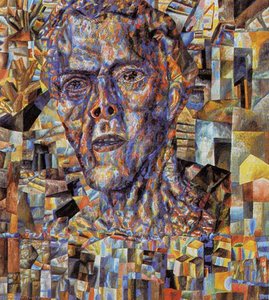
Within the Russian avant-garde, Pavel Filonov developed a profoundly unique approach known as Analytical Realism. Rejecting both representational art and traditional abstraction, Filonov sought to analyze the very essence of objects and phenomena, breaking them down into their constituent elements—what he called “color formulas.” His paintings are characterized by intricate patterns, swirling forms, and a remarkable attention to detail. Filonov believed that every object possessed an inherent “inner life,” which could be revealed through meticulous analysis and reconstruction. This wasn’t simply about visual representation; it was a philosophical quest to understand the fundamental nature of reality. His work often appears abstract, but it is rooted in a deep observation of the natural world and a desire to capture its underlying energy. Filonov's influence, though initially limited due to his unconventional approach, has been increasingly recognized for its originality and depth.
Formism & Expressionist Portraits: Henryk Gotlib’s Impact on British Art
Henryk Gotlib, a Polish painter who significantly impacted modern British art, stands as a compelling example of the cross-currents of artistic influence in the early 20th century. As a leading Formist—a movement emphasizing simplified forms and bold colors—Gotlib drew inspiration from Rembrandt’s mastery of light and shadow while simultaneously embracing the emotional intensity of Expressionism. His portraits, nudes, and evocative depictions of Poland are characterized by powerful figurative work and a distinctive use of color. Gotlib's time in Britain during the interwar period proved pivotal, introducing new ideas and techniques to the British art scene. He wasn’t simply replicating existing styles; he was synthesizing them, creating a unique visual language that resonated with British artists seeking alternatives to traditional academic painting. His work offered a bridge between European avant-garde movements and the established artistic traditions of Britain.
The Hungarian Avant-Garde: Béla Kádár and the Fusion of Styles
Hungary in the early 20th century was a hotbed of artistic innovation, with artists like Béla Kádár at the forefront of the avant-garde. Kádár’s paintings are characterized by a vibrant fusion of Expressionism, Cubism, and Neo-Primitivism. He blended bold colors, dynamic compositions, and simplified forms to create evocative scenes of village life and abstract works that explored themes of identity and modernity. Kádár wasn't confined to a single style; he embraced experimentation, constantly pushing the boundaries of artistic expression. His work reflects a deep engagement with Hungarian folk traditions as well as the broader currents of European art. Like many artists of his generation, Kádár sought to create an art that was both rooted in local culture and connected to the international avant-garde movement. He represents a fascinating example of how national identity and artistic innovation could coexist.