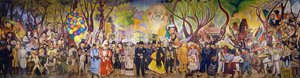
The Dawn of a Visual Revolution: Historical Context of Post-Revolutionary Mexico
The air in post-revolutionary Mexico was thick with the scent of reconstruction and the heavy weight of a burgeoning national identity. Following years of tumultuous conflict, the nation found itself at a crossroads, seeking to heal its fractured social fabric and forge a consciousness that transcended the colonial shadows of its past. This era was not merely about political stabilization; it was an era of profound cultural reclamation. The revolution had promised land, liberty, and justice, but it also demanded a new way of seeing—a visual language that could articulate the struggles of the peasantry, the dignity of the laborer, and the deep-rooted heritage of the indigenous soul. As the dust settled on the battlefield, the canvas became the new frontier for a nation attempting to define itself through the power of imagery and the reclamation of its own history.The Titans of the Fresco: Exploring the Artistry of Rivera, Orozco, and Siqueiros
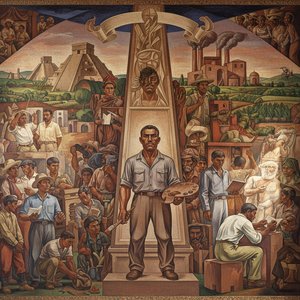
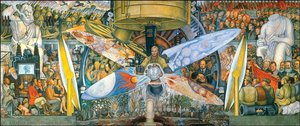
To understand this movement, one must look toward the monumental figures who breathed life into stone and plaster. Diego Rivera, perhaps the most globally recognized voice of the era, utilized a Social Realist style that blended vibrant, almost celebratory palettes with complex historical narratives. In masterpieces such as Man at the Crossroads, he wove together the threads of technology, class struggle, and human destiny, creating a tapestry of existence that felt both epic and intimate.Contrasting Rivera’s often rhythmic compositions was the dramatic intensity of José Clemente Orozco. His work, such as the hauntingly powerful Panel 3: Ancient Human Sacrifice, brought a darker, more ritualistic energy to the movement, focusing on themes of human suffering and the visceral reality of cultural conflict. Alongside them stood David Alfaro Siqueiros, a revolutionary in both politics and technique. Siqueiros challenged traditional boundaries, using innovative materials and aggressive, sweeping brushstrokes to ignite social change, ensuring that the art itself felt as dynamic and unsettled as the society it depicted. Together, these titans transformed the very architecture of Mexico into a living, breathing chronicle of resistance.
A Language of the People: Symbolism, Indigenous Identity, and Social Allegory
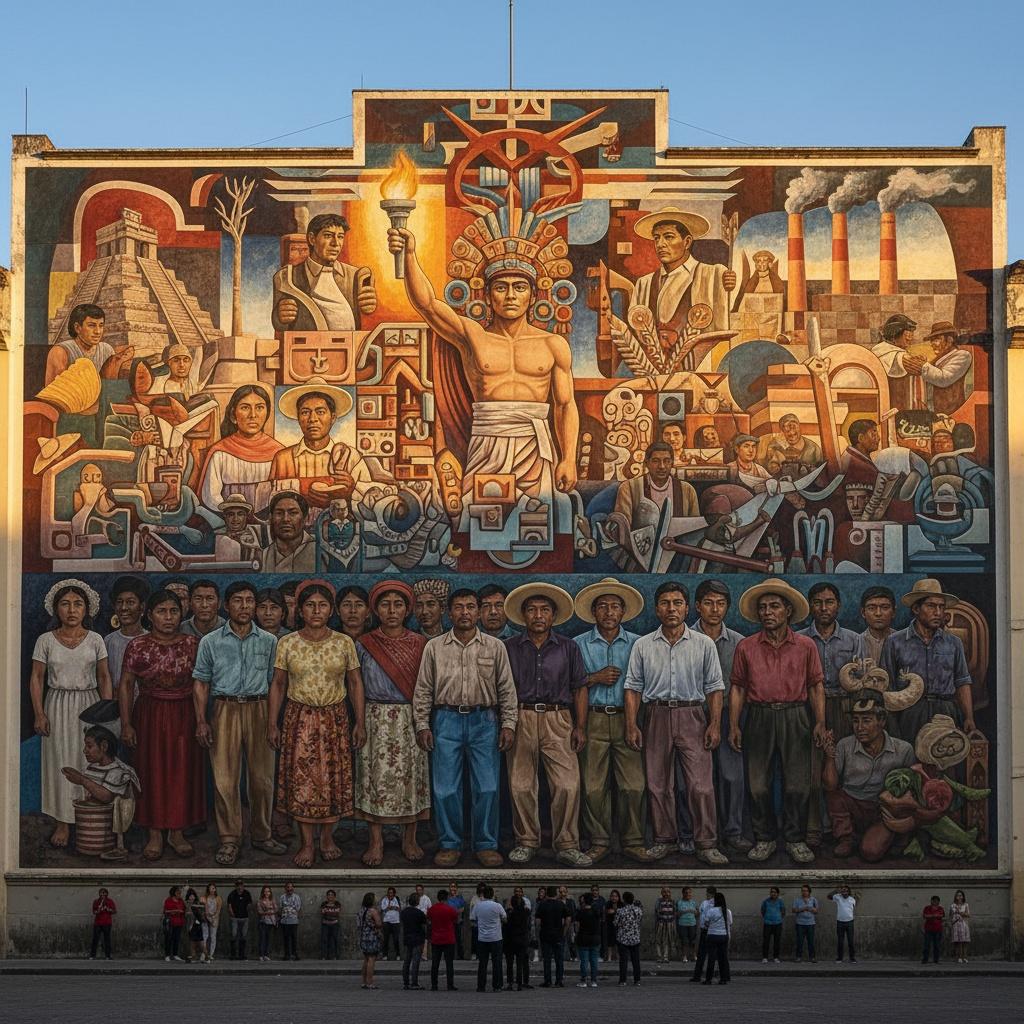
The true genius of Mexican Muralism lay in its ability to communicate with those whom history had often silenced. The movement functioned as a profound social allegory, where every element of the fresco carried a weight of meaning accessible even to the illiterate. Indigenous identity was not merely a subject; it was the very foundation of the visual vocabulary. The use of maize, volcanic earth, and ancient ritualistic symbols served to reconnect the modern Mexican citizen with their ancestral roots.Symbolism acted as a bridge between the past and the present. The depiction of the laborer’s calloused hands, the flowing blood of sacrifice, and the stark imagery of class struggle created a shared lexicon of resistance. By weaving these elements into the public consciousness, the muralists ensured that the struggles for land and justice were etched permanently into the visual landscape, making the art an inseparable part of the people's ongoing fight for dignity.
Democratizing the Canvas: The Power of Public Space and Monumental Scale
One of the most radical departures from traditional European art was the movement’s rejection of the museum as the sole arbiter of value. The muralists sought to democratize the canvas by moving art into the streets, the government buildings, the schools, and the plazas. By utilizing a monumental scale, they forced an encounter between the viewer and the artwork, making it impossible to ignore the social truths presented on the walls of public institutions.This shift in space transformed the city itself into an open-air gallery. The sheer size of these works demanded respect and attention, turning every corner of the urban landscape into a site of education and political engagement. This democratization ensured that art was no longer a luxury for the elite but a common good, a public testament to the collective will of a nation striving toward a more equitable future.
Enduring Echoes: The Global Legacy and Contemporary Resonance of Muralism
The echoes of Mexican Muralism continue to resonate far beyond the borders of Mexico. Its influence can be seen in the Chicano art movements of the United States, in the street art of modern urban centers, and in any movement that utilizes public space to challenge authority and celebrate identity. The legacy of Rivera, Orozco, and Siqueiros is not found merely in museum archives, but in the enduring spirit of art as a tool for social transformation.At ArtsDot.com, we hold a profound reverence for this period of human creativity. We strive to preserve the grandeur of these historical masterpieces through our meticulous hand-painted reproductions, ensuring that the textures, colors, and powerful messages of the muralists remain accessible to modern collectors and art enthusiasts worldwide. Through our dedication to quality and authenticity, we help keep the flame of this visual revolution burning for generations to come.