


The Rise of Realism: Challenging Artistic Conventions
Realism was an artistic movement that emerged in France in the 1840s. Realists rejected Romanticism, which had dominated French literature and art since the early 19th century. The artist Gustave Courbet, the original proponent of Realism, sought to ...
For centuries, art largely concerned itself with the lofty—mythology, religion, portraiture of the elite. But a seismic shift began to rumble in the mid-19th century, one that would irrevocably alter the course of artistic expression: the emergence of Realism. Rejecting the idealized worlds of Romanticism and Neoclassicism, artists turned their gaze towards the tangible realities of contemporary life. This wasn’t merely a change in subject matter; it was a fundamental re-evaluation of art's purpose. Gustave Courbet, often hailed as the father of Realism, boldly declared his intention to “record the customs, ideas, and appearances of my time.” He sought not to depict an imagined past or a fantastical future, but the world *as it was*, with all its imperfections and unvarnished truths. This commitment extended beyond subject matter; Courbet’s monumental scale—traditionally reserved for historical or religious scenes—applied to depictions of everyday laborers like those in his controversial “The Stonebreakers,” immediately signaled a radical departure from established norms.
Prior to Realism, genre painting existed, but often served as a backdrop or contained moralizing undertones. Realism stripped away these layers, presenting life without judgment, allowing viewers to confront the social and economic realities of their time. The rejection wasn’t immediate; many critics found the lack of embellishment vulgar, even offensive. However, this very honesty resonated with an increasingly urbanized population grappling with rapid industrialization and societal change.
Parisian Streets: Capturing Modern Life in the 19th Century
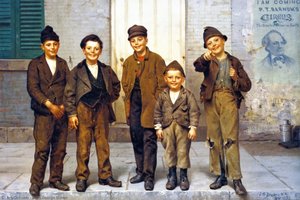 The Passing Show
Explore John George Brown’s ‘The Passing Show,’ a realistic 1877 oil painting capturing urban life & circus spectacle. Admire its detailed style, muted palette, & social commentary – perfect for art enthusiasts.
The bustling streets of Paris became a focal point for Realist painters. Artists like John George Brown weren't interested in grand historical narratives, but rather in the fleeting moments of everyday existence—a passing circus show, children at play, or individuals navigating the complexities of urban life. “The Passing Show” (1877) exemplifies this fascination; its muted palette and detailed style capture not just the spectacle itself, but the atmosphere of a city teeming with activity. Brown’s work is characterized by a keen observation of human behavior and a subtle social commentary. He wasn't simply documenting scenes; he was offering glimpses into the lives of ordinary people, their struggles, and their joys.
Thomas Benjamin Kennington’s “St. Martin in the Fields” offers another compelling example. The vibrant depiction of a Victorian London street scene isn't merely picturesque; it’s a snapshot of a specific time and place, filled with atmospheric detail and a palpable sense of realism. The careful rendering of light and shadow, combined with the artist’s attention to individual character, creates a captivating portrait of urban life. These artists weren't just painters; they were chroniclers of their age.
American Genre Painting: Domesticity and Everyday Scenes
 John George Brown: Capturing American Life & Sentiment in 19th-Century Genre Painting
Explore the captivating genre paintings of John George Brown, celebrated for his realistic depictions of 19th-century American life. Discover his legacy & find museum-quality reproductions at ArtsDot.
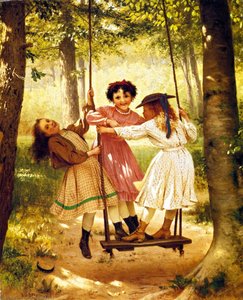
Across the Atlantic, American genre painting flourished in the 19th century, often focusing on domestic interiors and scenes of family life. While sharing a commitment to realism with their European counterparts, American artists developed a distinct sensibility, emphasizing sentimentality and moral values. John George Brown’s influence extended here as well; his ability to capture the nuances of human emotion resonated deeply with an American audience. Artists sought to portray idealized versions of middle-class life, often depicting scenes of warmth, comfort, and familial harmony.
However, even within this seemingly idyllic framework, subtle social commentaries could be found. The depiction of everyday tasks—a woman writing a letter, children playing games—often reflected the changing roles of women and the growing importance of family in American society. These paintings weren't just decorative; they were reflections of a nation grappling with its identity and values.
Beyond France: Realist Depictions Across Europe and Beyond
The seeds of Realism spread beyond France, taking root in various artistic communities across Europe and eventually reaching the Americas. In Germany, artists like Adolph Menzel embraced realism, focusing on depictions of industrial life and social inequality. While sharing a common commitment to portraying contemporary reality, each country developed its own unique interpretation of the movement. The influence of local traditions and cultural contexts shaped the style and subject matter of Realist paintings.
Even in countries with less established artistic academies, the principles of realism resonated with artists seeking to break away from traditional conventions. The desire to depict the world as it was—without embellishment or idealization—proved to be a powerful force for change.
Social Commentary & The Urban Landscape: A Closer Look
Beneath the surface of seemingly straightforward depictions of everyday life, many Realist paintings contained subtle yet potent social commentaries. Artists like Paul Moreau’s “The Cunning Thief”, while employing an Impressionistic style, captures the gritty underbelly of urban existence—the poverty, desperation, and crime that often went unnoticed by polite society. These works weren't simply aesthetic exercises; they were attempts to raise awareness about social issues and challenge viewers to confront uncomfortable truths.
The urban landscape itself became a character in these paintings. The crowded streets, dilapidated buildings, and bustling marketplaces served as backdrops for stories of human struggle and resilience. Artists didn’t shy away from depicting the less glamorous aspects of city life—the poverty, pollution, and social inequality that often lurked beneath the surface. This commitment to portraying reality, however unpleasant, was a defining characteristic of the Realist movement.
Collecting Street Scene Art: Finding Your Piece of History
Today, collecting street scene art offers a unique opportunity to connect with the past and appreciate the artistry of those who dared to challenge artistic conventions. Whether you’re drawn to the vibrant depictions of Parisian life or the subtle social commentaries of American genre paintings, there's a piece out there for every collector. ArtsDot offers museum-quality reproductions of iconic works from this period, allowing you to bring the beauty and historical significance of Realism into your home.
When considering a purchase, pay attention to the artist’s style, subject matter, and technique. Look for paintings that resonate with you emotionally and offer a glimpse into the lives of those who came before us. With its commitment to authenticity and quality, ArtsDot provides access to a world of artistic treasures, allowing you to own a piece of history and celebrate the enduring legacy of Realism.