The Enduring Legacy: Ink Sketching Across Cultures
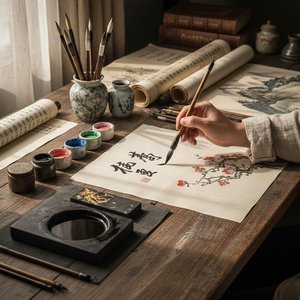
Calligraphy (from Ancient Greek καλλιγραφία (kalligraphía) 'beautiful writing') is a visual art related to writing. It involves the design and execution of lettering with a pen, ink brush, or other writing instruments. Contemporary calligraphic prac...
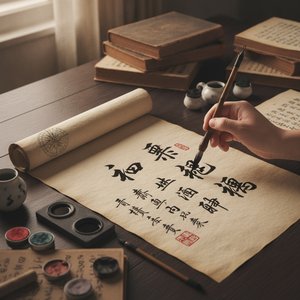
Ink, as a medium, possesses a unique resonance—a directness of expression that transcends mere representation. From the delicate brushstrokes of classical Chinese shūfǎ to the bold lines of Islamic calligraphy and the nuanced portraits emerging from Japanese traditions, ink has served not simply as a tool for recording visual information but as a conduit for conveying emotion, philosophical thought, and spiritual understanding. The very act of applying ink to paper demands a certain intentionality; unlike pencil’s forgiving nature, ink commits immediately, fostering a dialogue between artist and surface—a dance of control and surrender. This inherent quality has elevated ink sketching beyond craft into the realm of high art in many cultures. Consider the meticulous practice of Mao Gong ding inscriptions in ancient China, where each character wasn't merely a symbol but a testament to power, lineage, and artistic skill. Similarly, Japanese calligraphy, or shodō, isn’t simply beautiful handwriting; it is a meditative practice deeply intertwined with Zen Buddhism, emphasizing the energy of the moment and the artist’s inner state.
Beyond Representation: Capturing Emotion Through Line and Shadow
An emotional expression is a behavior that communicates an emotional state or attitude. It can be verbal or nonverbal, and can occur with or without self-awareness. Emotional expressions include facial movements like smiling or scowling, simple behav...
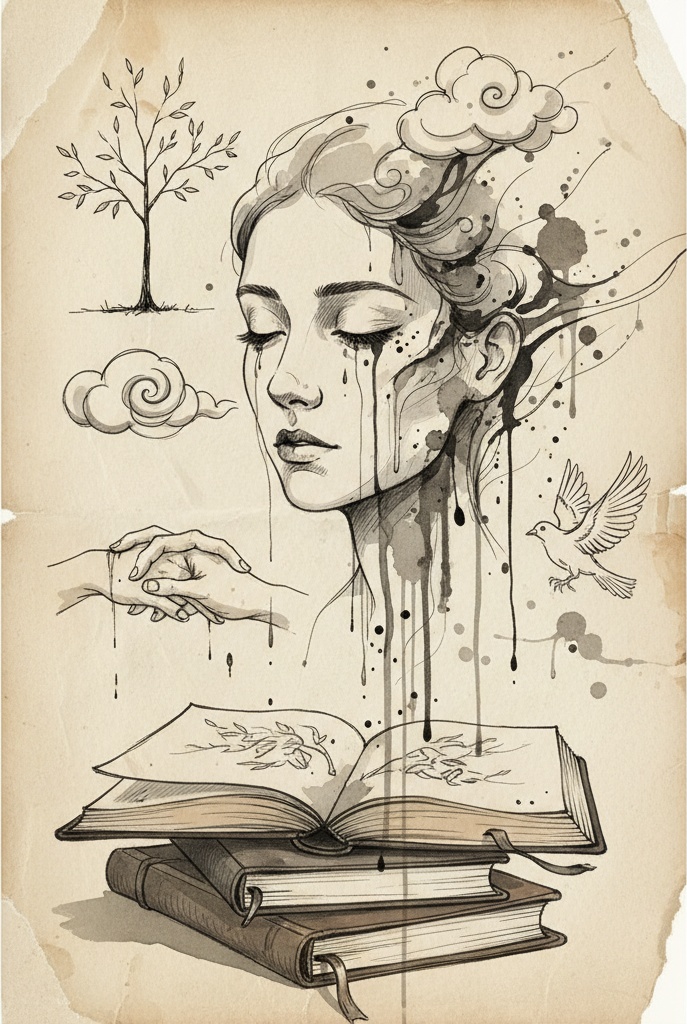
The power of ink lies in its ability to suggest rather than dictate. A masterfully placed line can convey weight, texture, and volume without resorting to elaborate shading or precise detail. More importantly, it can evoke a profound sense of emotion. This isn’t simply about depicting a smiling face; it's about capturing the subtle nuances of joy—the crinkling around the eyes, the slight upturn of the lips, the very *energy* radiating from the subject. Researchers in psychology have long studied emotional expression, recognizing that facial movements and body language are key indicators of internal states. However, ink sketching allows for a more subjective interpretation, inviting viewers to project their own feelings onto the work. The absence of color can be surprisingly potent, forcing us to focus on form, composition, and the inherent drama of light and shadow. A single, bold stroke can communicate grief, while delicate washes might suggest tranquility or longing.
Technical Mastery: Tools, Techniques, and the Art of Controlled Imperfection
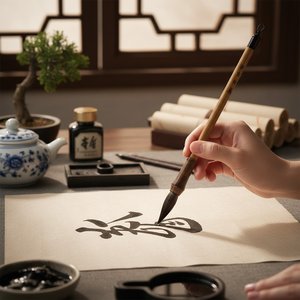
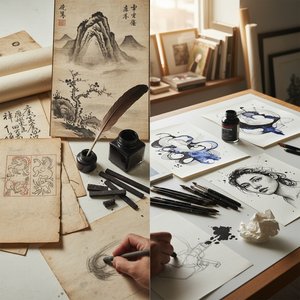
While intuition plays a crucial role in expressive ink sketching, it is underpinned by rigorous technical skill. The choice of pen or brush—quill, dip pen, fountain pen, or traditional ink brush—significantly impacts the final result. Each instrument offers unique characteristics: quills provide varying line weights depending on pressure, while brushes allow for fluid washes and dynamic strokes. The quality of the ink itself is also paramount; water-based inks offer transparency and blending capabilities, whereas oil-based inks are more permanent and resistant to smudging. However, true mastery isn’t about achieving perfect lines—it's about embracing imperfection. Techniques like stippling (creating texture with dots), hatching (using parallel lines), and cross-hatching (intersecting lines) allow for a range of tonal values and visual effects. Learning to control the flow of ink, understanding paper absorption rates, and practicing consistent pressure are all essential steps in developing one’s technical proficiency.
Hokusai's Wisdom: A Case Study in Expressive Minimalism
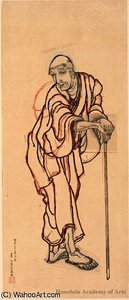 Portrait of Hokusai as an Old Man
Discover the elegant 'Portrait of Hokusai as an Old Man,' a traditional East Asian ink drawing capturing wisdom and serenity. Perfect for art collectors seeking timeless Japanese art reproductions.
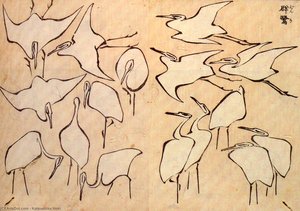
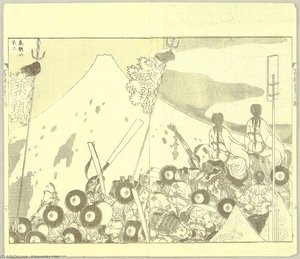
Katsushika Hokusai, a titan of Japanese art, exemplifies the power of expressive minimalism. His famous “Portrait of Hokusai as an Old Man” is not a photorealistic depiction but rather a distillation of character—a portrait of wisdom and serenity achieved through remarkably simple means. The loose brushstrokes, the subtle variations in ink density, and the deliberate use of negative space all contribute to a sense of profound depth. Hokusai’s work wasn't merely about capturing likeness; it was about conveying his inner state and philosophical outlook. He famously said, “At seventy years old, I finally began to understand something of nature.” This understanding is palpable in his later works, where every line feels deliberate, every stroke imbued with meaning. Studying Hokusai’s approach—his willingness to embrace simplicity, his mastery of brush control, and his profound connection to the natural world—offers invaluable lessons for aspiring ink sketchers.
Cultivating Sensitivity: Developing Your Emotional Palette in Ink
Ultimately, the most important tool for expressive ink sketching is not a specific pen or brush but rather a cultivated sensitivity—an ability to observe the world with empathy and translate those observations into visual form. This requires practice, patience, and a willingness to experiment. Begin by focusing on simple subjects—a single leaf, a weathered stone, a human face—and try to capture their essence through line and shadow. Don’t be afraid to make mistakes; in fact, embrace them as opportunities for learning. Explore different techniques, experiment with various inks and papers, and most importantly, allow your emotions to guide your hand. Consider journaling alongside your sketches, noting the feelings you are trying to convey and how specific lines or washes contribute to that effect. Ink sketching is not simply a technical skill; it’s a form of self-expression—a powerful way to connect with your inner world and share your unique perspective with others. The journey of mastering ink lies in the continuous exploration of both technique and emotion.