Early Life & Artistic Foundations: From Canada to New York
Landscape painting, also known as landscape art, is the depiction in painting of natural scenery such as mountains, valleys, rivers, trees, and forests, especially where the main subject is a wide view—with its elements arranged into a coherent compo...
Ernest Lawson’s story is one of a restless spirit finding its voice amidst shifting landscapes, both physical and artistic. Born in Halifax, Nova Scotia, in 1873, his early life was marked by relocation – a move to Kansas City, Missouri, when he was fifteen proved pivotal. While initially pursuing studies at the Kansas City Art Institute, it wasn’t until Lawson ventured east to New York City that his trajectory truly began to take shape. The Art Students League became his crucible, exposing him to a burgeoning artistic world and, crucially, introducing him to the principles of French Impressionism through mentors like John Twachtmann and J. Alden Weir. These figures weren't merely instructors; they were guides leading Lawson toward a new way of seeing – one that prioritized capturing fleeting moments of light and atmosphere over meticulous detail.
This initial exposure wasn’t simply about adopting a style, but understanding a philosophy. Twachtmann and Weir encouraged a simplification of form, urging Lawson to focus on “first impressions.” This resonated deeply with the young artist, who quickly began experimenting with painting *en plein air*, directly confronting the challenges and rewards of capturing nature's ephemeral beauty firsthand. The seeds of his unique artistic vision were sown during these formative years, blending academic training with a burgeoning passion for direct observation.
Embracing Impressionism: Influences and Techniques
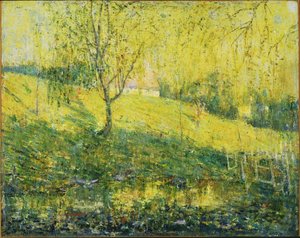
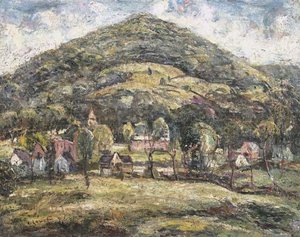 Haystack Mountain, Norfolk, Connecticut
Ernest Lawson (1873-1939) was a prominent Canadian-American painter known for his evocative landscapes. Born in Halifax, Canada, he became a key figure in the American Impressionist movement and later embraced a more independent style reflecting the
Lawson’s subsequent journey to France in 1893 solidified his commitment to the Impressionist aesthetic. Studying at the Académie Julian in Paris, he immersed himself in the world of Monet, Sisley, and Pissarro – artists who were actively redefining painting through their exploration of light, color, and subjective experience. However, Lawson didn’t simply mimic these masters; he absorbed their techniques while forging his own distinct path. His Parisian studio was shared with a young Somerset Maugham, a testament to the vibrant artistic community that surrounded him.
Upon returning to New York in 1894, Lawson began to develop a signature style characterized by bold brushstrokes and a rich, textured surface. He favored a palette knife, applying paint thickly – almost sculpting it onto the canvas – to create a sense of depth and immediacy. This impasto technique wasn’t merely decorative; it was integral to his attempt to capture the physicality of light and the emotional resonance of the landscape. His early works often depicted scenes around Washington Heights, Manhattan, showcasing a dynamic interplay between urban development and the remaining pockets of natural beauty.
The Eight and Beyond: Lawson’s Independent Path
 Wikipedia: Ernest Lawson
Ernest Lawson (March 22, 1873 – December 18, 1939) was a Canadian-American painter and exhibited his work at the Canadian Art Club and as a member of the American group The Eight, artists who formed a loose association in 1908 to protest the narrowne...
Around 1900, Lawson became associated with “The Eight,” a group of American artists who challenged the conservative norms of the National Academy of Design. This association is often linked to the Ashcan School, known for its gritty depictions of urban life. While Lawson shared their rebellious spirit and desire for artistic freedom, his focus remained firmly rooted in landscape painting. He was an anomaly within the group, preferring vistas to street scenes, yet he found common ground in their rejection of academic conventions.
Despite his affiliation with The Eight, Lawson’s style increasingly diverged from their realism. He wasn't interested in social commentary; instead, he sought to capture the *essence* of a place – its atmosphere, its light, and its emotional impact. This independent streak led him to explore new subjects and techniques throughout his career, constantly refining his vision. His election into the National Academy later in life underscores the growing recognition of his unique contribution to American art.
Capturing the American Landscape: Themes and Notable Works
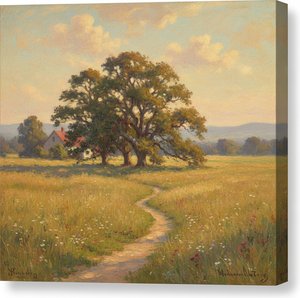
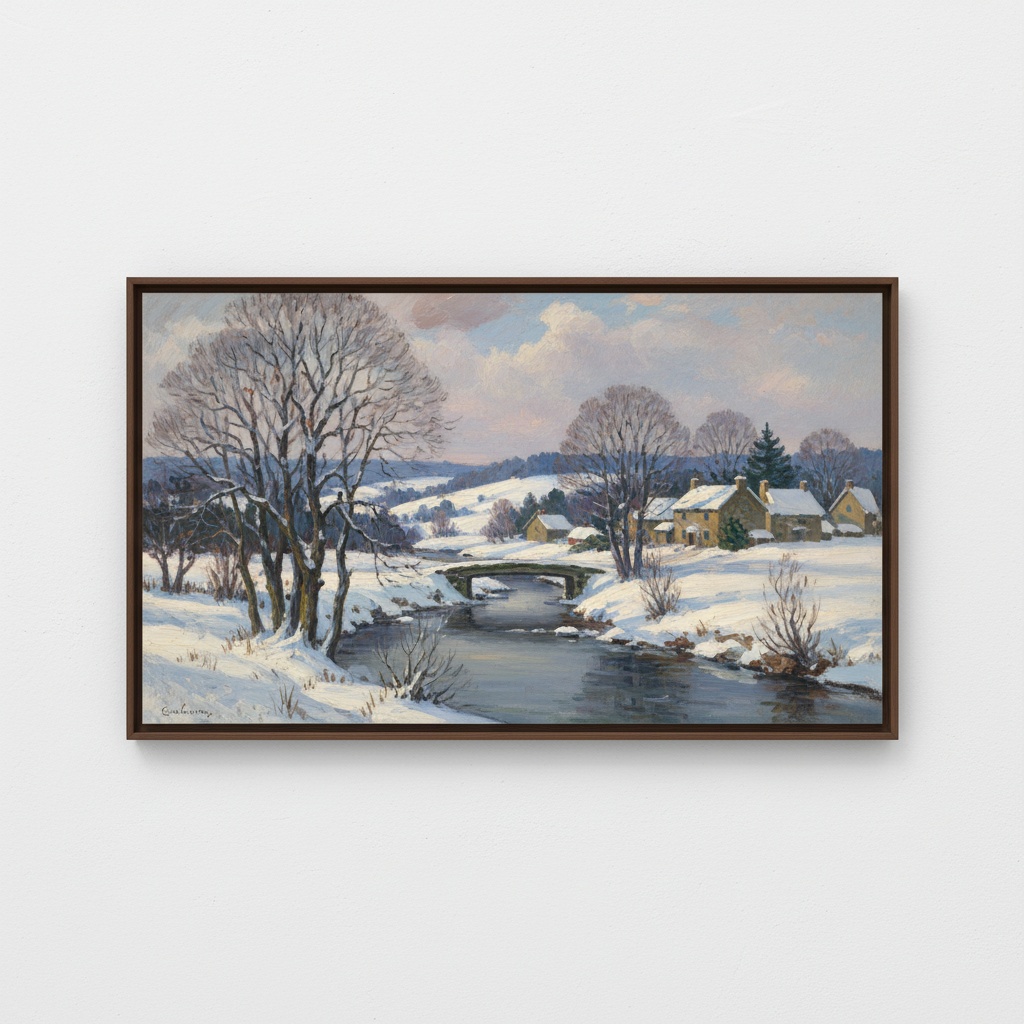
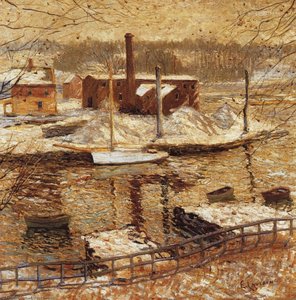
Lawson’s paintings are a testament to his profound connection with the American landscape. He wasn't interested in grand, picturesque scenes; rather, he focused on capturing the subtle beauty of everyday environments – snow-covered rivers, rolling hills, and quiet woodlands. Upper Harlem River—Winter (circa 1915), for example, exemplifies his mastery of muted palettes and tactile textures, evoking a sense of serene stillness. The thick layers of paint mimic the texture of snow, creating an almost palpable atmosphere.
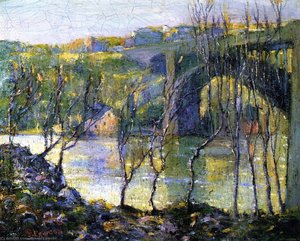
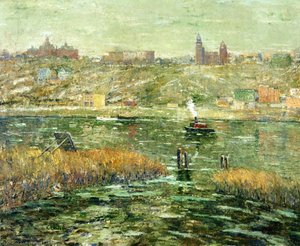
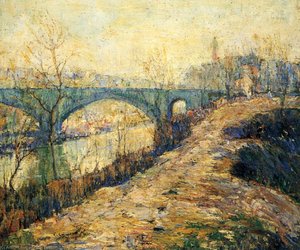
The Pond and Gapstow Bridge, New York City showcases his ability to transform familiar urban spaces into vibrant celebrations of color and light. Similarly, Spring Night, Harlem River demonstrates his skill in capturing the ethereal qualities of moonlight and reflection. These works aren’t simply depictions of places; they are emotional responses to them – imbued with a sense of wonder and tranquility. Lawson often sought to capture the interplay between nature and human presence, suggesting that someone has just been part of the scene.
Lawson's Legacy: A Lasting Impact on American Art
Ernest Lawson’s life was tragically cut short in 1939, but his artistic legacy endures. He occupies a unique position within the history of American Impressionism – blending elements of French technique with a ruggedly individualistic style that resonated deeply with the American experience. His “crushed jewel” style, as it was described by critic James Huneker, continues to captivate viewers with its shimmering depth and emotional resonance.
Lawson’s influence can be seen in the work of subsequent generations of landscape painters, who continue to explore the themes he pioneered – the interplay between nature and urbanization, the importance of direct observation, and the power of color to evoke emotion. His paintings are a reminder that true artistry lies not simply in replicating reality, but in capturing its essence – its fleeting moments of beauty and its enduring emotional impact. ArtsDot is proud to offer reproductions of Lawson’s masterpieces, allowing art enthusiasts to experience the magic of his vision firsthand.