Early Life & Training: The Foundations of Barocci’s Artistic Vision
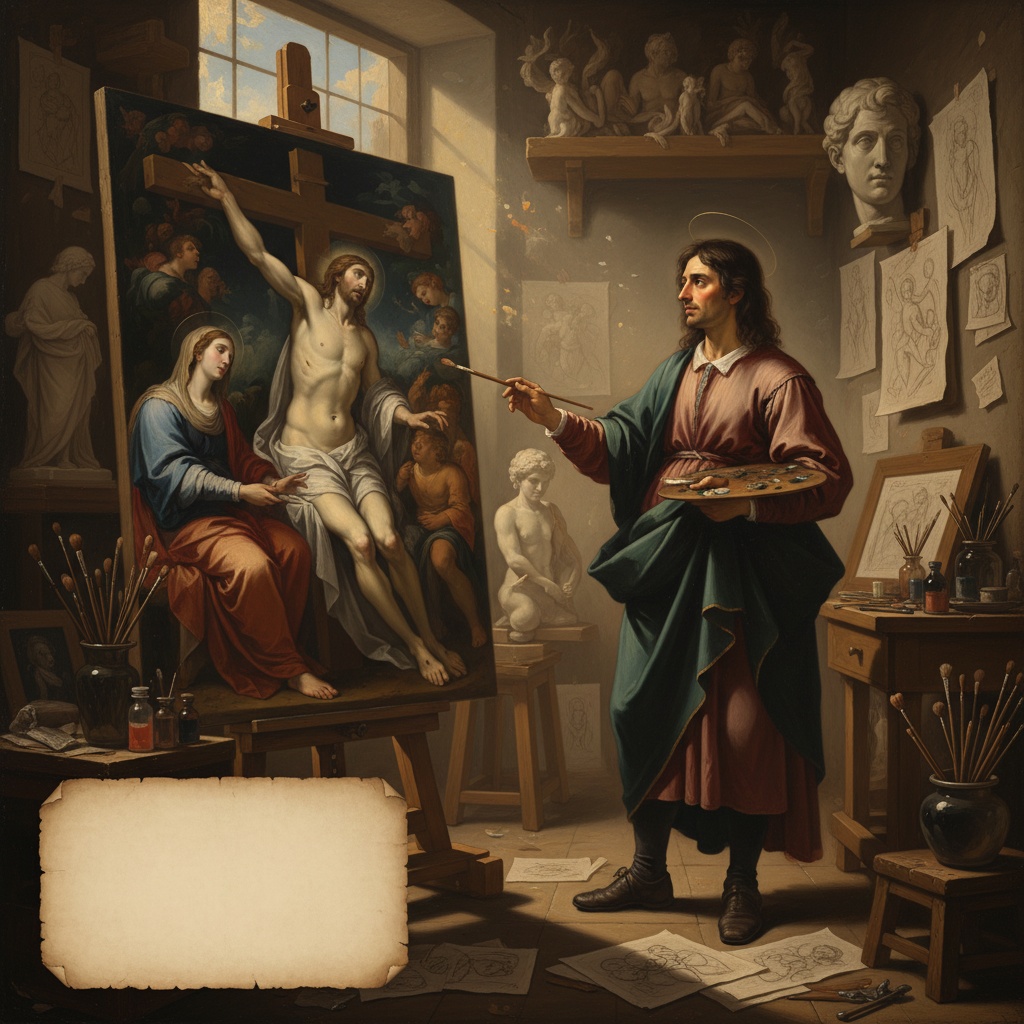
Federico Fiori, known to history as Federico Barocci (c. 1535 – 1612), emerged from the artistic heartland of Urbino, a duchy steeped in Renaissance tradition. His initial training under his father, Ambrogio Barocci—a sculptor of local renown—provided a foundational understanding of form and spatial relationships. However, it was his subsequent apprenticeship with Battista Franco Veneziano that truly ignited his path as a painter. This early exposure to the Venetian style, characterized by its rich color palettes and dynamic compositions, would subtly inform his later work. A pivotal moment arrived in 1548 when Barocci accompanied his uncle, Bartolomeo Genga, to Rome. There, he entered the studio of Taddeo and Federico Zuccari, immersing himself in the complexities of Mannerism—a style that prized elegance, artifice, and intellectual sophistication.
Rome and the Influence of Mannerism: A Crucible for Innovation
 Wikipedia: Federico Barocci
Federico Barocci (also written Barozzi) (c. 1535 – 30 September 1612) was an Italian Renaissance painter and printmaker. His original name was Federico Fiori, and he was nicknamed Il Baroccio. His work was highly esteemed and influential, and foresha...
The four years Barocci spent in Rome proved transformative. The studio of the Zuccari brothers was a hotbed of artistic experimentation, exposing him to the prevailing trends of the time: elongated figures, complex allegorical narratives, and a deliberate departure from the naturalistic ideals of High Renaissance masters like Raphael. While absorbing these influences, Barocci didn’t simply mimic; he began to synthesize them with his own innate sensibilities. His early Roman commissions, though less well-known today, reveal a burgeoning talent grappling with the stylistic demands of Mannerism while hinting at a personal inclination towards greater emotional depth and clarity. This period wasn't without its challenges. In 1563, a sudden illness—Barocci suspected poisoning by jealous rivals—forced his return to Urbino, an event that would profoundly shape his artistic trajectory.
The Counter-Reformation Aesthetic: Spirituality, Emotion, and Barocci's Response
The Protestant Reformation during the 16th century in Europe almost entirely rejected the existing tradition of Catholic art, and very often destroyed as much of it as it could reach. A new artistic tradition developed, producing far smaller quantit...
Barocci’s retreat from Rome coincided with the height of the Counter-Reformation, a period of intense religious fervor and reform within the Catholic Church. The Council of Trent (1545–1563) had mandated that art should serve as a powerful tool for conveying faith and inspiring piety. This new aesthetic demanded clarity, emotional resonance, and accessibility—a stark contrast to the often-intellectualized complexities of Mannerism. Barocci’s work became uniquely attuned to these evolving sensibilities. He embraced religious subjects with a sincerity and emotional intensity that resonated deeply with contemporary audiences. His paintings weren't merely depictions of biblical scenes; they were invitations to experience faith, imbued with a palpable sense of devotion.
Barocci’s Signature Style: Chiaroscuro, Composition & Pastel Innovations
Mannerism is a style in European art that emerged in the later years of the Italian High Renaissance around 1520, spreading by about 1530 and lasting until about the end of the 16th century in Italy, when the Baroque style largely replaced it. Northe...
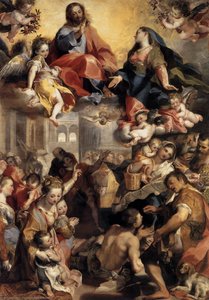
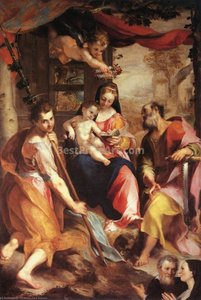
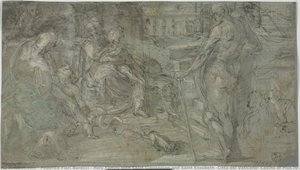
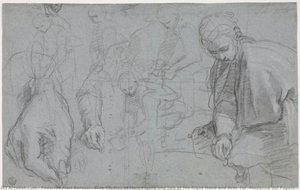
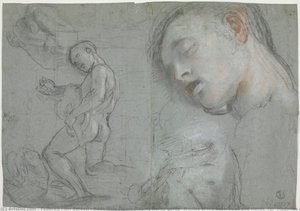
What distinguished Barocci from his contemporaries was his masterful command of chiaroscuro—the dramatic interplay of light and shadow. He employed this technique not simply for aesthetic effect but to heighten emotional impact, drawing the viewer’s eye to key figures and imbuing scenes with a sense of spiritual weight. His compositions, while retaining elements of Mannerist complexity, moved towards greater naturalism and clarity. Figures were arranged in dynamic groupings, often interacting with each other in emotionally charged ways. Perhaps most remarkably, Barocci pioneered the use of pastel as a preparatory medium. Over 2,000 of his drawings survive, revealing an obsessive attention to detail and a remarkable sensitivity to color and texture. These pastels weren’t merely sketches; they were luminous works of art in their own right, foreshadowing the Rococo style.
Key Works & Lasting Legacy: ‘Madonna del Gatto’ and Beyond
 The Madonna of the Cat (La Madonna del Gatto)
Admire Federico Barocci’s ‘Madonna of the Cat,’ a Baroque masterpiece blending religious symbolism & everyday life. Explore its rich details, chiaroscuro style, & captivating composition – perfect for art lovers.
The Madonna del Gatto (c. 1578) exemplifies Barocci’s mature style. This seemingly simple depiction of the Virgin Mary with the Christ Child and a playful cat is imbued with profound tenderness and humanity. The rich, warm colors, the soft modeling of forms, and the intimate interaction between mother and child create an atmosphere of serene devotion. Beyond this iconic work, his altarpieces for churches in Urbino and Rome—such as the *Visitation* and *Presentation of the Virgin* commissioned by Saint Philip Neri—demonstrated his ability to translate complex theological concepts into visually compelling narratives. Barocci’s influence extended far beyond Italy. His style foreshadowed the Baroque, inspiring artists like Peter Paul Rubens with its dynamic compositions, emotional intensity, and masterful use of color.
Barocci’s Enduring Influence on the Baroque Movement
Though often categorized as a late Mannerist, Federico Barocci stands as a crucial transitional figure. He absorbed the elegance and artifice of his predecessors but infused it with a newfound emotional sincerity that paved the way for the dramatic realism and dynamic energy of the Baroque. His emphasis on chiaroscuro, his naturalistic compositions, and his ability to evoke profound spiritual feeling resonated deeply with artists seeking to engage audiences on a more visceral level. Barocci’s legacy isn't simply found in the works of Rubens and other Baroque masters; it resides in his enduring ability to capture the human spirit—a quality that continues to captivate viewers centuries later. At ArtsDot.com, we are proud to offer high-quality reproductions of Barocci’s masterpieces, allowing you to experience the beauty and emotional power of his art firsthand.