Early Life & Artistic Foundations: From Military Service to Dresden Academy
Friedrich Hermann Carl Uhde, known to history as Fritz von Uhde, occupies a fascinating, and often overlooked, position within the landscape of late 19th-century German art. Born in Wolkenburg, Saxony, in 1848, his path to becoming a celebrated painter was anything but conventional. Unlike many artists who dedicated their youth to formal training, Uhde’s early life took an unexpected turn: he joined the army. This period, lasting several years and culminating in a commission as a horsemanship instructor, instilled within him a discipline and observational acuity that would later prove invaluable. However, the allure of artistic expression proved too strong to ignore. In 1866, Uhde enrolled at the Academy of Fine Arts in Dresden, but found himself chafing against its prevailing academic spirit. The rigid constraints of traditional instruction clashed with his burgeoning desire for a more direct and personal approach to art, leading him to abandon his studies after only a year.
His family background, though not overtly artistic, fostered an environment receptive to creative pursuits. His father was a part-time painter, and his maternal grandfather held the esteemed position of director at the Royal Museums in Dresden – a lineage that subtly encouraged Uhde’s inclination towards visual expression. This early exposure, combined with his inherent sensitivity, laid the groundwork for a career defined by its willingness to challenge convention and explore new artistic territories.
The Influence of Dutch Masters & Parisian Studies: A Shift in Style
Fritz von Uhde (born Friedrich Hermann Carl Uhde; 22 May 1848 – 25 February 1911) was a German painter of genre and religious subjects. His style lay in-between Realism and Impressionism, he was once known as "Germany's outstanding impressionist" and...
Uhde's artistic trajectory underwent a significant transformation following his departure from the military in 1877. Drawn to Munich, he sought further training at its Academy of Fine Arts, but found himself repeatedly denied access to the studios of prominent artists like Piloty, Lindenschmit, and Diez. This rejection proved fortuitous, ultimately leading him to Paris in 1879 – a pivotal moment that would reshape his artistic vision. In Paris, he became a pupil of Mihály Munkácsy, though his time under the master’s tutelage was relatively brief. More importantly, it was during this period that Uhde immersed himself in the study of the Dutch Old Masters, particularly Rembrandt van Rijn. The profound influence of Rembrandt – his masterful use of light and shadow, his psychological depth, and his ability to convey human emotion – became a defining characteristic of Uhde’s early work.
This fascination with Dutch painting wasn't merely stylistic; it represented a deeper philosophical shift. Uhde was drawn to the realism and emotional honesty of Rembrandt, qualities he sought to incorporate into his own art. However, this initial embrace of traditional techniques would soon be tempered by new influences, setting the stage for his exploration of plein-air painting.
Plein-Air Painting & the Conflict Between Innovation and Convention
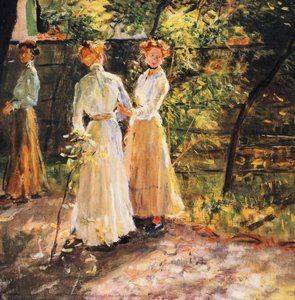
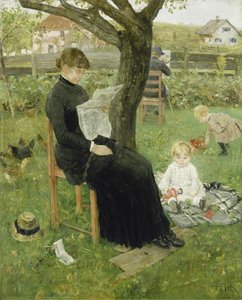
The year 1882 marked a turning point in Uhde’s artistic development. Encouraged by his contemporary Max Liebermann, he embarked on a journey to the Netherlands, where he began experimenting with *plein-air* painting – the practice of painting outdoors directly from nature. This approach, championed by the Impressionists, allowed him to capture the fleeting effects of light and atmosphere in a way that was previously unattainable. Paintings like Fishermen’s Children in Zandvoort (1882) demonstrate this newfound commitment to direct observation and spontaneous execution.
However, Uhde's relationship with Impressionism was complex. While he embraced the technical aspects of plein-air painting, he often hesitated to fully commit to its aesthetic principles. He frequently exhibited more conventional versions of his compositions – such as The Arrival of the Organ-Grinder (1883) – revealing a tension between his desire for innovation and his concern for public acceptance. This internal conflict characterized much of his career, leading him to navigate a delicate balance between artistic experimentation and established norms.
Religious Themes & Social Realism: Uhde’s Unique Moral Vision
 Wikipedia: Symbolism (movement)
Symbolism was a late 19th-century art movement of French and Belgian origin in poetry and other arts seeking to represent absolute truths symbolically through language and metaphorical images, mainly as a reaction against naturalism and realism. In l...
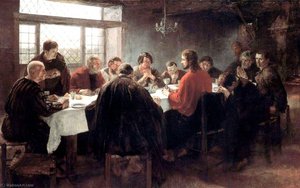
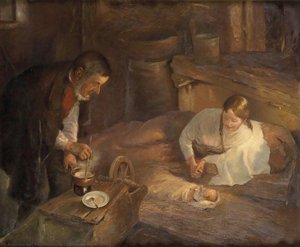
Beyond landscapes and genre scenes, Uhde developed a profound interest in religious subjects. Rooted in his upbringing – his father's position as President of the Lutheran Church Council – these paintings were not merely depictions of biblical stories but rather explorations of faith, morality, and the everyday lives of ordinary people. He sought to portray Biblical episodes realistically, often transplanting them into contemporary settings. Works like The Mealtime Prayer (1885), with its depiction of a humble family gathered around a simple meal, exemplify this approach.
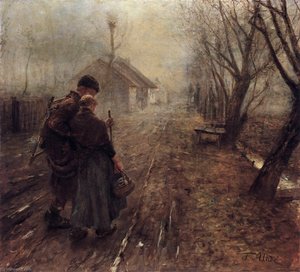
Uhde’s religious paintings were often imbued with a strong sense of social realism, depicting the struggles and hardships faced by the working class. This unflinching portrayal of reality sometimes drew criticism, with some viewers finding his work vulgar or unsightly. However, others admired his honesty and emotional depth, recognizing in his art a powerful message of compassion and empathy. His ability to imbue ordinary scenes with spiritual significance set him apart from many of his contemporaries.
Uhde and the German Secession Movements: Championing 'Unacademic' Art
In approximately 1890, Uhde ascended to the position of professor at the Academy of Fine Arts in Munich. This appointment coincided with a growing movement within the German art world – the rise of the *Secession* movements. Along with artists like Max Slevogt, Ludwig Dill, and Lovis Corinth, Uhde became a founding member of the Verein Bildender Künstler (Society of Fine Artists), better known as the Munich Secession. Later, he also joined the Berlin Secession.
These groups represented a rejection of academic tradition and a commitment to artistic freedom. They championed what they termed “unacademic” art – work that was characterized by its directness, emotional honesty, and willingness to challenge conventional norms. Uhde’s influence on the younger generation of German artists was profound, inspiring them to break free from established constraints and explore new forms of expression. He became the first President of the Secession, solidifying his position as a leading figure in the avant-garde.
Legacy and Lasting Impact: A Pioneer of Modern German Painting
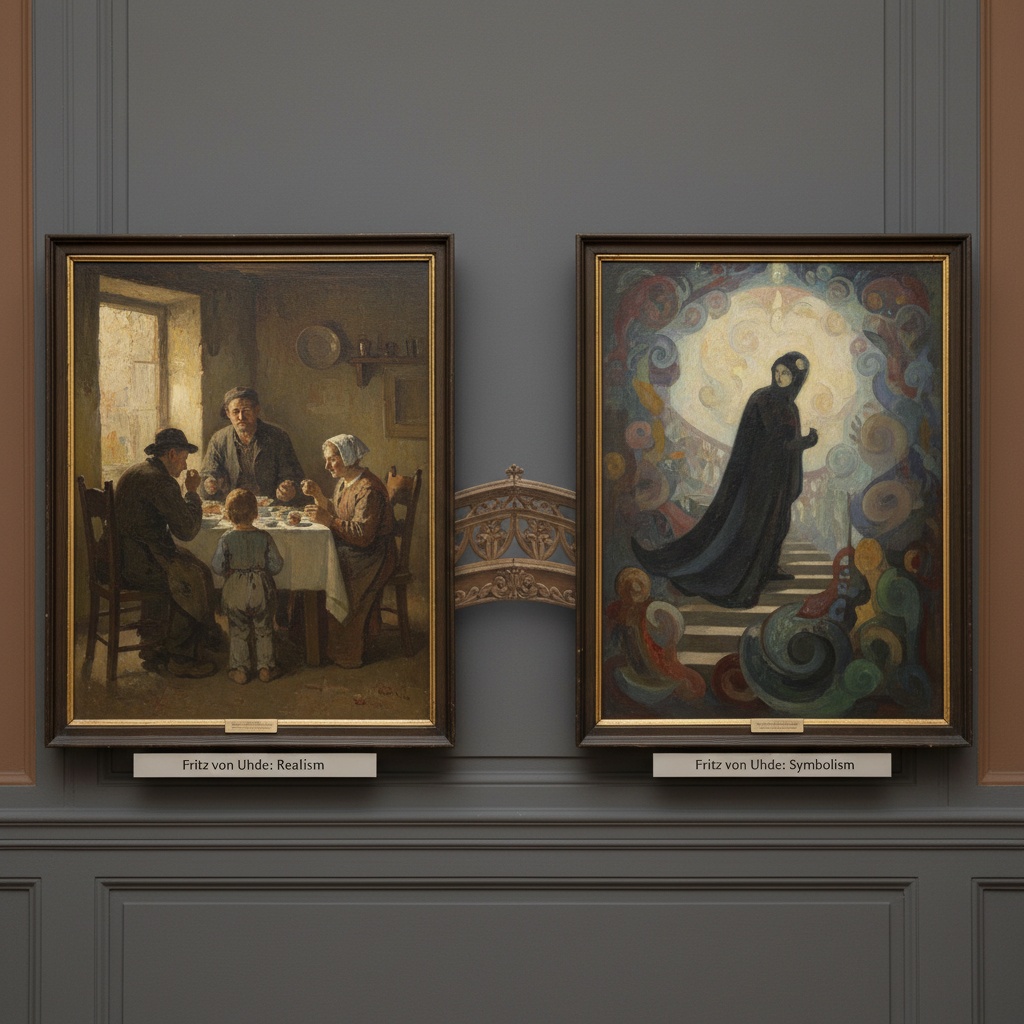
Although Uhde’s activity within the art world diminished after 1900, he continued to paint prolifically until his death in Munich in 1911. His later works are often considered among his most vivid and artistic achievements, demonstrating a culmination of his lifelong exploration of realism, symbolism, and religious themes. While once hailed as “Germany’s outstanding impressionist,” Uhde's legacy extends far beyond any single label.
He was a true pioneer of modern German painting, bridging the gap between Realism and Symbolism and paving the way for future generations of artists to explore new forms of expression. His commitment to *plein-air* painting, his unflinching portrayal of social reality, and his unique moral vision continue to resonate with viewers today. Discover the captivating world of Fritz von Uhde – a master whose work invites us to contemplate the beauty and complexity of the human condition.
Explore more exceptional artworks and discover your own artistic passions at ArtsDot.com, where history comes alive through stunning reproductions and personalized art experiences.