
Early Life and Artistic Beginnings: A Promising Talent Emerges
Fyodor Alexandrovich Vasilyev, born in 1850 in the quiet town of Gatchina, Russia, possessed a sensitivity to the natural world that would define his tragically short but remarkably impactful career. His beginnings were far from privileged; born out of wedlock and burdened by financial hardship, young Fyodor’s path wasn't paved with ease. Yet, it was within these humble circumstances that a profound connection to the Russian countryside began to blossom. From an early age, he shouldered responsibilities, working as a mailman and scribe to support his family after his father’s death, experiences which instilled in him a quiet resilience and perhaps, a deeper appreciation for the fleeting beauty surrounding him. His formal artistic education commenced at the School of Painting at the Society for Promotion of Artists in St. Petersburg, where his innate talent quickly became apparent. It was here that he encountered mentors who recognized his potential, setting the stage for a journey that would revolutionize Russian landscape painting.
The Lyrical Landscape Style: Vasilyev’s Unique Voice in Russian Art
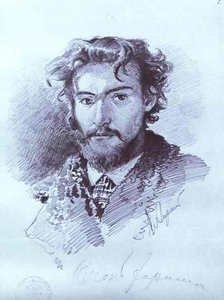 Fyodor Vasilyev
Fyodor Vasilyev (1850-1873) was a pioneering Russian landscape painter known for his lyrical style & atmospheric depictions of nature. Influenced by the Barbizon school, he captured the beauty of the Russian countryside and Crimean mountains, influen
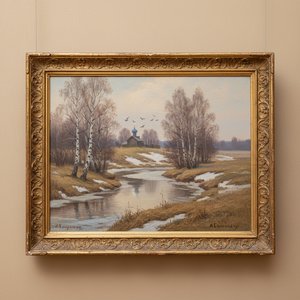
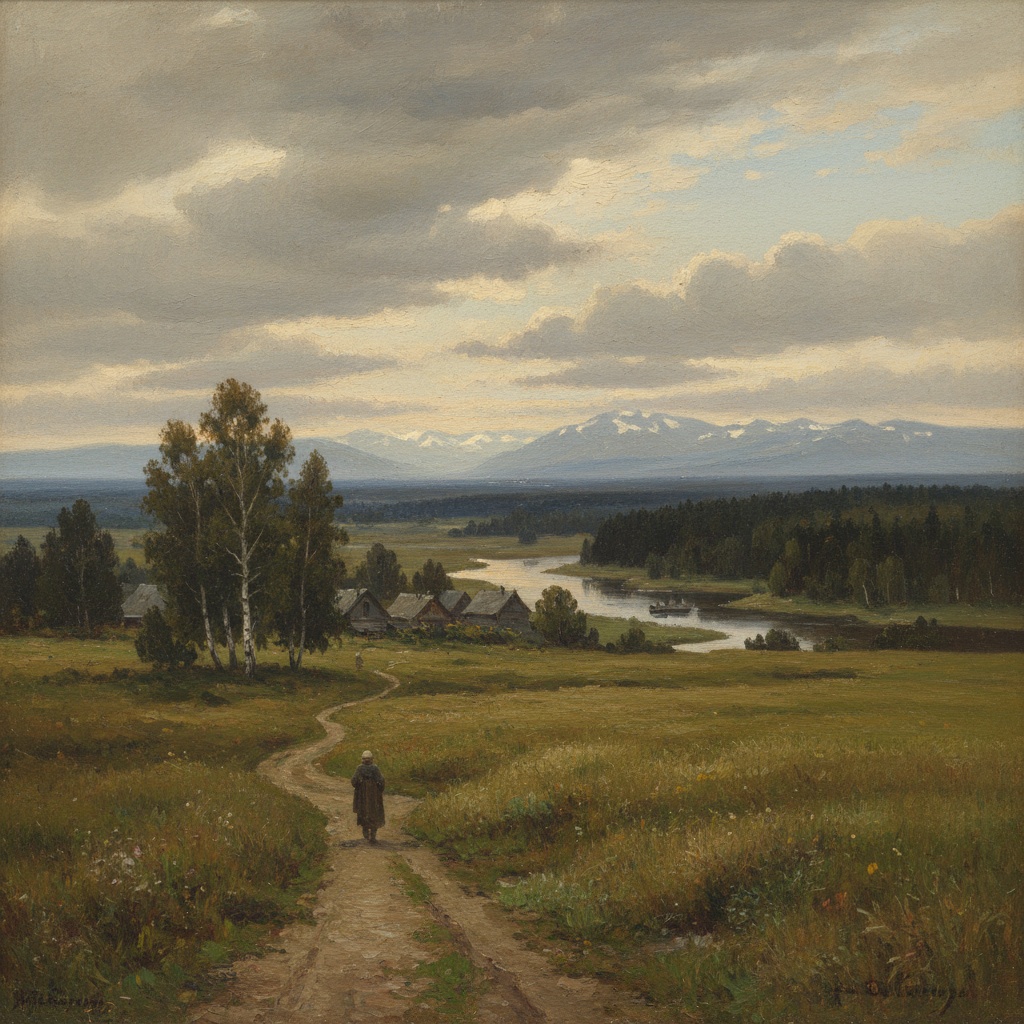
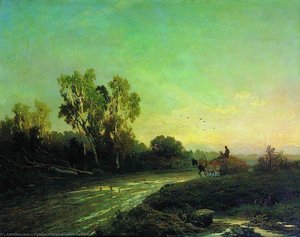
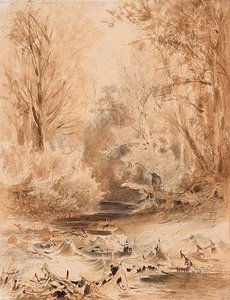
Vasilyev didn't simply depict landscapes; he imbued them with emotion. He pioneered what became known as the “lyrical landscape” style, moving beyond mere topographical representation to capture the very *soul* of nature. Where earlier artists focused on grand scale and dramatic narratives, Vasilyev’s work was characterized by a quiet intimacy, a subtle poetry woven into every brushstroke. His canvases weren't just scenes; they were moods – the stillness after a rain shower, the hazy warmth of a summer afternoon, the melancholic beauty of approaching winter. This wasn’t about technical perfection alone, but about conveying a deeply personal and evocative experience of the Russian countryside. He sought to translate the ephemeral qualities of light, atmosphere, and feeling onto canvas with an unprecedented sensitivity.
Influences and Inspirations: Barbizon School & the Russian Countryside
Romantic realism is art that combines elements of both romanticism and realism. The terms "romanticism" and "realism" have been used in varied ways, and are sometimes seen as opposed to one another. == In literature and art == The term has long sta...
While Vasilyev’s style was uniquely his own, it wasn't born in isolation. The influence of the Barbizon school, a French movement dedicated to realistic depictions of nature, is readily apparent in his early works. Artists like Théodore Rousseau and Jean-François Millet championed painting *en plein air* – directly from nature – and their emphasis on capturing the everyday beauty of rural life resonated with Vasilyev. However, he didn’t merely imitate; instead, he absorbed these lessons and filtered them through a distinctly Russian lens. He moved away from the Barbizon school's darker palettes, embracing a brighter, more nuanced approach that reflected the unique light and atmosphere of his homeland. His landscapes weren’t French fields, but the rolling hills around St. Petersburg, the serene shores of Lake Valaam, and eventually, the dramatic peaks of Crimea.
A Brief but Brilliant Career: Key Works and Recognition
Vasilyev's professional career spanned a mere decade, yet within those few years he produced an astonishing body of work. Paintings like “After the Rain” (1869) demonstrate his mastery of atmospheric perspective and his ability to capture the subtle nuances of light after a storm. “The Thaw” (1871), which garnered immediate acclaim – even earning a medal at the 1872 London World Fair – showcased his skill in depicting the delicate transition between seasons, evoking a sense of hope and renewal. “In the Vicinity of St. Petersburg” (1868) exemplifies his early style, with its tranquil scenes and meticulous attention to detail. Perhaps most striking is “Mountains in the Crimea in Winter” (1873), painted during his final illness, a testament to his unwavering dedication even as his health declined. His rapid ascent within the artistic community – becoming one of the founding members of the Peredvizhniki movement in 1870 – speaks volumes about the impact he made on his contemporaries.
Tragedy and Legacy: The Enduring Impact of a Short Life
The story of Fyodor Vasilyev is tinged with profound sadness. Diagnosed with tuberculosis at the peak of his artistic powers, he was forced to relocate to Crimea in search of respite. Despite his deteriorating health, he continued to paint, driven by an insatiable desire to capture the beauty around him. His final works, created from memory and sketches as he became increasingly unable to work outdoors, are imbued with a poignant sense of longing and fragility. He died in Yalta in 1873 at the young age of twenty-three. However, his premature death did not diminish his legacy; quite the contrary. A posthumous exhibition in St. Petersburg was a resounding success, solidifying his place as one of Russia’s most important landscape painters. His ability to capture the emotional essence of nature continues to resonate with audiences today.
Vasilyev's Influence on Subsequent Generations of Russian Painters
Nikolai Ge, a prominent realist painter, famously declared that Vasilyev “discovered for us the Sky,” a testament to his groundbreaking approach to depicting atmospheric effects. His influence extended far beyond mere technique; he inspired a generation of artists to look at nature with new eyes – to see not just what was *there*, but how it *felt*. Isaac Levitan, arguably Russia’s most celebrated landscape painter, openly acknowledged Vasilyev as a major inspiration, adopting his lyrical style and sensitivity to mood. Valentin Serov and Viktor Borisov-Musatov also drew heavily from Vasilyev's work, incorporating his atmospheric techniques into their own distinctive styles. His legacy is not simply found in the paintings he created, but in the countless artists who followed in his footsteps, striving to capture the same poetic beauty and emotional depth that defined his brief but brilliant career. At ArtsDot.com, we are proud to offer high-quality reproductions of Vasilyev’s masterpieces, allowing you to experience the enduring power of his vision firsthand.