The Rise of Romney: From Rural Origins to London’s Elite
George Romney's ascent from the remote landscapes of Lancashire to the heart of London’s artistic and social circles is a testament to both his prodigious talent and the shifting dynamics of 18th-century British society. Born in 1734 in Dalton-in-Furness, far removed from the capital’s glittering salons, Romney's early life offered little indication of the fame that awaited him. His initial training as a cabinet maker, inherited from his father, proved unfulfilling, though it instilled a meticulous attention to detail that would later characterize his portraiture. A local watchmaker sparked an interest in drawing, but it was his apprenticeship with Christopher Steele in Kendal that truly ignited his artistic ambition. This period, however, was marked by personal upheaval – a hasty marriage and subsequent separation – prompting Romney’s bold move to London in 1762, seeking fortune and recognition. The city initially proved challenging; early commissions were scarce, and the path to establishing himself amongst established artists like Reynolds and Gainsborough seemed daunting. Yet, Romney possessed an unwavering self-belief and a keen understanding of the burgeoning market for portraiture, fueled by a rising merchant class eager to display their newfound prosperity.
Romney's Artistic Style: Rococo Influences & Grand Manner Aspirations
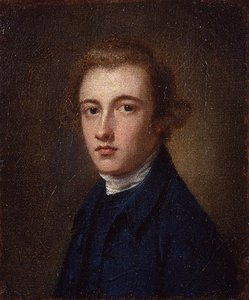
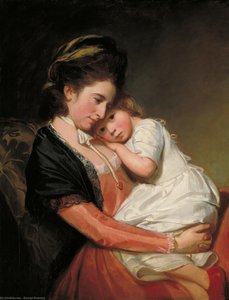
Romney’s artistic style was a fascinating synthesis of prevailing trends. While firmly rooted in the Rococo sensibilities that swept across Europe – characterized by delicate brushwork, pastel palettes, and an emphasis on elegance and grace – he simultaneously aspired to the grandeur and historical weight of the Grand Manner portraiture championed by Reynolds. This ambition is evident in his early attempts at history painting, notably *The Death of General Wolfe* (1762), a work that, despite initial acclaim, drew criticism for its unconventional depiction of the subject. Romney’s portraits, however, quickly became sought after for their ability to capture not merely physical likeness but also an idealized sense of character and social standing. He masterfully employed flowing lines, soft lighting, and subtle color variations to create images that flattered his sitters while hinting at a deeper psychological depth. His technique involved layering thin glazes of oil paint, building up form and texture with remarkable finesse. Unlike Reynolds’s more formal compositions, Romney often favored looser brushwork and a greater sense of spontaneity, lending his portraits a unique vitality.
Patronage Networks: Navigating the World of Georgian Society
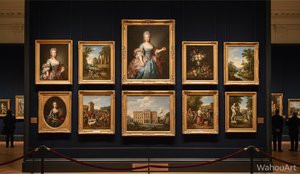
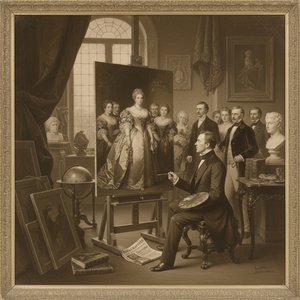
Success in 18th-century London hinged on cultivating powerful patronage networks. Romney understood this implicitly, meticulously building relationships with influential figures across the social spectrum. His studio became a hub for aristocrats, politicians, and wealthy merchants, all eager to secure a portrait by the increasingly celebrated artist. The ability to navigate these complex social circles required not only artistic skill but also diplomacy, charm, and an astute understanding of societal expectations. Romney’s portraits served as more than mere representations; they were carefully constructed statements of status, wealth, and taste. He became adept at tailoring his style to suit the individual preferences of each patron, offering a range of poses, settings, and accessories that reflected their aspirations and social identity. Figures like William Henry Cavendish Bentinck, 3rd Duke of Portland, exemplify this dynamic – Romney’s portrait capturing not only the Duke's aristocratic bearing but also his political influence and refined sensibilities. The patronage system was reciprocal; Romney gained financial security and social recognition, while his patrons received artworks that enhanced their prestige and solidified their position within Georgian society.
Emma Hamilton: Muse, Model, and the Scandalous Portraits
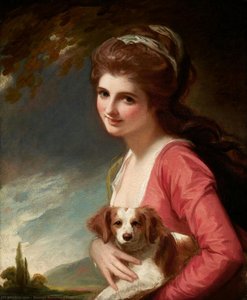
Perhaps no relationship defined Romney’s artistic career more profoundly than his association with Emma Hart, later Lady Hamilton. She arrived in London as a captivating beauty, quickly becoming a celebrated socialite and the muse of numerous artists, including Romney. Their collaboration extended far beyond conventional portraiture; Romney transformed Emma into a series of iconic figures from classical mythology and history – Medea, Cleopatra, Iphigenia, Joan of Arc – each painting showcasing her dramatic flair and expressive power. These portraits were not simply exercises in artistic skill but also bold statements about female agency and the power of performance. Emma’s “Attitudes” – carefully choreographed recitals based on Romney’s paintings – captivated audiences with their theatricality and emotional intensity, foreshadowing modern performance art. However, their relationship was shrouded in scandal, particularly after Emma became the mistress of Lord Nelson. While Romney continued to paint her throughout their affair, the controversy surrounding their connection undoubtedly impacted his reputation and contributed to his eventual retreat from London society.
Beyond Likeness: Romney’s Exploration of Character and Emotion
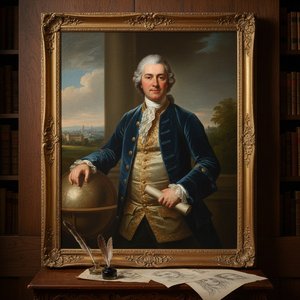
While celebrated for his technical skill, Romney's true genius lay in his ability to capture something beyond mere physical likeness. He sought to portray not just *who* his sitters were but also *what* they were – their inner character, their aspirations, and their emotional states. This is particularly evident in portraits like Dr John Matthews (1786), where the subject’s intelligence and sensitivity are conveyed through subtle nuances of expression and posture. Romney often employed a variety of techniques to achieve this effect, including carefully chosen lighting, dynamic compositions, and an emphasis on gesture and body language. He was also known for engaging his sitters in conversation during sittings, believing that it helped him capture their true personality. This pursuit of psychological depth set him apart from many of his contemporaries, who focused primarily on surface appearances. Romney’s portraits offer a fascinating glimpse into the inner lives of Georgian society, revealing not only the outward trappings of wealth and status but also the complexities of human emotion.
Romney's Legacy: Influence on British Portraiture & Collecting Today
Despite periods of self-doubt and professional setbacks, George Romney left an indelible mark on British portraiture. His influence can be seen in the work of subsequent generations of artists who sought to emulate his ability to capture both likeness and character. While overshadowed by Reynolds and Gainsborough during his lifetime, Romney’s reputation has steadily grown in recent decades as scholars have recognized the unique qualities of his art. Today, his paintings are highly prized by collectors worldwide, representing a significant investment and a testament to the enduring appeal of Georgian elegance and sophistication. ArtsDot.com offers exquisite reproductions of Romney's masterpieces, allowing art enthusiasts to experience the beauty and artistry of this remarkable painter firsthand. His works continue to captivate audiences with their timeless charm, offering a window into a fascinating era of social change, artistic innovation, and enduring human emotion. Explore our collection today and discover the legacy of George Romney.