Early Life & Italian Influences: The Formation of a 'Gerard of the Nights'
 Wikipedia: Gerard van Honthorst
Gerard "Gerrit" van Honthorst (4 November 1592 – 27 April 1656) was a Dutch Golden Age painter who became known for his depiction of artificially lit scenes, eventually receiving the Italian nickname Gherardo delle Notti ("Gerard of the Nights"). Ear...
Gerard “Gerrit” van Honthorst, born in Utrecht in 1592, emerged during a period of burgeoning artistic innovation within the Dutch Republic. His father, a decorative painter, provided his initial training, laying the groundwork for a career that would ultimately see him celebrated as one of the most compelling figures of the early Baroque era. However, it was Honthorst’s journey to Italy in 1616 that proved truly transformative. Rome, at this time, pulsed with the legacy of Caravaggio – a seismic shift in artistic sensibility that profoundly impacted the young Dutchman. He wasn't merely observing; he immersed himself in the *tenebrism* and dramatic realism that defined the Italian master’s style. Lodging within the palace of Vincenzo Giustiniani, surrounded by an exceptional art collection, Honthorst absorbed Caravaggio’s techniques with remarkable speed and fervor.
This period witnessed a collective embrace of Caravaggism amongst a group of Utrecht painters – including Hendrick ter Brugghen and Dirck van Baburen – who became known as the “Utrecht Caravaggisti.” They shared a fascination with artificial lighting, employing stark contrasts between light and shadow to create intensely emotional and theatrical scenes. Honthorst’s early Italian works, such as depictions of biblical subjects and genre scenes, immediately reveal this influence. He quickly gained recognition, attracting patrons like Cardinal Scipione Borghese, solidifying his position within the Roman art world. It was in Italy that he earned the affectionate nickname “Gherardo delle Notti” – Gerard of the Nights – a testament to his mastery of nocturnal illumination and its captivating effect.
Mastering Tenebrism: Honthorst's Dramatic Use of Light and Shadow
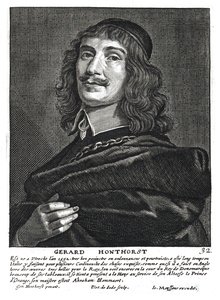 Gerard van Honthorst
Explore the dramatic Baroque paintings of Gerard van Honthorst, Dutch master of *tenebrism* and captivating light effects. Discover his portraits & biblical scenes!
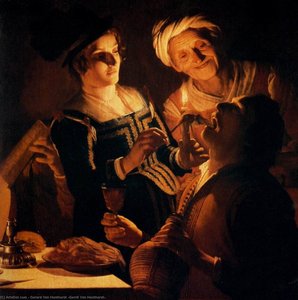
The hallmark of Van Honthorst’s style is undoubtedly his masterful command of *tenebrism*. This isn’t simply about darkness; it’s a carefully orchestrated interplay of light and shadow used to heighten drama, focus attention, and imbue scenes with psychological depth. Unlike the diffused lighting often favored by earlier artists, Honthorst employed a single, powerful source – frequently a candle or lamp – casting stark shadows that sculpt forms and create an almost palpable sense of realism. Consider his ‘Satyr & Nymph’ (1623), where the figures emerge from deep darkness, illuminated with a theatrical intensity that draws the viewer into their sensual encounter. The chiaroscuro isn't merely decorative; it actively shapes our perception of the scene, emphasizing the physicality and emotional connection between the subjects.
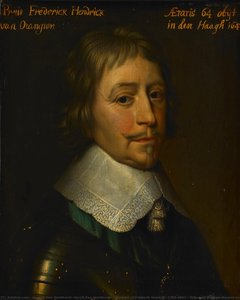
This technique wasn’t simply copied from Caravaggio but refined and adapted to Honthorst’s own artistic vision. He often used light not just to reveal form but also to create a sense of intimacy and immediacy. His paintings feel less like grand historical narratives and more like stolen glimpses into private moments, heightened by the dramatic lighting. This approach extended beyond mythological scenes; even his portraits benefit from this skillful manipulation of light, capturing the dignity and character of his sitters with remarkable precision. The effect is both captivating and profoundly human.
Courtly Commissions & International Patronage: From Rome to England
Honthorst’s success wasn't confined to Italy. Upon returning to Utrecht in 1620, he quickly established himself as a leading portrait painter, attracting commissions from prominent members of Dutch society. However, his reputation soon extended beyond the Netherlands, drawing the attention of international patrons. In 1628, Queen Elizabeth of Bohemia, exiled in the Netherlands, appointed him as her court painter and drawing master for her children. This connection proved pivotal, leading to an invitation to England from King Charles I.
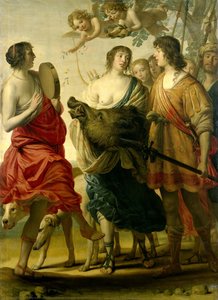
The English court provided Honthorst with a new set of opportunities and challenges. He produced large-scale allegorical paintings, such as the depiction of Charles and Henrietta Maria as Diana and Apollo, showcasing his ability to blend classical mythology with royal portraiture. He also painted more intimate group portraits, like ‘The Four Eldest Children of the King of Bohemia,’ revealing a sensitivity to familial relationships. His popularity remained strong even after his return to Utrecht, continuing to receive commissions from prominent figures across Europe – including Christian IV of Denmark and Lord Dorchester. This international patronage underscores Honthorst’s versatility and adaptability as an artist, capable of satisfying diverse tastes while maintaining his distinctive style.
Genre Scenes & Biblical Narratives: A Diverse Oeuvre
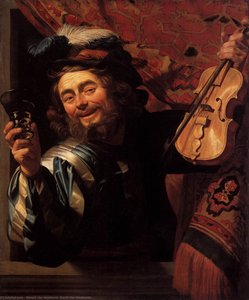
While celebrated for his portraits and dramatic lighting effects, Van Honthorst's artistic range extended far beyond these realms. He was a prolific painter of genre scenes – lively depictions of taverns, musicians, and everyday life that catered to the growing tastes of the Dutch middle class. These paintings often feature a sense of boisterous energy and realism, capturing the convivial atmosphere of 17th-century social gatherings. Alongside these secular subjects, Honthorst also produced numerous biblical narratives, demonstrating his ability to imbue religious scenes with the same dramatic intensity that characterized his other works.
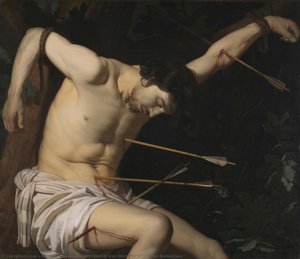
His approach to biblical painting wasn’t about grand theological statements; it was about bringing these stories to life through relatable human figures and emotionally charged moments. He often depicted scenes as if they were unfolding in a contemporary setting, making them more accessible and engaging for his audience. This combination of realism, dramatic lighting, and diverse subject matter – from intimate portraits to lively genre scenes and compelling biblical narratives – defines the breadth and depth of Honthorst’s artistic legacy.
Honthorst’s Legacy & Influence on Utrecht Caravaggism
Gerard van Honthorst's impact on Dutch Golden Age painting is undeniable. His mastery of *tenebrism* and his ability to create emotionally resonant scenes profoundly influenced a generation of artists, particularly within the Utrecht school of painting. He wasn’t simply a follower of Caravaggio; he adapted and refined the Italian master’s techniques, creating a distinctive style that resonated with Dutch audiences and captivated international patrons.
His influence extended beyond his immediate circle of pupils – including Joachim von Sandrart, who documented Honthorst's studio practices – shaping the broader artistic landscape of the Netherlands. Artists like Matthias Stom continued to explore the dramatic chiaroscuro that defined Utrecht Caravaggism, further solidifying its place within Dutch art history. Today, Van Honthorst’s paintings are celebrated for their technical brilliance, emotional depth, and enduring beauty, offering a captivating glimpse into the world of the 17th-century Dutch Golden Age. ArtsDot.com offers high-quality reproductions of his masterpieces, allowing art enthusiasts to experience the illuminating power of Honthorst’s vision firsthand.