Early Life & Formation: The ‘Spagnuolo’ and Bolognese Apprenticeships
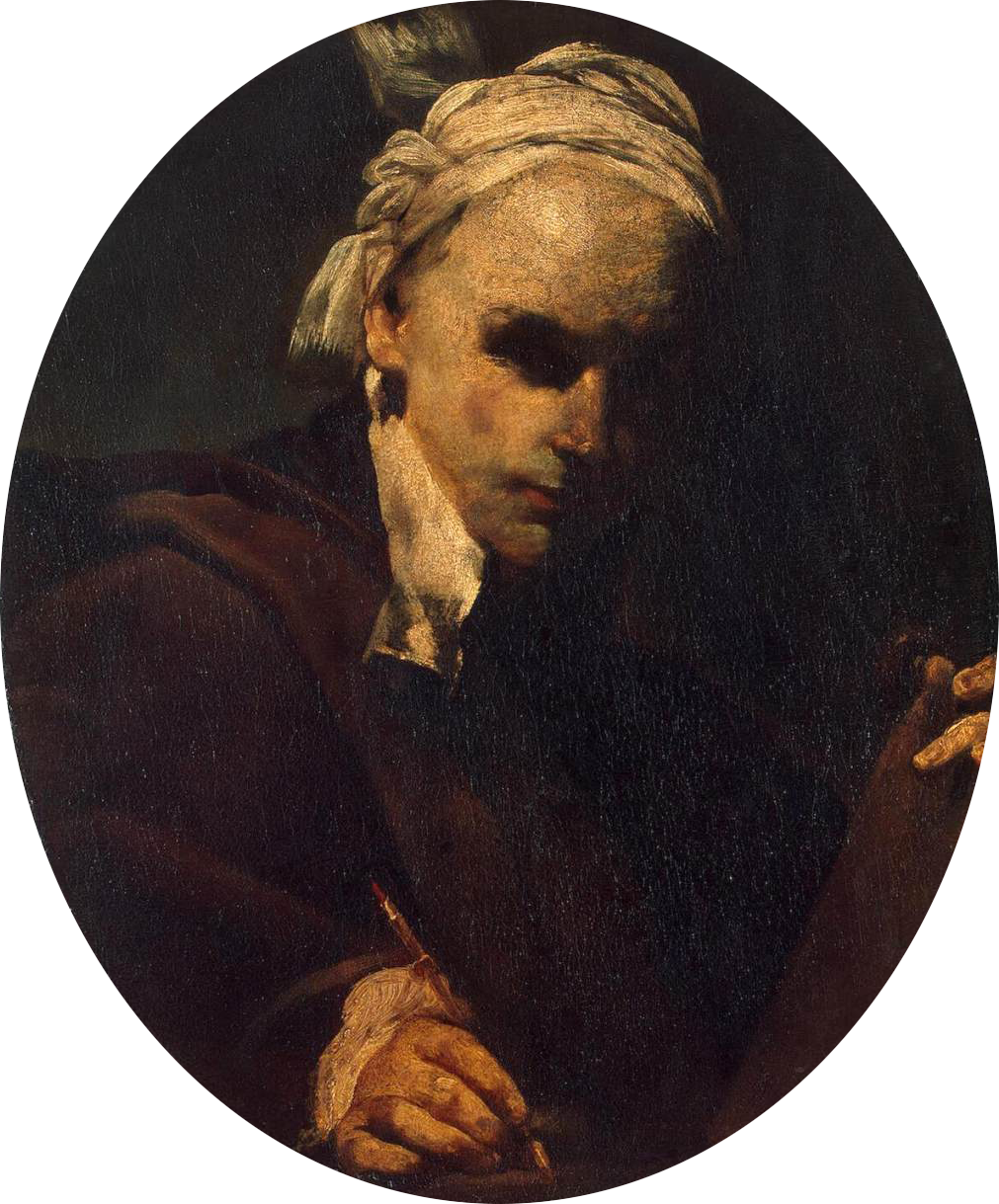 Wikipedia: Giuseppe Crespi
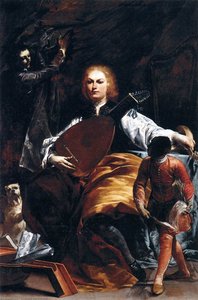
Giuseppe Maria Crespi (March 14, 1665 – July 16, 1747), nicknamed Lo Spagnuolo ("The Spaniard"), was an Italian late Baroque painter of the Bolognese School. His eclectic output includes religious paintings and portraits, but he is now most famous fo...
Giuseppe Maria Crespi, affectionately known as “Lo Spagnuolo” – the Spaniard – was a figure of intriguing contrasts within the vibrant artistic landscape of 17th-century Bologna. Born in 1665 to a family with connections to Florentine nobility, his nickname stemmed not from actual Spanish heritage but rather from his penchant for adopting the then-fashionable, tight-fitting attire favored in Spain. This early embrace of distinctive style foreshadowed a career marked by independence and a willingness to deviate from established norms. His artistic journey began at the tender age of twelve under the tutelage of Angelo Michele Toni, a local painter who laid the foundational groundwork for his technical skills. However, it was his subsequent apprenticeship with Domenico Maria Canuti, a prominent figure in the Bolognese Baroque scene, that truly shaped his initial direction. Canuti’s influence is visible in Crespi's early works, characterized by dynamic compositions and a flair for dramatic storytelling. Yet, even during these formative years, a unique sensibility began to emerge – a keen observation of everyday life that would ultimately define his most celebrated achievements.
The Roman painter Carlo Maratti’s invitation to work in Rome presented a pivotal moment, one Crespi surprisingly declined. This decision speaks volumes about his burgeoning artistic self-assurance and a desire to forge his own path, independent of the established centers of artistic power. Instead, he continued honing his skills within Bologna, benefiting from studies at the Accademia del Nudo under Carlo Cignani in 1681–82. This period was crucial for developing his mastery of anatomy and figure drawing – essential elements that would later underpin the remarkable realism of his genre scenes.
Breaking with Convention: Crespi's Embrace of Genre Painting
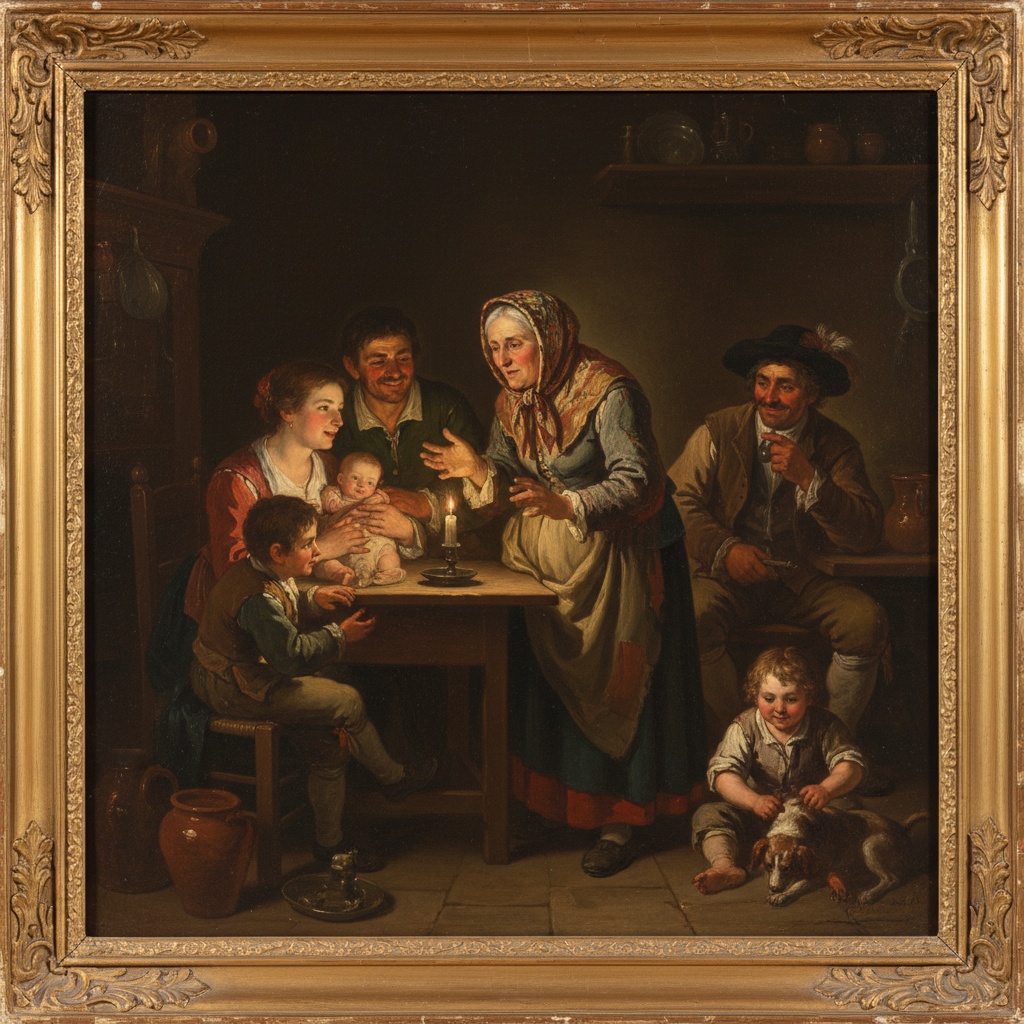
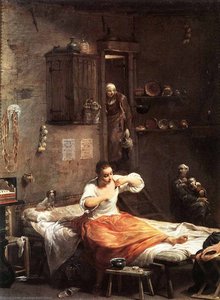
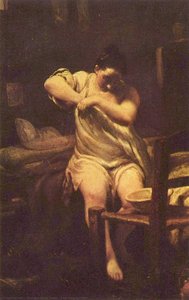
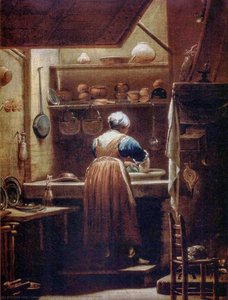
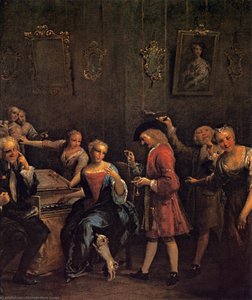
The early 17th century witnessed a shift in artistic patronage, driven by the Counter-Reformation’s emphasis on religious themes and grand historical narratives. Italian artists largely focused on these established genres, leaving the depiction of everyday life – genre painting – relatively unexplored. Crespi boldly challenged this convention. While he certainly fulfilled commissions for altarpieces and portraits, his true passion lay in capturing the lives of ordinary people: market vendors, peasants toiling in fields, families gathered around a humble meal. This was not merely an aesthetic choice; it represented a fundamental shift in perspective – a recognition of inherent dignity and artistic merit within the commonplace.
His biographer, Giampietro Zanotti, noted Crespi’s unique ability to “make stories and caprices that came into his imagination,” often depicting “the lowest occupations” of those who sustained themselves through hard work. This willingness to portray such subjects was revolutionary for its time, elevating the lives of the working class to a level previously reserved for religious or aristocratic figures. Crespi’s innovative approach wasn't simply about subject matter; it involved a meticulous attention to detail and an almost ethnographic accuracy in his depictions of clothing, tools, and environments. He is even believed to have utilized a camera optica – a precursor to the modern camera – as an aid in achieving this remarkable realism.
The Seven Sacraments: Piety, Realism, and Artistic Innovation
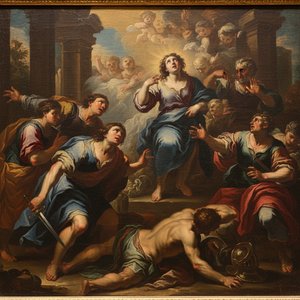
Around 1712, Crespi embarked on one of his most ambitious projects: *The Seven Sacraments*. Commissioned by Cardinal Pietro Ottoboni, a prominent patron of the arts in Rome, this series of canvases represents a masterful synthesis of religious devotion and artistic innovation. What sets these paintings apart is their deliberate rejection of traditional iconography. Instead of employing saints or allegorical figures, Crespi populated his scenes with ordinary people – humble villagers participating in the rituals of faith. This approach imbued the sacraments with a sense of immediacy and relatability, grounding them firmly within the lived experiences of everyday life.
The paintings are characterized by a loose, expressive brushstroke that conveys both piety and realism. Despite their apparent simplicity, they demonstrate a sophisticated understanding of composition, light, and shadow. Upon Ottoboni’s death, the series passed into the hands of the Elector of Saxony and now resides in the Gemäldegalerie Alte Meister in Dresden, serving as a testament to Crespi's enduring legacy. The *Seven Sacraments* are not merely religious paintings; they are profound meditations on faith, community, and the human condition.
A Master of Detail: Examining 'Village Fair' and 'Confession'
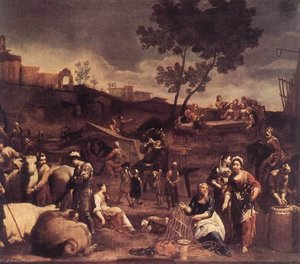 Village Fair
Discover 'Village Fair' by Giuseppe Maria Crespi (1709). A vibrant Baroque oil painting showcasing daily life in Bologna. Explore its dynamic composition & rich textures.
To truly appreciate Crespi’s genius, one must delve into specific examples of his work. *Village Fair* (1709) is a vibrant tapestry of daily life in Bologna, teeming with activity and populated by a diverse cast of characters. The dynamic composition draws the viewer into the bustling scene, capturing the energy and chaos of a market day. Crespi’s meticulous attention to detail – from the textures of fabrics to the expressions on faces – brings the painting to life, offering a glimpse into the social fabric of 18th-century Italy.
*Confession* (1712) offers a more intimate and introspective view. The dramatic chiaroscuro – the interplay of light and shadow – creates a sense of psychological tension, drawing attention to the emotional weight of the scene. The confessional itself is rendered with remarkable realism, while the figures are imbued with a palpable sense of vulnerability and spiritual struggle. Both paintings demonstrate Crespi’s ability to blend technical mastery with profound human insight.
Crespi’s Later Years & Legacy: Influence on Italian Art
Despite his success, Crespi remained an enigmatic figure throughout his career. He was known for his eccentric personality and a tendency towards independence, often refusing commissions that did not align with his artistic vision. His later years were marked by continued experimentation and a deepening exploration of genre painting. While he produced fewer large-scale religious works, his smaller canvases continued to showcase his remarkable skill and keen observation of everyday life.
Crespi’s influence on Italian art is undeniable. He paved the way for a new generation of artists who embraced genre painting as a legitimate form of artistic expression. His emphasis on realism, psychological depth, and social commentary resonated with subsequent painters, shaping the course of Italian art in the 18th century and beyond. Today, his works are celebrated for their unique blend of Baroque grandeur and intimate humanism. At ArtsDot, we offer high-quality reproductions of Crespi’s masterpieces, allowing you to experience the beauty and artistry of this remarkable painter firsthand. Explore our collection and discover the enduring legacy of Giuseppe Maria Crespi – a true pioneer of genre painting and a defining figure of the Bolognese Baroque. Find your perfect piece today!