The Rise of 'Makartstil': Vienna's Embrace of Opulence
Academic art, academicism, or academism, is a style of painting and sculpture produced under the influence of European academies of art. This method extended its influence throughout the Western world over several centuries, from its origins in Italy...
Vienna in the latter half of the 19th century was a city intoxicated by spectacle, and at the heart of this cultural fervor stood Hans Makart. More than merely a painter, Makart became a phenomenon – an orchestrator of lavishness whose influence permeated not only the art world but also fashion, interior design, and even the very social fabric of the Austro-Hungarian Empire. His name lent itself to “Makartstil,” a distinctive aesthetic characterized by rich ornamentation, historical revivalism, and a deliberate embrace of sensuality. This wasn’t simply about beauty; it was about creating an immersive experience, a total work of art that enveloped the viewer in a world of fantasy and grandeur. The son of a chamberlain at the Mirabell Palace, Makart absorbed the Baroque splendor of his upbringing, but he transformed it into something uniquely modern – a theatrical vision that resonated with a society eager to celebrate its own prosperity and power.
A Master of Historical Narrative: Makart’s Painting Technique & Subject Matter
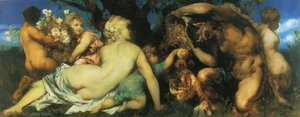 Die Ernte
Discover "Die Ernte" by Hans Makart – a stunning 1872 oil painting of naked figures & abundant flowers in opulent Academic style. Explore this masterpiece!
Makart's artistic journey began with formal training at the Vienna Academy, though his impatience with its rigid classicism soon led him elsewhere. He found mentorship in Karl Theodor von Piloty in Munich, where he honed a technique that prioritized color and atmosphere over precise draftsmanship. His canvases are immediately recognizable for their vibrant palette – deep reds, shimmering golds, and rich blues deployed to create dramatic contrasts and evoke emotional intensity. While rooted in historical subject matter—scenes from mythology, biblical stories, or episodes from the lives of famous figures—Makart wasn’t concerned with strict accuracy. Instead, he used history as a springboard for exploring themes of love, loss, and desire. “Die Ernte” (The Harvest), painted in 1872, exemplifies this approach: naked figures amidst abundant flowers are not presented as a literal depiction of rural life but rather as an allegorical celebration of fertility and pleasure. His brushwork is loose and expressive, creating a sense of movement and vitality that draws the viewer into the scene.
Sensuality and Symbolism: Decoding the Layers in Makart’s Portraits
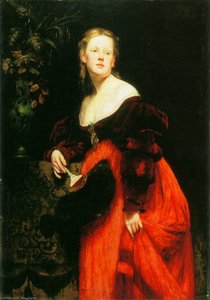 Karoline Gomperz
Discover Hans Makart’s "Karoline Gomperz," a captivating 19th-century portrait in Romantic style. Explore its chiaroscuro lighting, opulent details & symbolic elements – a masterpiece of Austrian art.
Perhaps most captivating are Makart's portraits, which transcend mere representation to become studies in character and mood. He didn’t simply paint *what* his sitters looked like; he painted *how* they wished to be seen – or perhaps how he imagined them to be. “Dame mit Federhut in Rückenansicht” (Lady with Feather Hat, Seen from Behind), for instance, is a masterclass in suggestion and intrigue. The subject’s face remains obscured, focusing attention on the exquisite detail of her attire and the graceful curve of her form. This deliberate ambiguity invites speculation about her identity and inner life. “Karoline Gomperz” similarly showcases his skill with chiaroscuro lighting and opulent details, but it also reveals a deeper symbolic layer – the carefully chosen accessories and background elements hint at the sitter’s social status, aspirations, and perhaps even hidden desires. Makart understood that clothing, jewelry, and setting could be as revealing as any facial expression.
Makart’s Influence on Klimt and the Vienna Secession
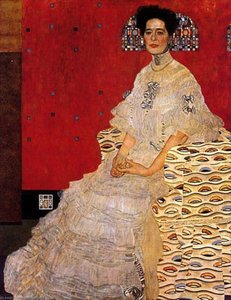
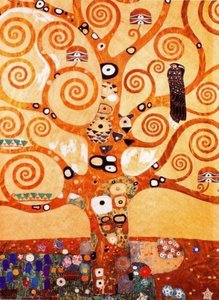
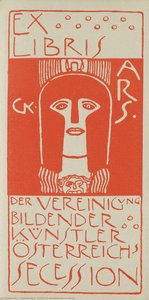
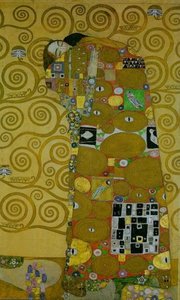
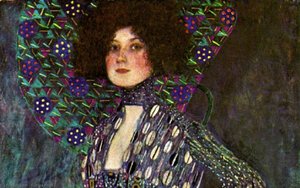
The impact of Hans Makart extended far beyond his own lifetime, most notably shaping the trajectory of Gustav Klimt and the Vienna Secession. While Klimt would eventually break away from the academic traditions that Makart initially embodied, he undeniably absorbed the older artist’s love of ornamentation, sensuality, and rich color. Makart's studio itself—a lavishly decorated space filled with costumes, props, and exotic objects—served as a model for Klimt’s own artistic environment. The Secessionists rejected the conservative values of the establishment, but they inherited Makart’s commitment to creating a total work of art that integrated painting, sculpture, architecture, and design. The emphasis on decorative elements and symbolic meaning in Klimt's works can be directly traced back to Makart’s influence, albeit filtered through a more modern sensibility.
Beyond the Canvas: Makart as a Designer, Decorator, and Cultural Icon
 Wikipedia: Hans Makart
Hans Makart (28 May 1840 – 3 October 1884) was an Austrian academic history painter, designer and decorator. Makart was a prolific painter whose ideas significantly influenced the development of visual art in Austria-Hungary, Germany, and other count...
Makart wasn’t content to confine his creativity to the canvas. He actively engaged in interior design, fashion, and even theatrical productions, transforming entire spaces into immersive environments that reflected his aesthetic vision. His Venetian studio became legendary—a social hub where royalty, politicians, artists, and writers mingled amidst a breathtaking display of luxury and extravagance. He famously designed costumes and scenery for the silver wedding anniversary celebration of Emperor Franz Joseph and Empress Elisabeth, an event that showcased his unparalleled ability to orchestrate spectacle on a grand scale. This foray into public life cemented his status as a cultural icon—a symbol of Vienna’s artistic dynamism and its embrace of opulence.
Collecting Hans Makart Today: Investment & Appreciation
While overshadowed by some of his more avant-garde successors, Hans Makart is experiencing a renewed appreciation among collectors. His works represent a fascinating intersection of historical revivalism, aestheticism, and early modern sensibility. Investing in Makart isn’t simply about acquiring beautiful paintings; it's about owning a piece of Viennese cultural history—a testament to an era defined by its embrace of spectacle and sensuality. His portraits, with their exquisite detail and psychological depth, are particularly sought after, as are his larger historical compositions that showcase his mastery of color and composition. ArtsDot.com offers a curated selection of high-quality reproductions of Makart’s masterpieces, allowing art enthusiasts to experience the grandeur of his vision firsthand. Whether you're a seasoned collector or simply appreciate the beauty of 19th-century Austrian art, Hans Makart’s work is sure to captivate and inspire.