The Renaissance Home: Status, Symbolism & Early Genre Painting
Genre art is the pictorial representation in any of various media of scenes or events from everyday life, such as markets, domestic settings, interiors, parties, inn scenes, work, and street scenes. Such representations (also called genre works, genr...
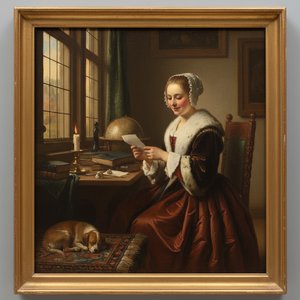
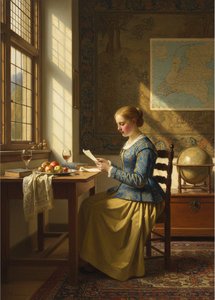
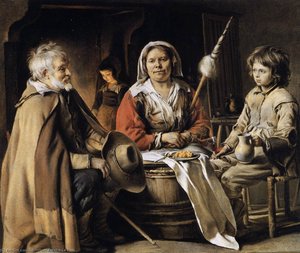
The Renaissance witnessed a burgeoning interest in the human experience, extending beyond religious narratives to encompass the everyday world. While grand history paintings and portraits of nobility dominated artistic production, a subtle yet significant shift began to occur – an exploration of domestic interiors. These spaces weren’t merely backdrops; they were carefully constructed statements of wealth, status, and familial piety. Early examples often appear within larger compositions, like wedding chests or depictions of aristocratic life, offering glimpses into the richly furnished rooms that signified a family's position in society. The objects themselves – intricately carved furniture, imported textiles, gleaming silver – weren’t simply decorative; they were visual shorthand for prosperity and refined taste. Artists began to subtly imbue these scenes with symbolic meaning. A lute might represent harmony, a closed book signify learning, or the presence of specific fruits allude to virtue or temptation. This nascent genre painting wasn't about capturing fleeting moments but rather constructing an idealized vision of domestic life, one that reinforced social hierarchies and celebrated humanist values.
Dutch Golden Age Interiors: Realism, Chiaroscuro & Everyday Life
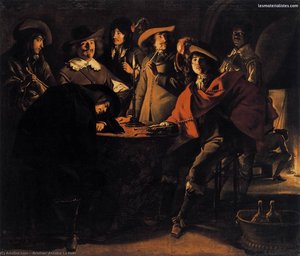
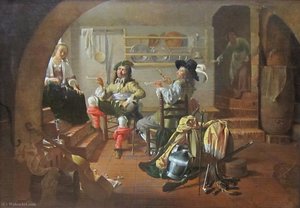 Interior with Soldiers and Women
Explore 'Interior with Soldiers & Women' by Jacob Duck – a realistic Dutch Golden Age painting of tavern life. Discover its chiaroscuro, detailed figures & 17th-century charm.
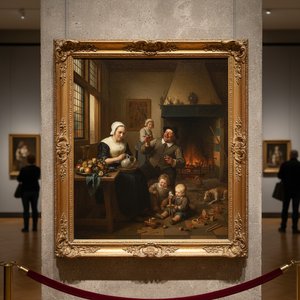
The 17th-century Dutch Golden Age marked a pivotal moment in the development of genre painting. Unlike their Italian counterparts who often focused on idealized beauty, Dutch artists embraced realism with remarkable precision. The interiors they depicted weren’t those of the wealthy elite but rather the homes of merchants, artisans, and even humble tavern keepers. Jacob Duck's “Interior with Soldiers & Women” exemplifies this shift – a bustling scene brimming with detailed figures engaged in lively conversation and everyday activities. The painting isn’t about grand narratives; it’s about capturing a specific moment in time, a slice of life rendered with astonishing accuracy. A key characteristic of Dutch interior paintings is the masterful use of chiaroscuro, the dramatic interplay of light and shadow that creates depth and atmosphere. This technique, borrowed from earlier masters but refined to new levels, draws the viewer’s eye to specific details – a half-empty glass, a shared laugh, or the subtle textures of clothing. The focus on domesticity wasn't simply about aesthetic appeal; it reflected the values of a burgeoning middle class that found pride and meaning in their everyday lives.
Baroque Family Life: Antoine Le Nain and the Depiction of Rural France
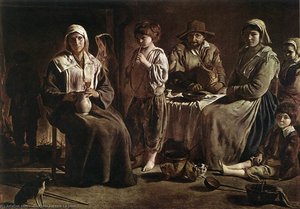
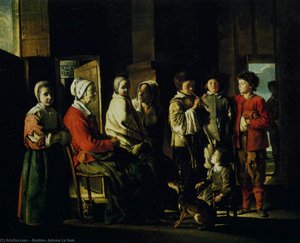 Country interior with the young player of flageolet
Discover Antoine Le Nain’s ‘Country Interior’. A Baroque masterpiece showcasing family life & dramatic chiaroscuro. Explore this 1640 oil painting's realism & timeless appeal.
While the Dutch focused on bustling urban scenes, French Baroque painter Brother Antoine Le Nain offered a more contemplative vision of domestic life. His “Country Interior with the Young Player of Flageolet” presents a scene of quiet intimacy – a family gathered in their modest home, sharing a moment of music and connection. Le Nain’s work is characterized by its dramatic chiaroscuro, which emphasizes the figures' faces and hands, drawing attention to their emotional state. The realism isn’t photographic; rather, it’s imbued with a sense of dignity and solemnity. Unlike the opulent interiors favored by other Baroque artists, Le Nain depicts a simple, rural setting – a testament to the virtues of family life and hard work. The painting's appeal lies in its ability to evoke a sense of warmth and connection, inviting viewers to contemplate the bonds that hold families together. It’s a powerful example of how genre painting could be used not just to depict everyday life but also to explore deeper themes of human emotion and social values.
18th-Century Domesticity: Rococo Charm & The Rise of Interior as Subject
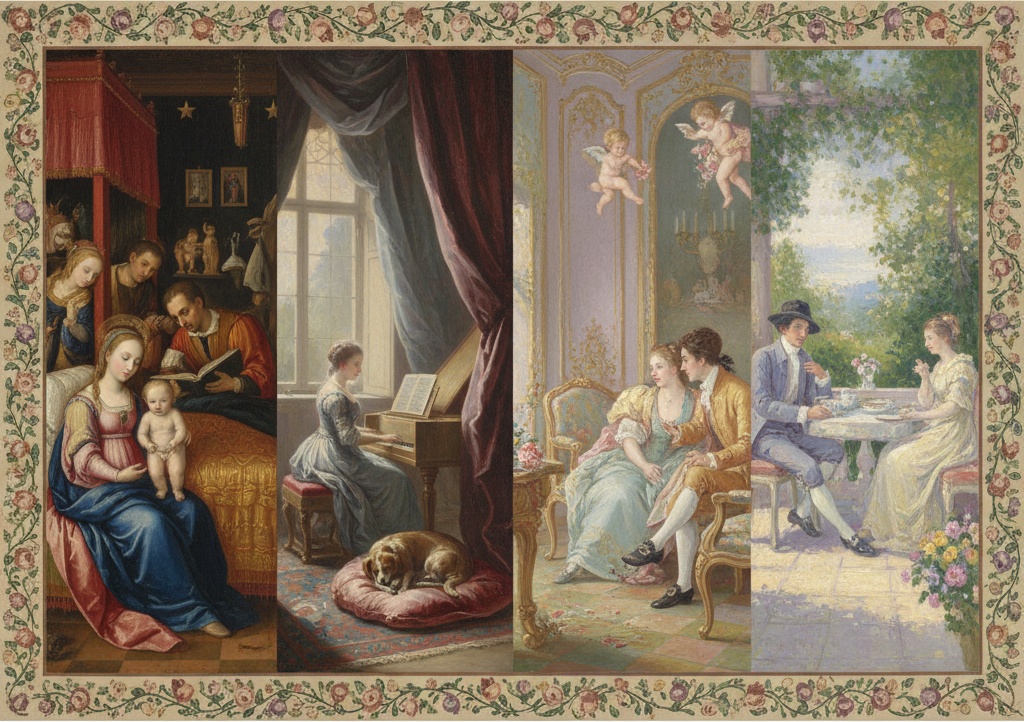
The 18th century, with its emphasis on elegance and refinement, saw a further elevation of the domestic interior. Rococo painting celebrated the pleasures of leisure and luxury, depicting lavishly decorated salons filled with fashionable figures engaged in courtship and entertainment. While not always focused on realism, these paintings captured the atmosphere of aristocratic life – the delicate fabrics, ornate furniture, and playful conversation that defined the era. More importantly, the interior itself began to emerge as a subject worthy of artistic attention. Artists started to depict rooms as self-contained worlds, carefully arranged compositions designed to showcase good taste and social status. Single figures or small groups decorated porcelain, furniture, wallpaper, and textiles, reflecting the growing importance of decorative arts in shaping domestic environments. This period also saw an increase in genre scenes depicting more intimate moments – a mother with her children, a couple sharing a quiet conversation – suggesting a shift towards valuing personal connection alongside social display.
Impressionism's Intimate Spaces: Capturing Light, Mood & Modern Living
The Impressionists revolutionized the depiction of domestic interiors by shifting their focus from narrative and symbolism to capturing fleeting moments of light and atmosphere. Artists like Édouard Manet and Mary Cassatt abandoned traditional techniques in favor of loose brushstrokes and vibrant colors, seeking to convey the subjective experience of being within a space. Cassatt’s paintings, in particular, offer intimate glimpses into the lives of women – mothers with their children, sisters sharing a quiet moment – rendered with remarkable sensitivity and psychological depth. The interiors themselves aren't grand or opulent; they are often modest apartments filled with everyday objects. What sets Impressionist interior scenes apart is their emphasis on mood and atmosphere. Artists sought to capture the way light filtered through windows, the subtle colors of fabrics, and the overall feeling of warmth and intimacy. This focus on subjective experience reflected a broader shift in modern society – a growing appreciation for personal connection and the beauty of everyday life.
The Enduring Appeal of Domestic Interiors in Western Art
From the Renaissance to Impressionism, the depiction of domestic interiors has served as a powerful lens through which to explore changing social values, artistic techniques, and human emotions. What began as subtle statements of status evolved into nuanced explorations of everyday life, family connection, and personal identity. The enduring appeal of these paintings lies in their ability to transport us to another time and place, inviting us to contemplate the lives of those who came before us. Whether it’s the richly furnished rooms of a Renaissance merchant or the intimate spaces of an Impressionist apartment, domestic interiors offer a glimpse into the human heart – a testament to our enduring desire for comfort, connection, and beauty. At ArtsDot, we are dedicated to bringing these masterpieces closer to you through high-quality reproductions that capture the essence of each original artwork, allowing you to experience the magic of art in your own home.