Early Life & Artistic Foundations: Harlem's Influence
Jacob Armstead Lawrence, born in Atlantic City, New Jersey, in 1917, emerged from a childhood steeped in the realities of the Great Migration and the burgeoning cultural energy of Harlem. His early life was marked by instability; his parents’ divorce led to periods in foster care in Philadelphia before he rejoined his mother in New York City at the age of thirteen. It was within the vibrant tapestry of Harlem that Lawrence truly found his artistic voice, a voice profoundly shaped by the neighborhood's collective experiences and its unwavering spirit. The Utopia Children's Center provided initial exposure to art, but it was Charles Alston at the Harlem Art Workshop and Augusta Savage at the Harlem Community Art Center who nurtured his burgeoning talent. These mentors weren’t simply instructors; they were conduits to a rich artistic lineage, connecting Lawrence to the broader African American artistic community and instilling in him a sense of purpose – to depict the lives and struggles of Black Americans with honesty and dignity.
Harlem itself served as an inexhaustible source of inspiration. Unlike many artists who sought subject matter elsewhere, Lawrence found beauty and power within his immediate surroundings. The “hard, bright, brittle” aspects of Depression-era Harlem – the bustling streets, the intimate interiors of homes decorated with vibrant colors and patterns – became integral to his aesthetic. He absorbed the visual language of everyday life, recognizing a sophisticated artistry in the seemingly mundane. This grounding in personal observation would become a defining characteristic of his work, setting him apart from artists who relied on more conventional sources of inspiration.
The Migration Series: A Visual Chronicle of African American Experience
This exhibition commemorates an important moment in the history of American painting, in the history of The Phillips. Collection and The Museum of Modern Art, ...
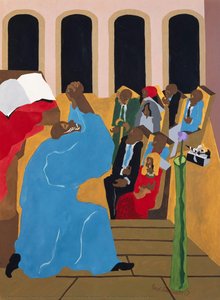
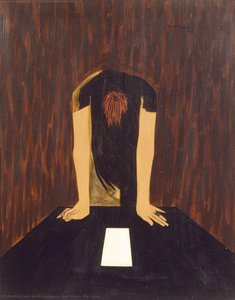
At just twenty-three years old, Jacob Lawrence achieved national recognition with The Migration Series, a monumental 60-panel work that stands as one of the most significant achievements in American art. Commissioned with funding from the Julius Rosenwald Fund, the series meticulously documents the Great Migration – the mass movement of African Americans from the rural South to the urban North between the 1910s and 1970s. More than a mere historical record, The Migration Series is a deeply empathetic portrayal of human resilience, hope, and the search for a better life.
Each panel functions as a self-contained narrative vignette, yet collectively they weave a powerful tapestry of experience. Lawrence doesn’t shy away from depicting the hardships faced by migrants – poverty, discrimination, overcrowded living conditions – but he also emphasizes their agency, determination, and unwavering faith. The series is remarkable for its compositional unity; Lawrence worked on all sixty panels simultaneously, ensuring a consistent color palette and stylistic approach. This deliberate choice creates a sense of rhythm and flow, drawing the viewer through the narrative arc of the migration with compelling force. The use of bold colors and simplified forms isn’t accidental; it reflects both his artistic influences and a desire to create an accessible visual language that resonated with a broad audience.
Dynamic Cubism & Lawrence’s Unique Style
Lawrence famously described his style as “dynamic cubism,” a term that belies its simplicity. It wasn't merely an adoption of European modernist techniques, but rather a conscious synthesis of influences – the fractured planes and bold colors of Cubism combined with the rhythmic patterns and symbolic language of African art and Meso-American traditions. This fusion resulted in a uniquely expressive visual vocabulary perfectly suited to his subject matter.
The dynamism inherent in Lawrence’s work isn't simply aesthetic; it reflects the energy and movement of the migration itself, as well as the internal struggles and aspirations of those involved. Figures are often depicted in motion, their bodies angular and fragmented, conveying a sense of urgency and determination. The use of flat planes of color creates a striking visual impact, while also emphasizing the symbolic weight of each element within the composition. Unlike traditional Cubism which often focused on deconstructing form for its own sake, Lawrence employed these techniques to tell a story – to convey emotion, history, and social commentary.
Themes of Social Justice and Historical Representation
Throughout his career, Jacob Lawrence consistently used his art as a vehicle for social justice and historical representation. He wasn’t content simply to depict the lives of African Americans; he sought to reclaim their narratives, challenging dominant perspectives and giving voice to marginalized experiences. His early series on Toussaint L'Ouverture, Harriet Tubman, and Frederick Douglass established this commitment, celebrating Black heroes and highlighting pivotal moments in African American history.
The Migration Series, however, represents the culmination of this ambition. By focusing on an often-overlooked chapter in American history – the mass migration of African Americans from the South – Lawrence brought a crucial story to the forefront of public consciousness. He didn’t romanticize or idealize his subjects; he presented them with honesty and complexity, acknowledging both their struggles and their triumphs. This commitment to authenticity resonated deeply with audiences and helped to establish him as a leading voice in the Civil Rights Movement.
Beyond the Migration Series: Exploring Diverse Subject Matter
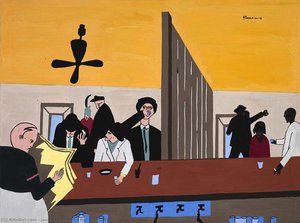
While The Migration Series remains his most celebrated work, Jacob Lawrence’s artistic output was remarkably diverse. He explored a wide range of subjects throughout his career, from depictions of Harlem life in his “Library Series” to poignant portrayals of everyday moments and intimate scenes. The “Library Series: The Schomburg” (1986), for example, captures the vibrant intellectual atmosphere of Harlem’s renowned library, showcasing its role as a vital community hub.
His Harriet Tubman Series exemplifies his ability to distill complex historical narratives into powerful visual statements. The dynamic brushwork and African tribal influences in these panels underscore the strength and resilience of Tubman and the Underground Railroad. Even seemingly simple scenes, such as depictions of railroad stations crowded with migrants (“The railroad stations in the South were crowded with people leaving for the North”), are imbued with symbolic weight and emotional depth. Lawrence’s ability to find beauty and meaning in everyday life is a testament to his artistic vision and unwavering commitment to social commentary.
Lawrence’s Legacy and Enduring Impact on American Art
Jacob Lawrence's influence on American art is profound and enduring. He paved the way for generations of African American artists, challenging conventional norms and expanding the boundaries of representation. His work continues to resonate with audiences today, prompting reflection on issues of race, identity, and social justice.
His paintings are held in the permanent collections of numerous museums, including the Philadelphia Museum of Art, the Whitney Museum, Metropolitan Museum of Art, and the Brooklyn Museum, a testament to his lasting artistic significance. Beyond his painting, Lawrence dedicated sixteen years as a professor at the University of Washington, nurturing young talent and fostering a new generation of artists. ArtsDot.com proudly offers high-quality reproductions of Jacob Lawrence’s iconic works, allowing art enthusiasts to experience the power and beauty of his vision firsthand. Explore our collection today and discover the enduring legacy of this pivotal American artist.