The Barbizon School & Millet’s Artistic Origins
The Barbizon school (French: école de Barbizon, pronounced [ekɔl də baʁbizɔ̃]) is the name given to oil painters and others who were part of an art movement advancing Realism in art, which arose in the context of the dominant Romantic Movement of the...
Jean-François Millet, a name synonymous with the dignity of rural life and the burgeoning Realist movement of 19th-century France, didn't emerge from a vacuum. His artistic journey began amidst the romantic ideals that still held sway, but quickly diverged towards a more grounded, honest portrayal of the world around him. Born in 1814 in Gruchy, Normandy, Millet’s early life was deeply intertwined with the land – a formative experience that would profoundly shape his aesthetic vision. While initially receiving traditional artistic training in Cherbourg and later Paris, he found himself increasingly disillusioned with the academic emphasis on historical or mythological subjects. The rigid conventions of the Salon system felt distant from the realities he knew, prompting him to seek kindred spirits who shared his desire for a more authentic representation of modern life. This search led him to Barbizon, a small village nestled at the edge of the Forest of Fontainebleau.
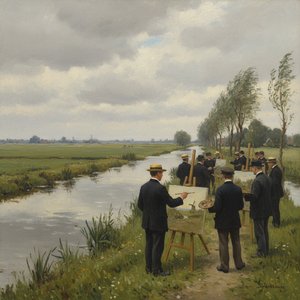
Barbizon wasn’t merely a geographical location; it was an intellectual and artistic haven. Here, alongside painters like Théodore Rousseau, Charles Jacque, and Constant Troyon, Millet found a community dedicated to painting *en plein air* – directly from nature. This collective rejection of studio-bound art marked the birth of the Barbizon School, a movement that prioritized observation, natural light, and the unvarnished truth of the countryside. The forest itself became their muse, offering an endless source of inspiration and a refuge from the constraints of Parisian artistic circles. It was within this environment that Millet began to develop his signature style – one characterized by a profound respect for the laboring class and a quiet reverence for the rhythms of rural existence.
Realism as Rebellion: Challenging Academic Conventions
Realism was an artistic movement that emerged in France in the 1840s. Realists rejected Romanticism, which had dominated French literature and art since the early 19th century. The artist Gustave Courbet, the original proponent of Realism, sought to ...
The emergence of Realism in the mid-19th century was, at its core, a rebellion. For decades, French art had been dominated by Romanticism – a movement that prioritized emotion, imagination, and often, idealized depictions of the past. Gustave Courbet, widely considered the father of Realism, spearheaded a radical shift, advocating for paintings that depicted “the customs, ideas, and appearances of our time.” This was a direct challenge to the established order, which favored grand historical narratives and allegorical scenes. Millet’s work, while distinct from Courbet's often starkly political canvases, shared this fundamental commitment to portraying contemporary life with unflinching honesty.
The Salon, the official art exhibition of the Académie des Beaux-Arts, was the gatekeeper of artistic success in France. Its jury, composed of established artists and critics, held immense power over which works were deemed worthy of public display. Millet’s early submissions frequently met with rejection, a testament to the prevailing conservative tastes. His paintings weren't considered “elevated” enough; they lacked the drama, exoticism, or historical significance that the Salon favored. However, this resistance only fueled his determination to depict the lives of ordinary people – farmers, laborers, and peasants – with dignity and respect. He wasn’t interested in sensationalizing their hardship but rather in revealing the inherent nobility of their work and the profound connection they shared with the land.
Peasant Life as Poetry: Millet's Revolutionary Subject Matter
 Wikipedia: Jean-François Millet
Jean-François Millet (French pronunciation: [ʒɑ̃ fʁɑ̃swa milɛ]; 4 October 1814 – 20 January 1875) was a French artist and one of the founders of the Barbizon school in rural France. Millet is noted for his paintings of peasant farmers and can be cate...
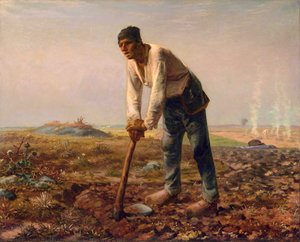
What truly set Millet apart was his ability to transform the mundane realities of peasant life into something profoundly poetic. He didn’t shy away from depicting the backbreaking labor, the poverty, and the hardship inherent in rural existence; instead, he imbued these scenes with a quiet dignity and spiritual resonance. His subjects weren't romanticized or idealized but presented as individuals deeply connected to the natural world, their lives governed by the rhythms of the seasons and the demands of the land.
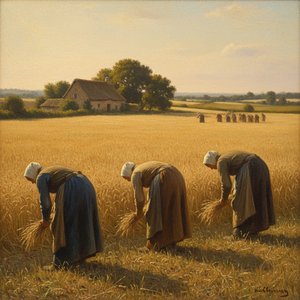
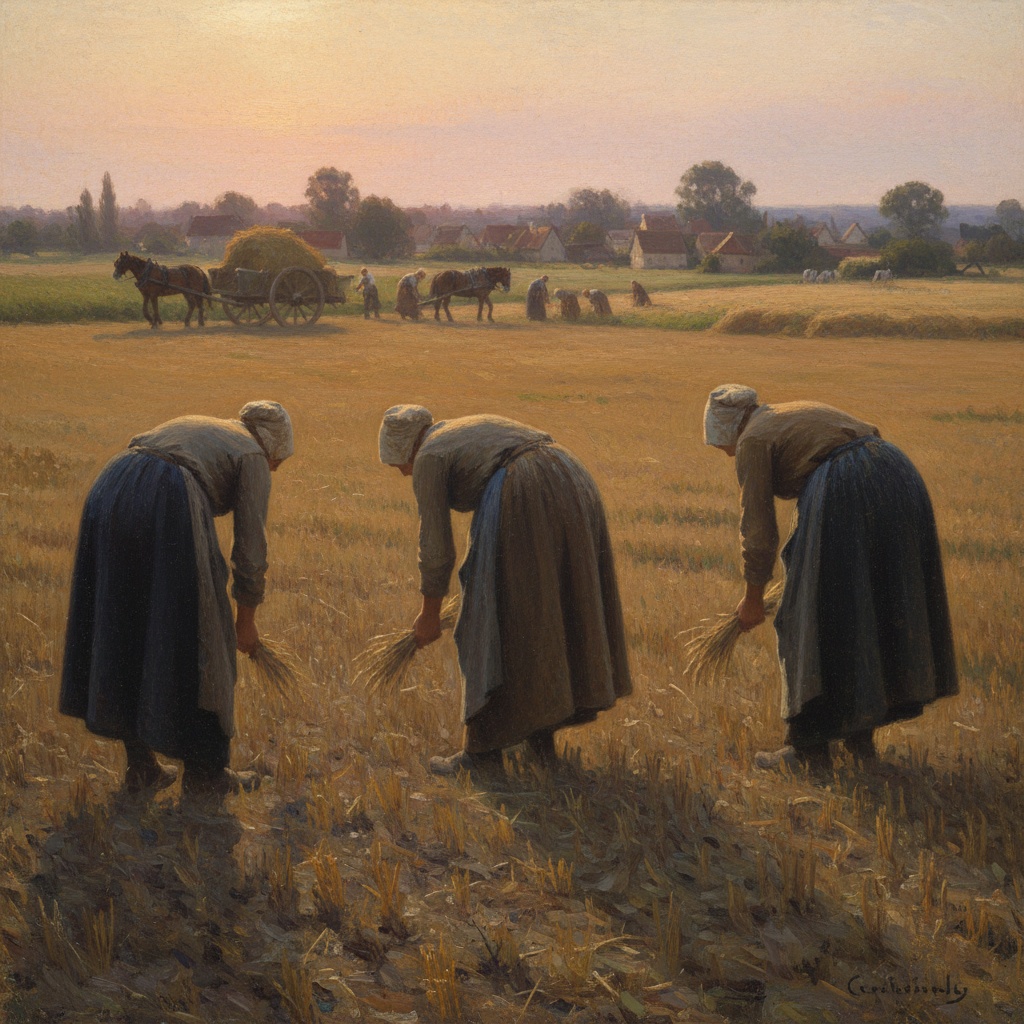
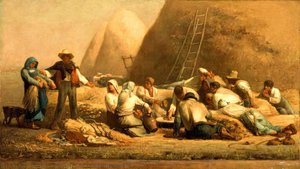
Consider his depictions of gleaners – women scavenging for leftover grain after the harvest. Rather than portraying them as pitiable figures, Millet elevates them to a symbol of resilience and perseverance. Their stooped postures and weathered faces speak volumes about their arduous lives, yet there’s also a sense of quiet strength and dignity in their work. Similarly, his paintings of harvesters resting aren't simply depictions of rural laborers taking a break; they are meditations on the cyclical nature of life, the importance of community, and the profound connection between humanity and the earth. He saw in these individuals a moral virtue often overlooked by society – a dedication to honest labor and a deep respect for the land that sustained them.
Iconic Works: 'The Angelus,' 'Harvesters Resting,' and Beyond
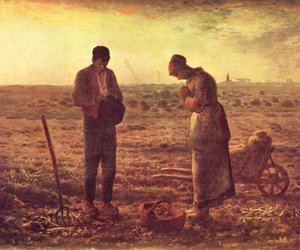
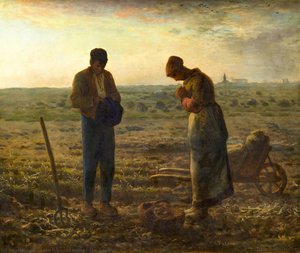 The Angelus
Experience 'The Angelus' by Millet – a timeless masterpiece of Realism depicting rural devotion. Explore this iconic painting’s history & profound symbolism. Perfect for art lovers!
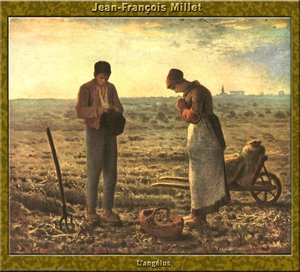
Several paintings cemented Millet’s reputation as a master of Realism and continue to captivate audiences today. 'The Angelus' (1857-59), perhaps his most famous work, depicts a peasant couple pausing their work at dusk to offer a silent prayer. The painting’s simple composition – two figures standing in a field before a humble dwelling – belies its profound emotional depth. The symbolism of the angelus bell, signaling the evening devotion, adds another layer of meaning, evoking themes of faith, family, and the sanctity of everyday life.
'Harvesters Resting' (1853) offers a more expansive view of rural existence, depicting a group of laborers taking a break in the field. The painting’s monumental scale and earthy palette create a sense of solidity and weight, emphasizing the physicality of their work. The figures are not idealized but presented as individuals weathered by the sun and toil, yet there's also a sense of camaraderie and shared purpose in their gathering. Other notable works, such as 'The Gleaners' (1857) and 'Sower', further demonstrate Millet’s ability to elevate ordinary subjects to the level of high art.
Symbolism and Interpretation: Unveiling the Deeper Meaning in Millet’s Art
While Millet championed a realistic portrayal of life, his paintings are far from devoid of symbolism. His work is imbued with subtle layers of meaning that invite contemplation and interpretation. The recurring motif of prayer, for example, speaks to the importance of faith in rural communities and the solace found in spiritual devotion. His depictions of labor often carry allegorical weight, representing not just physical toil but also themes of sacrifice, perseverance, and the cyclical nature of life.
The Angelus, for instance, has been interpreted as a symbol of hope amidst hardship, a testament to the enduring power of faith in the face of adversity. Similarly, 'Harvesters Resting' can be seen as a meditation on the importance of community and the shared human experience. Millet’s use of light and shadow also plays a crucial role in conveying meaning. The warm, golden hues often associated with his paintings evoke a sense of nostalgia and reverence for the natural world, while the darker tones suggest the hardships and challenges inherent in rural life.
Millet’s Enduring Legacy & Influence on Modern Painting
Jean-François Millet's impact on the course of art history is undeniable. His commitment to portraying contemporary life with honesty and dignity paved the way for subsequent generations of Realist painters, including artists like Gustave Courbet and Honoré Daumier. His influence extended beyond France, inspiring artists across Europe and America to embrace a more grounded and authentic approach to their work.
Furthermore, Millet’s paintings had a profound impact on Impressionism and Post-Impressionism. Artists like Vincent van Gogh were deeply moved by his depictions of peasant life and sought to emulate his expressive brushwork and emotional depth. His emphasis on capturing the fleeting effects of light and atmosphere also resonated with the Impressionists, who shared his desire to paint directly from nature. Today, Millet’s works continue to be celebrated for their timeless beauty, profound symbolism, and enduring relevance. You can explore a stunning collection of his masterpieces – and discover your own connection to this remarkable artist – at ArtsDot.com, where the legacy of Realism lives on through meticulously crafted reproductions that capture the essence of his vision.