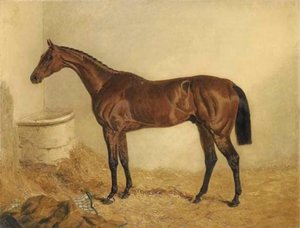
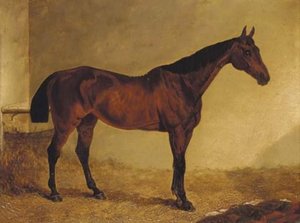
Early Life & Artistic Beginnings: From Coachman to Painter
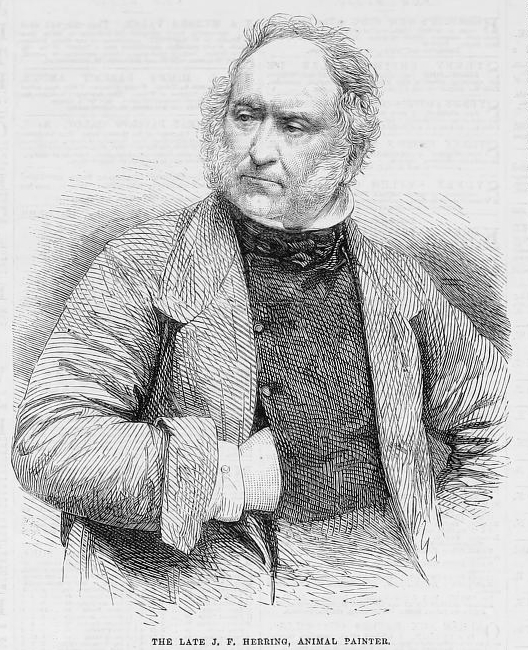 Wikipedia: John Frederick Herring Sr.
John Frederick Herring Sr. (12 September 1795 – 23 September 1865), also known as John Frederick Herring I, was a painter, sign maker and coachman in Victorian England. He painted the 1848 "Pharoah's Chariot Horses" (archaic spelling "Pharoah"). He a...
John Frederick Herring Sr.’s journey to becoming one of Victorian England’s most celebrated animal painters was anything but conventional. Born in London in 1795, his early life offered little indication of the artistic renown he would achieve. The son of a merchant of Dutch descent, young Herring displayed an innate fascination with drawing and, crucially, horses – a passion that would define his career. His initial foray into the working world wasn’t through formal art training but as a carriage painter, meticulously applying designs to vehicles. This practical experience honed his hand-eye coordination and attention to detail, skills that would later prove invaluable. A pivotal move in 1814 saw him relocate to Doncaster, then the heart of British horse racing, where he took employment as a coachman. It was here, amidst the vibrant energy of the racecourse, witnessing the power and grace of these magnificent animals firsthand, that Herring’s artistic ambitions truly began to take shape. He supplemented his income by painting portraits of horses for local inns, earning him the moniker “the artist coachman.” This period wasn't merely a means to an end; it was a crucial apprenticeship, allowing him to intimately understand equine anatomy and movement before ever attempting a formal composition.
The Ascendancy of the Sporting Genre: Capturing the Victorian Passion for Horses
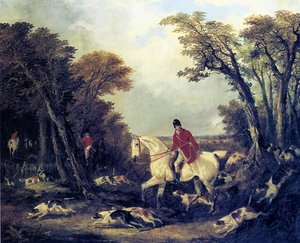 On the Scent
Experience the thrill of the chase with 'On the Scent' by John Frederick Herring Sr.! This dynamic 19th-century British painting captures a lively fox hunt, showcasing masterful detail and energy.
Herring’s rise coincided with a burgeoning national obsession – the sporting life. The Victorian era witnessed an unprecedented enthusiasm for horse racing, hunting, and shooting, activities deeply intertwined with aristocratic society and notions of English identity. Prior to Herring, depictions of horses often served as symbols of power or religious allegory. However, Herring pioneered a new approach: he captured the raw energy, athleticism, and individual character of these animals within the context of their sporting pursuits. His paintings weren’t simply portraits; they were dynamic narratives that celebrated speed, skill, and the thrill of the chase. “On the Scent”, for example, vividly portrays the excitement of a fox hunt, showcasing not just the horses but also the landscape and the human participants in a lively composition. This shift resonated deeply with a public eager to see their passions reflected in art. The demand for his work grew exponentially as he moved from Doncaster to Newmarket in 1830, then finally settling in London, establishing himself as the preeminent sporting artist of his time.
Patronage & Prestige: Herring’s Royal Commissions and Aristocratic Clientele
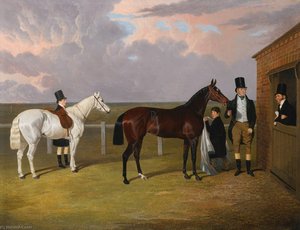 Sir Mark Wood with his dark brown filly Vespa, winner of the Oaks in 1833, her trainer H Scott and a groom with a grey hack
Admire 'Vespa,' a stunning equestrian portrait by John Frederick Herring Senior (1820-1865). Depicting Sir Mark Wood & his filly, this Neoclassical painting captures 19th-century British aristocratic life.
Success brought with it a prestigious clientele. Herring's ability to capture the likeness and spirit of prized horses attracted the attention of wealthy landowners, racehorse owners, and ultimately, royalty. He secured commissions from prominent figures like Sir Mark Wood, whose filly “Vespa” became a celebrated subject in one of Herring’s most notable portraits – a painting that exemplifies his neoclassical style and captures the aristocratic lifestyle of the period. However, it was his appointment as Animal Painter to the Duchess of Kent in 1845, followed by commissions from Queen Victoria herself, that cemented his reputation. These royal endorsements weren't merely symbolic; they signified Herring’s acceptance into the highest echelons of Victorian society and provided him with unparalleled access to exclusive subjects and resources. The paintings he created for the Queen were not simply decorative pieces but carefully crafted representations of her own beloved horses, reflecting a personal connection and artistic skill that few others could match.
Technical Brilliance & Distinctive Style: A Close Look at Herring's Painting Techniques
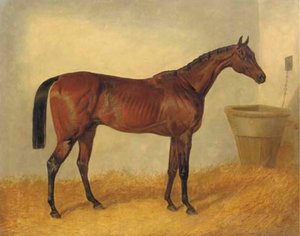 Merry Monarch, a bay mare, in a stable
Admire 'Merry Monarch' by John Frederick Herring Sr.! This stunning 19th-century British animal portrait captures the grace of a bay mare in her stable. A hand-painted reproduction available now!
Herring’s mastery wasn’t solely reliant on his subject matter; it was underpinned by exceptional technical skill. While he received some early guidance from Abraham Cooper, much of his technique was self-taught through diligent observation and experimentation. He possessed an extraordinary ability to capture equine anatomy with remarkable accuracy, conveying both the power and grace of these animals. His brushwork was characterized by a dynamic energy, particularly evident in depictions of horses in motion – a testament to his time spent observing them on the racecourse. “Merry Monarch”, a stunning portrait of a bay mare in her stable, showcases his meticulous attention to detail and ability to render textures realistically, from the sheen of the horse’s coat to the wood grain of the stable walls. He employed a layering technique, building up color and form gradually to create depth and luminosity. Furthermore, Herring wasn't afraid to incorporate elements of narrative into his compositions, often including trainers, grooms, and landscapes that added context and visual interest.
Legacy & Influence: Herring’s Impact on 19th-Century Art and Beyond
John Frederick Herring Sr.’s influence extended far beyond the confines of Victorian England. He ranks alongside Sir Edwin Landseer as one of the most eminent animal painters of the 19th century, leaving an indelible mark on sporting art. His paintings weren’t merely representations of horses; they were celebrations of a lifestyle and a national passion. The sheer volume of his output – hundreds of works exhibited at the Royal Academy and British Institution – testifies to his prolific nature and enduring popularity. His compositions were widely reproduced as engravings, further disseminating his style and imagery throughout society. While later art movements challenged the conventions of Victorian painting, Herring’s legacy continued to inspire artists interested in capturing the beauty and power of animals. His work remains highly sought after by collectors today, representing a tangible link to a bygone era of aristocratic elegance and sporting prowess.
Collecting Herring Today: Value, Authentication, and Investment Potential
For discerning collectors, acquiring a John Frederick Herring Sr. painting represents not only an aesthetic investment but also a piece of Victorian history. His works command significant prices at auction, with portraits of notable racehorses and royal commissions fetching the highest values. Authentication is crucial when considering a purchase; provenance – the documented history of ownership – is paramount. Look for paintings that are accompanied by certificates of authenticity from reputable art dealers or institutions. The condition of the painting also plays a vital role in determining its value, with well-preserved works commanding higher prices. Herring’s paintings appeal to a broad range of collectors, from those interested in sporting art and equestrian themes to those seeking examples of Victorian realism. ArtsDot.com offers a curated selection of high-quality reproductions of Herring's masterpieces, allowing enthusiasts to experience the beauty and artistry of this celebrated painter. Whether you’re an established collector or just beginning your journey into the world of fine art, John Frederick Herring Sr.’s work provides a captivating glimpse into a fascinating period of British history.