 Preview
 Send
Send Share
Share
 Details

 Download
 Similars
 X-Ray
X-Ray Diaporama
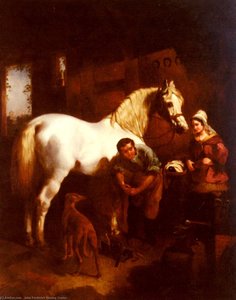
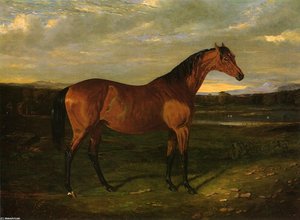
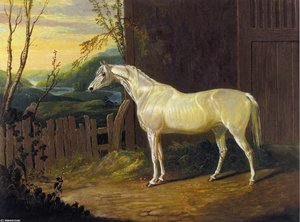
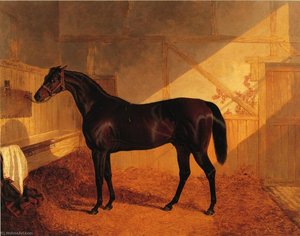
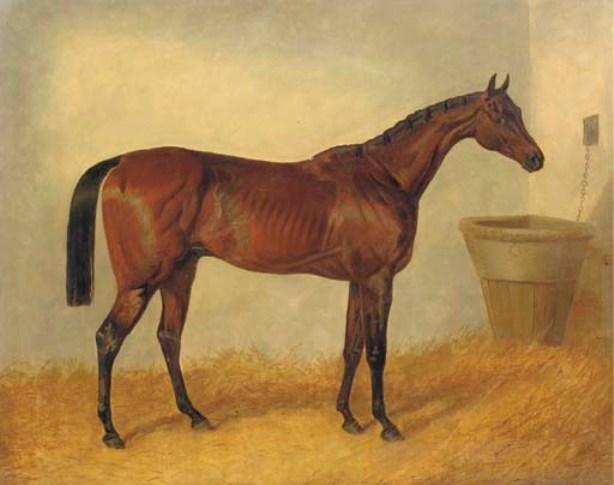
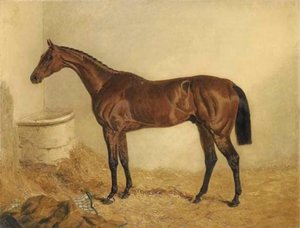
Merry Monarch, a bay mare, in a stable

 Read More
Hand Made Oil Reproduction
Hand-painted oil on canvas in your size and frame, made to order by our artists. ( Buy Print Buy Image)




































Pick from our preset sizes that match the artwork's original proportions.

You may enter your own dimensions to fit a specific frame or space. If your selected size does not match the original image's proportions, we will either crop the artwork or extend the painting with additional hand-painted elements. A digital mockup will be sent for your approval before production begins.
Please note that the on-screen preview does not reflect the actual cropping or extension. Only the mockup will accurately show the final composition.
While custom sizes are available, we recommend selecting a dimension from the predefined list to preserve the original proportions.
After order, ArtsDot.com team will email client for instructions and provide a mockup preview
Worldwide Delivery () in 3/4 weeks instead of standard 5 weeks. (16 August). No compromise on quality.

Free Worldwide Express Shipping

High-Quality Linen Canvas

Full Shipping Insurance

Customs Tax Refund Guarantee

True Color Matching Guarantee

60-Day Return Policy (Defects Only)

100% Money-Back Guarantee

Bulk Discount Offer
 Glass option is only available in size under 110 CM

Merry Monarch, a bay mare, in a stable
Reproduction Medium
Reproduction Size
-


Total Price
$ 263
Artwork Description
Merry Monarch: A Glimpse of Victorian Sporting Life
- Subject & Description: This captivating artwork portrays "Merry Monarch," a beautiful bay mare, within the confines of a stable. Painted by John Frederick Herring Senior, it's a realistic depiction that celebrates the elegance and power of horses, a popular subject in 19th-century British art. The painting focuses on capturing the horse’s form and texture with remarkable detail, offering viewers an intimate look at this magnificent animal.
The Artist: John Frederick Herring Senior
- Biography: Born in London in 1795, John Frederick Herring Sr. was a prominent British animal painter renowned for his skill in depicting horses and sporting scenes. His lineage included Dutch-American roots, and he spent his early years developing an interest in drawing and horses. In 1814, he moved to Doncaster, England, where he gained recognition painting inn signs and coach insignia. Herring's talent flourished, leading him to become the animal painter to Queen Victoria, a testament to his artistic prowess. His sons, including John Frederick Herring Jr., also became accomplished artists, contributing to a family legacy of artistic excellence.
Artistic Technique & Style
- Style: The artwork exemplifies the realistic style prevalent in 19th-century animal portraiture. Herring’s meticulous attention to detail and accurate representation of form are hallmarks of his technique, aiming for a faithful depiction rather than abstract interpretation.
- Technique & Materials: Likely executed using oil paints on canvas, the painting showcases visible brushstrokes skillfully blended to create smooth transitions in color and tone. The artist employed contour lines effectively to define the horse’s musculature, lending volume and realism to the portrayal. The stable wall is rendered with subtle vertical lines, suggesting its construction, while the hay exhibits a rougher, more textured appearance achieved through varied brushwork.
- Composition & Lighting: The composition centers on the bay mare, positioned slightly off-center within the stable setting. A corner of the wall, a water trough, and scattered hay contribute to the scene's context. Diffused lighting creates an even illumination, highlighting the horse’s form without harsh shadows. This gentle light source enhances the tranquil atmosphere of the piece.
Symbolism & Emotional Impact
- Emotional Resonance: "Merry Monarch" evokes a sense of tranquility and appreciation for nature, capturing the inherent grace and strength associated with horses. The painting’s realism fosters an emotional connection between the viewer and the animal, celebrating its nobility and beauty.
- Historical Context & Symbolism: The artwork reflects the Victorian era's fascination with equestrian subjects and sporting life. Horses were symbols of status, power, and athleticism, making them popular subjects for portraiture. This painting provides a window into 19th-century British culture, showcasing an appreciation for animals and their role in society.
Related Artworks
Artist Biography
John Frederick Herring Sr.: A Life in Art and Sport
- Born: September 12, 1795, London, United Kingdom
- Died: September 23, 1865
- Nationality: British
- Occupation: Painter, Sign Maker, Coachman
Early Life and Career
- Herring's father was a London merchant of Dutch parentage.
- From an early age, Herring displayed a dislike for city life and a strong interest in drawing and horses.
- In 1814, at the age of 18, he moved to Doncaster, England.
- He initially worked as a night coachman and painter of inn signs, which provided him with valuable opportunities to observe horses closely.
- His talent was recognized by local gentry, leading to commissions for portraits of hunters and racehorses.
- Around 1818, he began painting the winners of the St. Leger Cup and later the Derby, gaining wider recognition through engravings of these works.
Development as an Artist
- He briefly studied under Abraham Cooper, a renowned animal painter.
- In 1836, he added "Sr." to his signature to distinguish himself from his son, John Frederick Herring Jr., who was also becoming an artist.
- His work gained royal patronage, including commissions from the Duchess of Kent and Queen Victoria.
- He visited Paris in 1840-1841 at the invitation of the Duc d’Orleans, painting several pictures for him.
- Herring's subjects expanded beyond horses to include agricultural scenes and narrative paintings.
Major Achievements and Style
- Royal Patronage: Served as animal painter to HRH the Duchess of Kent and Queen Victoria.
- Sporting Art Icon: Became one of the most celebrated equine and sporting artists of the 19th century.
- Prolific Output: Exhibited extensively at the Royal Academy (1818–1865), British Institution (1830–1865), and Society of British Artists (1836-1852).
- Engravings & Popularity: His paintings were widely reproduced through engravings, increasing his popularity among the public.
- Style: Herring's style was characterized by its realism, attention to detail, and dynamic portrayal of horses in motion. He captured both the power and beauty of these animals with remarkable skill.
Historical Significance
- Recorder of Sporting Life: Herring’s paintings provide valuable insights into 19th-century British sporting culture, particularly horse racing and hunting.
- Influence on Animal Art: He is considered a significant figure in the history of animal art, alongside Sir Edwin Landseer.
- Family Legacy: His sons and daughters also pursued artistic careers, contributing to a family legacy of creativity.
- Popular Appeal: Herring’s work resonated with a wide audience due to its accessible subject matter and skillful execution.
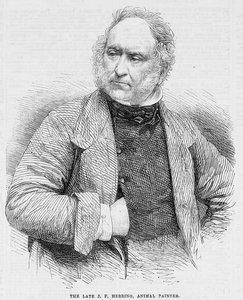
John Frederick Herring Senior
1795 - 1865 , United Kingdom
Quick Facts
- Artistic Movement Or Style: Victorian art
- Artists Who Influenced This Artist: ['Abraham Cooper']
- Date Of Birth: September 12, 1795
- Date Of Death: September 23, 1865
- Full Name: John Frederick Herring Sr.
- Nationality: British
- Notable Artworks:
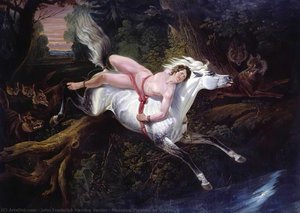
- Mazeppa Pursued by Wolves
- The Start of the Goodwood Gold Cup
- Sir Mark Wood with his filly Vespa
- A Grey Pony in a Stable with Ducks
- Pharoah's Chariot Horses
- Place Of Birth: London, United Kingdom
Related Articles
Animalia: Exploring the Enduring Presence of Animals in Art & Interior Design
Explore the rich history of animal symbolism in art, from ancient mythology to modern masterpieces. Discover how animals have inspired artists for centuries and learn how to incorporate these powerful motifs into your home décor.
The Noble Steed on Canvas: A Historical & Artistic Exploration of Horse Painting Across Cultures
Explore the rich history of horse painting! Discover masterpieces from Stubbs to Munnings & learn about symbolism, techniques & artists. Find museum-quality reproductions at ArtsDot.
The Equine Muse: A Historical & Artistic Exploration of Horses in Painting
Explore the captivating history of horses in painting! Discover Renaissance masterpieces, Baroque grandeur & expert insights for collecting equestrian art. Learn about symbolism, techniques & lasting value with ArtsDot.
The Noble Steed: A Historical and Artistic Exploration of Horses in Fine Art
Explore the rich history of horses in fine art! From ancient depictions to Renaissance masterpieces & beyond, discover iconic artworks and artists. Learn about symbolism, techniques, and find museum-quality reproductions at ArtsDot.
19th Century Masterpieces: 10 Paintings That Defined an Era | ArtsDot
Journey through 19th century art with ArtsDot! Explore 10 iconic paintings – from Monet & Renoir to Courbet – and discover the stories behind Romanticism, Realism & Impressionism. Find museum-quality reproductions for your home decor. Explore the full collection online!