The Genesis of a Visionary: La Farge’s Early Life & Artistic Formation
 Wikipedia: John La Farge
John La Farge (March 31, 1835 – November 14, 1910) was an American artist whose career spanned illustration, murals, interior design, painting, and popular books on his Asian travels and other art-related topics. La Farge made stained glass windows, ...
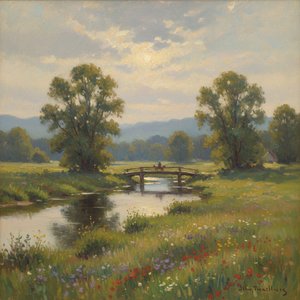
John La Farge, a name synonymous with luminous color and innovative technique, emerged from a privileged New York upbringing steeped in both artistic curiosity and intellectual rigor. Born in 1835 to wealthy French parents, his childhood was uniquely bilingual and bicultural – a foundation that would profoundly shape his aesthetic sensibilities. Unlike many of his contemporaries who sought training solely within the established European academies, La Farge’s path was one of deliberate exploration, initially encompassing law before fully embracing painting. This early exposure to legal frameworks perhaps instilled in him a meticulous attention to detail and a penchant for challenging conventional boundaries – qualities that would become hallmarks of his artistic practice. His formative years were marked by a restless energy, moving between studies at Mount St. Mary’s University and St. John's College, followed by a pivotal sojourn in Paris where he apprenticed under Thomas Couture. However, it was not simply the academic instruction but rather La Farge’s independent spirit and burgeoning fascination with color that truly set him apart. He returned to New York in 1857, determined to forge his own artistic identity amidst the vibrant, yet often conservative, art scene.
Beyond Imitation: La Farge’s Revolutionary Stained Glass Techniques
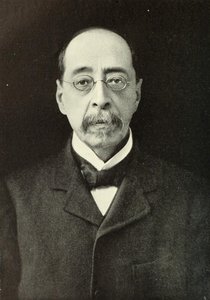 John La Farge
John La Farge (1835-1910): American painter & stained glass innovator captivated by Japanese art. Explore his luminous murals, pioneering techniques & lasting legacy.
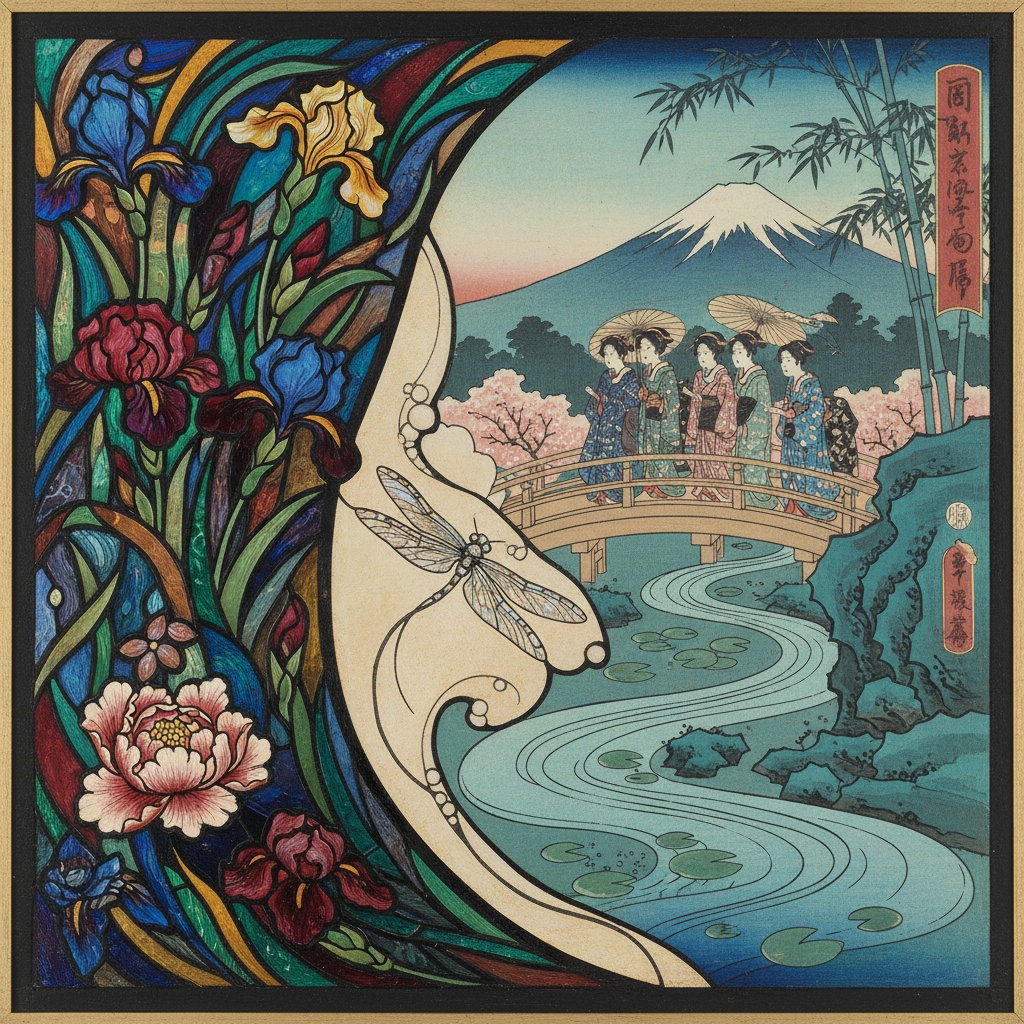
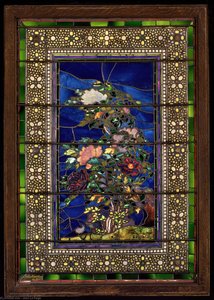
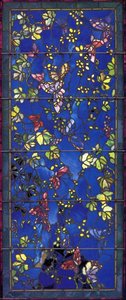
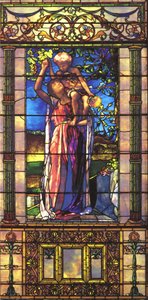
While La Farge initially gained recognition for his illustrations and murals, it was his pioneering work in stained glass that irrevocably altered the course of American decorative arts. Dissatisfied with the prevailing methods – largely imitative of medieval techniques – he embarked on a quest to unlock new possibilities within the medium. He didn’t merely *replicate* colored glass; he sought to *create* color itself, layering and manipulating different shades to achieve unprecedented depth and luminosity. In 1880, La Farge secured a patent for “superimposing panes of glass,” a process that allowed him to build up complex chromatic effects previously unattainable. This wasn’t simply a technical innovation; it was a philosophical shift. He viewed stained glass not as a collection of individual pieces but as an integrated field of color, akin to painting with light. His commissions for churches, notably Trinity Church in Boston, became showcases for this revolutionary approach, transforming sacred spaces into immersive environments bathed in ethereal hues. The dispute with Louis Comfort Tiffany over patent rights underscores the significance of La Farge’s breakthrough and his unwavering commitment to artistic originality.
An Artist Embraces the East: Japonisme and its Impact on La Farge’s Aesthetic
 Wikipedia: Japonisme
Japonisme is a French term that refers to the popularity and influence of Japanese art and design among a number of Western European artists in the nineteenth century following the forced reopening of foreign trade with Japan in 1858. Japonisme was f...
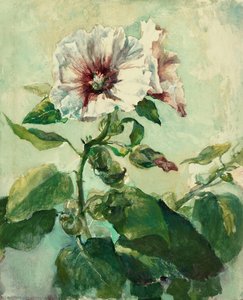
The mid-19th century witnessed a burgeoning fascination with Japanese art in the West, a phenomenon known as Japonisme. For John La Farge, this wasn't merely a passing trend but a profound source of inspiration that fundamentally reshaped his artistic vision. The arrival of *ukiyo-e* woodblock prints – with their bold compositions, flattened perspectives, and vibrant color palettes – ignited a creative spark within him. Unlike some artists who simply borrowed surface elements, La Farge delved deeper, appreciating the underlying principles of Japanese design: asymmetry, dynamic balance, and a reverence for nature. His own travels to Japan in 1886 further solidified this connection, allowing him to experience firsthand the cultural context that informed these artistic traditions. This influence is readily apparent in his paintings, murals, and even his stained glass designs – evident in the use of unconventional cropping, dramatic foreshortening, and a heightened sensitivity to color harmonies. La Farge’s watercolor ‘Hollyhocks,’ for example, exemplifies this aesthetic sensibility, capturing the vibrant beauty of nature with a delicate yet powerful sense of composition.
Murals as Total Environments: La Farge’s Vision of Integrated Art
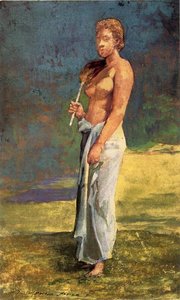
La Farge envisioned murals not as isolated decorative elements but as integral components of an encompassing artistic environment. He believed that art should permeate all aspects of the interior, seamlessly blending architecture, design, and painting to create a unified aesthetic experience. This holistic approach is particularly evident in his large-scale mural projects for public buildings and private residences. His decorations for the Church of the Ascension, with their opulent altarpiece, demonstrate this commitment to total design. He meticulously considered the interplay of light, color, and texture, striving to evoke specific moods and emotions within the space. This ambition extended beyond mere decoration; La Farge sought to create immersive environments that stimulated the senses and elevated the human spirit. His lunette mural at Bowdoin College Museum of Art, featuring Athens as its subject, is notable for its use of an African-American muse, Hettie Anderson, challenging conventional representations within academic art.
The Legacy of Color & Light: La Farge's Enduring Influence on American Art
John La Farge’s impact on American art extends far beyond his own prolific output. He was a true innovator, pushing the boundaries of stained glass and challenging established artistic norms. His pioneering techniques paved the way for subsequent generations of artists, inspiring them to explore new possibilities within color theory and design. While often overshadowed by contemporaries like Tiffany, La Farge’s influence is increasingly recognized as foundational to the development of American Impressionism and decorative arts. He wasn't simply a painter or a stained glass artist; he was a visionary who sought to transform the way we experience art – to create environments that enveloped the senses and elevated the human spirit. His legacy continues to resonate today, reminding us of the power of color, light, and integrated design. ArtsDot.com offers a curated selection of reproductions celebrating La Farge’s masterful works, allowing you to experience the brilliance of his vision firsthand.