
Early Life & Artistic Formation: From Pharmacy to Parisian Impressionism
 Wikipedia: József Rippl-Rónai
József Rippl-Rónai (23 May 1861 – 25 November 1927) was a Hungarian painter. He was among the first Hungarian exponents of artistic modernism. == Biography == He was born in Kaposvár. After his studies at the high school there, he went to study in ...
József Rippl-Rónai’s journey to becoming one of Hungary’s most celebrated artists was anything but conventional. Born in Kaposvár in 1861, his initial path diverged sharply from the world of paint and canvas. He pursued a degree in pharmacology, a pragmatic choice that belied the burgeoning artistic sensibility within him. However, the allure of visual expression proved too strong to resist. After studying briefly in Budapest, Rippl-Rónai embarked on a pivotal sojourn to Munich in 1884, laying the foundation for his formal training at the Akademie der Bildenden Künste. This period was crucial, yet it was his subsequent move to Paris in 1886 that truly ignited his artistic evolution. There, under the tutelage of Mihály Munkácsy – a towering figure in Hungarian realism – Rippl-Rónai began to absorb the techniques and philosophies that would shape his early work. But it wasn’t merely technical skill he sought; Paris offered something more profound: an immersion into the vibrant currents of modern art, setting the stage for a radical departure from academic conventions.
The Nabi Influence & The Search for Intimacy in Domestic Scenes
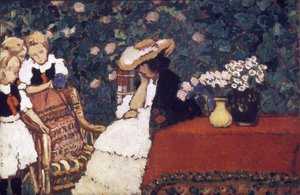
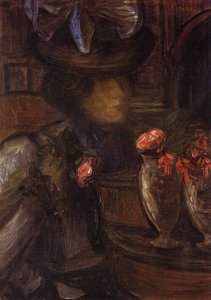
Paris in the late 19th century was a crucible of artistic innovation, and Rippl-Rónai found himself drawn to a group that would profoundly influence his aesthetic trajectory: Les Nabis. These avant-garde artists – including figures like Pierre Bonnard and Édouard Vuillard – rejected naturalistic representation in favor of subjective experience and symbolic meaning. The impact on Rippl-Rónai was immediate and transformative. He embraced their emphasis on flattened perspectives, bold color palettes, and a deliberate rejection of traditional chiaroscuro. This shift is beautifully exemplified in works like “My Grandmother” (1894), which garnered significant attention at the Salon Champ-de-Mars. More than just a portrait, it’s an intimate exploration of domesticity, imbued with a quiet melancholy and a sense of profound connection. Rippl-Rónai wasn't simply depicting his grandmother; he was capturing the essence of memory, loss, and the poignant beauty of everyday life. This focus on interior spaces and personal relationships became a defining characteristic of his oeuvre.
Rippl-Rónai's Unique Style: Symbolism, Flatness, and Bold Color Palettes
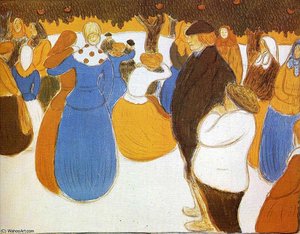
While deeply influenced by the Nabis, Rippl-Rónai didn’t merely imitate their style; he synthesized it with a distinctly Hungarian sensibility. His paintings are characterized by a remarkable flatness – figures and objects often appear as decorative elements arranged on a plane, rather than existing within three-dimensional space. This deliberate simplification wasn't an absence of skill but a conscious choice to prioritize symbolic meaning over realistic representation. He employed a bold, often unconventional color palette, eschewing subtle gradations in favor of striking contrasts and saturated hues. “Red Landscape”, for example, showcases this mastery of color, evoking tranquility and natural beauty through an almost abstract arrangement of forms. This wasn’t about replicating the appearance of nature but conveying its emotional resonance. His use of pattern and texture further enhanced this symbolic language, creating a visual world that was both captivating and deeply personal.
Portraits as Psychological Studies: Capturing Character and Mood
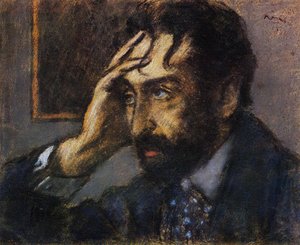 Portrait of József Vago
Admire József Rippl-Rónai’s "Portrait of József Vago" (1915). A captivating Hungarian portrait showcasing evocative realism & a thoughtful expression. Explore this masterpiece!
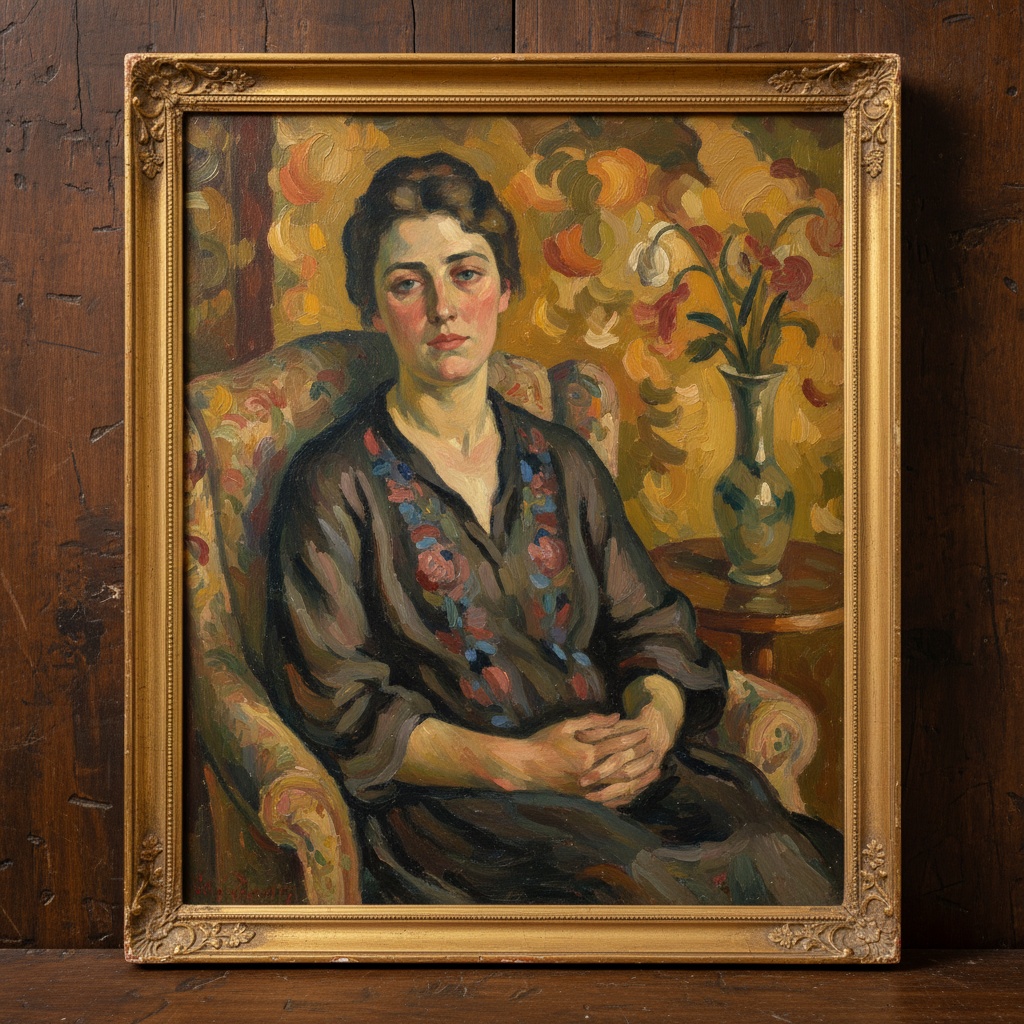
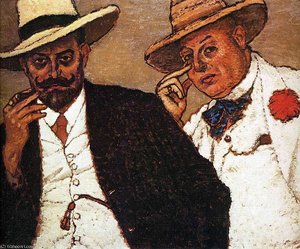
Rippl-Rónai’s portraits are arguably his most compelling works, transcending the conventions of likeness to become profound psychological studies. He wasn't interested in simply capturing a person’s physical appearance; he sought to reveal their inner life, their character, and their emotional state. “Portrait of József Vago” (1915), for instance, is not merely a depiction of a man but an exploration of his intellect and sensitivity. Similarly, “Portrait of Pianist Riccardo Vines Roda” (1914) captures the contemplative mood of its subject, conveying a sense of artistic passion and inner turmoil. He achieved this through subtle nuances in expression, carefully chosen poses, and a masterful use of light and shadow – even within his flattened compositions. His portraits are often described as ‘intimate’ because they feel like a privileged glimpse into the soul of the sitter.
Legacy and Recognition: A Pioneer of Hungarian Modern Art
Despite initial lukewarm reception in Hungary, Rippl-Rónai eventually achieved widespread recognition for his groundbreaking work. His 1890-1900 exhibition marked a turning point, showcasing his unique style to a wider audience. He became a pivotal figure in the development of Hungarian modern art, inspiring generations of artists with his innovative approach to painting and design. Beyond his canvases, Rippl-Rónai extended his artistic vision to encompass everyday objects, designing furniture, textiles, and even stained glass windows for prominent commissions – notably the dining room of the Andrássy palace. He believed that an artist’s entire *modus vivendi*—their lifestyle, their surroundings—should be a reflection of their creative sensibility. His commitment to originality and his unwavering pursuit of artistic expression cemented his place as a true pioneer.
Experiencing Rippl-Rónai Today: Museums & Collections
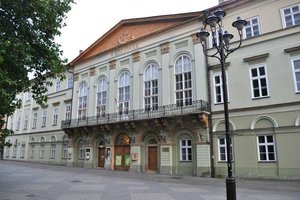 Rippl-rónai Museum
Explore József Rippl-Rónai's art at Villa Róma in Kaposvár, Hungary! Discover 90+ paintings by this Hungarian Post-Impressionist master, including 'My Grandmother'. A unique artistic experience awaits!
Fortunately, the legacy of József Rippl-Rónai is readily accessible to art enthusiasts today. The Rippl-Rónai Museum, located in Villa Róma in Kaposvár, Hungary, offers a unique opportunity to immerse oneself in his world, housing over 90 of his paintings, including the iconic “My Grandmother.” The Hungarian National Gallery in Budapest also boasts a significant collection of his works, providing context within the broader landscape of Hungarian art history. Exploring these collections allows viewers to appreciate the full breadth of his artistic vision – from his early Impressionistic experiments to his mature Symbolist masterpieces. Whether you’re captivated by his intimate portraits or his bold color palettes, Rippl-Rónai's work continues to resonate with audiences seeking beauty, emotional depth, and a glimpse into the soul of a truly remarkable artist. At ArtsDot.com you can find high-quality reproductions of his most celebrated works, bringing the spirit of Hungarian modernism into your own home.