Early Life & Academic Foundations: The Formation of a Painter
 Wikipedia: Jules Joseph Lefebvre
Jules Joseph Lefebvre (French: [ʒyl ʒozɛf ləfɛvʁ]; 14 March 1836 – 24 February 1911) was a French painter, educator and theorist. == Early life == Lefebvre was born in Tournan-en-Brie, Seine-et-Marne, on 14 March 1836. He entered the École nationa...
Jules Joseph Lefebvre, born in the quaint village of Tournan-en-Brie in 1836, emerged from humble beginnings to become one of the most celebrated academic painters of his era. His father, a baker by trade, recognized and nurtured his son’s artistic inclinations – an unusual act for the time, yet pivotal in shaping Lefebvre's destiny. In 1852, at the tender age of sixteen, young Jules embarked on his formal training in Paris, entering the prestigious École nationale supérieure des Beaux-Arts. This marked a crucial turning point, immersing him in a world steeped in classical tradition and rigorous technique. He became a dedicated pupil of Léon Cogniet, a respected figure painter known for his historical compositions and meticulous draftsmanship. Cogniet instilled in Lefebvre not only the fundamentals of painting – anatomy, perspective, composition – but also an appreciation for narrative clarity and emotional depth. The early years were characterized by diligent study, countless sketches from life, and a fervent desire to master the skills that would define his future artistic endeavors.
The Prix de Rome & Early Successes: Establishing a Reputation
The ambition of every aspiring artist in 19th-century France was to win the coveted Prix de Rome, a prestigious scholarship offering five years of study at the Villa Medici in Rome. Lefebvre relentlessly pursued this goal, submitting works year after year. His dedication culminated in triumph in 1861 with his painting, *The Death of Priam*. This victory was not merely an academic accolade; it was a passport to artistic enlightenment. Rome proved transformative. Surrounded by the masterpieces of Renaissance and Baroque art, Lefebvre absorbed the lessons of the Old Masters – their mastery of light and shadow, their anatomical precision, and their ability to convey profound emotion. He meticulously copied works by Andrea del Sarto, whose influence is subtly visible in his early compositions. Upon his return to Paris, he began exhibiting regularly at the Salon, steadily building a reputation for his skillful execution and increasingly refined style. Between 1855 and 1898, Lefebvre presented an impressive seventy-two portraits at the Salon, demonstrating both prolific output and consistent quality.
Portraits of Beauty: Lefebvre’s Signature Style and Technique
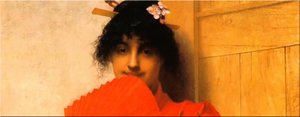 untitled
Admire this captivating portrait by Jules Joseph Lefebvre! A beautiful woman in a red dress, adorned with an elaborate braid & flower. Oil on canvas – exquisite detail. Commission a hand-painted replica today!
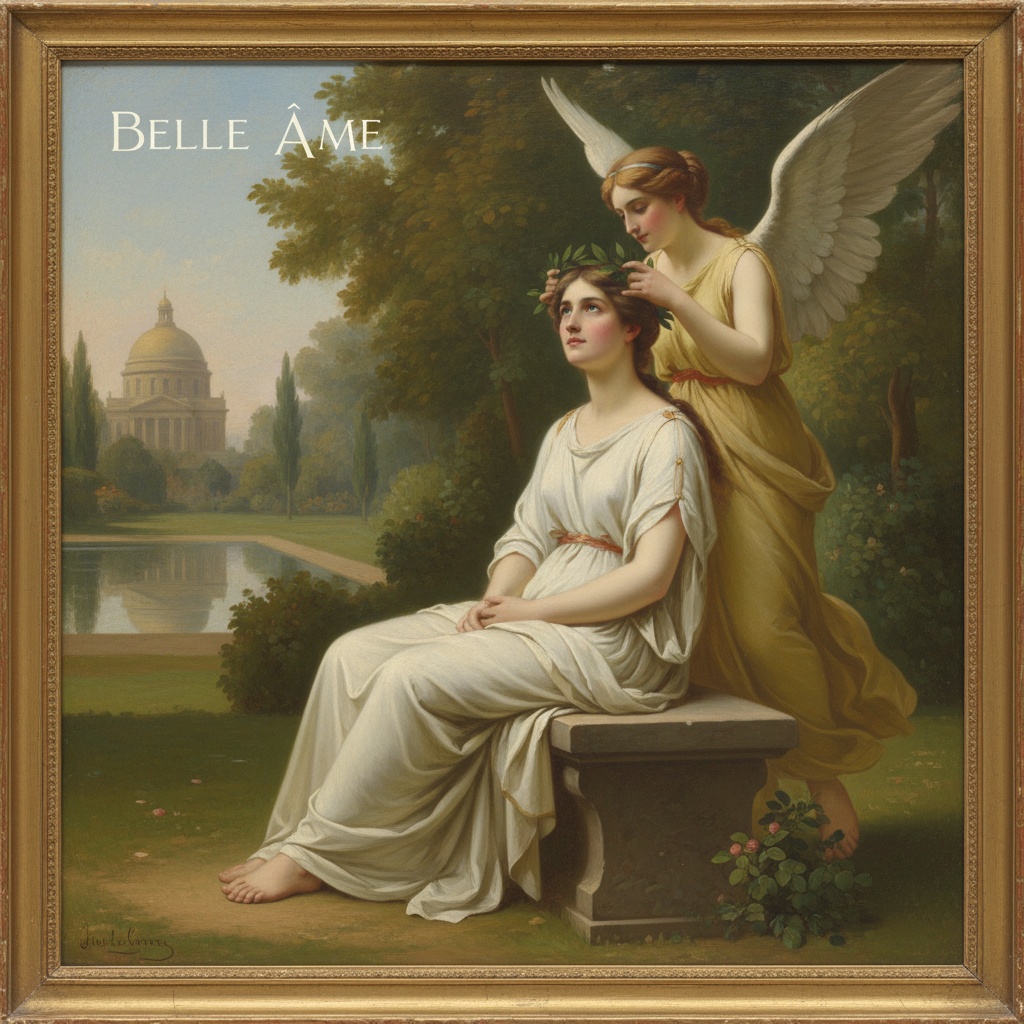
While Lefebvre initially explored historical subjects, he gradually gravitated towards portraiture, a genre in which he truly excelled. His canvases are populated with beautiful women – elegant figures radiating grace, intelligence, and inner life. He wasn't interested in mere physical likeness; his portraits sought to capture the belle âme, the “beautiful soul,” of his sitters. This pursuit demanded not only technical virtuosity but also a deep understanding of human psychology. Lefebvre’s technique was characterized by meticulous detail, subtle modeling, and a rich, luminous palette. He employed layers of thin glazes to create depth and luminosity, achieving a remarkable sense of realism without sacrificing elegance or refinement. His brushwork is delicate yet assured, caressing the contours of the feminine form with a sensitivity that captivated contemporary audiences. Paintings like *Untitled* (a striking portrait of a woman in red) exemplify his signature style – a harmonious blend of technical skill and emotional insight.
A Dedicated Educator: Shaping Generations of Artists
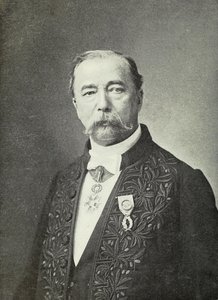 Jules Lefebvre
Explore the captivating figure paintings of Jules Joseph Lefebvre (1836-1911), a renowned French academic artist & educator. Known for portraits of beautiful women and influential teaching, including students like Tarbell & Khnopff.
Beyond his accomplishments as a painter, Lefebvre was an exceptionally influential teacher. In 1870, he joined the faculty of the Académie Julian, a private art school that quickly gained prominence as a progressive alternative to the official École des Beaux-Arts. He attracted students from across Europe and America, imparting not only technical skills but also his own artistic philosophy – a belief in careful observation, meticulous draftsmanship, and the importance of capturing the essence of the subject. Lefebvre’s pedagogical approach was remarkably effective; he is estimated to have taught over 1500 pupils throughout his career. Among his most notable students were Fernand Khnopff, Kenyon Cox, Félix Vallotton, and Edmund C. Tarbell – artists who would go on to achieve significant success in their own right. His influence extended far beyond the walls of the Académie Julian, shaping the course of academic painting for generations.
La Vérité & Beyond: Exploring Key Works and Artistic Themes
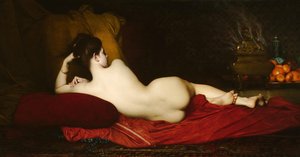
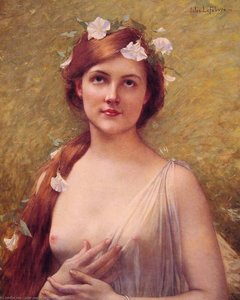
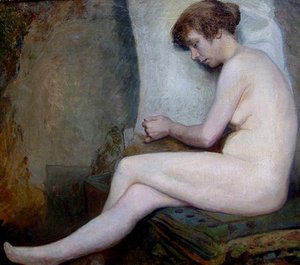 Susanne (Unfinished)
Admire 'Susanne,' an unfinished nude by Jules Joseph Lefebvre. This realistic 19th-century French painting captures intimacy & grace. Explore art history & acquire a unique piece.
Lefebvre’s allegorical work *La Vérité* (The Truth), exhibited in 1870, stands as a testament to his artistic maturity. The painting depicts a beautiful young woman holding up a mirror – a conventional symbol of truth – but the composition is imbued with a subtle sensuality and psychological complexity. Other notable works include *Susanne (Unfinished)*, an intimate nude that showcases his mastery of light and form, and *Portrait of James A. Campbell*, a Victorian masterpiece characterized by rich detail and elegant composure. Throughout his oeuvre, Lefebvre consistently explored themes of beauty, truth, and the human condition. His paintings are not merely representations of physical appearance; they are windows into the inner lives of his sitters, capturing their emotions, aspirations, and vulnerabilities. He possessed an exceptional ability to imbue his subjects with a sense of dignity and grace, elevating them beyond the realm of mere portraiture.
Lefebvre's Legacy in the Belle Époque & Academic Tradition
The Belle Époque (French pronunciation: [bɛlepɔk]) or La Belle Époque (French for 'The Beautiful Era') was a period of French and European history that began after the end of the Franco-Prussian War in 1871 and continued until the outbreak of World W...
Jules Lefebvre’s career unfolded during the Belle Époque, a period characterized by optimism, prosperity, and artistic innovation. While Impressionism challenged the dominance of academic painting, Lefebvre remained steadfast in his commitment to classical tradition. He became a member of the French Académie des Beaux-Arts in 1891, solidifying his position as one of the leading artists of his time. His influence extended beyond France, with his works finding admirers and collectors across Europe and America. Though academic painting eventually fell out of favor in the early 20th century, Lefebvre’s legacy endures. He is remembered not only for his technical skill and artistic sensitivity but also for his dedication to education and his profound understanding of human nature. Today, his paintings continue to captivate audiences with their beauty, elegance, and timeless appeal. At ArtsDot.com, you can explore a curated selection of Lefebvre’s masterpieces, reproduced with museum-quality precision, allowing you to bring the beauty of his art into your own home.