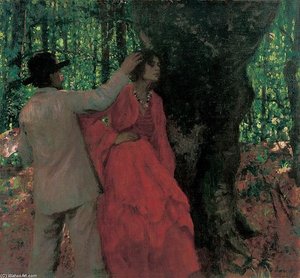
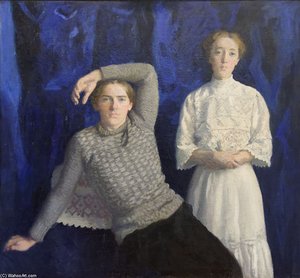
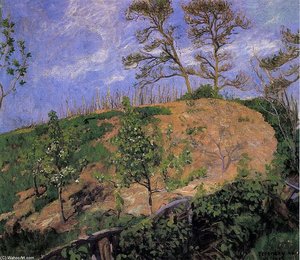
Early Influences & Artistic Formation: From Munich to Nagybánya
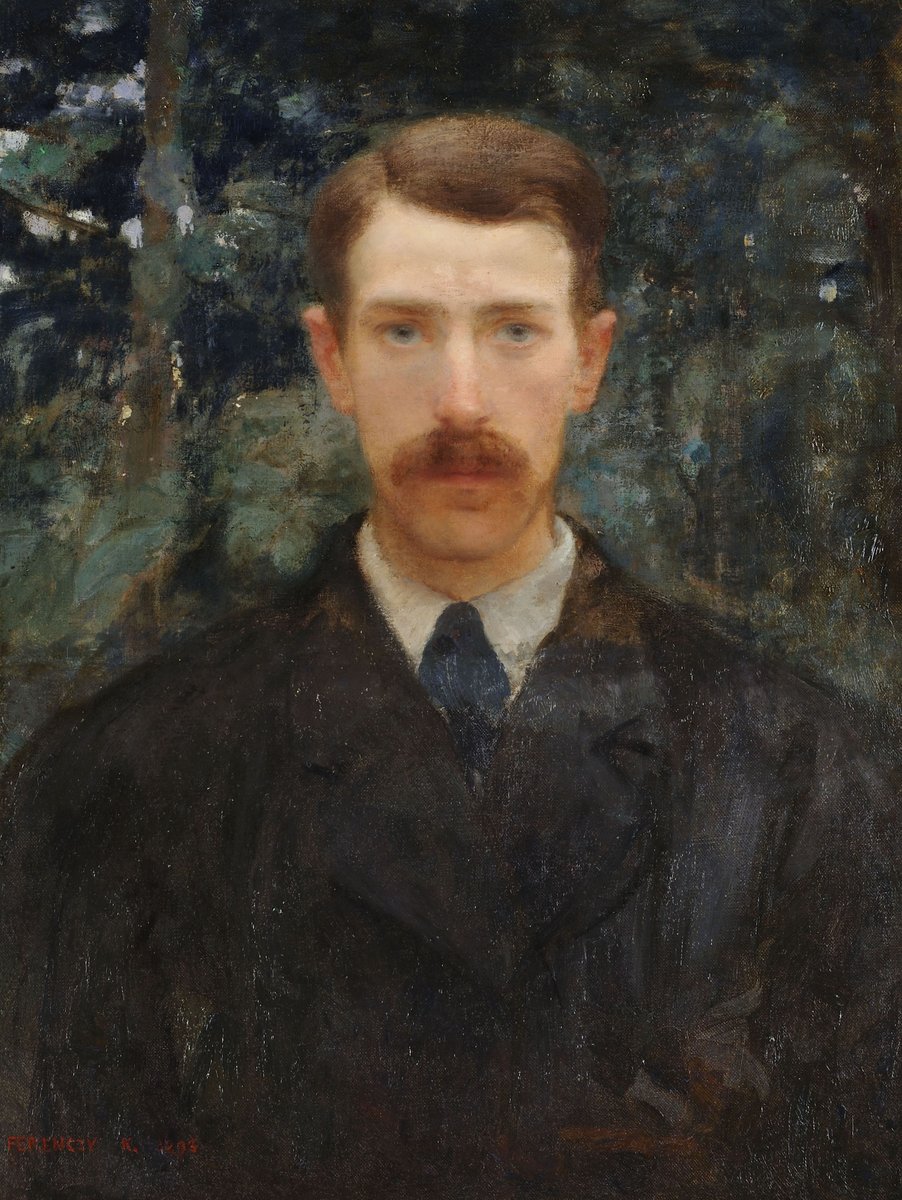 Wikipedia: Károly Ferenczy
Károly Ferenczy (February 8, 1862 – March 18, 1917) was a Hungarian painter and leading member of the Nagybánya artists' colony. He was among several artists who went to Munich for study in the late nineteenth century, where he attended free classes ...
Károly Ferenczy’s artistic journey was one of deliberate seeking, a restless exploration that ultimately positioned him as the “father of Hungarian Impressionism” and a foundational figure in modern Hungarian painting. Born in Vienna in 1862, his early life was marked by loss – the death of his mother shortly after his birth – and an initial pursuit of law, a path he abandoned for the compelling call of artistic expression. This shift wasn’t immediate; it was nurtured through travel, particularly to Italy, where he first encountered the power of direct observation and the allure of plein air painting. However, it was Munich in the late 19th century that proved truly transformative. The city pulsed with artistic energy, a crossroads for Central European talent grappling with new ideas. Ferenczy enrolled in free classes led by Simon Hollósy, a Hungarian painter who would become a crucial mentor and collaborator. Hollósy’s approach, less constrained than the traditional Academy methods, encouraged experimentation and an embrace of French Impressionist techniques – a revelation for Ferenczy.
The influence wasn't merely technical; it was philosophical. Munich exposed Ferenczy to a burgeoning sense of artistic freedom, a rejection of academic rigidity in favor of capturing fleeting moments and subjective experience. This nascent spirit would be further refined upon his return to Hungary and the establishment of the artists’ colony at Nagybánya in 1896, alongside István Réti and János Thorma. The move wasn't simply about finding a picturesque location; it was about creating a space dedicated to innovation, a haven where artists could collectively challenge established norms and forge a distinctly Hungarian artistic identity.
The Nagybánya Colony: A Crucible of Hungarian Impressionism
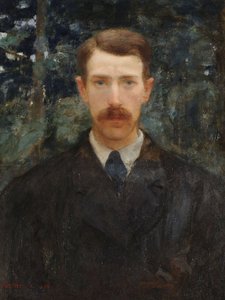 Károly Ferenczy
Explore the art of Károly Ferenczy (1862-1917), a pivotal Hungarian painter & "father of Hungarian Impressionism." Discover his landscapes, portraits, and role in founding the Nagybánya artists' colony. A pioneer of modern Hungarian painting!
The Nagybánya colony wasn’t merely a geographical location—it was an intellectual and creative ecosystem. Ferenczy, Réti, and Thorma weren't simply painting the rural landscapes surrounding the small town; they were actively constructing a new artistic language rooted in their shared experiences and observations of Hungarian life. Hollósy’s presence solidified this commitment to plein air work, encouraging artists to immerse themselves directly in nature, capturing the nuances of light and atmosphere with unprecedented immediacy. This emphasis on direct observation distinguished them from earlier generations who often relied on studio-based compositions.
Ferenczy's role within the colony was pivotal. He wasn’t just a participant; he was a leader, fostering an environment of collaboration and mutual critique. While maintaining a studio in Budapest throughout his career, allowing him to engage with the wider art world, he consistently returned to Nagybánya, drawn by its unique energy and the opportunity to mentor aspiring artists. The colony became synonymous with Hungarian Impressionism, attracting talent from across the region and establishing a distinctly national voice within the broader European artistic landscape.
Identity, Landscape, and the Poetics of Color in Ferenczy’s Oeuvre
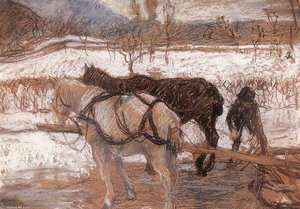 Winter
Discover 'Winter' by Károly Ferenczy, a pivotal Hungarian Impressionist pastel drawing of rural life. Explore its expressive realism & connection to nature.
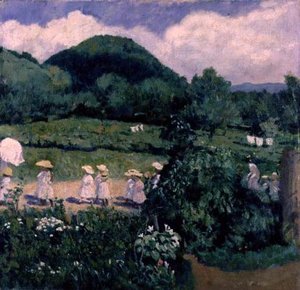
Ferenczy's art is deeply intertwined with his exploration of Hungarian identity. Unlike some artists who sought universal themes, he consistently turned to the landscapes and people of his homeland for inspiration. His paintings aren’t simply depictions of rural life; they are imbued with a sense of intimacy and reverence, capturing the essence of a culture undergoing rapid change. Works like Winter, a pivotal pastel drawing, exemplify this connection. The expressive realism isn't merely about accurately portraying the scene but conveying the emotional weight of the landscape—the harshness of the season, the resilience of life in the face of adversity.
Central to Ferenczy’s artistic vision was his masterful use of color. He wasn’t simply replicating hues; he was employing them as a means of expressing emotion and creating atmosphere. His palette evolved over time, moving from more naturalistic tones to increasingly vibrant and expressive combinations. This exploration of color is particularly evident in his later works, where he often employed bold brushstrokes and unconventional juxtapositions to create dynamic compositions that resonate with emotional intensity.
Beyond Realism: Exploring Ferenczy's Romantic and Symbolist Tendencies
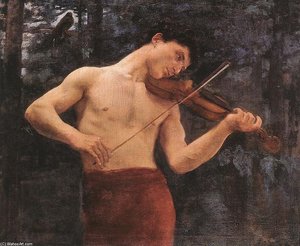 Orpheus
Experience Károly Ferenczy’s "Orpheus." A Romantic masterpiece featuring a soulful musician in a dramatic forest setting. Oil painting, impasto texture & evocative mood.
While celebrated as a pioneer of Hungarian Impressionism, reducing Ferenczy solely to this label overlooks the depth and complexity of his artistic vision. Beneath the surface of his seemingly straightforward depictions of landscape and portraiture lie currents of Romanticism and Symbolism. Orpheus, for example, is not merely a representation of the mythical musician; it’s an evocative exploration of solitude, longing, and the power of art itself. The dramatic forest setting, rendered with impasto texture and a moody palette, creates a sense of psychological depth that transcends mere realism.
Similarly, Dapnis and Chloe, a striking black and white illustration, reveals Ferenczy’s mastery of gesture and emotional tension. The cross-hatching technique isn't simply about creating tonal variations; it’s about conveying the raw emotion of the scene—the passion, vulnerability, and underlying drama of the narrative. These works demonstrate his willingness to experiment with form and subject matter, pushing beyond the boundaries of Impressionism to explore deeper psychological themes.
Ferenczy’s Legacy: The 'Father of Hungarian Modernism' and His Enduring Impact
Károly Ferenczy’s influence on Hungarian art is immeasurable. He wasn’t just a painter; he was an educator, a mentor, and a catalyst for change. His founding of the Nagybánya colony created a space where artists could freely explore new ideas and forge a distinctly national artistic identity. The retrospective exhibition held by the Hungarian National Gallery in 2011—a six-month celebration of his work—underscores his enduring relevance and the breadth of his contribution.
Ferenczy’s title as the “father of Hungarian Modernism” isn't simply a matter of historical precedence; it reflects his profound impact on subsequent generations of artists. He challenged established norms, embraced experimentation, and championed the power of individual expression. His legacy continues to inspire artists today, reminding us of the importance of connecting with our cultural roots and forging our own unique artistic voices. At ArtsDot.com, we are proud to offer high-quality reproductions of Ferenczy’s masterpieces, allowing you to experience the beauty and emotional depth of his work firsthand.