




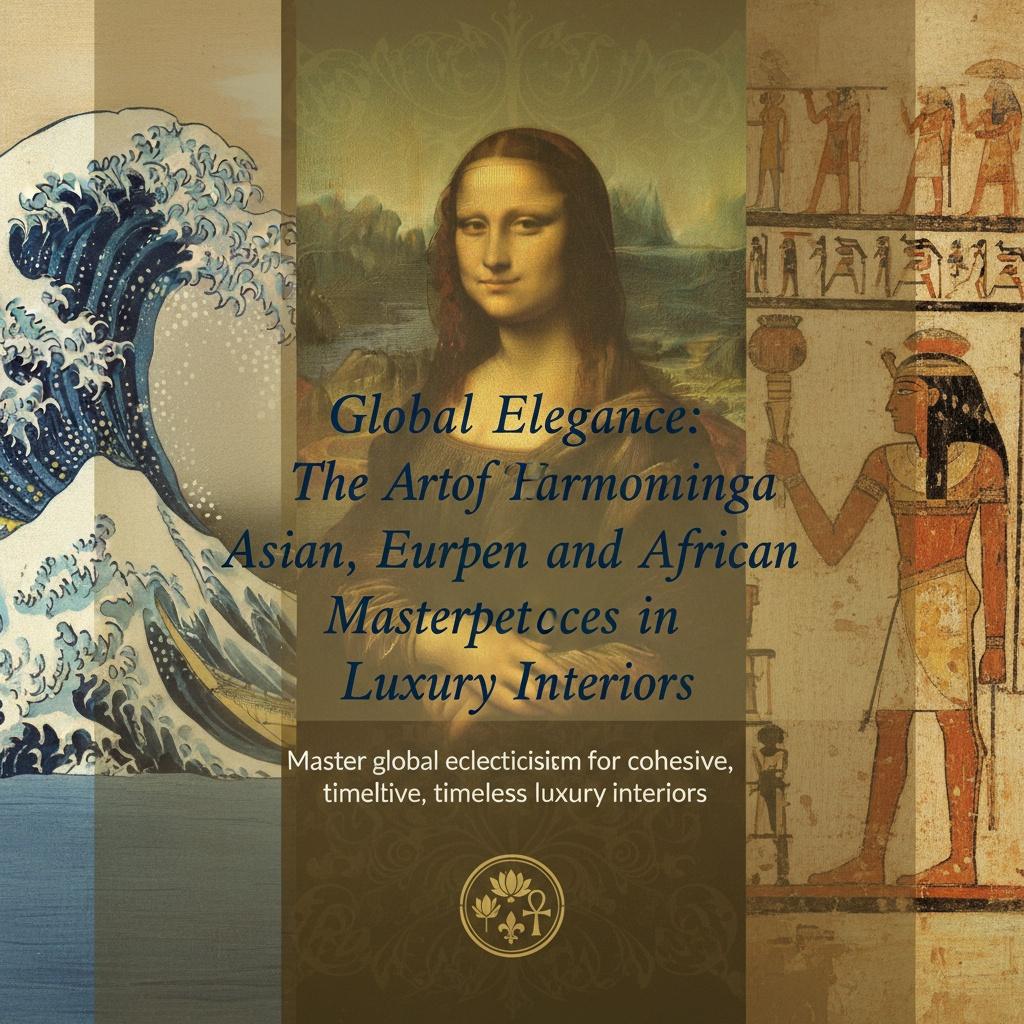
The Curated Collector: Defining the Aesthetic of Global Eclecticism
In the upper echelons of interior design, true luxury is rarely found in the repetitive or the monochromatic. Instead, it resides in the profound ability to weave disparate histories into a singular, breathtaking narrative. The modern collector no longer seeks a showroom-perfected uniformity; rather, they pursue a curated eclecticism that speaks of travel, intellect, and a deep appreciation for the human spirit across borders. This aesthetic, often termed global elegance, is an intentional dialogue between eras and continents, where the boundaries of geography dissolve into a cohesive visual symphony.
To master this style is to move beyond mere decoration and enter the realm of storytelling. It requires an eye that can recognize the shared pulse of beauty in a Renaissance oil painting and a contemporary African sculpture. This level of curation demands a sophisticated understanding of how different cultural motifs—the delicate linework of the East, the structured grandeur of Europe, and the rhythmic vitality of Africa—can coexist without competition. When executed with precision, such an interior becomes more than a room; it becomes a living museum of a life well-traveled.
European Grandeur: Integrating Classical Mastery and Renaissance Depth
The foundation of many luxury interiors remains rooted in the enduring legacy of European classical art. There is an undeniable gravity to the Old Masters, a sense of permanence that provides a structural anchor for any space. When we consider works inspired by the Renaissance or the Baroque periods, we are engaging with a tradition of light, shadow, and anatomical perfection. The use of chiaroscuro—that dramatic interplay between darkness and illumination—offers a psychological depth that can transform a grand hall into a sanctuary of contemplation.
Integrating these heavy, storied pieces requires a delicate touch to avoid overwhelming the contemporary setting. A large-scale reproduction of a Dutch landscape or a portrait reminiscent of Rembrandt’s textured impasto can serve as a magnificent focal point, provided it is balanced by lighter, more modern elements. The key lies in respecting the weight of the history. By utilizing the rich tonal ranges found in hand-painted oils on cotton canvas, one can introduce a sense of historical continuity that makes a new estate feel as though it has been inhabited for generations.
Eastern Serenity: Balancing Zen Minimalism with Asian Calligraphic Grace
Contrasting the dramatic weight of European traditions is the ethereal lightness found in Asian artistic philosophies. Whether it is the disciplined minimalism of Japanese Zen aesthetics or the fluid, rhythmic energy of Chinese calligraphy, Eastern art introduces a much-needed breath of tranquility to a global collection. This influence often manifests through a focus on negative space—the concept of Ma—where what is left unpainted is just as vital as the brushstroke itself.
In a luxury setting, incorporating Asian elements allows for moments of visual repose. A delicate silk-style landscape or a piece emphasizing soft, ink-wash textures can soften the edges of more robust Western works. The grace of a single, sweeping line can act as a bridge between much heavier compositions, guiding the eye through the room with effortless movement. This balance prevents the interior from feeling cluttered, instead fostering an atmosphere of meditative luxury where every object is given the space to be seen and felt.
African Vibrancy: Incorporating Bold Textures and Ancestral Narratives
To complete the global triad, one must embrace the profound vitality and rhythmic complexity inherent in African artistic traditions. African art often brings a powerful sense of texture and ancestral narrative that can energize a muted palette. From the bold, geometric patterns found in traditional textiles to the expressive, sculptural forms of contemporary masters, this influence introduces an element of raw, organic strength to the curated space.
The Art of Curation: Principles of Color, Scale, and Visual Harmony
Achieving harmony in such a diverse collection is an exercise in advanced visual mathematics. The primary principle is not to match, but to coordinate. One must look for common threads—perhaps a shared shade of cerulean blue that appears in a French seascape, a Japanese print, and an African textile. This subtle repetition of color acts as the invisible thread that binds the disparate pieces into a unified whole.
Scale is equally critical. A massive, multi-panel landscape can command a room, but it must be balanced by smaller, more intimate works to prevent a sense of visual exhaustion. The use of multi-panel layouts or large-format murals can help bridge the gap between architectural elements and fine art, allowing the artwork to become part of the very structure of the home. When scale is managed with intention, the eye moves seamlessly from the grand to the minute, discovering new layers of meaning with every glance.
Architectural Synergy: Merging Diverse Artworks into a Cohesive Luxury Space
Ultimately, the pinnacle of global elegance is reached when the art and the architecture become indistinguishable. The most successful luxury interiors treat walls not merely as boundaries, but as canvases for historical dialogue. This might involve the installation of large-scale frescoes that mimic the grandeur of the Sistine Chapel, or the use of custom-framed oil reproductions that mirror the molding of a classical library.
As we look toward the future of high-end living, the ability to merge these worlds through bespoke commissions and meticulous curation will remain the hallmark of true distinction. Whether it is transforming a personal photograph into a 17th-century masterpiece or finding the perfect balance between a modern silhouette and an ancient motif, the goal remains the same: to create a space that is as much a reflection of the soul as it is a testament to global culture. Through the expertise of ArtsDot.com, this vision of a borderless, beautiful world becomes a tangible reality for the discerning collector.