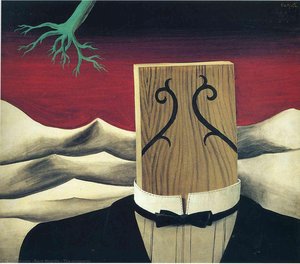
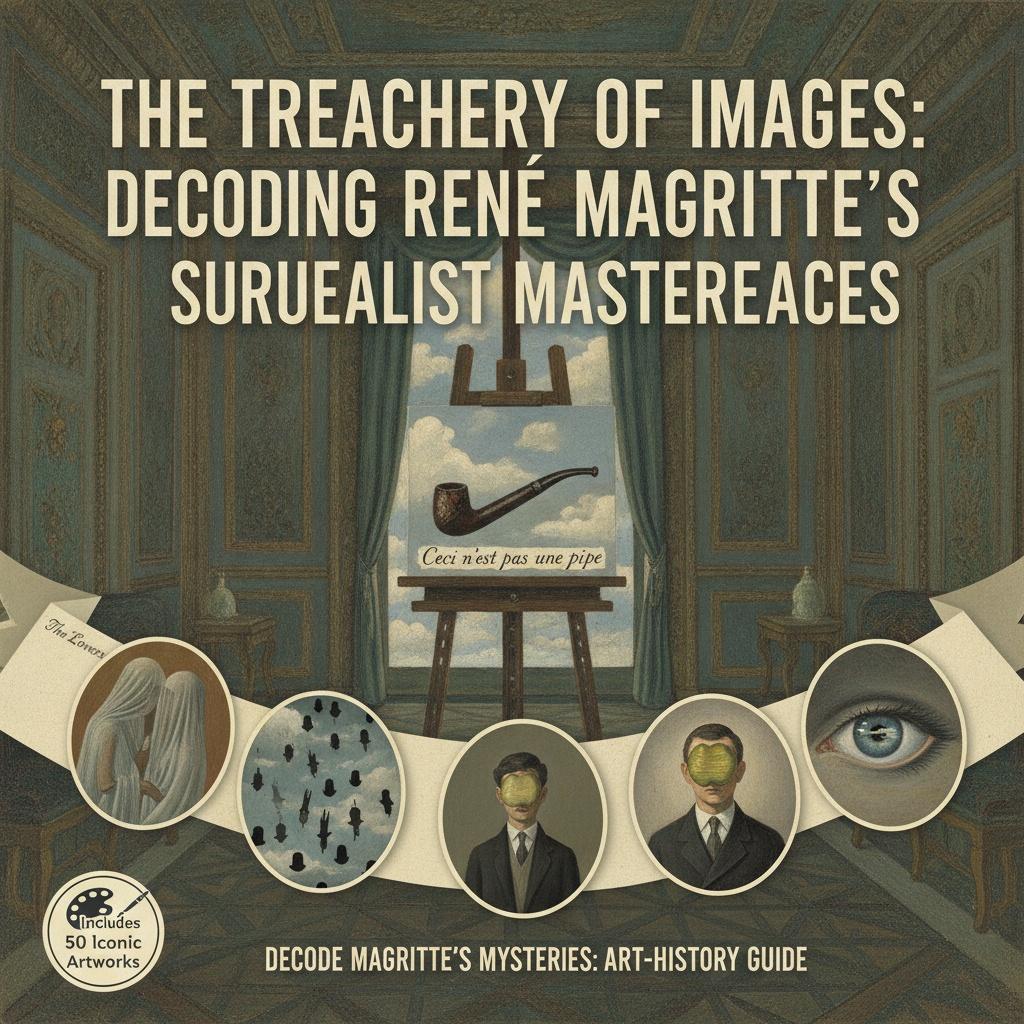
The Genesis of Mystery: Magritte’s Early Life and the Seeds of Surrealism
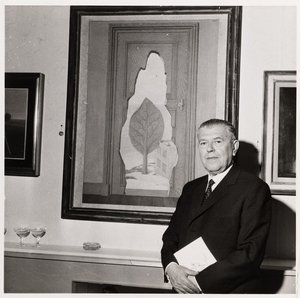 René Magritte
Early Life and the Seeds of Surrealism René Magritte, born René François Ghislain Magritte on November 21, 1898, in Lessines, Belgium, emerged into a world that would profoundly shape his enigmatic artistic vision. His early years were marked by an u...
To understand the profound enigmas of René Magritte, one must first look toward the shadows of his formative years in Belgium. Born René François Ghislain Mag1898, his entry into the world was marked by a quiet, unsettling gravity that would later define the very essence of his Surrealist vision. The landscape of his youth, characterized by the industrial shifts of the late 19th century and the looming specter of global conflict, provided a fertile yet turbulent soil for an artist obsessed with what lies beneath the surface. While many associate Surrealism with the spontaneous, dream-like outbursts of the subconscious, Magritte’s approach was far more cerebral, rooted in a meticulous questioning of the visible world.
A pivotal, haunting moment in his early life—the tragic loss of his mother—is often cited by historians as a foundational element of his aesthetic. The imagery of her body being recovered from the River Sambre, with her dress obscuring her face, introduced a recurring motif of veiled identities and hidden realities that would permeate his later masterpieces. This early encounter with the unseen and the veiled instilled in him a lifelong fascination with the tension between presence and absence. Though he initially explored the structured languages of Impressionism, Cubism, and Futurism during his studies at the Académie Royale des Beaux-Arts in Brussels, these movements provided only the technical scaffolding for his true calling: the subversion of the familiar.
It was not until his encounter with Giorgio de Chirico’s work in 1922 that Magritte found his true artistic compass. De Chirico’s ability to render dreamlike, unsettling landscapes unlocked a new dimension of perception for him, allowing him to move beyond formal experimentation toward a philosophy where the ordinary could be rendered profoundly strange. This transition marked the birth of a unique brand of Surrealism—one that did not seek to escape reality through fantasy, but rather to dismantle reality through its own recognizable components.
Beyond the Canvas: The Linguistic Trap of 'Ceci n'est pas une pipe'
--- title: The Treachery of Images - Wikipedia author: Show Authority Control Databases International Viaf Gnd National France Bnf Data url: https://en.wikipedia.org/wiki/The_Treachery_of_Images hostname: wikipedia.org sitename: Wikimedia Foundation,...
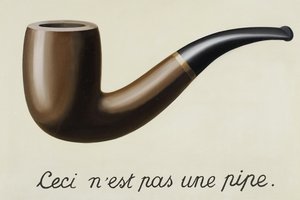
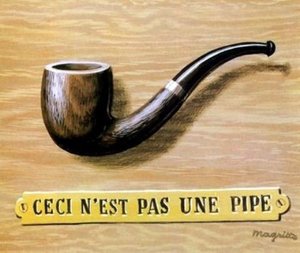
In 1929, Magritte produced what would become perhaps the most famous provocation in art history: The Treachery of Images. At first glance, the painting appears almost deceptively simple, possessing the clinical clarity of an instructional manual or a commercial advertisement. A meticulously rendered tobacco pipe floats against a neutral, void-like background, accompanied by a single line of elegant, cursive script: "Ceci n'est pas une pipe" (This is not a pipe). This linguistic intervention creates an immediate and jarring cognitive dissonance for the viewer.
The brilliance of this work lies in its refusal to allow the viewer to settle into comfortable recognition. Magritte was not merely playing a trick; he was exposing a fundamental truth about the nature of representation. As he famously remarked, one cannot stuff, light, or smoke the image of a pipe. The painting is not the object it depicts; it is merely an arrangement of oil pigments on canvas, a symbolic signifier that points toward an idea rather than the physical reality itself. By explicitly stating this truth, Magritre shatters the unspoken contract between the artist and the observer, forcing us to confront the gap between the thing and the word.
This painting serves as a gateway into his broader exploration of how we use symbols to navigate our existence. It challenges the authority of the image and the stability of language, suggesting that our reliance on labels is a fragile construct. For the art student or the dedicated collector, this work remains an essential study in how much of our "reality" is actually composed of shared illusions and linguistic shortcuts.
The Semiotics of Subversion: Deconstructing Image and Language
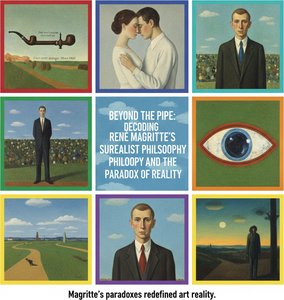 The Treachery of Images: Decoding René Magritte’s Surrealist Vision and the Paradox of Representation
The Semiotics of Subversion: Deconstructing the Linguistic Trap To encounter René Magritte’s The Treachery of Images is to enter a profound state of cognitive dissonance. At first glance, the viewer is presented with a deceptively simple subject: a m...
To engage with Magritte is to enter a profound state of semiotic inquiry. He was a master at manipulating the relationship between the signifier (the image or word) and the signified (the concept it represents). His work often functions as a linguistic trap, where he deliberately misaligns these two elements to provoke thought. In works such as The Words and the Images, he pushes this boundary further, creating a visual playground where text and picture exist in a state of perpetual conflict.
This subversion is not merely an intellectual exercise; it is a radical assault on the way we perceive meaning. Magritte understood that our brains are wired to seek patterns and certainties, to quickly categorize a shape as a "tree" or a "cloud." By disrupting these automatic associations—placing a train emerging from a fireplace or a sky of daylight resting atop a nocturnal streetscape in The Empire of Light—he forces the mind into a state of heightened awareness. He strips away the comfort of the predictable, demanding that we look at the world with a renewed, critical eye.
This deconstruction extends to his use of motifs like the bowler-hatted man or the shrouded faces seen in The Lovers. These figures are often stripped of individual identity, becoming vessels for broader philosophical questions about anonymity, loss, and the impenetrable nature of the human psyche. Through this lens, Magritte’s art becomes a meditation on the limits of knowledge and the inherent mystery that resides within even the most mundane objects.
Mastering the Mundane: Hyperrealism as a Tool for Disruption
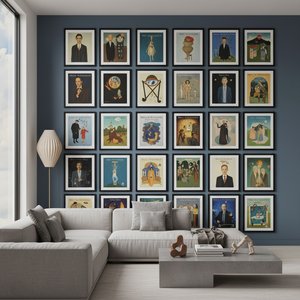 René Magritte's Masterpieces: 25 Surrealist Paintings for Art Lovers | ArtsDot
Introduction To embark on a journey through the top 25 artworks of René Magritte is to enter a realm where the familiar dissolves into the enigmatic, and reality itself becomes a question mark. These paintings are not merely images; they are portals—...
Unlike many of his Surrealist contemporaries who utilized fluid, expressionistic brushwork to depict the dreamscape, Magritte employed a technique that was strikingly precise and almost academic. His ability to render textures—the smoothness of a stone, the translucency of a cloud, or the heavy fabric of a shroud—was achieved through a hyperrealistic clarity that made his illogical scenes feel disturbingly tangible. This choice of style was essential to his disruptive mission.
By using a "transparent" style of painting, Magritte avoided the distraction of overt painterly emotion, instead focusing the viewer's attention on the conceptual dissonance of the subject matter. The more "real" the object appears, the more unsettling its placement in an impossible context becomes. This tension between verisimilitude and absurdity is the engine that drives his most powerful works. He uses the tools of traditional realism to undermine the very foundations of what we believe to be true.
This mastery of the mundane allows him to transform everyday objects—apples, hats, pipes, stones—into icons of mystery. There is no need for grand, epic landscapes when a single, perfectly rendered green apple can obscure an entire face and change the meaning of a portrait. It is this economy of means, paired with an extraordinary technical precision, that allows his work to resonate with such enduring power across generations of viewers.
The Legacy of Illusion: Magritte’s Influence on Modern Visual Culture
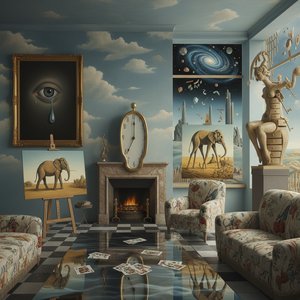 Surrealism's Greatest Hits: 10 Masterpieces for Your Home |
Introduction To gaze upon a Surrealist masterpiece is to step through a looking glass, into a realm where logic dissolves and the subconscious takes flight. These aren’t merely paintings; they are windows into the hidden landscapes of the human mind,...
The ripples of Magritte’s philosophical inquiries can be felt throughout the trajectory of 20th and 21st-century art. His influence is deeply embedded in the DNA of Pop Art, where the interrogation of commercial imagery and mass production mirrors his own interest in the "common" object. Furthermore, his conceptual approach laid the groundwork for Minimalism and much of the contemporary art that seeks to explore the boundaries between idea and execution.
Beyond the gallery walls, Magritte’s visual language has permeated our broader cultural consciousness, influencing advertising, graphic design, and even cinema. The way we interact with digital imagery today—often caught in a loop of hyper-reality and simulated truth—is perhaps more "Magrittean" than ever before. We live in an era saturated with images that claim to represent reality but are often mere constructions of light and code, echoing his warning that seeing is not believing.
For those seeking to bring this profound intellectual depth into their own environments, the preservation of such masterpieces is vital. At ArtsDot.com, we honor this legacy by providing museum-quality, hand-painted oil reproductions of the world's most iconic works. Our master artists, trained in the finest academic traditions, capture not just the likeness, but the very texture and soul of Magritte’s vision—from the visible brushstrokes of a custom commission to the striking clarity of our fine art prints. Whether you are an art student studying the mechanics of Surrealism or a collector seeking to anchor a room with historical significance, we invite you to explore our collection and experience the enduring mystery of the masters.