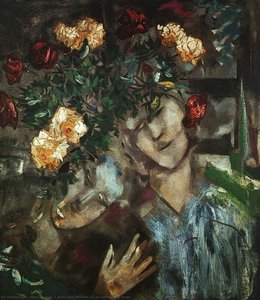
The Roots of a Dreamer: Vitebsk, Heritage, and the Formative Years
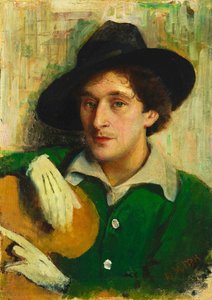 Marc Chagall
A Life Painted in Dreams: The World of Marc Chagall Marc Chagall, born Moishe Shagal in 1887 in the small Belarussian town of Liozna near Vitebsk, wasn’t merely a painter; he was a poet of color, a weaver of dreams, and a chronicler of memory. His li...
This cultural crossroads provided the emotional reservoir from which Chagall would draw for the rest of his long and prolific life. The folklore, religious motifs, and the very scent of the Belarusian countryside became the foundational elements of his visual vocabulary. Even as he traveled to the great artistic hubs of Saint Petersburg, Paris, and Berlin, Chagall never truly left Vitebsk behind. Instead, he transformed his memories of this provincial childhood into a universal language of nostalgia and identity, ensuring that the spirit of his homeland would forever haunt the corridors of modern art history.
A Symphony of Styles: Blending Cubism, Fauvism, and Surrealist Vision
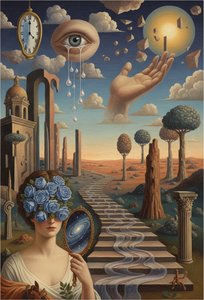 Surrealist Painting Masterpieces: 10 Artworks That Redefined Reality | ArtsDot
Introduction To gaze upon a Surrealist painting is to step through a looking glass, into a realm where logic dissolves and the subconscious takes flight. These are not merely images; they are windows into the hidden landscapes of dreams, desires, and...
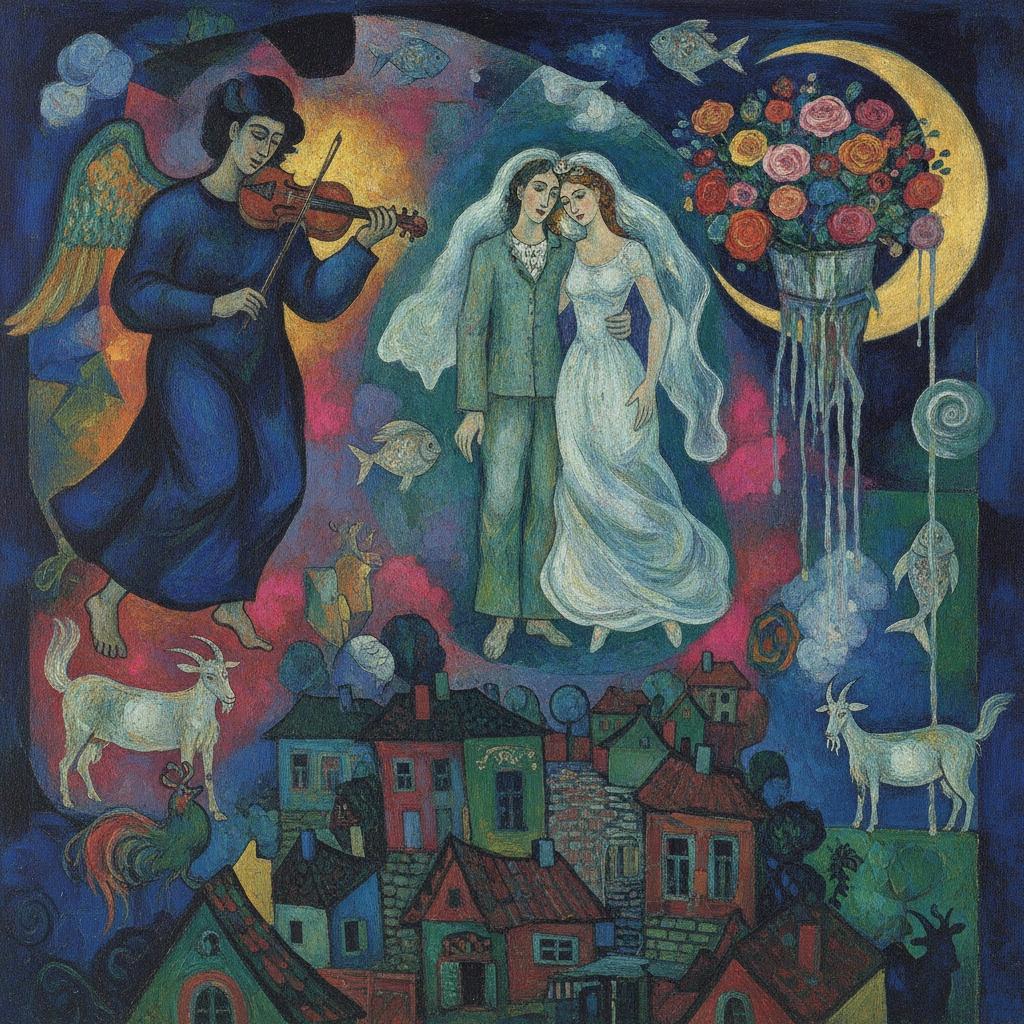
His style became a unique synthesis—a way to represent the intangible. He employed the structural innovations of his contemporaries to depict figures that floated effortlessly, defying gravity and logic. This refusal to align with any single movement allowed him to create a "surrealist" vision that was deeply personal rather than purely psychological. His work exists in that luminous space where the boundaries between reality and imagination dissolve, creating a realm where memories shimmer with color and the subconscious is given a vivid, tangible form.
Poetry in Pigment: Decoding Symbolism, Folklore, and Personal Memory
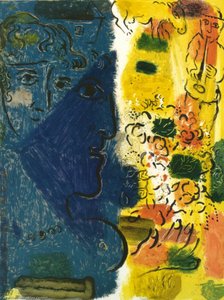
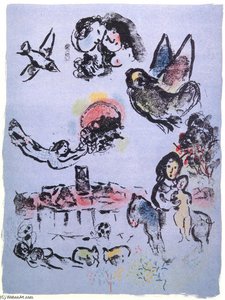 Nocturne at Vence
A Surreal Symphony in Lithograph Ink Marc Chagall’s “Nocturne at Vence,” created in 1963, transcends mere representation; it embodies the artist's profound engagement with folklore, mythology, and the subconscious. Printed as a lithograph by Mourlot,...
This symbolic depth is perhaps most evident in his use of figures that drift through the sky, representing the liberation of thought and the transcendence of the soul. Every brushstroke carries the weight of a memory, often blending the intimate details of his personal life—such as his profound love for his wife, Bella—with the broader themes of religious and cultural heritage. This ability to transmute individual experience into universal poetry is what elevates his work from mere painting to a spiritual testament.
Masterpieces Unveiled: An Exploration of Iconic Works and Their Narratives
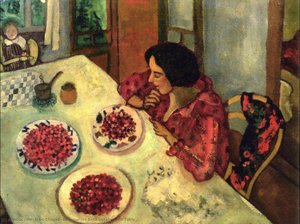 Strawberries Bella and Ida at the Table
Captivating Subject and Intimate Scene This exquisite painting captures a tender, domestic moment filled with warmth and nostalgia. At its center, a woman, likely Bella, is seated at a modest table adorned with three large, vibrant strawberries, whic...
For the discerning collector, bringing such legendary imagery into one's own space requires an appreciation for true craftsmanship. At ArtsDot.com, we specialize in honoring this legacy through our Handmade Oil Reproductions. We do not offer mere prints; our artists meticulously recreate these masterpieces on 100% cotton canvas, ensuring that the luminous hues and the tactile depth of Chagall’s visible brushstrokes are preserved. Whether it is the ethereal lithograph quality of Nocturne at Vence or the monumental scale of his later canvases, our goal is to provide a museum-quality experience. Each piece is a labor of passion, designed to capture the very soul of the original, allowing the magic of Chagall to reside permanently within your home.
The Eternal Legacy: Chagall’s Influence on Modernity and the Art of Color
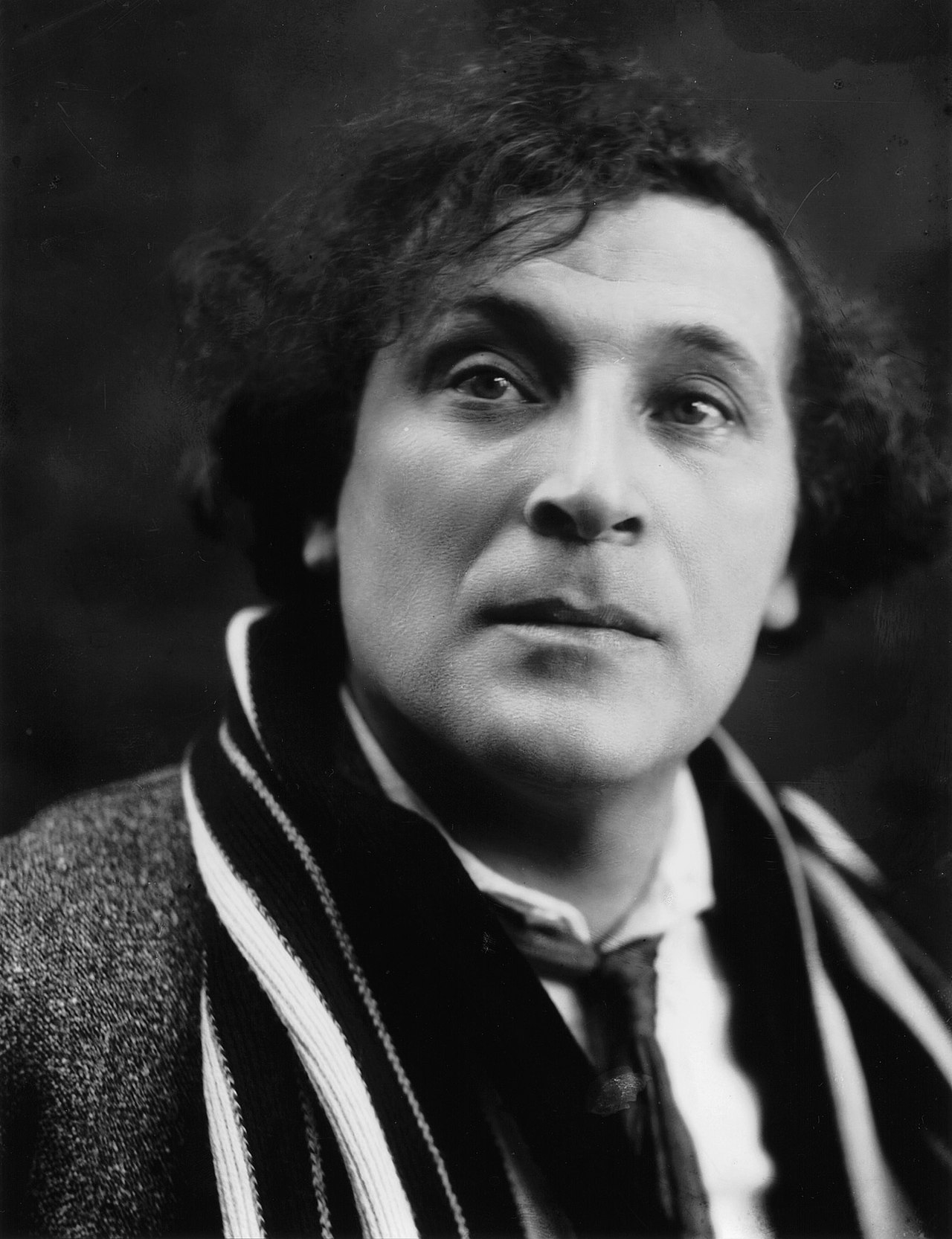 Marc Chagall
Marc Chagall (born Moishe Shagal; 6 July [O.S. 24 June] 1887 – 28 March 1985) was a Russian and French artist of Jewish ancestry. An early modernist, he was associated with the École de Paris, as well as several major artistic styles and created work...
As we reflect on his nearly century-long life, Chagall remains the quintessential artist of the twentieth century—a chronicler of memory who taught us that art can be both avant-garde and deeply rooted in tradition. His work continues to inspire a new generation of enthusiasts to look through the "looking glass" of surrealism, finding beauty in the unexpected and truth in the dream. Through the careful preservation of his works via high-quality reproductions, his vibrant, colorful legacy continues to illuminate the modern world, one masterpiece at a time.