The Essence of Tonalism: Beyond Detail to Atmospheric Emotion
 Tonalism
Tonalism was an artistic style that emerged in the 1880s.The movement was eventually eclipsed by Impressionism and European modernism. == French origins == The French Barbizon school artists emphasized mood and shadow. The movement was eventually ecl...
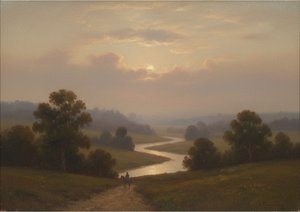
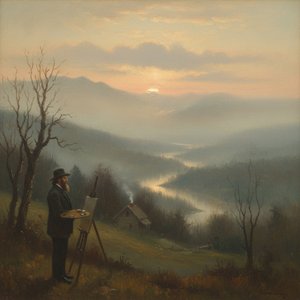
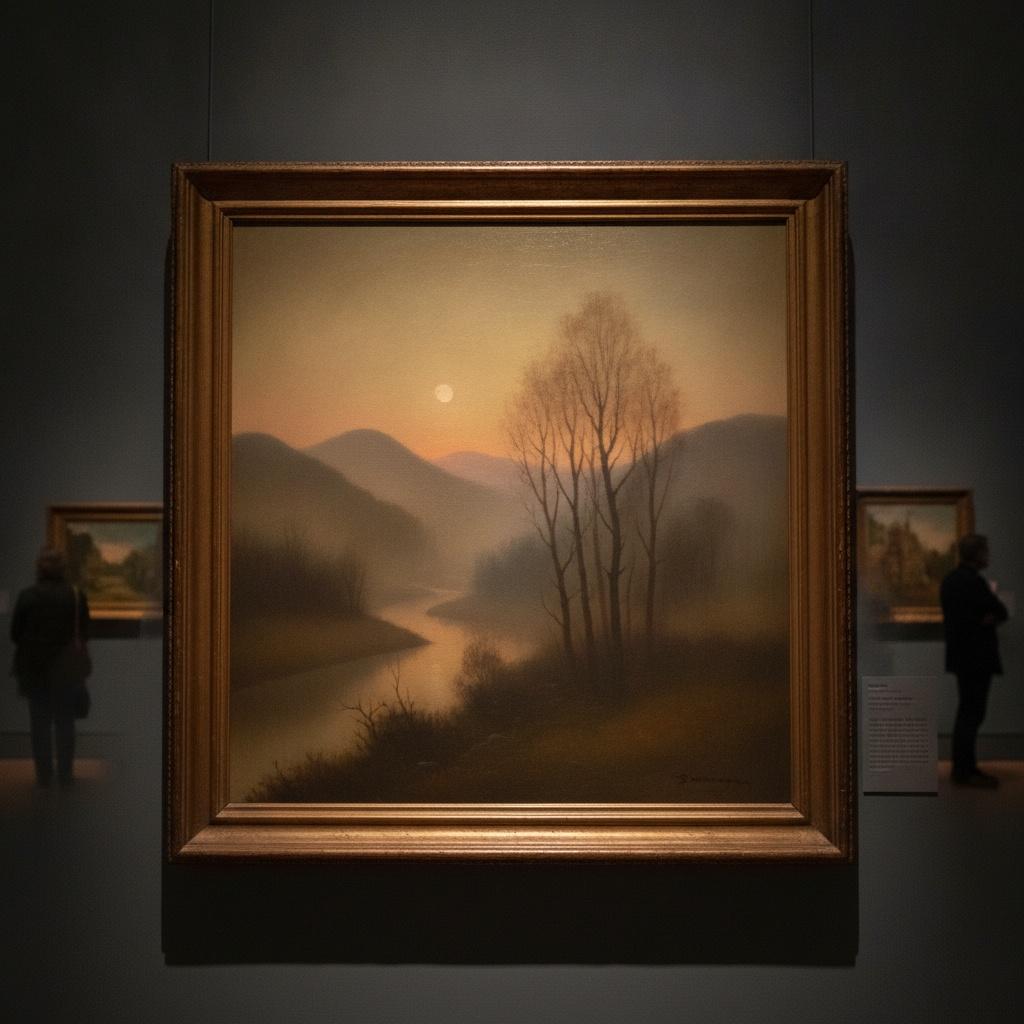
To step into a Tonalist painting is not merely to observe a landscape, but to enter a state of mind. Unlike the dramatic, often theatrical narratives found in earlier classical traditions, or the vibrant, light-drenched energy of Impressionism, Tonalism offers a quiet, introspective retreat. It is an art form that prioritently values how a scene is perceived over what is explicitly depicted. At its core, Tonalism is the pursuit of mood—a subtle, evocative power derived from the harmonious interplay of color and atmosphere.
The movement, which flourished primarily between 1880 and 1915, sought to capture the ephemeral qualities of nature: the soft veil of morning mist, the deepening shadows of twilight, and the weight of a humid summer afternoon. Rather than relying on sharp outlines or high-contrast brilliance, Tonalist artists utilized a limited, often muted palette of grays, browns, and deep blues. This restraint allowed for a sense of unity and "tonal harmony," where every element of the composition—from the distant tree line to the foreground water—seems to breathe within the same colored atmosphere. It is an art of suggestion, inviting the viewer to complete the scene with their own emotions and memories.
Historical Roots: From the French Barbizon School to American Landscapes
 Evocations of Place: A Historical Journey Through Landscape Art
The Dawn of Landscape: From Symbolic Representation to Naturalistic Depiction Wikipedia: Landscape painting Landscape painting, also known as landscape art, is the depiction in painting of natural scenery such as mountains, valleys, rivers, trees, an...
The lineage of Tonalism is a profound journey through the evolution of landscape art. Its spiritual ancestors can be found in the French Barbizon school, where artists began to move away from idealized, symbolic landscapes toward a more direct, emotive observation of nature. These French masters emphasized shadow and mood, laying the groundwork for a style that prioritized the emotional resonance of the natural world over meticulous topographical accuracy.
As these sensibilities crossed the Atlantic, they underwent a transformative evolution in America. While European traditions often focused on the ruggedness of the countryside, American Tonalism embraced a more poetic, almost dreamlike interpretation of the landscape. This was not a violent rejection of realism, but rather a quiet turning inward—a reaction against the stark, sometimes overwhelming detail of contemporary realism. By focusing on the "colored atmosphere," American artists created works that felt intimately connected to the soul of the land, transforming ordinary vistas into extraordinary meditations on peace and solitude.
The Master Architects of Mood: Exploring Whistler, Tryon, and Dewing
 Thomas Wilmer Dewing: Atmospheric Landscapes & the American Tonalist Vision
Introduction: The Allure of Tonalism & Thomas Wilmer Dewing The late 19th century witnessed a subtle but profound shift in American art, a move away from the dramatic narratives and meticulous realism that had defined earlier generations. This was th...
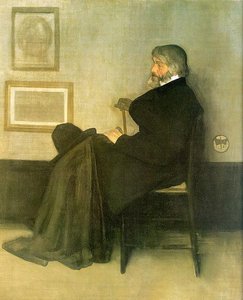
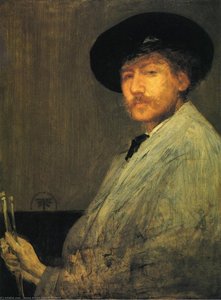
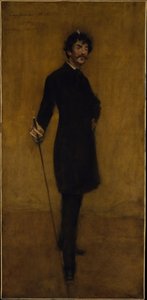
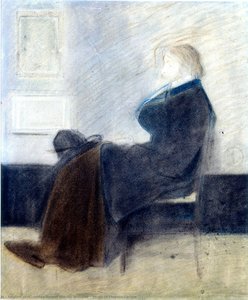
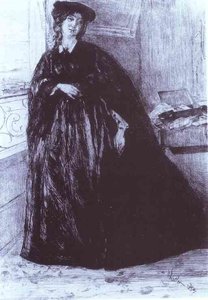
Few names resonate with the quiet authority of Tonalism as strongly as James McNeill Whistler. A pioneer of the Aesthetic Movement, Whistler’s "Nocturnes" are quintessential examples of tonal harmony. His ability to evoke profound atmosphere through subtle tonal values rather than precise detail revolutionized the way artists approached composition, championing the idea of art for art's sake.
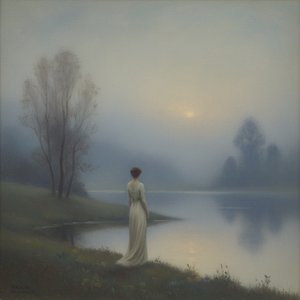
In the American landscape, Dwight William Tryon emerged as a vital figure, bringing a sense of serene majesty to his canvases. His works, such as Daybreak, capture the soft, luminous transition of sunrise over water with a delicate mastery of color gradations. Tryon’s connection to the rural rhythms of Connecticut allowed him to translate the subtle nuances of light and shadow into scenes of deep tranquility. Similarly, Thomas Wilmer Dewing brought a refined, almost aristocratic elegance to the movement. While often celebrated for his ethereal portraits of women, Dewing’s landscapes are equally captivating, characterized by dreamlike surroundings that invite a sense of poetic suggestion and quiet contemplation.
Technique and Palette: The Science of Mist, Shadow, and Subtle Gradations
 Aerial perspective
Aerial perspective, or atmospheric perspective, is the effect of the atmosphere has on the appearance of an object as viewed from a distance. As the distance between an object and a viewer increases, the contrast between the object and its background...
The technical execution of Tonalism is a masterclass in subtlety. To achieve the desired effect of "aerial perspective"—where distance is conveyed through a decrease in contrast and a shift toward cooler, more muted tones—artists employed sophisticated layering techniques. The use of thin oil glazes was essential; by building up translucent layers of paint, artists could create a luminous quality that mimics the way light filters through fog or dusk.
The palette itself is intentionally restrained. By avoiding jarring, high-saturation colors, the Tonalist painter maintains a cohesive "tone" across the entire canvas. This involves a careful study of neutral hues—the soft grays of a cloudy sky, the earthy browns of damp soil, and the deep, receding blues of distant mountains. The goal is to create an illusion of depth and space through tonal relationships rather than through sharp lines. When executed correctly, the brushwork becomes almost invisible, leaving only the impression of a world softened by moisture and light.
Tonalism in Global Context: From the American West to Australian Realism
 Australian tonalism
Australian tonalism was an art movement that emerged in Melbourne during the 1910s. Known at the time as tonal realism or Meldrumism, the movement was founded by artist and art teacher Max Meldrum, who developed a unique theory of painting, the "Scie...
While often associated with the American Northeast, the principles of Tonalism found echoes across the globe. In California, a distinct regional variation emerged, focusing on intimate, low-key settings that captured the soft light of twilight and evening. These works often featured a limited palette and an absence of harsh contrast, creating a sense of stillness characteristic of the coastal landscape.
Across the Pacific, Australian Tonalism—sometimes referred to as "Meldrumism"—offered a unique, almost scientific approach to the movement. Founded by Max Meldrum, this branch emphasized a "Scientific Order of Impressions," where the painter aimed to record the exact optical analysis of light and tone as received by the eye. Artists like Clarice Beckett utilized misty, wintry conditions to explore the interplay between structure and softness, proving that the Tonalist impulse toward atmospheric beauty is a universal language, capable of finding profound meaning in any landscape.
Bringing the Atmosphere Home: Preserving Tonalist Beauty in Modern Interiors
California Tonalism was art movement that existed in California from circa 1890 to 1920. Tonalist are usually intimate works, painted with a limited palette. Tonalist paintings are softly expressive, suggestive rather than detailed, often depicting t...
In the contemporary home, a Tonalist masterpiece serves as more than mere decoration; it acts as an anchor of tranquility. The muted tones and soft edges of these works are uniquely suited to modern interiors, providing a sophisticated counterpoint to the often sharp lines and bright lights of modern architecture. A well-placed Tonalist landscape can transform a room into a space of reflection and calm.
For the discerning collector, acquiring such works requires an appreciation for the tactile nature of the medium. At ArtsDot.com, we specialize in bringing these historical atmospheres to life through museum-quality reproductions. Our Handmade Oil Reproductions are meticulously crafted by skilled artists who understand the delicate layering and tonal nuances required to replicate the works of masters like Tryon or Whistler. Each piece is hand-painted on 100% cotton canvas, ensuring that the visible brushstrokes and deep tonal ranges characteristic of the original movement are preserved for generations. Whether you seek a large-scale landscape to anchor a grand hall or an intimate study for a private library, our collection allows you to possess a fragment of art history's most evocative era.