Introduction
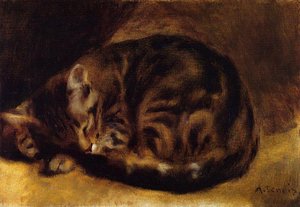
To walk through a gallery dedicated to the animal kingdom is to embark on a journey that transcends species, crossing the boundaries between the human soul and the wild, untamed world. Throughout history, artists have looked upon the creatures of our earth not merely as subjects for study, but as profound mirrors reflecting our own virtues, fears, and spiritual complexities. From the primal power captured in prehistoric cave paintings to the delicate, light-drenched studies of fauna in the Impressionist era, animals have served as the ultimate vessels for storytelling.
In the annals of art history, the depiction of animals has shifted with the tides of human culture. In the Renaissance, a meticulously painted stag or bird often carried heavy allegorical weight, symbolizing everything from nobility to divine grace. During the Romantic period, the focus shifted toward the sublime—capturing the terrifying majesty of a storm-tossed predator to evoke awe and existential wonder. Even in more modern movements, the animal subject has been used to explore texture, movement, and the very essence of life itself.
These works remain deeply meaningful today because they touch upon a universal truth: our interconnectedness with the natural world. In an increasingly digital age, seeing the tactile weight of a painted mane or the soulful gaze of a captured creature reminds us of the biological and emotional threads that bind us to all living things. There is a profound, quiet intimacy in observing a master's brushstroke trace the curve of a sleeping predator or the frantic energy of a bird in flight.
In the following curation, we invite you to pause and reflect alongside these canonical masterpieces. We have selected ten extraordinary works that define the pinnacle of animal portraiture—pieces that do not just show us animals, but allow us to feel their presence. As we move through this list, you may find yourself drawn to a specific era or style; should a particular masterpiece resonate with your own space, remember that our artisans can recreate these very textures and emotions on canvas, bringing the legacy of the masters into your personal sanctuary.
Guernica - Pablo Picasso
 Guernica - Pablo Picasso
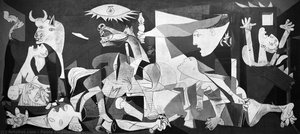
In the fractured, monochromatic landscape of Pablo Picasso’s 1937 masterpiece, Guernica , animals are not mere subjects; they are the visceral voices of agony. As you stand before this monumental Cubist achievement, the absence of color forces your gaze into the raw, jagged edges of a world in chaos. The wounded horse , writhing in a state of unbearable torment, serves as a profound symbol of the innocent victims of the Spanish Civil War, its pierced flank embodying the physical reality of violence.
Beside it, the bull looms—a complex, stoic figure that evokes both the strength of Spain and the dark shadow of brutality. Through these animal figures, Picasso transcends a specific historical tragedy to explore a universal language of suffering. To possess a reproduction of such a profound work is to invite a piece of history's most powerful outcry into your home. It is more than an acquisition; it is an invitation to surround yourself with the transformative power of a gallery of the soul , where every brushstroke echoes the resilience of life amidst darkness.
The Tilled Field - Joan Miró
 The Tilled Field - Joan Miró
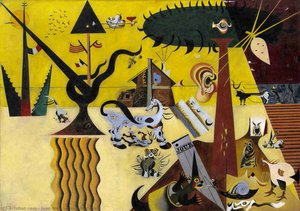
In Joan Miró’s The Tilled Field (1924), the viewer is not merely observing a landscape, but entering a fever dream where the boundary between the natural world and the subconscious dissolves. As one of the most significant artworks that explore the theme of animals , this masterpiece presents a menagerie of fragmented creatures—a lizard wearing a conical hat, watchful eyes peering from foliage, and birds in flight—all woven into a vibrant Catalan landscape. The painting pulses with an unsettling yet hypnotic energy, where bold yellows and stark blacks create a psychological tension that mirrors our own internal complexities.
Miró’s transition from Cubist structure to Surrealist symbolism allows these animal figures to act as totems of the imagination, inviting profound reflection on the hidden life within nature. Bringing this powerful emotional resonance into your home can transform a personal sanctuary into a space for deep contemplation and wonder. For those seeking to capture this avant-garde spirit, our hand-made oil reproductions offer the tactile depth of Miró's original brushwork, allowing the dreamlike vitality of his world to become a permanent fixture in your collection.
Triptych of Temptation of St Anthony (detail) (31) - Hieronymus Bosch
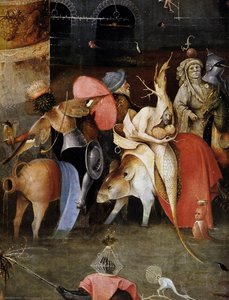 Triptych of Temptation of St Anthony (detail) (31) - Hieronymus Bosch
In the feverish, hallucinatory landscapes of Hieronymus Bosch, the boundary between the spiritual and the bestial dissolves into a singular, haunting vision. The Temptation of St Anthony (detail) stands as a cornerstone of our collection exploring the theme of animals in art, not merely for their presence, but for their role as vessels of moral chaos. Within this meticulously painted vignette, Bosch utilizes creatures to manifest psychological unrest; horses emerge as symbols of earthly impulse, while scattered birds act as unsettling harbingers of doom amidst a landscape of decay.
This work earns its place among the top ten through its unparalleled ability to use fauna to articulate the complexities of human vice and temptation. The interplay of earthy ochres and grotesque forms creates an atmosphere that is both repulsive and deeply hypnotic. At ArtsDot.com, we believe such profound historical narratives should not be confined to the Prado. By commissioning a high-fidelity, hand-painted oil reproduction, you can bring this transformative, surrealist energy into your own home or gallery, allowing Bosch’s enigmatic world to serve as a powerful, conversational centerpiece in any modern interior.
The Garden of Earthly Delights (detail) - Hieronymus Bosch
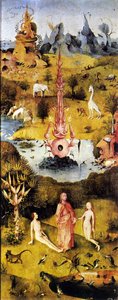 The Garden of Earthly Delights (detail) - Hieronymus Bosch
To gaze upon the central panel of Hieronymus Bosch’s The Garden of Earthly Delights is to step directly into a fever dream where the boundaries between reality and nightmare dissolve. One feels an immediate sense of vertigo, caught in a lush, hyper-detailed landscape that vibrates with both primordial vitality and profound spiritual unease. This masterpiece earns its place among the top 10 artworks exploring animals because it does not merely depict fauna; it uses them as surrealist vessels for human desire and moral allegory.
Within this teeming ecosystem, oversized birds, strange fish, and hybrid creatures roam alongside nude figures, creating a visual tapestry where every creature carries a symbolic weight. Bosch’s meticulous oil technique captures the iridescent feathers of exotic birds and the muscular grace of horses with an almost unsettling clarity. This profound exploration of the animal kingdom serves as a mirror to our own complex instincts. Bringing such a powerful piece into a modern home through a hand-made oil reproduction allows one to invite this deep, historical contemplation into daily life, transforming a contemporary space into a sanctuary of intellectual and sensory wonder.
Nativity - Duccio di Buoninsegna
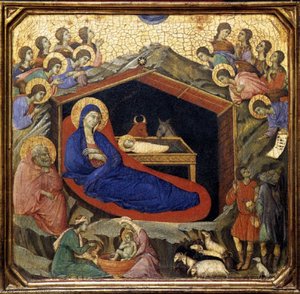 Nativity - Duccio di Buoninsegna
In Duccio di Buoninsegna’s 1308 masterpiece, Nativity , the boundary between the celestial and the earthly dissolves through the quiet presence of the animal kingdom. As a cornerstone of Sienese Gothic art, this work transcends mere religious iconography; it uses the ox and the donkey to ground a divine event in a tangible, breathing reality. These creatures are not mere background details but profound symbols of gentleness and sacrifice, their textured forms rendered with a burgeoning naturalism that was revolutionary for the Trecento period.
The painting’s visual language—characterized by deep blues, rich reds, and a soft, dramatic light—creates an intimate atmosphere that resonates in modern curated spaces seeking tranquility and depth. In an era of digital abstraction, Duccio’s ability to weave organic life into a sacred narrative offers a poignant connection to the natural world. For collectors, owning a high-quality oil reproduction of such a work allows one to bring this timeless dialogue between humanity and nature into the home, preserving the soulful, tactile beauty of the Sienese School.
St Mary Magdalen - Jacopo Tintoretto
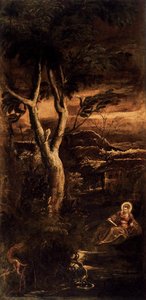 St Mary Magdalen - Jacopo Tintoretto
In Jacopo Tintoretto’s 1582 masterpiece, St Mary Magdalene , the animal kingdom serves as a silent, soulful witness to human redemption. Within this shadowed Venetian landscape, animals are not mere background elements; they are profound symbols of fidelity and divine presence. As the Saint sits in deep, sorrowful contemplation, two dogs—traditional emblems of loyalty—anchor her to the earthly realm, while a solitary bird soars above, perhaps acting as a celestial messenger of hope amidst the gloom.
Tintoretto, known as Il Furioso , utilizes his signature dramatic chiaroscuro to sculpt this emotional tableau. The light does not simply illuminate; it pierces through the dense forest foliage to catch the texture of fur and feather, creating a visceral connection between the Saint’s internal turmoil and the natural world. To bring this transformative energy into your own collection, consider a Handmade Oil Reproduction . Our artists meticulously recreate Tintoretto's rapid, turbulent brushstrokes on 100% cotton canvas, ensuring that the profound spiritual weight of this animal-filled sanctuary becomes a permanent gallery of the soul within your home.
Animated Landscape - Joan Miró
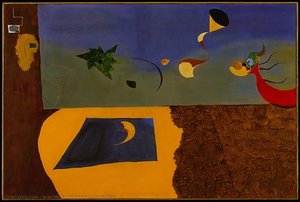 Animated Landscape - Joan Miró
To gaze upon Joan Miró’s Animated Landscape is to step directly into the fluid logic of a dream. In this 1927 masterpiece, the boundary between the terrestrial and the subconscious dissolves, leaving us in a realm where birds, fish, and amorphous creatures dance across an ethereal blue expanse. It earns its place among the top artworks exploring animals because it does not merely depict fauna; it animates them with a primal, symbolic energy that transcends biological form.
Miró uses calligraphic lines and a luminous palette to transform a Catalan landscape into a playground of Surrealist instinct. The way these stylized creatures interact with enigmatic objects like clocks and umbrellas creates a sense of wonder that has captivated collectors for decades. At ArtsDot.com, we honor this profound emotional depth through our handmade oil reproductions. Our artists meticulously recreate Miró’s spontaneous gestures and textured brushstrokes on 100% cotton canvas, ensuring that the vibrant, dreamlike spirit of this Surrealist vision remains a living, tactile presence in your own home.
Deer in the Forest II - Franz Marc
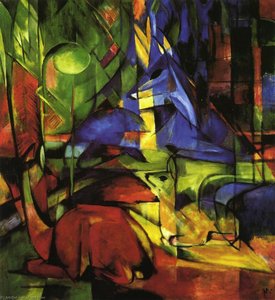 Deer in the Forest II - Franz Marc
To gaze into the heart of a primordial woodland is to encounter a world where the veil between the physical and the spiritual is at its thinnest. In 1914, on the precipice of global upheaval, Franz Marc captured this transcendence in Deer in the Forest II . As a pioneer of the Der Blaue Reiter movement, Marc sought to move beyond mere representation, finding a profound, uncorrupted truth within the animal kingdom. This masterpiece earns its place among the top 10 artworks exploring animals through its rhythmic, pulsating energy and its rejection of literalism.
The canvas is a symphony of non-naturalistic color; vibrant blues, deep greens, and jewel-like accents create a chromatic whirlwind where deer, birds, and even subtle human figures dissolve into a singular, cosmic tapestry. His energetic, thick brushstrokes lend a tactile depth to the scene, making the forest feel less like a setting and more like a living, breathing organism. Today, owning a hand-painted reproduction of such an iconic work allows one to bring this same sense of spiritual vitality and emotional resonance into the modern home, transforming any space into a sanctuary of contemplative beauty.
Fighting Forms - Franz Marc
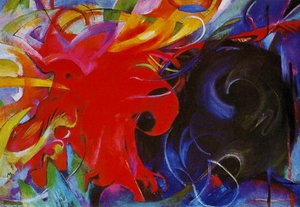 Fighting Forms - Franz Marc
In Franz Marc’s 1914 masterpiece, Fighting Forms , light does not merely illuminate the canvas; it erupts from within a primal, rhythmic struggle. As one of the most profound entries in our exploration of animal-themed art, this work transcends literal depiction to capture the very soul of conflict. Marc, a pioneer of the Der Blaue Reiter movement, does not paint animals as static subjects, but as vibrant, swirling energies of red, blue, and yellow that collide in a cosmic dance of life and death.
The painting functions like a visual sonata, where bold, gestural brushstrokes compose a language of tension and spiritual yearning. You can almost feel the heat of the aggressive reds clashing against the deep, mysterious blues, mirroring the era's pre-war anxieties. It is an immersive experience that invites you to look beyond the surface of the natural world into a realm of pure emotion. This powerful expressionist work is more than a historical relic; it is a living energy that, through a high-quality oil reproduction, can transform your personal space into a portal of profound movement and historical depth.
fairy tale - Gustav Klimt
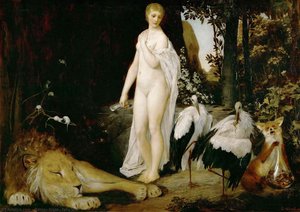 fairy tale - Gustav Klimt
To step into the world of 1884 is to encounter a moment where reality dissolves into myth. In Fairy Tale by Gustav Klimt, the boundaries between the human spirit and the natural kingdom blur through a symphony of symbolic creatures. This masterpiece earns its place among the top artworks exploring animals not merely as subjects, but as spiritual guardians. Within this lush, woodland sanctuary, a serene woman is enveloped by a menagerie: protective lions, delicate doves, and a watchful cat all converge to create an atmosphere of primordial grace.
Klimt’s early mastery is evident in the way light dances across the canvas, utilizing rich textures and organic forms that foreshadow his legendary Golden Phase. The interplay of soft, feathered wings against the powerful, muscular presence of the lions evokes a profound sense of fertility and protection. Through meticulous oil layering, Klimt transforms a simple forest scene into an eternal, dreamlike vision. Today, owning a reproduction of this work allows the radiant, symbolic energy of the animal kingdom to transform any modern space into a sanctuary of historical depth and quiet contemplation.
Conclusion
As the light fades on our gallery tour, we are left to contemplate how these depictions of the animal kingdom transcend mere biological observation. These masterpieces do not simply record the presence of a creature; they capture the pulse of life itself—the quiet dignity of a predator, the tender vulnerability of a pet, and the wild, untamed spirit of nature that resides within us all. Through the brushstrokes of history's greatest masters, animals have become vessels for our deepest emotions, serving as mirrors to our own strength, grace, and instinct.
To bring these works into your own sanctuary is to invite an eternal dialogue into your daily life. Whether it is the commanding presence of a lion or the serene stillness of a pastoral scene, these paintings act as living presences that breathe character into a room and soul into a home. They remind us that the bond between humanity and the natural world is unbroken, offering a window into a timeless beauty that continues to shape our culture and inspire our modern interiors.
We invite you to continue this journey of discovery and find the piece that speaks to your own spirit within our full collection . Let these enduring icons of art history transform your space into a place of reflection, wonder, and everlasting connection.