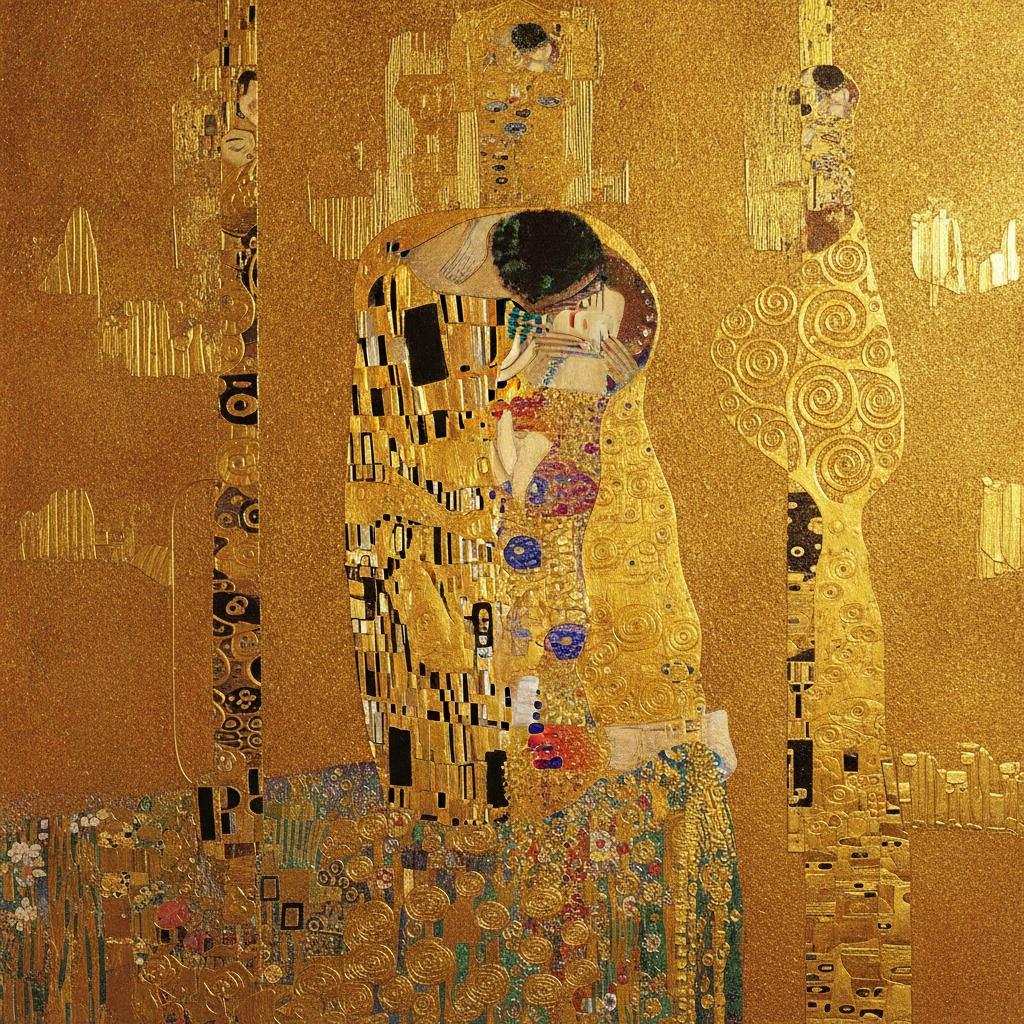
Introduction
To step into the world of Gustav Klimt is to enter a realm where the boundaries between reality and ornament dissolve into a shimmering haze of gold, pattern, and profound emotion. His work does not merely sit upon a canvas; it radiates, pulling the viewer into a sensory experience that feels both ancient and startlingly modern. As you prepare to journey through his top twenty-five masterpieces, imagine yourself walking through a gallery where every corner holds a secret—a fragment of a mosaic, a swirl of organic geometry, or the haunting gaze of a figure caught in a moment of eternal intimacy.
Born in 1862 in Baumgarten, Klimt was a child of the Austro-Hungarian Empire, a period of immense cultural tension and unparalleled artistic flowering. His early training in architectural painting instilled in him a respect for decorative grandeur, yet his spirit was far too restless for the rigid confines of the Vienna Academy. In 1897, he led a daring rebellion, founding the Vienna Secession —a movement that sought to shatter the stuffy traditions of the past to make way for the fluid, symbolic language of Art Nouveau and Symbolism. This era was defined by a search for a 'total work of art,' where every line and color served a higher, psychological purpose.
<The brilliance of Klimt’s legacy lies in his ability to marry the tactile opulence of his 'Golden Phase' with the raw, often unsettling truths of the human condition. He explored themes of Eros, Thanatos, and the cyclical nature of life with a frankness that scandalized his contemporaries but continues to captivate us today. His use of gold leaf—a technique likely inspired by his father’s profession as an engraver—transforms his subjects into icons, elevating personal portraits into something much more universal and mythic.
In the following selection, we will explore the evolution of a master. From the intricate, mosaic-like textures of his most famous compositions to the tender, psychological depth of his later works, these twenty-five pieces represent the pinnacle of Klimt’s creative zenith. Whether you are a scholar of the Secession movement or a lover of pure aesthetic beauty, this collection serves as a guide to the luminous, gilded soul of Gustav Klimt.
The kiss - Gustav Klimt
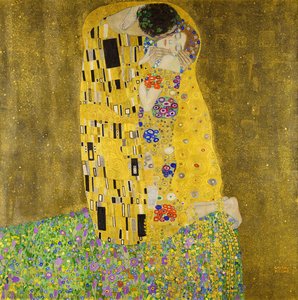 The kiss - Gustav Klimt
In a shimmering realm of gilded light, two souls are lost in an eternal, intimate embrace. Gustav Klimt’s The Kiss is not merely a painting; it is a transcendent experience of the soul. Created during his legendary “Golden Phase,” this masterpiece stands as the pinnacle of the Vienna Secession movement, where the boundaries between fine art and decorative opulence dissolve into pure emotion.
As you approach the canvas, the eye is immediately captivated by the luminous texture of gold leaf, reminiscent of Byzantine mosaics. The composition vibrates with a sensory richness: bold geometric patterns of black and white adorn the man’s robe, contrasting beautifully against the delicate, flowing floral motifs that drape the woman. Beneath them, a vibrant meadow of wildflowers suggests life and fertility, even as the golden cloak envelops the couple in a sacred, protective cocoon.
Bringing a hand-painted reproduction of this iconic work into your home does more than decorate a wall; it introduces an atmosphere of profound tenderness and spiritual calm. It serves as a timeless window into a world of beauty, inviting quiet reflection and a touch of historical grandeur to any modern interior.
Portrait of Adele Bloch-Bauer I - Gustav Klimt
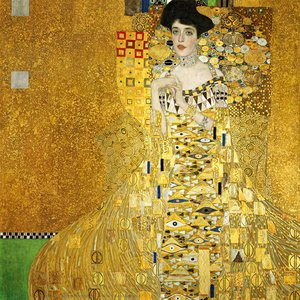 Portrait of Adele Bloch-Bauer I - Gustav Klimt
Imagine standing before a shimmering portal of light, where the boundaries between flesh and divinity dissolve into a sea of molten gold. To encounter Portrait of Adele Bloch-Bauer I is to step directly into the heart of the Vienna Secession’s most opulent dream. This 1907 masterpiece does not merely depict a woman; it captures an era of profound transformation, where Gustav Klimt utilized precious gold leaf and intricate geometric mosaics to elevate his subject, Adele, to the status of a Byzantine icon.
As one of the top 25 artworks of Gustav Klimt, this painting remains unparalleled in its ability to provoke awe through its tactile, swirling textures and symbolic depth. The way the light dances across the gilded patterns evokes a sense of eternal grace, a quiet sanctuary of beauty amidst the chaos of modern life. Bringing such a profound sense of grandeur into a contemporary home allows the luminous energy of Klimt’s 'Golden Phase' to transform a simple room into a space of reflection and sophisticated splendor.
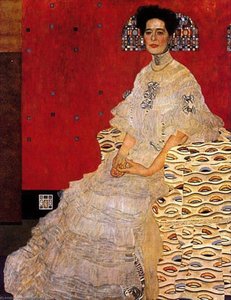
Bildnis Fritza Riedler, 1906 - Österreichische Galerie, Vienna - Gustav Klimt
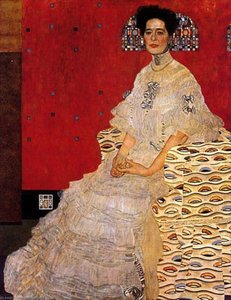 Bildnis Fritza Riedler, 1906 - Österreichische Galerie, Vienna - Gustav Klimt
Step into the gilded atmosphere of 1906 Vienna with Bildnis Fritza Riedler , a masterpiece that captures the very essence of Klimt’s celebrated Golden Phase. As you gaze upon Fritza Riedler, you are not merely looking at a portrait, but entering a world of profound opulence and psychological depth. The composition is a breathtaking symphony of textures; the deep, saturated reds of the background clash dramatically with the luminous, creamy whites of her gown, while shimmering gold accents create a mosaic-like brilliance that seems to glow from within.
Klimt utilizes intricate, eye-like motifs and organic Art Nouveau patterns to weave a sense of mystery around his subject, evoking an atmosphere of both high-society elegance and a haunting, quiet melancholy. The tactile richness of the oil paint, with its visible, meticulous layering, offers a sensory experience that transcends the flat canvas. Bringing such a legendary work into your home—perhaps as a hand-painted oil reproduction on heavy cotton canvas—does more than decorate a wall; it introduces a focal point of historical prestige and contemplative beauty, inviting a sense of timeless luxury and artistic reflection into your modern living space.
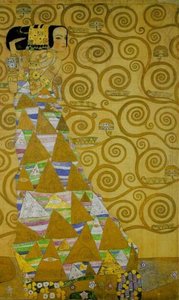
The Tree of Life - Gustav Klimt
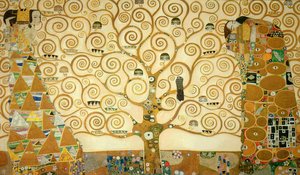 The Tree of Life - Gustav Klimt
Imagine standing before a shimmering portal where the boundaries between the earthly and the divine dissolve into a swirl of radiant gold. To encounter The Tree of Life is to step into a dreamscape of eternal connection. Painted in 1909, this masterpiece serves as a profound visual hymn to the cyclical nature of existence, capturing a moment of spiritual transcendence through the lens of the Vienna Secession.
Klimt’s use of opulent gold leaf and intricate, swirling patterns creates a textured tapestry that feels alive, pulsing with the energy of growth and rebirth. The central motif—a magnificent, spiraling tree—intertwines human figures and architectural silhouettes, suggesting that civilization and soul are inextricably bound to the natural world. It earns its place among the top 25 artworks of Gustav Klimt because it does more than decorate; it heals, offering a sense of cosmic serenity amidst the chaos of modern life. Bringing such a luminous vision into your home allows this timeless symbol of interconnectedness to cast a warm, meditative glow over your daily environment, turning a simple room into a sanctuary of beauty.
Beethoven Frieze; The Arts, Choir of Angels, Embracing Couple - Gustav Klimt
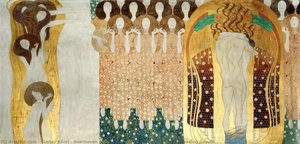 Beethoven Frieze; The Arts, Choir of Angels, Embracing Couple - Gustav Klimt
Imagine standing before a shimmering horizon of gold, where the boundaries between the earthly and the divine dissolve into a rhythmic procession of souls. The Beethoven Frieze is not merely a painting; it is a sensory experience of spiritual transcendence. Within this monumental work, Klimt captures the profound tension between human desire and cosmic order, moving through the Choir of Angels toward the intimate vulnerability of an Embracing Couple .
This masterpiece earns its place among the top 25 artworks of Gustav Klimt through its unparalleled ability to evoke a sense of sacred ceremony. Through the use of luminous gold leaf, sinuous Art Nouveau lines, and Byzantine-inspired textures, Klimt transforms a decorative commission into a philosophical journey of devotion and sacrifice. To possess a reproduction of this frieze is to invite a sense of quiet prestige and meditative depth into your own space, allowing the radiant, dreamlike atmosphere of the Vienna Secession to bring a timeless, golden serenity to the modern home.
Water Serpents II (Bewegtes Wasser sfondo) - Gustav Klimt
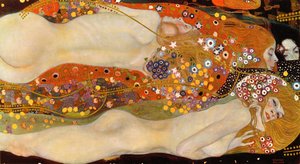 Water Serpents II (Bewegtes Wasser sfondo) - Gustav Klimt
In Water Serpents II (Bewegtes Wasser sfondo) , the lines of Gustav Klimt’s brush are not merely drawn; they are choreographed . This is not a static composition; it is a dance frozen in time, where the undulating forms of serpentine figures and swirling aquatic patterns create a rhythmic pulse across the canvas. Created during his transformative Golden Phase, this masterpiece epitomizes the Art Nouveau spirit, blending the sensuality of a reclining nymph with the hypnotic, decorative geometry of the Vienna Secession.
The painting breathes with a luminous, dreamlike energy, utilizing rich, golden hues and thick impasto textures that invite the eye to wander through a landscape of primal beauty. The fluid, organic shapes suggest a world where nature and the subconscious merge seamlessly. Imagine your own space holding this same exquisite balance—where your walls do not just decorate, but breathe rhythm . For those seeking to curate a collection of the top 25 artworks of Gustav Klimt, this piece offers a profound sense of tranquility and mystery, making it an unparalleled centerpiece for any sophisticated interior.
Farm Garden with Crucifix - Gustav Klimt
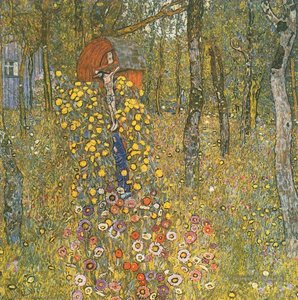 Farm Garden with Crucifix - Gustav Klimt
In Farm Garden with Crucifix , Gustav Klimt captures a moment where the ephemeral beauty of nature meets the eternal weight of spirituality. This 1911 masterpiece stands among the top 25 artworks of Gustav Klimt because it transcends mere landscape painting; it is a sensory immersion into a world of vibrant, impressionistic light and profound introspection.
The canvas breathes with a symphony of color, where fiery yellows and deep greens dance in short, textured brushstrokes that evoke the very pulse of summer. A solitary figure, sheltered by a striking red parasol, wanders through a dense tapestry of wildflowers, her presence adding a layer of quiet melancholy to the lush scenery. The subtle inclusion of the crucifix nestled within the foliage invites a contemplative dialogue between earthly vitality and divine mystery.
For the modern collector, this piece offers more than historical significance; its harmonious palette and dreamlike atmosphere bring a sense of sophisticated calm to any contemporary interior. Whether through a museum-quality oil reproduction or a textured Giclée print, owning this work allows the luminous spirit of the Vienna Secession to reside within your home.
Music I - Gustav Klimt
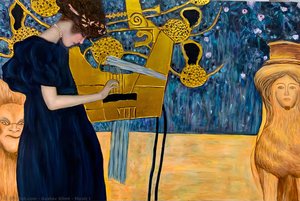 Music I - Gustav Klimt
In Music I , Gustav Klimt orchestrates a breathtaking interplay of light and shadow that transcends mere musical depiction to reach the realm of the divine. The illumination appears to emanate from within the composition itself, catching the gilded edges of the ornate harpsichord and casting a soft, ethereal glow upon the central figure. This masterful use of chiaroscuro creates a profound sense of depth, where the deep blues and earthy browns recede into a mysterious, swirling void, allowing the luminous, golden textures to pulse with life. It is this sophisticated command of light that secured its place among the top 25 artworks of Gustav Klimt, captivating critics with its ability to blend Symbolist mystery with Art Nouveau opulence.
For the discerning collector, a high-quality oil reproduction of this masterpiece brings a transformative energy to a contemporary space. The way the light interacts with the visible brushstrokes and rich pigments adds an unmistakable layer of luxury and intellectual depth to any wall, turning a room into a sanctuary of contemplative beauty.
Allegory of 'Sculpture' - Gustav Klimt
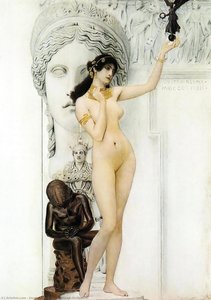 Allegory of 'Sculpture' - Gustav Klimt
Acquiring Allegory of 'Sculpture' by Gustav Klimt is an investment in a profound artistic legacy, offering the discerning collector a rare window into the artist's formative technical mastery. Created in 1889, this work stands as a vital precursor to his later Symbolist triumphs, showcasing a sophisticated fusion of classical realism and the burgeoning Romantic movement. The composition breathes with a dreamlike atmosphere; soft washes of watercolor create a melancholic, diffused light that dances across the nude central figure and the imposing, idealized statue above. Through the delicate rendering of architectural decay and the symbolic presence of a small bird, Klimt explores themes of beauty, aspiration, and the passage of time.
As one of the top 25 artworks of Gustav Klimt, this piece possesses an enduring aesthetic authority that transcends its era. Its muted, nostalgic palette and complex, surrealist layers provide a commanding focal point for modern luxury interiors. Owning a high-quality, hand-painted oil reproduction of this masterpiece allows you to bring this same sense of historical prestige and quiet grandeur into your private collection, anchoring a contemporary space with the weight of art history.
Birch Forest, 1903 - Vienna, Osterreichische Museum für Angewandte Kunst - Gustav Klimt
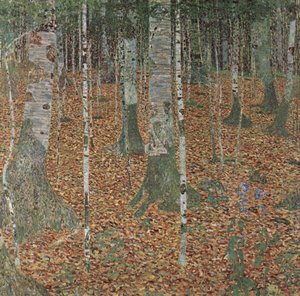 Birch Forest, 1903 - Vienna, Osterreichische Museum für Angewandte Kunst - Gustav Klimt
To stand before Birch Forest (1903) is to experience a profound moment of autumnal stillness. In this masterpiece, Gustav Klimt moves away from the gilded opulence of his later works to capture something more primal and transient: the rhythmic, vertical pulse of nature. The white trunks of the birch trees stand like silent sentinels amidst a mosaic of ochre, burnt orange, and deep earth tones, creating a textured landscape that feels both intimate and vast.
This work earns its place among the top 25 artworks of Gustav Klimt because it reveals the artist's incredible versatility, showcasing an Impressionistic mastery of light and atmosphere long before his iconic Golden Phase. The visible, broken brushstrokes create a tactile depth that invites quiet contemplation of life's cycles. At ArtsDot.com, we honor this delicate texture through our handmade oil reproductions. Each piece is meticulously painted on cotton canvas, ensuring that the vibrant autumnal hues and the physical soul of Klimt’s brushwork are preserved, allowing you to bring this serene Viennese vision into your own sanctuary.
Poppy Field - Gustav Klimt
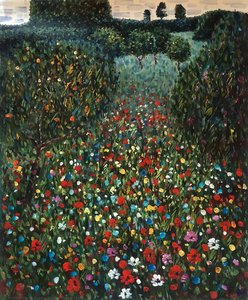 Poppy Field - Gustav Klimt
What story does the vibrant, sun-drenched meadow in Poppy Field by Gustav Klimt tell us about the fleeting nature of beauty? Painted in 1907, this masterpiece emerged during Klimt’s celebrated Golden Phase, a period where his fascination with Byzantine mosaics and organic forms reached its zenith. Unlike his more structured, gold-leafed portraits, this work captures a breathtaking sense of botanical abundance, using thick, expressive impasto to make the red poppies appear almost tactile against the lush greenery.
The painting serves as a window into a secluded, tranquil world, offering a sensory escape from the modern bustle. Its rich palette of crimson, azure, and deep emerald creates an atmosphere of quiet prestige and natural wonder. For collectors seeking to curate a space of serenity, this piece brings the soul of the Vienna Secession into the home. Whether you are drawn to its Art Nouveau elegance or its impressionistic texture, owning a hand-painted oil reproduction allows you to preserve this luminous moment of nature's brilliance on your walls forever.
Judith - Gustav Klimt
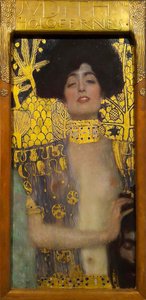 Judith - Gustav Klimt
There is a gaze in Judith by Gustav Klimt that follows you—not with judgment, but with understanding . Created in 1901, this masterpiece serves as more than a mere portrait; it is a mirror reflecting the strength and sensuality of the Art Nouveau movement. As one of the most significant works in our collection of the top 25 artworks of Gustav Klimt, Judith captures a moment where biblical heroism meets modern female empowerment.
The composition is a breathtaking tapestry of the artist's 'Golden Phase,' where shimmering gold leaf and intricate, curvilinear patterns intermingle with organic, floral motifs. The soft, diffused light illuminates the figure’s serene yet commanding presence, creating a hypnotic atmosphere of divinity and mystery. Every brushstroke on this 100% hand-painted oil reproduction preserves the tactile depth of Klimt's original technique, from the opulent textures to the symbolic green hues representing fertility. Now, imagine that gaze in your space. Not watching you, but reminding you : you are seen. You are part of the story.
Avenue of Schloss Kammer Park - Gustav Klimt
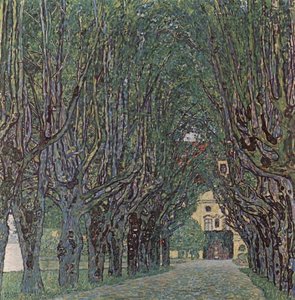 Avenue of Schloss Kammer Park - Gustav Klimt
In Avenue of Schloss Kammer Park , Gustav Klimt moves away from the gilded opulence of his famous Golden Phase to explore a profound, atmospheric interplay of light and shadow. The brilliance of this 1912 masterpiece lies in its dappled illumination; sunlight filters through a dense, vertical canopy of trees, creating a shimmering, pointillist effect that breathes life into the lush greenery. This masterful command of diffused light transforms a simple woodland path into a dreamlike sanctuary, where soft highlights dance against deep, verdant shadows to evoke a sense of quiet introspection and mystery.
As one of the top 25 artworks of Gustav Klimt, this landscape captures a pivotal shift toward naturalism and Symbolism. The way the light guides the eye toward the distant, sun-drenched building offers a rhythmic depth that is truly captivating. For the discerning collector, a hand-painted oil reproduction of this work brings more than just color to a room; it introduces a sophisticated layer of texture and luminous depth. The visible brushstrokes and rich tonal range of an authentic oil painting allow the subtle transitions from emerald to deep forest green to radiate, adding a luxurious, contemplative soul to any contemporary interior.
Hope II - Gustav Klimt
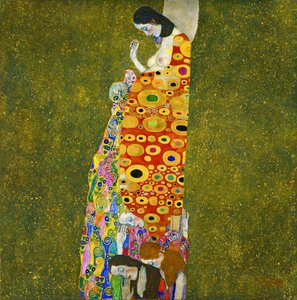 Hope II - Gustav Klimt
In Hope II , Gustav Klimt achieves a breathtaking structural harmony through a vertical arrangement of intertwined figures that guides the eye upward in a rhythmic, organic flow. The composition is a masterclass in geometric balance, where the soft, fluid lines of the female forms are anchored by a dense tapestry of circular and oval motifs. These swirling patterns, rendered in vibrant reds, blues, and golds, create a sense of rhythmic stability amidst the ornamental complexity. This equilibrium between delicate human vulnerability and bold, abstract ornamentation is precisely what secures its place among the top 25 artworks of Gustav Klimt .
The painting’s internal logic—the way intricate detail is balanced by a luminous, unified field—resonates deeply with the principles of modern minimalist design. Much like contemporary aesthetics that value clean silhouettes and intentional negative space, Klimt uses his textured, golden-green background to ground the exuberant patterns, preventing the work from feeling chaotic. For collectors seeking to bring historical grandeur into a modern home, this piece offers a sophisticated anchor, blending the opulence of the Vienna Secession with a timeless, structural elegance that complements a clean, contemporary interior.
Compositional Sketch for - Gustav Klimt
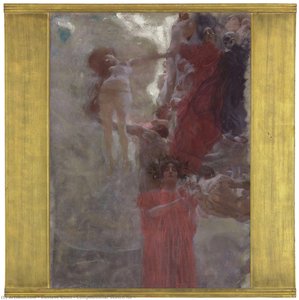 Compositional Sketch for - Gustav Klimt
To encounter Compositional Sketch for by Gustav Klimt is to witness the raw, turbulent heartbeat of the Vienna Secession before it was gilded in gold. This 1898 oil on canvas serves as a profound psychological map, where the boundaries between life and mortality dissolve into a swirling, atmospheric vortex. Klimt utilizes a heavy, expressive impasto that gives the surface a visceral, sculptural quality, pulling the viewer into a dreamlike realm of Symbolism. The composition is anchored by the goddess Hygieia, yet she is surrounded by a chaotic dance of figures—a nude representing vulnerable life and a skeletal presence signaling the inevitable approach of death.
The palette is somber and evocative, using deep shadows and diffused light to create an ethereal, almost haunting mood. Owning a reproduction of this piece isn't merely a purchase; it is an inheritance of Klimt’s most rebellious era . It allows you to bring this lineage of taste into your own space, where the thick, visible brushstrokes and dramatic tension serve as a constant, sophisticated nod to the masters of Austrian modernism.
Head of a Man in Profile (Illustration for - Gustav Klimt
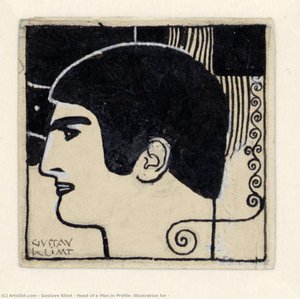 Head of a Man in Profile (Illustration for - Gustav Klimt
Before the shimmering gold leaf of his later years defined him, Gustav Klimt was a master of the striking, graphic line. Head of a Man in Profile , created around 1898, offers a profound glimpse into this era of early modernism. Far removed from the opulent textures of The Kiss , this work serves as a window into the soul of the Vienna Secession. Likely conceived as an illustration for the movement's influential magazine, Ver Sacrum , the piece embodies a rebellion against academic realism, favoring instead the bold, flattened aesthetics of Art Nouveau and the delicate influence of Japanese woodblock prints.
The portrait is a study in elegant simplicity, where the subject's features are distilled into geometric planes and sharp, angular contours. There is a haunting, contemplative mood in the man’s ambiguous gaze, captured through a masterful use of contrast and rhythmic, parallel lines. Owning such a piece from the top 25 artworks of Gustav Klimt is not merely a purchase; it is an inheritance of taste. At ArtsDot.com, we allow you to bring this lineage of modernism into your own home through meticulous, hand-painted oil reproductions that preserve every intentional stroke and graphic shadow.
Portrait of Philip Friedrich Christoph, Count of Hohenzollern - Gustav Klimt
 Portrait of Philip Friedrich Christoph, Count of Hohenzollern - Gustav Klimt
Before the world knew him as the master of gold leaf and ethereal sensuality, Gustav Klimt demonstrated a profound command over the classical traditions of portraiture. The Portrait of Philip Friedrich Christoph, Count of Hohenzollern stands as a breathtaking testament to his early technical brilliance. In this work, we encounter a young Klimt channeling the dramatic grandeur of the Baroque, utilizing masterful chiaroscuro to breathe life into the Prussian aristocracy. The interplay of light and shadow across the Count’s military attire creates a theatricality that is nothing short of commanding.
Its inclusion in our Top 25 collection is essential; it reveals the academic foundation upon which his later, more rebellious Secessionist style was built. The meticulous rendering of textures—from the cold gleam of armor to the heavy folds of fabric—serves as a precursor to his legendary obsession with ornamentation. At ArtsDot.com, we believe such historical gravity belongs in the modern home. Owning a hand-painted oil reproduction of this masterpiece allows you to invite this sense of noble authority and timeless architectural depth into your personal sanctuary, transforming a mere wall into a curated gallery of history.
Mother with Two Children (Family) - Gustav Klimt
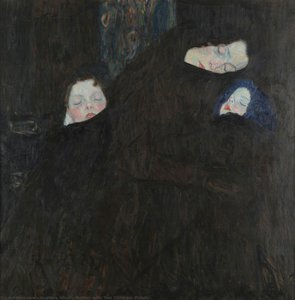 Mother with Two Children (Family) - Gustav Klimt
A profound stillness settles over the viewer when encountering Mother with Two Children (Family) by Gustav Klimt, a work that breathes with the quiet rhythm of a shared slumber. While many recognize Klimt for the gilded opulence of his Golden Phase, this 1910 masterpiece earns its place among the top 25 artworks of Gustav Klimt through its startling emotional vulnerability and departure from decorative excess. It is an irreplaceable pillar of his oeuvre, stripping away the mosaic-like ornamentation to reveal a raw, Symbolist intimacy.
The painting captures a tender tableau of domestic devotion, where luminous faces emerge from a sea of deep, somber tones. This masterful use of chiaroscuro creates a striking visual dichotomy, sculpting the figures as islands of light against an enveloping darkness. Such profound atmospheric depth offers a unique inspiration for modern interiors, providing a focal point of contemplative calm. At ArtsDot.com, we believe in democratizing this level of beauty; through our meticulous, hand-painted oil reproductions, you can bring the transformative, soulful presence of Klimt’s most private moments into your own home or personal gallery.
Lady with Hat and Feather Boa - Gustav Klimt
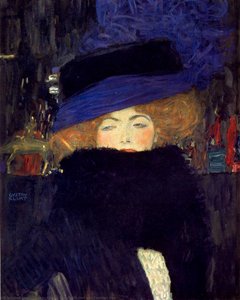 Lady with Hat and Feather Boa - Gustav Klimt
In the quiet gaze of Lady with Hat and Feather Boa , Gustav Klimt captures a fleeting moment of Belle Époque elegance, frozen in a soft, atmospheric amber. This masterpiece earns its place among the top 25 artworks of Gustav Klimt through its profound ability to bridge the gap between Impressionist light and the psychological depth of early Modernism. The canvas breathes with a sophisticated palette of deep blues and regal purples, where the tactile richness of the impasto brushwork brings the luxurious fur collar and feathered hat to life.
As you observe the subject's direct yet melancholic expression, you feel the pulse of turn-of-the-century Vienna—a world of opulence masking an underlying sense of urban anonymity. The blurred, dreamlike background allows the figure to emerge with a luminous presence that transcends time. For the modern collector, this portrait offers more than mere decoration; its harmonious cool tones and enigmatic spirit provide a sophisticated anchor for contemporary interiors, inviting a sense of contemplative calm and timeless grace into any curated space.
Girl-friends - Gustav Klimt
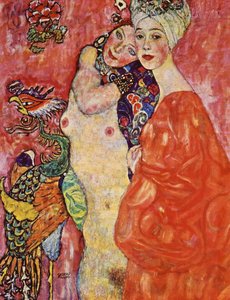 Girl-friends - Gustav Klimt
To gaze upon Girl-friends by Gustav Klimt is to step into a private, whispered moment of intimacy captured amidst the shifting tides of 1916. As one of the most profound entries in our collection of the top 25 artworks of Gustav Klimt, this piece serves as a breathtaking bridge between the decorative opulence of Art Nouveau and the psychological depth of Symbolism. The canvas vibrates with a warm, inviting palette, where deep reds and lush floral motifs envelop two women in a tender, entwined embrace.
Klimt’s mastery is felt in the tactile interplay of light and pattern; notice how the delicate headscarf and flowing garments seem to merge with a background of rich, organic textures. The presence of subtle bird motifs suggests a soaring spiritual aspiration, while the coiled dragon introduces a primal, earthly tension. This duality—the balance between passion and peace—is what makes this masterpiece so enduring. Owning a hand-painted oil reproduction of such a work allows this era of Viennese Modernism to breathe new life into your home, transforming a modern space into a sanctuary of historical elegance and emotional resonance.
Spring - Gustav Klimt
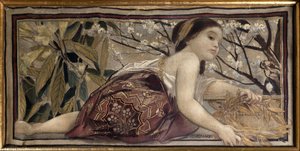 Spring - Gustav Klimt
In the delicate whispers of Spring by Gustav Klimt, one finds a moment of eternal serenity frozen in the soft light of 1884. As one of the most evocative early works within the top 25 artworks of Gustav Klimt, this piece serves as a profound prelude to his later, more opulent masterpieces. The painting captures a young woman in a state of ethereal repose, enveloped by a lush tapestry of blossoms that seem to breathe with the very essence of renewal. Through subtle washes of color and masterful use of light and shadow, Klimt creates a sensory experience where the textures of the earth and the luminosity of the flora merge into a singular, meditative vision.
This work transcends its status as a preparatory study, offering a sense of harmony and organic grace that brings a sophisticated calm to any modern interior. Whether you are drawn to the nascent symbolism of the flowers or the quiet introspection of the subject, owning a hand-painted oil reproduction of this Klimt treasure allows the tranquil spirit of the Vienna Secession to reside within your own home.
Dancer, The - Gustav Klimt
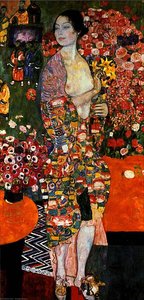 Dancer, The - Gustav Klimt
To encounter The Dancer by Gustav Klimt is to step into a realm of shimmering elegance and profound Symbolist mystery. As one of the most captivating entries in our collection of the top 25 artworks of Gustav Klimt , this 1916 masterpiece radiates with the vitality of the Art Nouveau movement. The composition breathes with a vibrant palette of deep reds, lush greens, and sun-drenched yellows, centering on a woman whose presence is both ethereal and grounded by the tactile beauty of floral motifs.
Klimt masterfully employs a flattened perspective, weaving geometric patterns with organic forms to create a sense of decorative opulence that transcends mere portraiture. The subject, draped in an elaborate gown, seems to emerge from a garden of symbolic significance, her aura elevated by a divine, glowing light. For the discerning collector, this painting offers more than visual splendor; it brings a legacy of Austrian modernism into the home. Its rich textures and rhythmic colors make it a peerless centerpiece for luxury interiors, embodying a timeless aesthetic that continues to inspire refined, sophisticated spaces.
Ex-libris (bookplate) - Vereinigung Bildender Künstler Österreichs Secession - Gustav Klimt
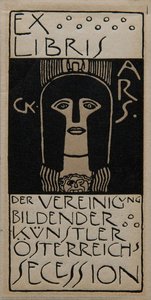 Ex-libris (bookplate) - Vereinigung Bildender Künstler Österreichs Secession - Gustav Klimt
To gaze upon the Ex-libris (bookplate) - Vereinigung Bildender Künstler Österreichs Secession is to witness a manifesto of rebellion captured in miniature. In this 1903 masterpiece, Gustav Klimt does not merely design a bookplate; he summons the spirit of the Vienna Secession, distilling an entire movement’s defiance into a single, luminous vision. The stylized visage of Pallas Athena, crowned with a radiant halo and surrounded by swirling, mosaic-like patterns, evokes a profound sense of intellectual awakening and the courage to embrace the unknown.
This work earns its place among the top 25 artworks of Gustav Klimt because it serves as the visual heartbeat of the Secessionist era, blending Byzantine opulence with modern symbolism. The interplay of deep blues and shimmering gold textures creates a sensory experience that transcends its small scale. At ArtsDot.com, we strive to preserve this very magic. Our handmade oil reproductions capture every intricate swirl and gilded detail, allowing the transformative power of Klimt’s decorative intensity to reside permanently within your own collection.
The Large Poplar Tree II (Coming Storm) - Gustav Klimt
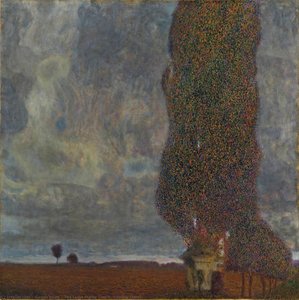 The Large Poplar Tree II (Coming Storm) - Gustav Klimt
In The Large Poplar Tree II (Coming Storm) , the lines of nature are not merely painted; they are choreographed . This work is far more than a landscape; it is a dance frozen in time, where the rhythmic swaying of branches meets the heavy, atmospheric tension of an approaching tempest. Klimt utilizes a vibrant, almost electric palette—swirling with reds, yellows, and deep purples—to transform a simple poplar tree into a symbol of resilient strength amidst cosmic turbulence.
The technique is breathtaking; through a delicate sponge application, Klimt creates a textured mosaic of leaves that seems to pulse with life against the brooding sky. As one of the most evocative pieces in our collection of the top 25 artworks of Gustav Klimt , it captures the very essence of the Vienna Secession: the ability to find harmony within chaos. What if your own living room could hold this same profound balance? What if your walls could breathe rhythm and evoke the quiet majesty of a storm? For those seeking to bring the soul of Art Nouveau into their homes, a hand-painted oil reproduction of this masterpiece offers a tactile connection to Klimt's legendary genius.
Beech Forest, 1902 - Dresden, Morderne Galerie - Gustav Klimt
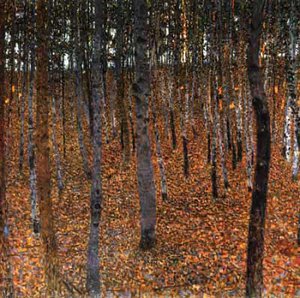 Beech Forest, 1902 - Dresden, Morderne Galerie - Gustav Klimt
To step into Beech Forest, 1902 is to lose oneself in a rhythmic dance of light and organic geometry. Gustav Klimt captures more than just a woodland scene; he evokes the very pulse of autumn, where vibrant orange leaves flicker like embers against the dark, structural trunks of the beech trees. This masterpiece stands among the top 25 artworks of Gustav Klimt because it reveals a different side of the master—moving away from his famed gilded portraits to explore the profound Symbolism found within the natural world. The painting’s flattened perspective and bold, mosaic-like textures exemplify the Vienna Secession movement's revolutionary spirit.
The way the warm hues contrast with the deep shadows creates a sense of sanctuary and mystery that remains emotionally resonant today. At ArtsDot.com, we strive to preserve this tactile magic. Our handmade oil reproductions utilize meticulous layering and visible brushstrokes on 100% cotton canvas, ensuring that the luminous energy and seasonal warmth of Klimt’s forest can become a breathtaking, permanent centerpiece in your own collection.
Conclusion
To wander through the world of Gustav Klimt is to step into a realm where the boundaries between the physical and the ethereal dissolve. His canvases do more than merely depict figures; they capture the very pulse of human intimacy, the shimmering weight of gold, and the profound tension between life’s fleeting beauty and its inevitable shadows. As we conclude this journey through his most iconic masterpieces, we find that these works are far more than static relics of the Vienna Secession or historical treasures confined to museum halls. They are living presences, breathing with a vitality that continues to stir the soul and challenge our perceptions of grace and ornamentation.
There is a unique power in allowing such profound artistry to move beyond the gallery walls and into the sanctuary of your own home. To live with a Klimt reproduction is to invite a daily dialogue with history—to feel the textured impasto of a hand-painted stroke and to witness how light dances across gilded patterns as the hours pass. These paintings possess the rare ability to transform a room, turning a simple interior into a space of reflection, warmth, and architectural splendor. Whether it is the soft embrace of a portrait or the geometric complexity of his mosaic-like landscapes, each piece serves as a silent, beautiful reminder of the heights human creativity can reach.
We invite you to explore the full collection and discover which of these golden visions resonates with your own story. Let these masterpieces become part of your daily landscape, acting as enduring anchors of beauty and inspiration in an ever-changing world.