The Historical Context: Vienna at the Turn of the Century
The Vienna Secession (German: Wiener Secession; also known as the Union of Austrian Artists or Vereinigung Bildender Künstler Österreichs) is an art movement, closely related to Art Nouveau, that was formed in 1897 by a group of Austrian painters, gr...
Vienna, at the close of the 19th century, was a city brimming with contradictions – a majestic imperial capital steeped in tradition yet pulsing with intellectual and artistic ferment. The Habsburg Empire, though waning in power, remained a formidable presence, its rigid social structures and conservative aesthetic sensibilities dominating public life. Yet beneath this veneer of formality lay a burgeoning undercurrent of change. Rapid industrialization had drawn a new class of citizens to the city, creating a vibrant, if often uneasy, mix of wealth and poverty, established aristocracy and ambitious newcomers. This societal shift fueled a questioning of traditional values, particularly within artistic circles. The Academy of Fine Arts, while prestigious, was perceived as increasingly out of touch with contemporary currents, clinging to historical styles at a time when artists across Europe were experimenting with new forms of expression. It was against this backdrop – a city simultaneously grand and stifling, beautiful and restrictive – that the seeds of the Vienna Secession were sown.
Breaking with Tradition: The Founding & Philosophy of the Secession
Jugendstil (German pronunciation: [ˈjuːɡn̩tˌstiːl] ; "Youth Style") was an artistic movement, particularly in the decorative arts, that was influential primarily in Germany, Austria, and elsewhere in Europe to a lesser extent from about 1895 until ab...
The formal birth of the Vienna Secession in 1897 wasn’t merely an artistic declaration; it was a defiant act. A group of approximately nineteen painters, sculptors, graphic artists, and architects – including luminaries like Gustav Klimt, Josef Hoffmann, Koloman Moser, and Otto Wagner – formally resigned from the Association of Austrian Artists (Vienna Künstlerhaus). This wasn't a spontaneous decision but rather the culmination of years of frustration with the Academy’s conservative jury system and its resistance to innovative work. Their stated aim was ambitious: to create an independent platform for artistic expression free from the constraints of officialdom. The movement drew inspiration from the earlier Munich Secession, but quickly developed its own distinct character. Central to their philosophy was a rejection of *Historicism* – the prevailing academic obsession with replicating past styles – and a desire to forge a “total work of art” (*Gesamtkunstwerk*) that unified painting, architecture, sculpture, and design. This holistic approach aimed to elevate everyday objects to the level of artistic significance, blurring the boundaries between fine art and applied arts. Their official magazine, *Ver Sacrum* (“Sacred Spring”), published from 1898 to 1903, became a vital showcase for their work and ideas, disseminating their aesthetic principles throughout Austria and beyond.
Key Figures of the Movement: Klimt, Olbrich, and Beyond
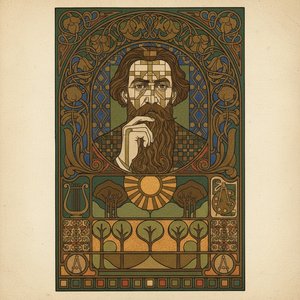
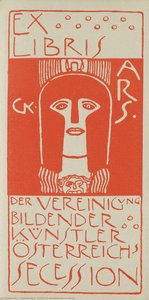
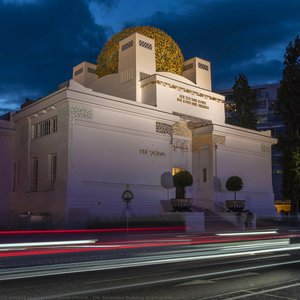
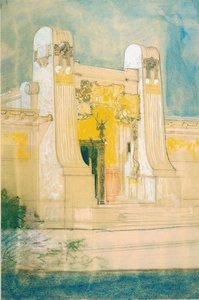
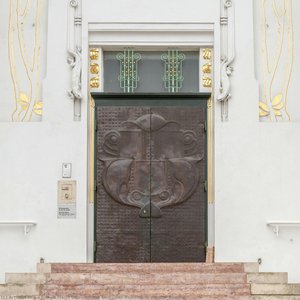
While many contributed to the Secession’s success, certain figures stand out as particularly influential. Gustav Klimt, arguably the most recognizable name associated with the movement, embodied its spirit of rebellion and sensuality. His paintings, often adorned with opulent gold leaf and intricate patterns, challenged conventional notions of beauty and morality. Poster for the 1st Secession Exhibition (7Z5Q6L), a striking example of his Art Nouveau style, immediately signaled the group’s departure from academic norms. Joseph Maria Olbrich, an architect by training, was responsible for designing the Secession Building itself – a landmark structure that became both a physical manifestation and symbolic headquarters of the movement. Its geometric form, adorned with gilded laurel leaves, represented a deliberate break from traditional architectural conventions. Koloman Moser, a versatile artist working in graphic design, ceramics, glasswork, and jewelry, played a crucial role in realizing the Secession’s vision of a unified artistic aesthetic. His illustration Waidmannsheil (8XYDT4) exemplifies the Jugendstil influence on the movement, showcasing delicate lines and natural motifs. Other important figures included Max Kurzweil, who handled much of the organizational work, and Otto Wagner, whose architectural innovations paved the way for the Secession’s radical designs.
A New Aesthetic: Characteristics of Secession Art & Architecture
Art Nouveau ( AR(T) noo-VOH; French: [aʁ nuvo] ; lit. 'New Art'), Jugendstil in German, is an international style of art, architecture, and applied art, especially the decorative arts. It was often inspired by natural forms such as the sinuous curves...
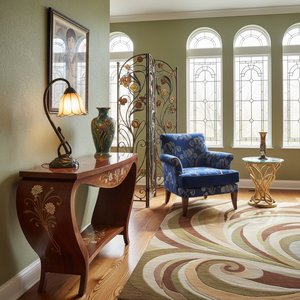
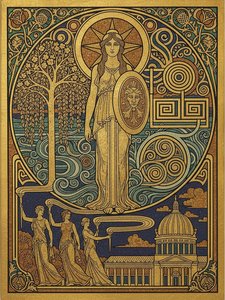
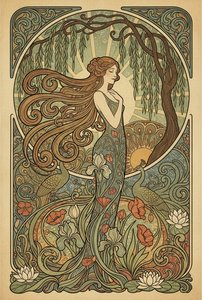
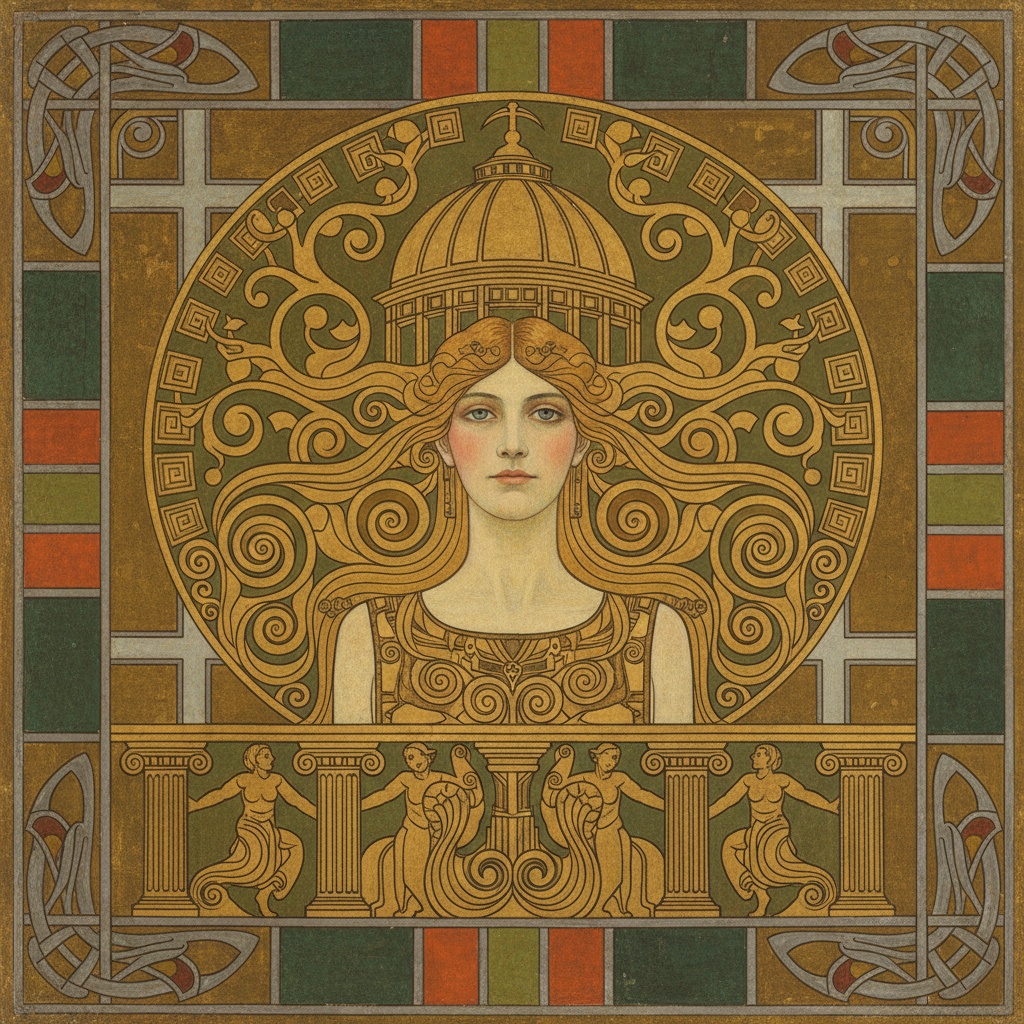
The art produced by the Vienna Secession was characterized by a distinctive visual language that drew heavily from Art Nouveau and Jugendstil, but with its own unique Austrian inflection. Organic forms, inspired by nature – particularly flowers, plants, and flowing water – were prevalent, often rendered in sinuous curves and delicate lines. Ornamentation was abundant, yet rarely arbitrary; it served to enhance the overall composition and convey symbolic meaning. A rejection of realistic representation led artists to explore abstraction and stylization, emphasizing decorative patterns and flattened perspectives. Gold leaf became a signature element, lending an opulent quality to many paintings, most notably Klimt’s works. In architecture, Secession buildings favored geometric forms, clean lines, and the integration of art into every aspect of design – from facades and interiors to furniture and tableware. The use of modern materials like iron and glass allowed for larger open spaces and innovative structural solutions. Brustbild eines kleinen Mädchen (7Z5Q3P), by Klimt, demonstrates the Secession’s focus on portraiture with a unique stylistic approach.
The Legacy of the Vienna Secession: Influence on Modern Art
Though relatively short-lived – the core group began to dissolve around 1905 due to internal disagreements – the Vienna Secession exerted a profound and lasting influence on the development of modern art. Its emphasis on artistic freedom, its rejection of academic conventions, and its holistic approach to design paved the way for subsequent movements like Expressionism and Functionalism. The Secession’s commitment to integrating art into everyday life anticipated many of the principles of the Bauhaus school. The movement also played a significant role in fostering a sense of national identity within Austria, challenging the dominance of German artistic styles. Today, the Secession Building continues to function as an exhibition space and cultural center in Vienna, hosting contemporary art exhibitions and serving as a reminder of the group’s revolutionary spirit. Artists like Leopold Forstner, known for his innovative mosaics, and Emilie Louise Flöge, Gustav Klimt's lifelong companion and a pioneering fashion designer, further cemented the Secession’s impact on Austrian art and design.
Exploring Secession Masterpieces Today
For those seeking to experience the Vienna Secession firsthand, numerous opportunities abound. The Secession (Austria, Vienna) museum itself is a must-visit, showcasing both historical works by founding members and contemporary exhibitions. The Akademie Der Bildenden Künste Wien houses significant collections of Secession art, offering insights into the movement’s origins and influences. Beyond Vienna, museums like the Museo Art Nouveau y Art Déco - Casa Lis (Spain, Salamanca), while focused on a broader range of styles, often feature examples of Jugendstil and Art Nouveau that demonstrate the Secession's international connections. And, of course, ArtsDot.com offers museum-quality reproductions of iconic Secession masterpieces, allowing you to bring the beauty and innovation of this groundbreaking movement into your own home. Explore our collection today and discover the enduring legacy of Gustav Klimt, Joseph Maria Olbrich, and their fellow rebels who dared to challenge tradition and redefine the boundaries of art.