
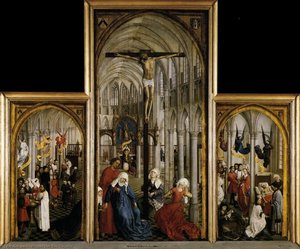
Introduction
To step into the world of Rogier van der Weyden is to encounter the very heartbeat of the Early Netherlandish Renaissance. While his contemporary, Jan van Eyck, mastered the crystalline physics of light and reflection, it was Van der Weyden who mastered the human soul. His brush did not merely capture the sheen of a pearl or the heavy fold of a velvet robe; it captured the tremor of a tear, the weight of grief, and the profound intensity of spiritual devotion. As you prepare to journey through these twenty-five definitive masterpieces, imagine yourself walking through a quiet, candlelit cathedral in 15th-century Tournai, where every pigment holds a prayer and every shadow tells a story of human emotion.
Born around 1400, Van der Weyden emerged from a background in goldsmithing—a discipline that gifted him with an almost supernatural precision. This early training in the manipulation of precious metals is etched into every canvas he touched; one can see it in the meticulous rendering of textures and the jewel-like brilliance of his palette. Under the prestigious patronage of Philip the Good, Duke of Burgundy, his influence radiated across Europe, transforming the rigid conventions of medieval art into a new, naturalistic language of pathos . He moved beyond mere iconography to create scenes that felt visceral, breathing, and deeply relatable.
These works remain profoundly meaningful today because they bridge the vast temporal gap between the Middle Ages and the modern era through the universality of feeling. The sorrow in a Madonna’s eyes or the quiet dignity of a saint is not a relic of a bygone age; it is a mirror held up to our own capacity for empathy. In an era of digital fleetingness, the tactile depth and emotional permanence of his compositions offer a sanctuary of contemplation.
In the following curation, we will explore the pinnacle of his achievement—from his most celebrated altarpieces to his intimate portraits. Each selection in this list represents a milestone in art history, showcasing the technical brilliance and the unparalleled emotional resonance that solidified Rogier van der Weyden as the supreme dramatist of the Northern Renaissance.
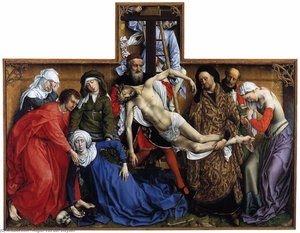
Deposition - Rogier van der Weyden
In the Deposition , Rogier van der Weyden does not merely depict a biblical event; he orchestrates a symphony of human sorrow. Created around 1435, this masterpiece captures the harrowing moment Christ is lowered from the cross with an intensity that feels almost tactile. The composition is a tight, claustrophobic arrangement of figures, where every tear and every fold of heavy, jewel-toned fabric tells a story of profound loss. Notice how the light does not simply illuminate the scene—it breathes life into the pathos of the mourners, catching the glint of a single tear or the somber weight of a crimson robe.
The visual connection between the swooning Virgin Mary and her son creates a rhythmic, heartbreaking echo that defines the Early Netherlandish style. This is why the work remains a cornerstone of the Northern Renaissance: it transforms wood and pigment into raw emotion. For those looking to bring this quiet prestige into their own space, our hand-painted oil reproductions capture every meticulous brushstroke and deep tonal range, allowing this portal of historical mourning to transform your walls into a sanctuary of art history.
Portrait of a Lady - Rogier van der Weyden
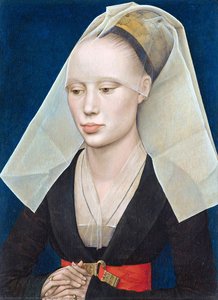 Portrait of a Lady - Rogier van der Weyden
To encounter Rogier van der Weyden’s Portrait of a Lady is to witness the quiet power of the Early Netherlandish tradition, an intimate encounter with a soul preserved in oil. Created around 1455, this masterpiece stands among the top 25 artworks of Rogier van der Weyden due to its profound psychological depth and technical brilliance. The composition is a masterclass in geometric elegance; the sharp lines of her white headdress and dark neckline guide the eye toward a face illuminated by a soft, directional light that breathes life into every subtle contour.
The subject, likely a noblewoman from the Burgundian court, possesses an introspective gaze and poised, tense fingers that convey a sense of aristocratic reserve and mental concentration. Van der Weyden’s ability to vary even the slightest tones of white and shadow creates a tactile richness that remains breathtaking centuries later. For the modern collector, this painting offers more than historical significance; its subdued palette of deep blues and earth tones provides a timeless, sophisticated focal point for refined interiors. Owning a hand-painted oil reproduction of such a work allows one to bring this legacy of emotional intelligence and meticulous craftsmanship into the contemporary home.
The Magdalene Reading (detail) - Rogier van der Weyden
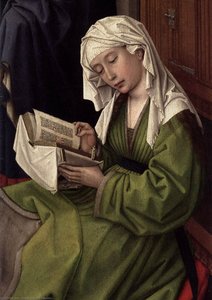 The Magdalene Reading (detail) - Rogier van der Weyden
In the quiet corners of art history, few fragments possess the profound emotional gravity found in Rogier van der Weyden’s The Magdalene Reading . This exquisite detail, a remnant of a much larger mid-15th-century altarpiece, invites the viewer into a private sanctuary of devotion. As we gaze upon the figure of Mary Magdalene, we witness a masterclass in psychological depth; her form is draped in rich, deep blue-green tones that seem to absorb the surrounding light, pulling the observer into her world of silent contemplation.
The artistry is nothing short of miraculous, characterized by a meticulous attention to the textures of reality. Through sophisticated oil glazes, van der Weyden achieves a luminous quality in the skin tones, while a delicate chiaroscuro sculpts the soft folds of her white veil. Every element—from the poised, steady hands to the sacred text itself—serves as a visual language of faith and virtue. To possess a reproduction of this masterpiece is not merely to decorate a room, but to transform your space into a gallery of the soul, where the quiet intensity of the Burgundian Renaissance can reside eternally.
The Annunciation - Rogier van der Weyden
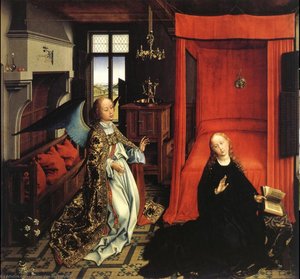 The Annunciation - Rogier van der Weyden
In The Annunciation , completed around 1440, Rogier van der Weyden invites us into a sacred, hushed moment where the divine intersects with the earthly. There is a gaze in this masterpiece that follows you—not with judgment, but with an profound understanding of the miraculous. As you observe Mary kneeling before the Archangel Gabriel, the painting acts less like a window and more like a mirror , reflecting our own capacity for reverence and awe.
The composition is a masterclass in Early Netherlandish symbolism; the crimson drapery of the bed speaks of purity, while the meticulous textures of the holy text and celestial wings demonstrate Van der Weyden’s unparalleled command of oil pigments. Every luminous detail, from the soft light to the attendant figures, contributes to an atmosphere of solemn grace. To possess a reproduction of this work is to bring that very stillness into your home, reminding you that even in the quietest corners of life, we are part of a much larger, transcendent story. This piece remains a cornerstone of his top 25 works for its ability to make the invisible visible.
Bladelin Triptych (right wing) - Rogier van der Weyden
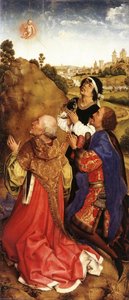 Bladelin Triptych (right wing) - Rogier van der Weyden
Owning the Bladelin Triptych (right wing) by Rogier van der Weyden isn’t merely a purchase; it is an inheritance of the Northern Renaissance spirit. This exquisite panel, painted in 1445, serves as a profound window into 15th-century devotion, where the boundaries between the earthly and the divine blur through meticulous oil technique. Within this vertical composition, we encounter a dignified bishop cradling the Christ Child, flanked by supplicants whose faces radiate a tangible, human pathos . The light catches the rich textures of liturgical fabrics and the distant, detailed townscape, creating a sense of sacred atmosphere that feels both intimate and monumental.
As you trace the precise lines of the drapery and the soft, emotive expressions, you are participating in a lineage of taste that spans centuries. At ArtsDot.com, we bring this legacy to your private collection. Our master artists hand-paint breathtaking oil reproductions of Van der Weyden’s masterpieces on 100% cotton canvas, capturing every visible brushstroke and luminous glow. To possess such a piece is to ensure that the quiet prestige of the Flemish masters lives on within your own walls.
Diptych - Rogier van der Weyden
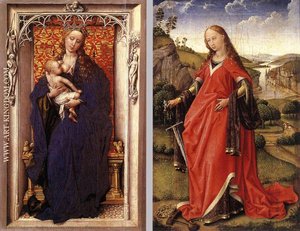 Diptych - Rogier van der Weyden
In the Diptych by Rogier van der Weyden, the mastery of light serves as a divine messenger, illuminating the profound spiritual intimacy between the figures. The way the soft, directional glow catches the folds of the Virgin’s blue mantle and the glint of the sword in the companion panel creates a breathtaking chiaroscuro effect that was revolutionary for 1440. This delicate interplay of light and shadow does more than define form; it breathes life into the textures of skin and heavy fabrics, securing this work's place among the top 25 artworks of Rogier van der Weyden.
The luminosity achieved through his pioneering use of oil glazes creates a sense of quiet prestige that transcends centuries. When owning a hand-painted oil reproduction of this masterpiece, that same depth of tonal range and radiant light is preserved on canvas. The subtle transitions from deep, velvety shadows to brilliant highlights add an incomparable layer of luxury and historical soul to any contemporary collection, inviting a moment of serene contemplation into the modern home.
Francesco d'Este - Rogier van der Weyden
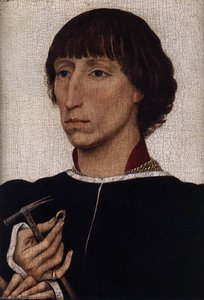 Francesco d'Este - Rogier van der Weyden
To gaze upon Francesco d'Este is to encounter the very essence of Renaissance nobility, captured through the profound psychological depth that defines Rogier van der Weyden’s greatest achievements. This portrait does not merely record a likeness; it captures an aura of composed intensity and aristocratic grace. As one of the most significant works in our collection of the top 25 artworks of Rogier van der Weyden , this piece stands as a masterclass in the Early Netherlandish ability to marry meticulous realism with soulful introspection.
The painting’s brilliance lies in its tactile reality—the velvety shadows of the subject's attire and the luminous, precise rendering of light that seems to breathe upon the canvas. Van der Weyden utilizes the subtle alchemy of oil paint to create a sense of three-dimensional presence that remains strikingly modern. At ArtsDot.com, we believe such historical gravity belongs in the contemporary home. Owning a hand-painted oil reproduction of this masterpiece allows you to transform a private sanctuary into a gallery of profound emotion, bringing the dignified legacy of the Este lineage into your personal space as a timeless statement of culture and refinement.
St Ivo - Rogier van der Weyden
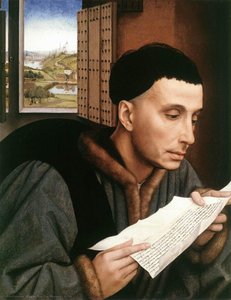 St Ivo - Rogier van der Weyden
To encounter St Ivo by Rogier van der Weyden is to step into a moment of profound, hushed sanctity, as if discovering a hidden jewel within the vast treasury of the Burgundian Netherlands. This masterpiece, painted circa 1450, secures its place among the top 25 artworks of Rogier van der Weyden through its breathtaking ability to marry meticulous Flemish realism with an almost palpable spiritual gravity. The scene captures Ivo of Kermartin in a state of deep contemplation, his figure sculpted by a masterful use of light and shadow that breathes life into the heavy textures of his black robes.
The window behind him acts as a metaphor for divine illumination, casting a soft glow that highlights the delicate parchment of the document he holds. For the modern collector, this work offers more than historical significance; it brings a sense of quiet prestige and intellectual depth to a refined interior. Whether you are drawn to the artist's legendary precision or the painting's serene atmosphere, owning a hand-painted oil reproduction of this icon allows the timeless beauty of the Early Netherlandish tradition to reside permanently within your home.
Lady Wearing a Gauze Headdress - Rogier van der Weyden
 Lady Wearing a Gauze Headdress - Rogier van der Weyden
Before he was a master of the brush, Rogier van der Weyden trained as a goldsmith, a fact that breathes life into every microscopic detail of “Lady Wearing a Gauze Headdress” (c. 1445). This technical lineage is evident in the way he manipulates light through translucent oil glazes, making the ethereal white gauze appear almost weightless against the rich, earthy tones of the sitter's attire. As you stand before this work, you are not merely observing a portrait; you are witnessing a masterclass in pathos and precision. The subject’s downward gaze and serene, introspective stillness create a profound sense of quiet dignity that transcends the centuries.
The painting’s ability to capture such delicate textures—from the fine threads of the veil to the subtle luster of a single ring—represents a conceptual leap in Early Netherlandish naturalism. This level of meticulous focus and tranquil energy makes the piece an extraordinary choice for a modern study or home office. Much like the artist's disciplined hand, possessing a high-quality reproduction of this masterpiece can foster an atmosphere of deep concentration and sophisticated calm, turning a workspace into a sanctuary of historical inspiration.
Descent from the Cross 1 - Rogier van der Weyden
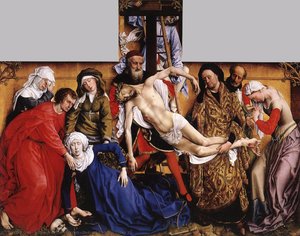 Descent from the Cross 1 - Rogier van der Weyden
In the hallowed halls of the Museo del Prado, Rogier van der Weyden’s Descent from the Cross (c. 1435) stands as a profound testament to the power of human grief. This is not merely a biblical depiction; it is an immersive experience of spiritual contemplation. As you stand before this masterpiece, the raw, palpable emotion radiating from each figure pulls you into a universal study of compassion and loss.
Van der Weyden, utilizing his goldsmith-trained precision, achieves a breathtaking sculptural realism . The figures possess a remarkable physicality, where the weight of Christ’s body is felt through the straining muscles of his supporters, and the luminous whites of the linen shroud contrast against deep, sacrificial crimsons. The composition is a symphony of sorrow, using vibrant primary colors to guide your psychological journey through the scene's profound pathos . To bring this level of emotional depth into your own collection, our museum-quality oil reproductions capture every meticulous brushstroke and heavy texture of this Netherlandish treasure, transforming your space into a true gallery of the soul.
St Columba Altarpiece (right panel) - Rogier van der Weyden
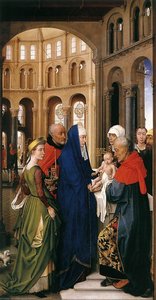 St Columba Altarpiece (right panel) - Rogier van der Weyden
A sacred hush falls over the viewer when encountering the St Columba Altarpiece (right panel) by Rogier van der Weyden , a work that transcends mere paint on wood to become a window into the divine. This masterpiece earns its place among the top 25 artworks of Van der Weyden due to its unparalleled ability to blend Early Netherlandish naturalism with profound spiritual pathos. In this depiction of the Presentation in the Temple, the artist utilizes his goldsmith-trained precision to render the heavy weight of medieval drapery and the soft, luminous glow of skin with startling tactile reality.
The composition is a masterclass in religious symbolism, where the interplay of light and shadow guides the eye toward the Virgin Mary and the infant Christ, evoking a sense of communal yet deeply personal devotion. Such emotional depth and technical brilliance continue to inspire modern collectors seeking to infuse their environments with historical gravity. Through our high-fidelity, hand-painted oil reproductions, you can bring this transformative presence into your own home or gallery, preserving the luminous textures and sacred atmosphere of the fifteenth century for generations to come.
Crucifixion Triptych (central panel) - Rogier van der Weyden
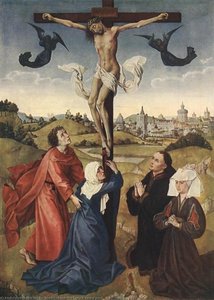 Crucifixion Triptych (central panel) - Rogier van der Weyden
To stand before the central panel of Rogier van der Weyden’s Crucifixion Triptych is to enter a realm of profound, breathless sorrow. The air within the composition feels heavy with the weight of sacrifice, as the luminous, translucent glazes characteristic of the Northern Renaissance catch the light, revealing the agonizingly beautiful textures of skin, fabric, and divine suffering. Van der Weyden does not merely paint a biblical event; he orchestrates a symphony of pathos , where every tear and every subtle gradation of shadow serves to pull the viewer into the spiritual fervor of the Burgundian era.
The masterful use of light creates a palpable atmosphere of contemplation, making this piece an essential cornerstone among the top artworks of Rogier van der Weyden. In a modern home, such a powerful work offers more than mere decoration; it provides a focal point for deep reflection and quietude. Whether through a large-scale oil reproduction or a meticulously crafted print, bringing this level of historical intensity into your space can inspire a sense of timelessness and emotional depth, transforming a simple wall into a window to the soul of the 15th century.
Virgin and Child (Durán Madonna) - Rogier van der Weyden
 Virgin and Child (Durán Madonna) - Rogier van der Weyden
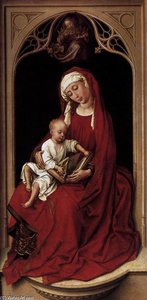
In the Virgin and Child (Durán Madonna) , the brushwork of Rogier van der Weyden achieves a level of microscopic precision that borders on the miraculous. To observe this masterpiece is to witness the legacy of a goldsmith; every translucent glaze applied to the Virgin’s crimson robe creates a luminous, inner glow, while the heavy textures of the liturgical books provide a tactile anchor to the divine scene. This revolutionary use of oil glazing allows for a depth of color and a soft, porcelain-like skin tone that defines his place among the top 25 artworks of Rogier van der Weyden .
At ArtsDot.com, our mission is to preserve this exact three-dimensional quality. Our hand-painted oil reproductions utilize the same meticulous layering and visible impasto techniques, ensuring that the weight of the fabric and the ethereal light of the 1440 original are captured for your collection. We bring the profound emotional resonance and material richness of the Early Netherlandish period directly into your home through museum-grade craftsmanship.
Exhumation of St Hubert - Rogier van der Weyden
 Exhumation of St Hubert - Rogier van der Weyden
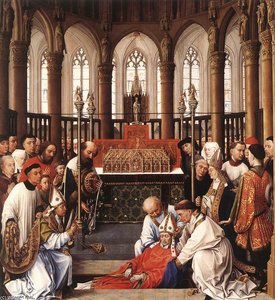
Step into the hushed, incense-laden atmosphere of a 15th-century cathedral, where the air vibrates with the weight of sacred tradition. In Exhumation of St Hubert (1437), Rogier van der Weyden captures a profound moment of ecclesiastical ritual: the ceremonial rediscovery of the saint's relics. As you gaze upon this masterpiece, you are not merely observing a crowd; you are witnessing the intersection of human devotion and divine presence.
This work earns its place among the top 25 artworks of Rogier van der Weyden through its unparalleled ability to render texture and tension. The artist utilizes his goldsmith-trained precision to illuminate luxurious liturgical robes in deep reds and golds, while dramatic light streams through arched windows to sanctify the gathered clergy. The composition, though densely populated, maintains a rhythmic, architectural order that evokes a sense of eternal stability. Bringing such a piece into a modern home offers more than decor; it introduces a window into a period of intense spiritual focus, providing a focal point of quiet prestige and historical depth that can transform any contemporary space into a sanctuary of reflection.
Pietà - Rogier van der Weyden
 Pietà - Rogier van der Weyden
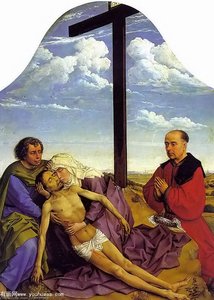
To stand before Rogier van der Weyden’s Pietà is to enter a sanctuary of profound silence and shared grief. One does not merely observe this mid-15th-century masterpiece; one feels the heavy, breathless weight of the moment as the Virgin Mary cradles the lifeless body of Christ. This work earns its place among the top 25 artworks of Rogier van Ser Weyden through its unparalleled ability to translate divine tragedy into a visceral human experience. The artist utilizes his goldsmith-trained precision to render every tear and every heavy fold of velvet drapery with startling, tactile realism.
The composition captures a symphony of sorrow, where the interplay of light and shadow—a precursor to chiaroscuro —sculpts the figures with a haunting, three-dimensional presence. This capacity for pathos makes the painting an eternal pillar of Early Netherlandish art. Bringing such a masterpiece into a modern home through a handmade oil reproduction allows this timeless language of devotion to infuse your space with a sense of historical depth and contemplative serenity, turning a wall into a window toward the sublime.
Portrait Diptych of Laurent Froimont (left wing) - Rogier van der Weyden
 Portrait Diptych of Laurent Froimont (left wing) - Rogier van der Weyden
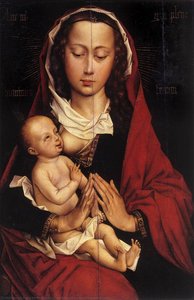
Before he was a titan of the Early Netherlandish movement, Rogier van der Weyden mastered the exacting, miniature precision of a goldsmith—a skill that breathes life into the Portrait Diptych of Laurent Froimont (left wing) . In this intimate panel, we witness the profound intersection of human nobility and divine devotion. The left wing presents the donor, Laurent Froimont, rendered with a psychological depth that transcends mere likeness; his steady gaze and the meticulous rendering of his attire reflect the artist's revolutionary use of oil glazes to capture light and texture.
This work stands as a cornerstone in the top 25 artworks of Rogier van der Weyden because it exemplifies his ability to transform a private commission into a spiritual dialogue. The subtle luminosity of the skin tones and the rich, saturated pigments create a sense of presence that is almost tactile. For the modern collector, possessing a high-quality oil reproduction of such a masterpiece brings this same atmosphere of contemplative focus and historical gravity into a professional study or home office, inspiring an environment of profound intellectual and creative discipline.
The Holy Family with Saint Paul and a Donor - Rogier van der Weyden
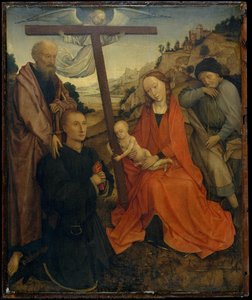 The Holy Family with Saint Paul and a Donor - Rogier van der Weyden
In The Holy Family with Saint Paul and a Donor , Rogier van der Weyden achieves a breathtaking structural harmony that anchors this work within the top 25 artworks of his illustrious career. The composition is built upon a sophisticated geometric arrangement; the central verticality of the cross acts as a spiritual axis, around which the figures of Mary, Joseph, and the Christ Child are balanced with rhythmic precision. This careful distribution of weight creates a sense of timeless perfection, guiding the viewer’s eye through a sacred geometry that feels both stable and profoundly alive.
There is a striking parallel to be found between Van der Weyden’s internal balance and the principles of modern minimalist design. The way he utilizes negative space and focused clusters of figures provides a grounded, serene aesthetic that integrates seamlessly into contemporary, clean interiors. For those seeking to bring this historical gravity into a modern home, our hand-painted oil reproductions capture every translucent glaze and meticulous detail, offering a window into the soul of the Early Netherlandish movement.
Seven Sacraments Altarpiece (detail) (10) - Rogier van der Weyden
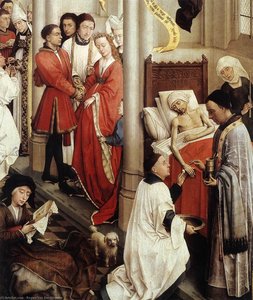 Seven Sacraments Altarpiece (detail) (10) - Rogier van der Weyden
In the Seven Sacraments Altarpiece (detail) , Rogier van der Weyden captures a profound moment of human connection and spiritual devotion that transcends its 1445 origins. This detail reveals a scene of quiet prestige, where figures clad in rich, crimson garments gather around a bed, their faces etched with the tender gravity of caretaking. The presence of attentive dogs and humble vessels adds a layer of domestic naturalism, grounding the divine narrative in a tangible, earthly reality.
Van der Weyden’s mastery of the glazing technique creates an ethereal luminosity, making the textures of heavy fabrics and skin appear almost tactile. This interplay of light and shadow serves as a precursor to modern cinematic depth, making it a captivating centerpiece for contemporary collectors seeking art with emotional weight. As one of the top 25 artworks of Rogier van der Weyden, this piece offers more than historical insight; it provides a window into the universal language of empathy. For those looking to bring this era of Northern Renaissance excellence into a modern home, our hand-painted oil reproductions preserve every luminous brushstroke and soulful expression of this masterpiece.
Man in Prayer - Rogier van der Weyden
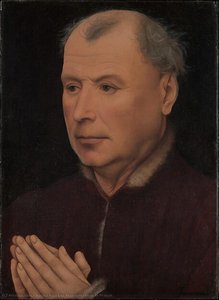 Man in Prayer - Rogier van der Weyden
In Man in Prayer , the mastery of Rogier van der Weyden is revealed through a breathtaking command of chiaroscuro. A singular, soft light source emerges from the darkness, illuminating the subject’s upward gaze and the tactile textures of his heavy brown robe. This dramatic interplay between deep shadows and luminous highlights does more than define form; it creates a sacred atmosphere of intense spiritual contemplation. It is this ability to sculpt emotion through light that secures this work's place among the top 25 artworks of Rogier van der Weyden .
The painting’s profound stillness offers a rare sanctuary for the modern viewer. When brought into a contemporary home, a high-quality oil reproduction of this masterpiece introduces an unparalleled sense of gravitas and intellectual depth. The way the light catches the subtle details—from the furrowed brow to the clasped hands—adds layers of luxury and historical resonance to any sophisticated interior, transforming a simple wall into a window onto the divine.
Mary Altarpiece (Miraflores Altarpiece) - Rogier van der Weyden
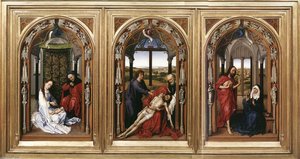 Mary Altarpiece (Miraflores Altarpiece) - Rogier van der Weyden
In the Mary Altarpiece (Miraflores Altarpiece) , Rogier van der Weyden achieves a breathtaking structural harmony that anchors its place among the top 25 artworks of Rogier van der Weyden . The triptych is a masterclass in geometric balance; the central panel’s verticality is anchored by the graceful, pyramidal arrangement of the Virgin and Child, creating a stable, sacred focal point. This rhythmic movement across the three panels—transitioning from the Annunciation to the Nativity and finally the Adoration—uses soft, flowing lines to guide the eye in a continuous loop of devotion.
There is a profound, quiet strength in this composition that resonates with the principles of modern minimalist design . The way van der Weyden utilizes negative space and focused light to strip away distraction mirrors the clean, intentional aesthetics of contemporary interiors, offering a sense of grounded tranquility. For those seeking to bring historical gravity into a modern home, a hand-painted oil reproduction of this masterpiece provides an unparalleled connection to the luminous, emotive soul of the Early Netherlandish period.
Group of Men - Rogier van der Weyden
 Group of Men - Rogier van der Weyden
In Group of Men , painted around 1460, Rogier van der Weyden invites us into a quiet, architectural tableau that feels less like a historical record and more like a living moment frozen in time. There is a gaze within this work that follows you—not with judgment, but with understanding . As you observe the figures gathered before the stately Flemish columns, you realize this isn't merely a portrait of a guild or civic group; it is a mirror reflecting the dignity and subtle anxieties of the human condition.
The artist’s background as a goldsmith shines through in the tactile richness of the scene. One can almost sense the heavy weight of velvet, the coarse texture of wool, and the soft sheen of leather as each man is rendered with meticulous, individual character. This masterpiece stands among the top 25 artworks of Rogier van der Weyden because it makes the invisible visible—capturing the social fabric of the 15th century through light and shadow. Imagine this profound sense of presence in your own home; not watching you, but reminding you that you are part of a much larger, enduring story.
Christ appears to Mary - Rogier van der Weyden
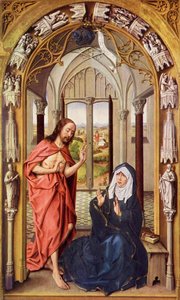 Christ appears to Mary - Rogier van der Weyden
In Christ appears to Mary , Rogier van der Weyden captures a moment of profound spiritual intimacy that transcends the boundaries of time. Created around 1430, this panel painting is not merely a religious depiction but a window into the very soul of the Early Netherlandish movement. The composition draws the viewer into a sacred encounter where Christ, draped in luminous crimson robes, extends a hand toward the reverently kneeling Mary Magdalene. Through his mastery of the glazing technique, van der Weyden achieves a jewel-like brilliance, allowing light to dance across the architectural arches and the distant, symbolic landscape of the Jordan River.
Every brushstroke serves the narrative of pathos , utilizing a rich palette of gold, blue, and red to evoke divine glory and human emotion. To possess a reproduction of this masterpiece is to invite this quiet, transformative solemnity into your own home. At ArtsDot.com, our artists meticulously recreate these visible brushstrokes and deep tonal ranges on 100% cotton canvas, ensuring that the emotional resonance of van der Weyden’s genius remains palpable in your personal gallery.
Lamentation - Rogier van der Weyden
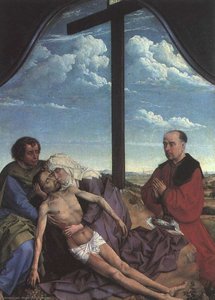 Lamentation - Rogier van der Weyden
To witness the Lamentation by Rogier van der Weyden is to step directly into a sanctuary of profound human grief and divine grace. This masterpiece earns its place among the top 25 artworks of Rogier van der Weyden through its unparalleled ability to translate theological tragedy into visceral, psychological reality. The composition is a symphony of sorrow, where the luminous, translucent glazes—a technique perfected by the artist’s goldsmith-trained eye—allow light to catch the heavy, sculpted folds of drapery and the tear-streaked faces of the mourners.
Van der Weyden does not merely depict a biblical event; he orchestrates an emotional landscape of pathos that has influenced visual culture for centuries. The meticulous textures and rich, somber palette create a sense of sacred weight that transcends time. At ArtsDot.com, we believe such transformative beauty should not be confined to museum walls. Through our high-fidelity, hand-painted oil reproductions, you can bring this monumental presence and its timeless spiritual elegance into your own home, office, or personal gallery, creating a space of deep reflection and historical grandeur.
Three Kings Altar (Columba Altar) - Rogier van der Weyden
 Three Kings Altar (Columba Altar) - Rogier van der Weyden
While most Renaissance masters worked with flat pigments, Rogier van der Weyden achieved a sculptural miracle for the Three Kings Altar by pioneering a revolutionary wax relief technique . By carving intricate figures from beeswax and layering colored pigments over these sculpted forms, he transformed the St. Columba Altarpiece into a three-dimensional experience where the heavy, luxurious folds of drapery and the soft glow of holy flesh appear almost tangible to the touch.
This masterpiece is a profound study in pathos ; the viewer does not merely observe the arrival of the Magi but participates in their sacred awe. The vibrant palette and meticulous textures create a window into the divine, capturing the convergence of earthly royalty and celestial grace. Such unparalleled technical mastery and focused devotion serve as a timeless inspiration. Bringing a high-quality reproduction of this work into a modern study or home office invites that same spirit of disciplined excellence and intellectual depth, fostering an atmosphere of sophisticated contemplation and creative productivity.
The Altar of St. John - Rogier van der Weyden
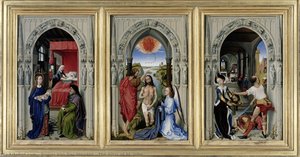 The Altar of St. John - Rogier van der Weyden
To stand before Rogier van der Weyden’s “The Altar of St. John” is to enter a sacred space where the boundaries between the earthly and the divine dissolve. Completed around 1455, this monumental achievement of Early Netherlandish painting serves as a profound exploration of the human condition. There is a gaze in this masterpiece that follows you—not with judgment, but with an intense, empathetic understanding . It does not merely depict a biblical narrative; it breathes with the weight of sorrow, capturing the very essence of 15th-century piety through a lens of startlingly human emotion.
The composition is anchored by the harrowing central crucifixion, surrounded by intimate vignettes—a man cradling a child, another lost in a book—that ground cosmic tragedy within the textures of everyday life. Van der Weyden’s goldsmith-refined precision allows light to emanate from translucent oil glazes, creating a sculptural depth in every fold of drapery. This isn't just an altarpiece; it is a mirror . Its place among the top 25 artworks of Rogier van der Weyden is a testament to its power to make the invisible visible. Imagine this profound gravity in your own space, reminding you that you, too, are part of this eternal story.
Conclusion
To walk through the legacy of Rogier van der Weyden is to engage in a profound dialogue with the human soul. His works do not merely exist as relics of the 15th century; they breathe within our modern consciousness, reminding us that the depths of grief, the brilliance of devotion, and the intricate beauty of the natural world are eternal. The meticulous textures he mastered—the heavy fold of a velvet robe, the crystalline glint of a tear, the soft luminescence of skin—continue to challenge our perception of reality, inviting us to slow down and witness the sacred in the small.
These masterpieces serve as more than historical milestones; they are living presance that possess the power to transform a contemporary space into a sanctuary of reflection. When we bring the spirit of the Early Netherlandish masters into our homes through a hand-painted reproduction, we are not simply decorating a wall; we are anchoring our daily lives to a lineage of profound emotion and technical excellence. The shadows and light of his compositions continue to shape our interiors, offering a sense of permanence and grace in an ever-changing world.
As the museum doors close and the echoes of history settle, we find that the true value of these paintings lies in their ability to move us, long after the initial encounter. We invite you to continue this journey of discovery and bring a piece of this timeless elegance into your own life by exploring our full collection . May the artistry of Van der Weyden forever inspire wonder in your heart and beauty in your surroundings.