Introduction
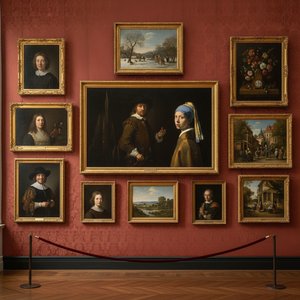
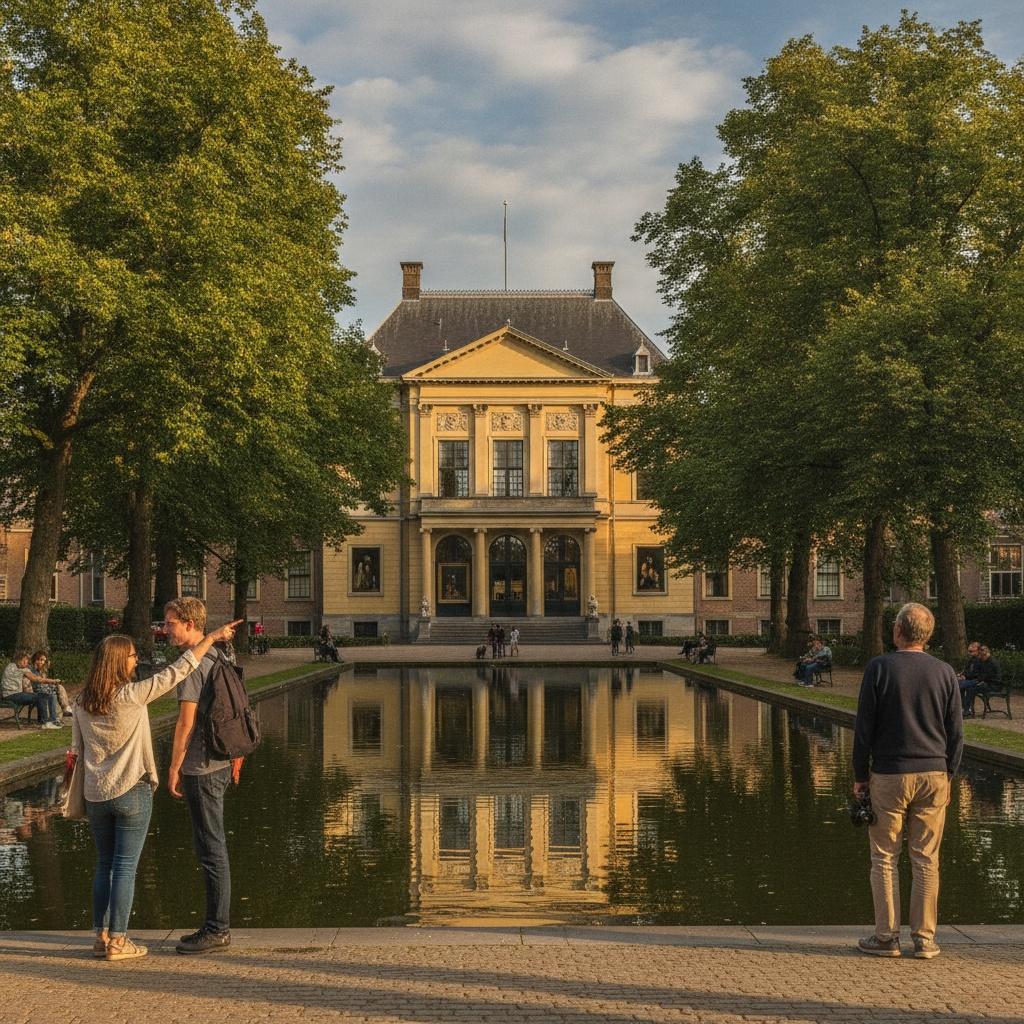
To step across the threshold of the Mauritshuis is to leave the modern bustle of The Hague behind and enter a sanctuary where time slows to the rhythm of a brushstroke. This is not merely a museum; it is a jewel box of the Dutch Golden Age, a stately residence that breathes with the elegance of 17 and the quiet dignity of Dutch Classicism. Within these walls, the air feels heavy with the legacy of a period when light was not just an environmental condition, but a divine medium used to capture the very essence of human existence.
The collection housed here is remarkably concentrated, eschewing the overwhelming scale of larger institutions in favor of an intimate, profound dialogue between the viewer and the canvas. As you wander through the galleries designed by Jacob van Campen and Pieter Post, you are walking through a curated history of prosperity, intellect, and unparalleled artistry. Here, the mastery of Johannes Vermeer meets the dramatic shadows of Rembrandt van Rijn , creating a landscape of emotion that spans from the serene stillness of a domestic interior to the boisterous, moralizing scenes of Jan Steen.
These twenty-five masterpieces remain deeply meaningful today because they do more than document a bygone era; they mirror our own enduring fascination with identity, light, and the fleeting nature of a moment. Whether it is the enigmatic gaze of a young girl wearing a single, luminous pearl or the meticulous detail of a maritime scene, these works possess a tactile vitality that transcends centuries. They remind us that while technology changes, the human impulse to find beauty in the mundane remains constant.
In the following guide, we shall embark on a curated journey through these twenty-five essential works. We will explore the technical brilliance of the Dutch masters and the historical narratives that give these paintings their soul, preparing you for an encounter with art that is as much about the heart as it is about the eye.
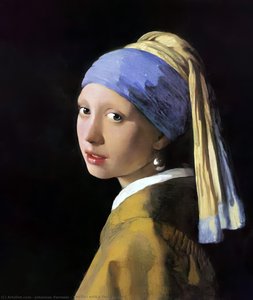
The Girl with a Pearl Earring - Johannes Vermeer
To stand before The Girl with a Pearl Earring is to experience a sudden, breathless hush, as if the bustling halls of The Hague have vanished, leaving only this intimate encounter. Johannes Vermeer’s 1665 masterpiece does not merely depict a face; it captures a fleeting moment of soul-stirring connection. As her eyes meet yours, the luminous pearl catches a stray beam of light, anchoring a composition defined by the profound contrast between the dark, infinite void and the vibrant ultramarine of her turban.
This work earns its place among the top 25 artworks in the Mauritshuis because it transcends the boundaries of a mere tronie . It is a masterclass in Dutch Golden Age light, where delicate glazes create skin that seems to breathe. The mystery of her expression—is it an invitation or a farewell?—offers a timeless sanctuary for contemplation. Bringing such a profound sense of serenity into a modern home through a hand-painted oil reproduction allows this legendary quietude to enrich your daily environment, turning a personal space into a gallery of eternal grace.
The Anatomy Lecture of Dr. Nicolaes Tulp [1632] - Rembrandt van Rijn
![The Anatomy Lecture of Dr. Nicolaes Tulp [1632]](/media/artworks/images-thumb/e5/fc/e5fcb33447eac6b24ab049b22effa1a3.jpg) The Anatomy Lecture of Dr. Nicolaes Tulp [1632] - Rembrandt van Rijn
The Anatomy Lecture of Dr. Nicolaes Tulp [1632] - Rembrandt van RijnTo stand before The Anatomy Lecture of Dr. Nicolaes Tulp [1632] by Rembrandt van Rijn is to witness the very moment scientific inquiry collided with Baroque drama. In this seminal work, one does not merely see a medical demonstration; one feels the heavy, expectant silence of the Amsterdam Guild of Surgeons. Rembrandt utilizes his legendary chiaroscuro to pierce the gloom, casting a stark, directional light that illuminates the pale, dissected forearm and the intense, searching eyes of the observers.
The palette is a somber symphony of deep umbers, blacks, and muted ochres, punctuated by the startling, visceral textures of the anatomical study. Every brushstroke contributes to a sense of profound realism, from the crisp linen of the surgeons' collars to the unsettling, organic detail of the cadaver. As one of the most significant pieces among the top 25 artworks in Mauritshuis, The Hague , it captures the intellectual hunger of the Dutch Golden Age. This masterpiece remains a powerful testament to human curiosity, offering a transformative presence that continues to command reverence and invite deep contemplation in any modern collection.
View of Delft - Johannes Vermeer
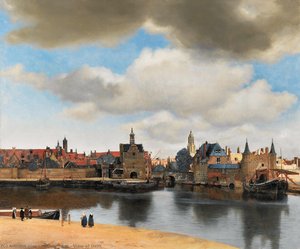 View of Delft - Johannes Vermeer
A profound stillness settles over the viewer when standing before View of Delft by Johannes Vermeer, a masterpiece that captures the very breath of the Dutch Golden Age. This sweeping cityscape is an essential pillar of the Mauritshuis collection, distinguished not merely by its architectural precision but by its unparalleled ability to transmute a bustling maritime hub into a vision of eternal serenity. Vermeer employs a masterful command of light, using subtle atmospheric perspective and delicate, textured brushwork to render the reflective canals and the iconic spire of the Nieuwe Kerk with breathtaking realism.
As one of the top 25 artworks in the Mauritshuis, this painting transcends mere documentation; it is a symbolic celebration of civic pride and prosperity. The harmonious interplay of cool river tones and the soft, diffused light of an overcast sky creates a meditative atmosphere that remains as influential today as it was in 1659. At ArtsDot.com, we believe such beauty should be accessible to all. You can bring this transformative presence into your own home, office, or personal gallery through our high-fidelity, hand-painted oil reproductions, allowing the timeless tranquility of Vermeer’s Delft to anchor your modern interior.
Diana and her Companions - Johannes Vermeer
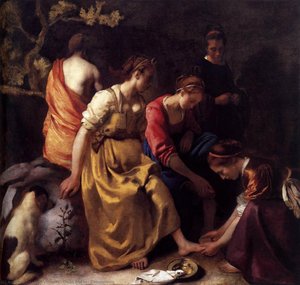 Diana and her Companions - Johannes Vermeer
In Diana and her Companions , Johannes Vermeer transcends the grandiosity of classical mythology to capture a moment of profound, quiet intimacy. While many Baroque masters utilized mythological themes for dramatic spectacle, this 1655 masterpiece stands out among the top 25 artworks in the Mauritshuis due to its restrained, psychological depth. Vermeer replaces the chaos of the hunt with a serene domesticity, where light softly models the goddess Diana and her nymphs amidst earthy tones and luminous glazes.
The painting’s muted palette and focus on subtle textures—from the golden gown to the delicate skin tones—resonate deeply with modern interior design sensibilities, offering a sense of tranquil sophistication. The presence of the loyal dog and the symbolic thistle invites a contemplative gaze, much like the stillness one seeks in a contemporary sanctuary. For collectors looking to bring this era of Dutch Golden Age elegance into their own homes, our hand-painted oil reproductions capture every meticulous brushstroke and light-drenched detail of Vermeer’s original vision, preserving the soulful atmosphere of The Hague's most precious treasures.
Tronie - Rembrandt van Rijn
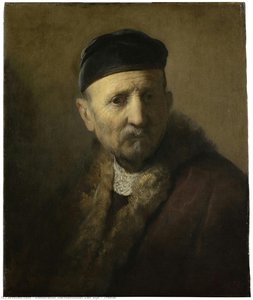 Tronie - Rembrandt van Rijn
In the quiet, amber-hued depths of Rembrandt van Rijn’s Tronie , we encounter more than a mere face; we meet a lifetime of unspoken stories. Created around 1631, this masterpiece transcends traditional portraiture to explore the very essence of human vulnerability and the dignified weight of age. As one of the most profound highlights among the top 25 artworks in 'Mauritshuis, The Hague', it stands as a definitive study in chiaroscuro , where a singular, ethereal light source pulls the subject's weathered features from a heavy, mysterious gloom.
The brilliance of this work lies in its tactile intensity. Rembrandt’s masterful use of impasto creates a sculptural topography of skin and shadow that remains breathtaking centuries later. At ArtsDot.com, we strive to preserve this emotional resonance through our handmade oil reproductions. Our artists meticulously recreate these thick, expressive brushstrokes on 100% cotton canvas, ensuring that the dramatic interplay of light and the rugged texture of the original are brought into your own collection, allowing the soul of the Dutch Golden Age to reside within your home.
Saul and David - Rembrandt van Rijn
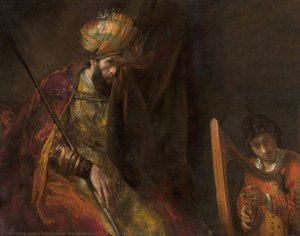 Saul and David - Rembrandt van Rijn
In the hallowed halls of the Mauritshuis, a profound drama unfolds within the shadows of Rembrandt van Rijn’s Saul and David . The painting captures a moment of heavy, psychological tension, where the broken King Saul sits weighed down by jealousy, his gaze lost in a private sea of misery. In stark, luminous contrast stands the young David, whose presence brings a flicker of grace to the gloom as he kneels to play his harp. Through the masterful use of chiaroscuro , Rembrandt illuminates the struggle between internal torment and divine purity, making this work a cornerstone of the top 25 artworks in 'Mauritshuis, The Hague'.
To bring this powerful emotional resonance into your own home, consider a hand-painted oil reproduction. The tactile depth of visible brushstrokes and the dramatic interplay of light can transform a personal sanctuary into a space for profound reflection. Whether through a large-scale canvas or a multi-panel arrangement, displaying such a masterpiece invites a sense of historical gravity and quiet contemplation into any modern interior.
The Laughing Man - Rembrandt van Rijn
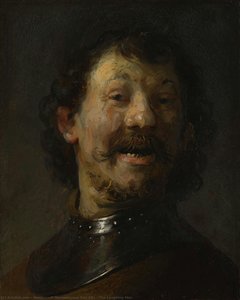 The Laughing Man - Rembrandt van Rijn
In the profound shadows of the Mauritshuis collection, Rembrandt van Rijn’s The Laughing Man (1630) serves as a visceral masterclass in the psychology of the human spirit. As one of the top 25 artworks in The Hague's most prestigious gallery, this piece transcends simple portraiture; it is a "tronie," a character study designed to explore the raw, unvarnished textures of emotion. Through his legendary use of chiaroscuro, Rembrandt illuminates a moment of spontaneous joy, yet the man’s crooked teeth and upward gaze suggest a complex duality—a flicker of vulnerability hidden within exhilaration.
The painting’s placement among the museum's greatest treasures is earned through its technical audacity, where loose, expressive brushstrokes capture the very essence of life. This work invites us to contemplate how beauty often resides in imperfection. For the modern collector, bringing a reproduction of this Dutch Golden Age masterpiece into a home offers more than mere decor; it introduces a timeless conversation about resilience and the enduring power of the human face to tell stories that remain deeply resonant centuries later.
Woman Writing a Letter, with her Maid - Johannes Vermeer
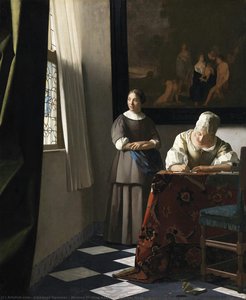 Woman Writing a Letter, with her Maid - Johannes Vermeer
In Woman Writing a Letter, with her Maid , Johannes Vermeer captures the profound weight of a single, quiet moment. This masterpiece stands as a cornerstone of the Mauritshuis collection because it transcends mere domestic portraiture; it is an exploration of the psychological tension found in anticipation. As the woman focuses on her correspondence, the soft, directional light from an unseen window illuminates the textures of the room—the heavy fabrics, the scattered books, and the subtle presence of the maid—creating a sense of hushed intimacy that feels remarkably modern.
Vermeer’s mastery of light and his ability to imbue mundane objects with symbolic depth place this work among the top 25 artworks in The Hague. The painting invites us to reflect on our own private histories and the silent narratives that shape our lives. For the discerning collector, bringing a reproduction of this Dutch Golden Age treasure into a home offers more than decor; it introduces a timeless conversation about stillness and grace, allowing the serene atmosphere of 17th-century Delft to breathe within a contemporary space.
Self-Portrait - Rembrandt van Rijn
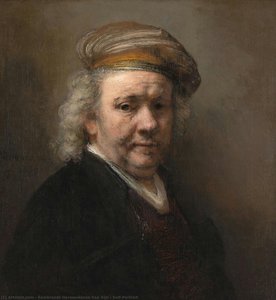 Self-Portrait - Rembrandt van Rijn
To stand before Rembrandt’s 1669 Self-Portrait at the Mauritshuis is to witness a master confronting his own mortality. This work, created in the final year of his life, is far more than a mere likeness; it is a profound psychological landscape. Through the dramatic use of chiaroscuro , Rembrandt employs stark contrasts between deep, velvety shadows and a piercing, focused light to reveal the weathered textures of his own skin and the heavy weight of experience in his gaze.
The painting captures the artist in a moment of unflinching introspection. His expression, marked by a serious, almost melancholic dignity, speaks to a lifetime of both immense triumph and devastating financial ruin. Every meticulously layered brushstroke on the canvas serves to distill the essence of human resilience. For those seeking to bring this level of transformative genius into their own environment, our Handmade Oil Reproductions capture these very textures and emotional depths, allowing you to transform a simple room into a personal gallery of the soul.
Two Moors - Rembrandt van Rijn
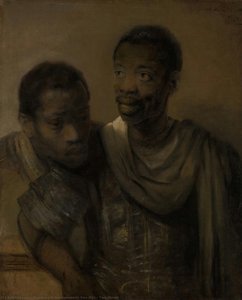 Two Moors - Rembrandt van Rijn
In Two Moors by Rembrandt van Rijn, the composition achieves a profound structural harmony through a masterful use of verticality and weight. The figures are anchored by a central, stabilizing axis, where the gentle tilt of one man’s head toward his companion creates a soft, triangular geometry that guides the eye inward. This balance of forms—the heavy, dark mass of the background contrasted with the luminous, focused highlights on their faces—creates a sense of timeless perfection that secures its place among the top 25 artworks in Mauritshuis, The Hague.
There is a striking parallel between Rembrandt’s use of negative space and the principles of modern minimalist design; by allowing the shadows to consume the periphery, he focuses all emotional energy on the subjects, much like how a single, well-placed piece of art grounds a clean, contemporary aesthetic. For those looking to bring this historical gravity into a modern home, our hand-made oil reproductions capture every tactile impasto stroke and dramatic shadow, offering a sophisticated centerpiece that connects 17th-century soul with 21st-century elegance.
Andromeda - Rembrandt van Rijn
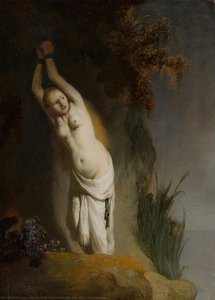 Andromeda - Rembrandt van Rijn
In Andromeda by Rembrandt van Rijn, there is a profound vulnerability that follows you—not with judgment, but with an intense, shared understanding of human fear. This isn't merely a depiction of Greek myth; it is a mirror reflecting the raw, psychological weight of facing an inescapable fate. As one of the most evocative works within the Mauritshuis collection in The Hague, Rembrandt strips away the heroic spectacle of Perseus to focus on the princess’s palpable terror , anchored by his early mastery of chiaroscuro .
The composition breathes through the striking contrast between the luminous, white fabric of her attire and the swallowing shadows of the nocturnal landscape. The way light sculpts the textures of skin and cold stone creates an atmosphere heavy with dread yet breathtakingly beautiful. Now, imagine that dramatic interplay of light and shadow in your own space. A hand-painted oil reproduction of this masterpiece serves as a powerful reminder: even in the darkest moments, there is a profound, luminous beauty to be found. It is an essential piece for any discerning collector seeking to bring the soul of the Dutch Golden Age into a contemporary setting.
The Presentation of Jesus in the Temple - Rembrandt van Rijn
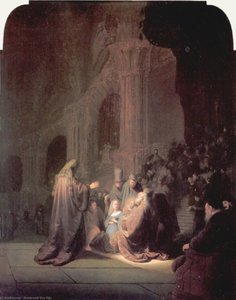 The Presentation of Jesus in the Temple - Rembrandt van Rijn
While Rembrandt was still a young man in his early twenties, far from the established fame of his later years, he was already mastering the language of the divine through The Presentation of Jesus in the Temple . This 1631 masterpiece, a cornerstone of the top 25 artworks in 'Mauritshuis, The Hague', captures a moment of profound spiritual weight using an almost architectural use of light. Rembrandt employs a breathtaking chiaroscuro , where a celestial beam descends to illuminate Mary and the infant Jesus, pulling them from the velvety shadows of the temple interior.
The composition is a rhythmic dance of figures—Simeon, Anna, and angelic attendants—all arranged in a way that directs the viewer's soul toward the central miracle. The heavy textures of the robes and the dramatic interplay of light and dark create a sense of palpable, sacred presence. Such profound focus and the ability to command light from darkness can serve as a powerful inspiration for any professional space; hanging a high-quality oil reproduction of this work in a modern home office or study fosters an atmosphere of deep contemplation, intellectual rigor, and quiet prestige.
Venus with an Organist and a Dog - Titian Ramsay Peale II
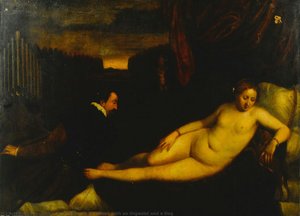 Venus with an Organist and a Dog - Titian Ramsay Peale II
To encounter Venus with an Organist and a Dog by Titian Ramsay Peale II is to witness a rare moment where the spirit of the American frontier meets the luminous grandeur of the Venetian High Renaissance. As one of the most captivating works within the Mauritshuis collection, this painting transcends its 19th-century origins, offering a profound dialogue with the masters of light and color.
Peale II, a descendant of the legendary Charles Willson Peale, utilizes meticulous glazing techniques to imbue the canvas with an ethereal glow. The scene unfolds as an intimate tableau: a graceful Venus reclines beside a seated companion, while the presence of two loyal dogs and the architectural weight of an organ suggest a sanctuary of musical and sensory contemplation. The interplay of soft skin tones against the rich, atmospheric shadows creates a depth that resonates powerfully in modern, refined interiors. For the discerning collector, this piece represents more than mere historical interest; it is a timeless testament to how classical elegance can be reimagined, making it an essential jewel among the top 25 artworks in the Mauritshuis, The Hague.
Portrait of Emperor Charles V (1500-1558) - Titian Ramsay Peale II
 Portrait of Emperor Charles V (1500-1558) - Titian Ramsay Peale II
In the hallowed halls of the Mauritshuis, the Portrait of Emperor Charles V by Titian Ramsay Peale II stands as a profound bridge between the Old World's imperial grandeur and the burgeoning spirit of American artistry. This work is not merely a likeness; it is an encounter with authority. Peale II channels the Venetian legacy, utilizing subtle color gradations and delicate glazing to create an ethereal luminescence that seems to emanate from the Emperor’s very skin. The palette—a sophisticated arrangement of deep ochres and somber browns—anchors the composition, allowing the textured detail of the imperial beard and the piercing, direct gaze to command the viewer's attention.
To possess such a piece is to invite a sense of classical weight into your environment. Whether you are drawn to the historical gravity of the Habsburg era or the masterful light-and-shadow play characteristic of the High Renaissance, this portrait offers a transformation of space. For those seeking to surround themselves with genius, our hand-painted oil reproductions allow you to bring this museum-grade prestige into your own home, turning a private room into a true gallery of the soul.
Nymph and Satyr - Peter Paul Rubens
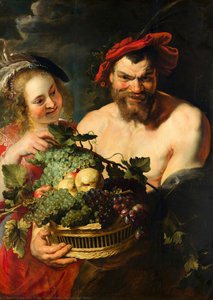 Nymph and Satyr - Peter Paul Rubens
While many associate the Baroque era with somber religious devotion, Sir Peter Paul Rubens possessed a singular ability to capture the pulse of untamed vitality. In “Nymph and Satyr,” found among the top 25 artworks in Mauritshuis, The Hague, Rubens breaks from traditional rigidity to present a visceral, theatrical encounter. The painting vibrates with the scent of ripe grapes and the warmth of a sun-drenched pastoral landscape, where the ethereal purity of a nymph meets the carnal impulse of a satyr.
The technical genius lies in his command of chiaroscuro ; Rubens orchestrates a dramatic interplay of light that makes the figures appear almost luminous against the forest shadows. His energetic brushwork and opulent palette of deep crimsons and radiant golds create a sense of movement that feels as though it might spill off the canvas. This masterpiece, an allegory of innocence meeting instinct, possesses a rhythmic energy that is profoundly transformative. Bringing such a dynamic, high-spirited composition into a modern home office or study can inspire a sophisticated atmosphere of creativity and intellectual vigor, much like the grand halls of the Dutch Golden Age.
Fruit Still Life - Jan van Huysum
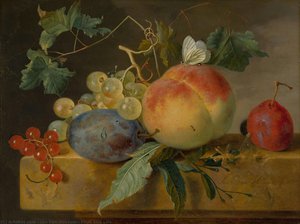 Fruit Still Life - Jan van Huysum
To encounter Jan van Huysum’s Fruit Still Life is to witness a masterclass in the sensory opulence of the Dutch tradition, a work that demands the attention of any serious connoisseur visiting the Mauritshuis. This painting transcends mere botanical study; it is a symphonic arrangement of texture and light, where the velvety skin of sun-drenched peaches and the deep, translucent purples of ripe grapes create a palpable sense of abundance. Van Huysum utilizes a dramatic chiaroscuro to sculpt each piece of fruit, lending a three-dimensional vitality that feels almost edible.
Beyond its visual feast, the work serves as a sophisticated vanitas ; the delicate butterfly and the subtle presence of nature's tiny inhabitants remind us of the fleeting beauty of life. For the modern collector, such a masterpiece offers more than historical value—it provides a timeless anchor for refined interiors. Whether you are admiring the original in The Hague or seeking a high-quality hand-painted oil reproduction to bring this legacy into your own home, Van Huysum’s ability to capture the ephemeral essence of nature remains an unparalleled achievement in art history.
Venus Trying to Restrain Adonis from Departing for the Hunt - Peter Paul Rubens
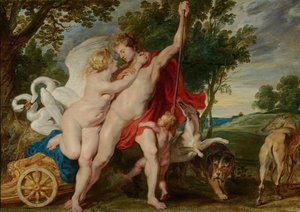 Venus Trying to Restrain Adonis from Departing for the Hunt - Peter Paul Rubens
In the presence of Peter Paul Rubens’ Venus Trying to Restrain Adonis from Departing for the Hunt , one does not merely view a canvas; one witnesses a visceral struggle between divine devotion and mortal impulse. This Baroque masterpiece, a cornerstone of the Mauritshuis collection, pulses with the dramatic energy characteristic of the Flemish master. Rubens utilizes a breathtakingly opulent palette—rich golds, deep reds, and luminous flesh tones—to sculpt the figures through chiaroscuro , creating a theatrical tension that feels almost palpable.
The scene captures the goddess Venus in a desperate, tender embrace, attempting to shield Adonis from the perils of his first hunt. The composition is alive with movement, from the soft textures of skin to the surrounding natural world filled with subtle hints of animals and lush greenery. Owning a reproduction of this work is not a mere purchase; it is an inheritance of the Baroque spirit. At ArtsDot.com, we bring this lineage of taste to your home through hand-painted oil recreations that preserve every vigorous brushstroke and emotional depth found in the original, allowing the grandeur of the Dutch Golden Age to reside on your own walls.
River Landscape at Sunset - Aert van der Neer
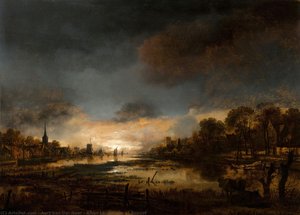 River Landscape at Sunset - Aert van der Neer
What story does the shifting light and quiet movement in River Landscape at Sunset by Aert van der Neer tell? As one of the top 25 artworks in the Mauritshuis, The Hague, this 1650 masterpiece captures a fleeting moment of Dutch tranquility. During the Golden Age, while many contemporaries sought grand, heroic vistas, van der Neer revolutionized landscape painting by focusing on the atmospheric soul of the Netherlands—the subtle, fiery transition from day to night.
The canvas breathes with the warmth of twilight, where golden hues dance upon the water's surface and small boats drift peacefully beneath a cloudy, emotive sky. This mastery of light and tonal gradation offers more than just a view; it provides a profound sense of stillness. In modern interior design, such a piece serves as a curated escape, bringing the prestige of 17th-century Dutch realism into the home to evoke peace and contemplation. For those looking to honor this legacy, our hand-painted oil reproductions allow you to possess this very atmosphere, capturing every meticulous brushstroke and glowing ember of the sunset on fine cotton canvas.
Beach View - jacob isaackszoon van ruisdael
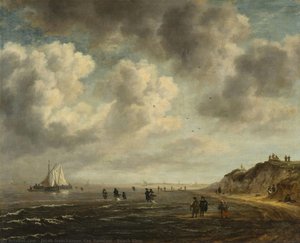 Beach View - jacob isaackszoon van ruisdael
To stand before Jacob Isaackszoon van Ruisdael’s Beach View is to witness the rhythmic pulse of the Dutch coast, where the boundary between sea and sky dissolves into a symphony of silvered light and movement. In this masterpiece, Ruisdael transcends mere coastal documentation; he captures the very breath of the North Sea. The composition breathes with life—from the solitary bird tracing arcs through an overcast sky to the distant sails of boats navigating the gentle swells. It earns its place among the top 25 artworks in the Mauritshuis because it masterfully orchestrates a sense of vastness and tranquility, utilizing his signature atmospheric glazes to create a world that feels both immense and intimately reachable.
This painting is more than a historical relic; it is an invitation to bring the sublime outdoors into your private sanctuary. At ArtsDot.com, we believe such profound moments of natural beauty should not be confined to museum walls. By commissioning a hand-painted oil reproduction , you can transform your home or office into a gallery of reflection, where the textured brushstrokes and luminous tones of Ruisdael serve as a daily reminder of the enduring elegance found in the natural world.
Singing Round the Star on Twelfth Night - Cornelis Troost
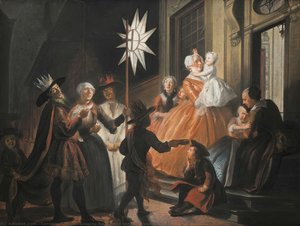 Singing Round the Star on Twelfth Night - Cornelis Troost
In Singing Round the Star on Twelfth Night by Cornelis Troost, the composition achieves a remarkable structural harmony that anchors this vibrant scene within the top 25 artworks in 'Mauritshuis, The Hague'. Troost, drawing from his theatrical background, orchestrates a complex arrangement of figures around a central, luminous star-shaped lantern. The geometric balance is masterfully executed; the verticality of the standing guests and the clock on the wall provides a rhythmic counterpoint to the horizontal stability of the dining table. This careful distribution of weight creates a sense of timeless perfection, guiding the eye through a whirlwind of 18th-century Dutch Rococo elegance.
There is a profound internal equilibrium here that resonates with the principles of modern minimalist design. Much like a contemporary curated space, Troost uses light and shadow to define boundaries, preventing the festive chaos from overwhelming the viewer. This balance between exuberant detail and structural clarity allows the painting to ground a clean, contemporary aesthetic in any collection. For those seeking to bring this era of warmth into a modern home, our hand-painted oil reproductions capture every delicate pastel hue and expressive gesture of this Amsterdam masterpiece.
A Meal of Oysters - Frans van Mieris
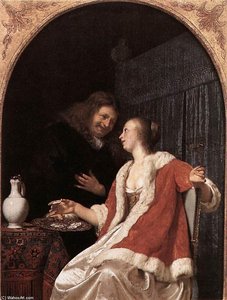 A Meal of Oysters - Frans van Mieris
In Frans van Mieris’ 1661 masterpiece, A Meal of Oysters , the viewer is invited into a theatrical, arched niche that feels less like a painting and more like a whispered secret. As a prominent member of the fijnschilder movement, Van Mieris employs an almost hyperrealistic precision to render the textures of the Dutch Golden Age: the cold, shimmering sheen of the oysters, the heavy weight of fur-trimmed capes, and the luminous glow of white silk. There is a palpable tension in the air—a dance of flirtation and subtle deception between the two figures.
The symbolism is as rich as the palette of deep reds and creams; the oysters serve as a sensory metaphor for both abundance and illicit desire, while the shadows suggest a clandestine rendezvous hidden from the world. There is a gaze in A Meal of Oysters by Frans van Mieris that follows you—not with judgment, but with understanding . This isn’t just a historical document; it is a mirror of human intimacy. Imagine bringing this exquisite depth of light and texture into your own home through a hand-painted oil reproduction, allowing the quiet prestige of the Mauritshuis to reside on your walls.
Still Life with Copper Pot, Cheese and Eggs - Jean-Baptiste-Siméon Chardin
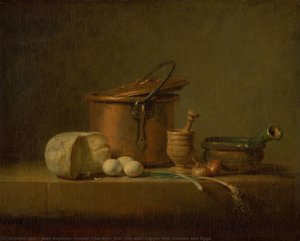 Still Life with Copper Pot, Cheese and Eggs - Jean-Baptiste-Siméon Chardin
In the quiet corners of the Mauritshuis, Jean-Baptiste-Siméon Chardin’s 1735 masterpiece, Still Life with Copper Pot, Cheese and Eggs , offers a profound meditation on the beauty of the mundane. The lines in this work are not merely drawn; they are choreographed , guiding the eye through a rhythmic arrangement of humble textures. This is not just a composition of domestic objects; it is a dance frozen in time , where the soft glow of light hitting a copper pot creates a sense of sacred stillness.
Chardin breathes life into the inanimate, using a subtle, diffused light to elevate a wedge of cheese and simple eggs into icons of quiet dignity. There is a palpable warmth here, an echo of the Dutch masters that makes the scene feel both intimate and eternal. What if your own living room could hold this same balance? What if your walls could breathe rhythm through the tactile depth of a hand-painted oil reproduction? To bring this sense of harmony into your home, consider our museum-quality recreations, where every brushstroke honors Chardin’s original mastery.
Cottages in a Forest - meindert lubbertszoon hobbema
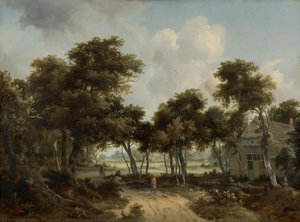 Cottages in a Forest - meindert lubbertszoon hobbema
What story does the dappled sunlight and rustling canopy in Cottages in a Forest by Meindert Lubbertszoon Hobbema tell? Painted around 1665, this masterpiece serves as a profound window into the Dutch Golden Age, capturing a period when landscape painting evolved from mere topography into a spiritual exploration of nature’s harmony. Within the prestigious collection of the Mauritshuis, The Hague, Hobbema’s work stands out for its ability to weave human presence—strolling figures and rustic dwellings—into a dense, atmospheric woodland that feels both vast and intimately protective.
The painting utilizes masterful atmospheric perspective, where soft tonal gradations and meticulous detail create a sense of deep, luminous space. For the modern collector, this work offers more than historical significance; it provides a curated escape. Bringing a high-quality oil reproduction of this pastoral vista into a contemporary home allows one to invite the tranquility and nostalgic peace of the 17th-century Dutch countryside into a living space, transforming a wall into a serene sanctuary of light and greenery.
St Barbara - Parmigianino
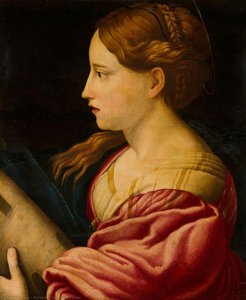 St Barbara - Parmigianino
A soft, luminous pink dominates St Barbara by Parmigianino, casting a mood of tender devotion and ethereal grace across the panel. This delicate hue, paired with the rich, flowing texture of the saint's red hair, exemplifies the transition from High Renaissance harmony to the refined sensuality of Mannerism. The artist’s mastery lies in his use of sfumato , creating a smoky, atmospheric haze that makes the figure appear to glow from within, a technique that secures its place among the top 25 artworks in 'Mauritshuis, The Hague'.
For the discerning collector, this painting offers a blueprint for sophisticated interior curation. The gentle palette and serene atmosphere can be used to anchor the emotional lighting of a modern dining room or a quiet study, introducing historical weight and a sense of calm. If you are moved by this era of elegance, our artists can recreate this masterpiece as a Handmade Oil Reproduction on 100% cotton canvas, capturing every subtle brushstroke and the profound spiritual depth of Parmigianino’s vision.
The Proposition - judith jans leyster
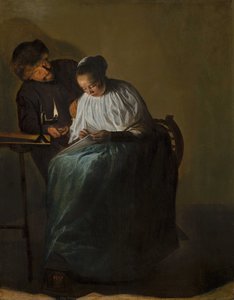 The Proposition - judith jans leyster
For centuries, the true hand behind The Proposition remained obscured by history, as many of Judith Jans Leyster’s works were misattributed to Frans Hals. It was only through rigorous modern scholarship that her singular voice—a master of psychological tension—was reclaimed from the shadows. In this 1631 masterpiece, Leyster utilizes a breathtaking chiaroscary to illuminate a moment of profound domestic drama: a woman focused on her needlework, while a man’s jewel-adorned fist offers a silent, tempting gesture that threatens the sanctity of her industriousness.
The technical brilliance lies in the way light sculpts the textures of fabric and the scattered books, creating a palpable atmosphere of moral complexity. The interplay of shadow and luminous detail transforms a simple genre scene into a profound meditation on temptation and virtue. This same sense of focused intensity and intellectual depth makes such a piece an extraordinary addition to a modern study or home office. Much like the scholars depicted in her work, one can find inspiration in the quiet, disciplined elegance that a high-quality oil reproduction of Leyster’s genius brings to a sophisticated workspace.
Conclusion
To walk through the halls of the Mauritshuis is to participate in a silent, centuries-old conversation. As the daylight fades over The Hague, one realizes that these twenty-five masterpieces are far more than mere relics of the Dutch Golden Age; they are living presences. Whether it is the enigmatic gaze of Vermeer’s subject or the dramatic shadows cast by Rembrandt’s brush, these works possess a rhythmic vitality that continues to shape our modern perception of beauty, light, and the human condition. They do not belong solely to the past; they reside in the way we perceive emotion and find stillness in a chaotic world.
At ArtsDot.com , we believe this profound connection should not be confined to the walls of a single palace. Our mission is to bridge the gap between the museum archive and your personal sanctuary, allowing these timeless echoes to inhabit your own space. Every hand-painted reproduction in our full collection is a labor of reverence, meticulously crafted by skilled artists who honor the original's soul, texture, and intricate detail. Through the careful application of oil on canvas and the preservation of every intentional brushstroke, we strive to ensure that the majesty of the Mauritshuis remains a tangible, breathing part of your home, inspiring wonder for generations to come.