Introduction
To step into the world of Wassily Wassilyevich Kandinsky is to abandon the safety of the recognizable and surrender to the profound rhythm of the soul. It is an invitation to move beyond the mere sight of objects and enter a realm where color, line, and form dance in a symphonic arrangement of pure emotion. As you prepare to journey through these twenty-five seminal works, imagine yourself not merely as a spectator in a gallery, but as a listener to a visual orchestra, where every brushstroke carries the weight of a musical note and every hue vibrates with its own spiritual frequency.
Born in Moscow in 1866, Kandinsky’s path to abstraction was anything but linear. A man of deep intellect, he began his professional life studying law and economics, yet his destiny was irrevocably altered by the sensory power of art—specifically the atmospheric light of Monet’s landscapes and the transcendent drama of Wagner’s operas. This fusion of visual impression and auditory grandeur became the cornerstone of his philosophy. Moving from the vibrant folk traditions of Russia to the avant-garde circles of Munich, Kandinsky sought to capture what he called "inner necessity" —the spiritual impulse that exists beneath the surface of our physical reality.
\The works featured in this collection represent the evolution of a revolutionary. You will witness his transition from the bold, expressive landscapes of his early years to the complex, non-objective compositions that effectively dismantled the boundaries of Western art. These paintings remain profoundly meaningful today because they mirror our own modern experience: a world of fragmented perceptions, intense psychological depth, and the search for meaning in an increasingly abstract existence. They remind us that art does not need to depict the world to express its essence.
As we navigate this curated selection, we will explore the milestones of his career—from the explosive energy of his early Expressionist period to the geometric precision of his later years. Each masterpiece serves as a window into a mind that viewed the canvas as a sacred space for spiritual exploration. Prepare to encounter the textures, the tensions, and the triumphs of an artist who taught us how to see with our hearts.
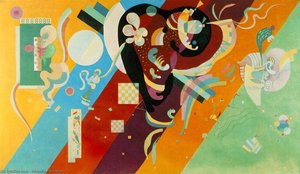
Composition VIII - Wassily Wassilyevich Kandinsky
 Composition VIII - Wassily Wassilyevich Kandinsky
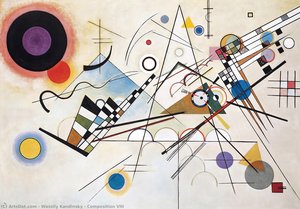
Created in 1923 during Kandinsky’s influential tenure at the Bauhaus, Composition VIII stands as a monumental pillar within the top 25 artworks of Wassily Kandinsky. It represents the precise moment when the artist transitioned from expressive landscapes into a pure, non-objective language of geometry. This masterpiece functions as a visual symphony; here, circles, triangles, and intersecting lines do not merely sit upon the canvas but dance in a rhythmic, synesthetic arrangement that mirrors musical notation.
The work’s placement in the canon of modern art is earned through its profound philosophical depth, moving beyond mere decoration to explore what Kandinsky called "inner necessity." The tension between sharp, angular structures and floating, ethereal spheres invites viewers to contemplate the balance between chaos and cosmic order. For the discerning collector, a high-quality oil reproduction of this piece brings an intellectual energy into the modern home, serving as a timeless conversation piece that bridges the gap between early 20th-century spiritualism and contemporary architectural minimalism.
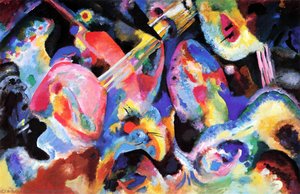
Improvisation. Gorge - Wassily Wassilyevich Kandinsky
 Improvisation. Gorge - Wassily Wassilyevich Kandinsky
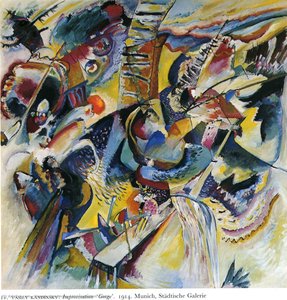
In Improvisation. Gorge by Wassily Kandinsky, a piercing, fiery red surges through the composition, setting a mood of profound urgency and spiritual awakening. This masterpiece stands among the top 25 artworks of Wassily Wassilyevich Kandinsky because it captures the exact moment where color transcends the physical world to touch the soul. The palette is a masterful tension between chaotic, energetic warmth and deep, receding blues, creating a visual symphony that demands attention.
For the discerning collector, integrating such a dynamic work into a modern interior can redefine a room's emotional atmosphere. The painting’s vibrant contrasts are ideal for a contemporary dining room or an avant-garde living space, where it can serve as a focal point to stimulate conversation and intellectual energy. Whether you seek a museum-quality Handmade Oil Reproduction to bring this historical vitality to your walls, or a high-fidelity Giclée print, this work offers an unparalleled way to curate a space filled with movement, light, and the revolutionary spirit of abstract expressionism.
On White II - Wassily Wassilyevich Kandinsky
 On White II - Wassily Wassilyevich Kandinsky
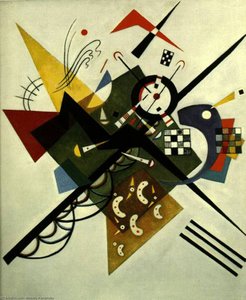
To stand before On White II by Wassily Wassilyevich Kandinsky is to witness the precise moment where the chaos of emotion meets the discipline of geometry. Created in 1923 during his transformative tenure at the Bauhaus, this masterpiece marks a departure from his earlier, fluid expressionism toward a structured, cosmic language of form. The luminous, off-white background acts as a silent stage for a rhythmic dance of intersecting triangles, sharp rectangles, and floating circles that seem to vibrate with an inner life.
Kandinsky utilizes flat planes of vibrant color—piercing yellows and deep, tranquil blues—to bypass the intellect and speak directly to the soul. The composition is a symphony of tension; bold, lance-like shapes cut through the space, evoking a sense of spiritual triumph and movement. As one of the top 25 artworks of Wassily Kandinsky , this piece remains a cornerstone of abstract history. Its ability to transform a modern room into a space of contemplation makes a hand-painted oil reproduction an enduring tribute to the power of pure, non-objective beauty.
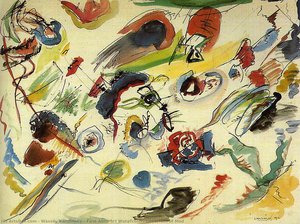
First Abstract Watercolor, Collection of Mad - Wassily Wassilyevich Kandinsky
Imagine standing before a sudden burst of visual music, where the boundaries between sound and sight dissolve into a whirlwind of pure emotion. In 1910, Wassily Kandinsky achieved this transcendence with First Abstract Watercolor, Collection of Mad , a work that captures the precise moment the artist broke free from the shackles of representation. This piece is a cornerstone in our selection of the top 25 artworks of Wassily Wassilyevich Kandinsky because it represents the birth of non-objective art; it is not a window into a landscape, but a mirror to the soul.
The composition is a controlled chaos of vibrant reds, deep blues, and energetic yellows, applied with a fluid, wet-on-wet technique that allows colors to bleed and dance across the paper. Through these spontaneous, gestural strokes, Kandinsky translates his synesthetic experiences into a visual symphony of inner necessity. Bringing such a revolutionary masterpiece into your home through a hand-painted oil reproduction allows you to invite this same sense of dynamic energy and spiritual depth into your daily environment, transforming a modern space into a sanctuary of profound meaning.
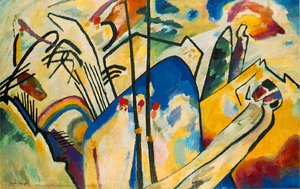
Improvisation 28 (second version) - Wassily Wassilyevich Kandinsky
 Improvisation 28 (second version) - Wassily Wassilyevich Kandinsky
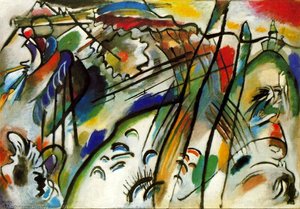
To stand before Improvisation 28 (second version) by Wassily Kandinsky is to witness the precise moment where the visible world dissolves into a visual symphony of pure emotion. Created in 1912, this masterpiece marks a revolutionary departure from representation, serving as a cornerstone in our exploration of the top 25 artworks of Wassily Kandinsky. Here, the artist abandons the constraints of landscape and figure to pursue what he called "inner necessity." The canvas erupts with a rhythmic dance of intersecting lines, vibrant geometric fragments, and swirling organic forms that pulse with an almost musical energy.
The viewer is swept into a dense, layered composition where bold impasto textures and a kaleidoscopic palette evoke both cosmic harmony and chaotic tension. Each brushstroke feels spontaneous yet deeply intentional, translating spiritual vibrations into color. This work remains essential because it captures the birth of abstract expressionism, offering a window into a soul seeking the infinite. Bringing such a dynamic piece into a modern home allows the transformative power of Kandinsky’s rhythmic abstraction to breathe life and intellectual depth into any architectural space.
Yellow, Red, Blue - Wassily Wassilyevich Kandinsky
 Yellow, Red, Blue - Wassily Wassilyevich Kandinsky
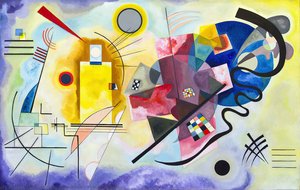
While many view abstraction as a departure from reality, for Wassily Kandinsky, it was a journey toward a higher spiritual truth. During his tenure at the Bauhaus , Kandinsky underwent a profound conceptual shift, moving away from the fluid, organic forms of his earlier Expressionist works toward the disciplined, geometric precision seen in Yellow, Red, Blue (1925). This masterpiece serves as a rhythmic symphony of color; the assertive black lines and intersecting planes create a visual tension that vibrates with energy.
The painting is a masterclass in abstract expressionism , where the primary colors—yellow, red, and blue—are not merely pigments but psychological forces. The interplay of sharp angles against soft, watercolor-like washes evokes a sense of controlled chaos, inviting the viewer to find harmony within fragmentation. This level of intellectual rigor and structural balance makes such a work an extraordinary choice for a modern study or home office. Displaying a high-quality hand-painted oil reproduction of this Kandinsky classic can transform a workspace into a sanctuary of focused creativity and sophisticated, avant-garde inspiration.
All Saints day I - Wassily Wassilyevich Kandinsky
 All Saints day I - Wassily Wassilyevich Kandinsky
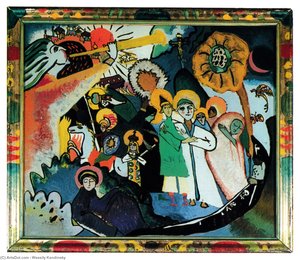
To encounter All Saints Day I is to witness a moment of profound spiritual rebellion. Painted in 1911, this masterpiece stands as a cornerstone in our collection of the top 25 artworks by Wassily Kandinsky because it captures the exact second where representational tradition shattered to make way for pure, emotive abstraction. The canvas vibrates with a chaotic yet sacred energy; swirling, impastoed brushstrokes and a non-naturalistic palette of saturated hues create a rhythmic dance of geometric shapes and religious iconography.
Kandinsky does not merely paint a scene; he orchestrates a symphony of color and form that explores the depths of faith and mortality. The composition, featuring a central sun-like orb and distorted figures, pulls the viewer into a cosmic celebration of the soul. At ArtsDot.com, we believe such transformative energy should not be confined to museum archives. Our hand-painted oil reproductions bring this very movement into your personal sanctuary, allowing the bold, tactile textures of Kandinsky’s expressionism to turn your walls into a living manifesto of modern art history.
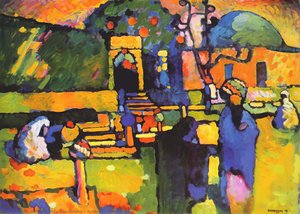
Arabs I (Cemetery) - Wassily Wassilyevich Kandinsky
 Arabs I (Cemetery) - Wassily Wassilyevich Kandinsky
In Arabs I (Cemetery) , Wassily Kandinsky presents a mesmerizing study of geometric tension and rhythmic balance. The composition is built upon a sophisticated architecture of angular fragments—triangles, rectangles, and sweeping curves—that dance across the canvas without the constraints of traditional perspective. This structural harmony creates a sense of timeless perfection, where the weight of deep shadows is perfectly offset by bursts of luminous, sun-drenched ochre and rose. As one of the top 25 artworks of Wassily Wassilyevich Kandinsky , this piece captures the exact moment where landscape dissolves into pure form.
The painting’s internal equilibrium offers a profound parallel to modern minimalist design; its ability to ground a space through intentional shape and saturated color makes it an ideal anchor for a clean, contemporary aesthetic. The thick, tactile impasto layers invite the eye to trace the movement of figures lost within a symbolic, fragmented world. For collectors seeking to bring this era of expressive energy into a modern home, our hand-painted oil reproductions capture every visible brushstroke and emotional vibration of this Expressionist masterpiece.
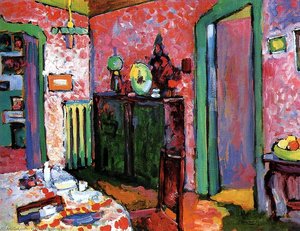
Interior (My dining room) - Wassily Wassilyevich Kandinsky
 Interior (My dining room) - Wassily Wassilyevich Kandinsky
In Interior (My dining room) , we witness a pivotal moment in the evolution of Wassily Kandinsky. Painted in 1909, this work serves as a vibrant bridge between the recognizable world and the profound abstraction that would later define his legacy. The scene is far from a quiet domesticity; instead, it is a pulsating, post-impressionist explosion of energy. A central table, draped in a striking red-and-white checkered cloth, anchors a composition filled with rhythmic movement and emotional intensity.
Kandinsky utilizes a bold, non-naturalistic palette where deep pinkish-red walls clash beautifully against dark green cabinetry, creating a visual tension characteristic of early Fauvism. The thick impasto brushstrokes and distorted perspectives transform a simple room into a dreamlike sanctuary of color. To possess a reproduction of this masterpiece is to invite that same spiritual vitality into your own home. Whether you choose a hand-painted oil on canvas to capture every textured stroke or a high-quality Giclée print, this artwork transforms a mere living space into a gallery of the soul, echoing the artist's search for inner necessity.
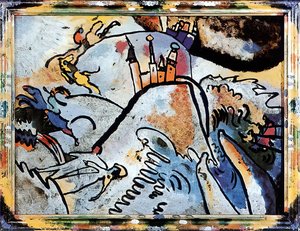
Glass Painting with the Sun (Small Pleasures) - Wassily Wassilyevich Kandinsky
 Glass Painting with the Sun (Small Pleasures) - Wassily Wassilyevich Kandinsky
To gaze upon Glass Painting with the Sun (Small Pleasures) is to witness a moment of pure, spiritual awakening. In this 1910 masterpiece, Kandinsky captures the ephemeral joy of light breaking through chaos, translating the warmth of a sunbeam into a rhythmic dance of color and form. It stands as a cornerstone among the top 25 artworks of Wassily Kandinsky because it marks his definitive departure from the physical world toward the realm of pure abstraction.
The composition vibrates with an energetic, almost sculptural texture; thick, gestural brushstrokes and a palette of brilliant yellows and deep blues create a landscape that feels less like earth and more like a dream. This work is essential for understanding how Kandinsky used color as a psychological language to evoke inner necessity . At ArtsDot.com, we honor this profound legacy through our handmade oil reproductions. Our artists meticulously recreate the heavy impasto and luminous layers of this piece on cotton canvas, ensuring that the raw, emotional intensity and the radiant, glowing light of Kandinsky’s vision are preserved for your own collection.
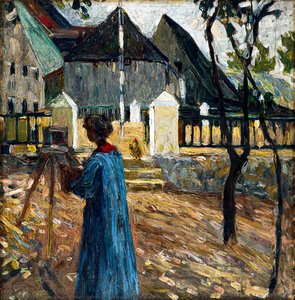
Gabriele Münter painting in Kallmunz - Wassily Wassilyevich Kandinsky
 Gabriele Münter painting in Kallmunz - Wassily Wassilyevich Kandinsky
To encounter Gabriele Münter painting in Kallmunz is to witness the quiet, profound genesis of a revolution. This 1903 masterpiece by Wassily Kandinsky serves as an intimate window into a pivotal moment before the world knew him as the pioneer of abstraction. Here, we find not just a landscape, but a soulful tribute to his partner and fellow artist, Gabriele Münter, captured in the serene act of plein air painting amidst the Bavarian countryside.
The work earns its place among the top 25 artworks of Wassily Kandinsky through its exquisite tension between Impressionist light and the burgeoning emotional intensity that would later define Der Blaue Reiter . Kandinsky employs a rich, tactile impasto, where earthy browns and muted grays are brilliantly punctuated by the striking blue of Münter’s robe. This interplay of color and visible, rhythmic brushstrokes creates a sense of living movement. For the discerning collector, this painting offers more than mere decoration; it brings a legacy of spiritual inquiry and timeless, rustic elegance into a modern interior, embodying a sophisticated connection to the very roots of modern art history.
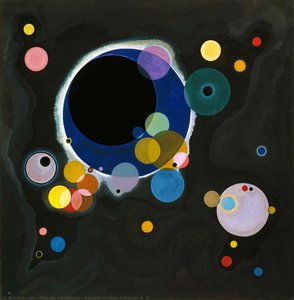
Several Circles, Solomon R. G - Wassily Wassilyevich Kandinsky
 Several Circles, Solomon R. G - Wassily Wassilyevich Kandinsky
In Several Circles, Solomon R. G , Wassily Kandinsky achieves a breathtaking cosmic equilibrium. The composition is a masterclass in geometric rhythm, where concentric circles of varying diameters and vibrant hues dance across a deep, velvety void. Each ring is meticulously layered to suggest transparency and motion, creating a structural harmony that feels both mathematically precise and spiritually fluid. This interplay of weightless forms against the dark background creates a sense of timeless perfection, securing its place among the top 25 artworks of Wassily Kandinsky .
Beyond its historical significance, the painting’s internal balance serves as a precursor to modern minimalist design. The reduction of subject matter to pure shape and color provides a grounding element for contemporary aesthetics, offering a sophisticated focal point for clean, architectural interiors. As you observe the soft transitions between warm and cool tones, you experience the artist's unique synesthesia—a visual symphony where every stroke resonates with emotional depth. For those seeking to bring this era of abstraction into their own space, our hand-painted oil reproductions capture the very soul of Kandinsky’s rhythmic geometry.
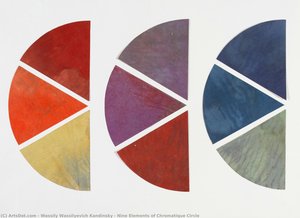
Nine Elements of Chromatique Circle - Wassily Wassilyevich Kandinsky
 Nine Elements of Chromatique Circle - Wassily Wassilyevich Kandinsky
In Nine Elements of Chromatique Circle , Wassily Kandinsky presents a masterclass in the reduction of art to its most fundamental, spiritual components. This 1928 work stands prominently among the top 25 artworks of Wassily Wassilyevich Kandinsky because it serves as a visual manifesto for his theory of inner necessity . By dividing the circle into nine distinct chromatic sectors—ranging from the piercing energy of yellow to the profound depth of blue—Kandinsky transcends mere geometry to create a rhythmic, musical experience on canvas.
The painting invites us to contemplate how color alone can bypass the intellect to touch the soul, mirroring the emotional resonance found in Wagnerian opera. It is a profound meditation on perception: how simple forms can contain infinite complexity. For the modern collector, this piece offers a sophisticated dialogue between historical abstraction and contemporary minimalism. Integrating such a vibrant, symbolic work into a curated space does more than decorate a wall; it introduces a timeless conversation about the harmony of the universe, making it an essential cornerstone for any collection dedicated to the pioneers of modernism.
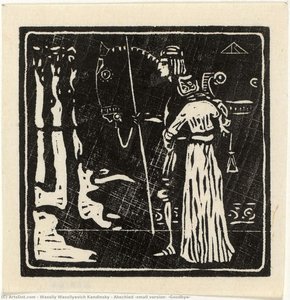
Abschied (small version) (Goodbye) - Wassily Wassilyevich Kandinsky
 Abschied (small version) (Goodbye) - Wassily Wassilyevich Kandinsky
What story does the somber, symbolic landscape of Abschied (small version) (Goodbye) by Wassily Kandinsky tell us about the dawn of modernism? Created in 1903, this evocative black and white drawing captures a pivotal moment in the artist's life, as he transitioned from a legal career toward the spiritual frontiers of abstraction. The composition is a masterclass in early symbolism; a woman holding a spear stands beside a horse, surrounded by enigmatic elements like a ticking clock and soaring birds that suggest themes of departure and the inexorable passage of time.
While this work predates his famous colorful explosions, it possesses a profound atmospheric depth that offers a sophisticated escape for the modern collector. Integrating such a piece into your home decor provides a window into the genesis of a visionary mind, bringing a sense of historical gravity and quiet contemplation to any gallery wall. As one of the top 25 artworks of Wassily Kandinsky, this drawing serves as a foundational pillar for those seeking to curate a space defined by intellectual depth and the haunting beauty of early Expressionism.
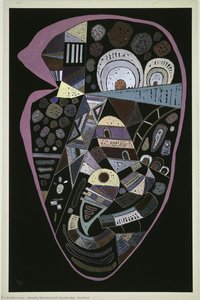
Untitled - Wassily Wassilyevich Kandinsky
 Untitled - Wassily Wassilyevich Kandinsky
In Untitled (1940), Wassily Kandinsky orchestrates a profound dialogue between shadow and spectral light, a mastery of internal illumination that secures its place among the top 25 artworks of Wassily Wassilyevich Kandinsky. Rather than relying on an external sun, the light emerges from within the composition itself, radiating from vibrant, pulsing discs that pierce through a deep, nocturnal atmosphere of purples and blacks. This use of chiaroscuro —not to define volume, but to animate abstract form—creates a sense of spiritual emergence, where the clock face and swirling circles seem to glow with an autonomous, rhythmic energy.
The interplay of these luminous shapes against the darker, velvety depths creates a multidimensional experience that transcends mere pigment. When captured in a hand-painted oil reproduction , this sophisticated tension between light and void is preserved through visible brushstrokes and rich, layered textures. Such a piece does more than decorate; it introduces a layer of intellectual luxury and temporal depth to a contemporary wall, inviting viewers to contemplate the very essence of time and emotion through Kandinsky's revolutionary visual symphony.
Model of Pannel for the Exhibit of Juryfreie: Wall B - Wassily Wassilyevich Kandinsky
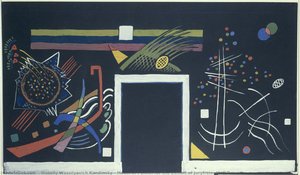 Model of Pannel for the Exhibit of Juryfreie: Wall B - Wassily Wassilyevich Kandinsky
In Model of Pannel for the Exhibit of Juryfreie: Wall B , Wassily Kandinsky does not merely apply pigment to a surface; he orchestrates a visual symphony where light acts as a profound language . Created in 1922, this gouache masterpiece functions less like a static image and more like a musical score, where vibrant circles and geometric squares dance against a deep, grounding black void. Kandinsky did not simply paint shapes; he composed them, using the stark contrast to invent a sense of internal luminosity that seems to pulse from within the canvas itself.
As one of the most significant works in our collection of the top 25 artworks of Wassily Kandinsky, this piece captures the very essence of the Bauhaus era—a period defined by the search for spiritual harmony through pure abstraction. The velvety textures and rhythmic arrangement of forms invite you to look beyond the physical plane. This light is waiting to spill into your own space, turning a simple wall into a portal of cosmic inspiration. For those seeking to bring this avant-garde energy into their homes, our museum-quality oil reproductions capture every intentional brushstroke and symbolic hue of this revolutionary vision.
Park von Saint-Cloud, Waldlichtung (Saint-Cloud Park, clearing) - Wassily Wassilyevich Kandinsky
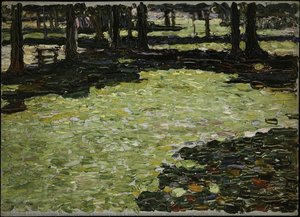 Park von Saint-Cloud, Waldlichtung (Saint-Cloud Park, clearing) - Wassily Wassilyevich Kandinsky
In Park von Saint-Cloud, Waldlichtung (Saint-Cloud Park, clearing) , one does not merely observe a landscape; one feels the warmth of a sun-drenched sanctuary. This 1907 masterpiece captures a profound sense of serenity, where the golden light filtering through an emerald canopy evokes an almost spiritual tranquility. As one of the top 25 artworks of Wassily Kandinsky , this piece serves as a vital bridge between his early Impressionist influences and his eventual descent into pure abstraction. The vibrant interplay of ochre, sapphire, and deep greens creates a psychological depth that invites the viewer to lose themselves in the forest's quiet pulse.
The painting acts as a universal mirror for the human need for peace, making it an extraordinary choice for any collector seeking to transform a personal study or living space into a zone of profound reflection. By bringing a hand-painted oil reproduction of this clearing into your home, you invite the rhythmic, emotional language of Kandinsky's early years to reside on your walls, turning a simple room into a luminous retreat of light and color.
Bild II. Gnomus (Painting II. Gnomus) - Wassily Wassilyevich Kandinsky
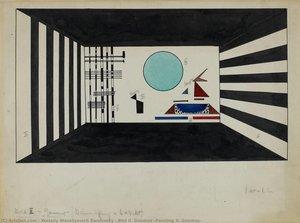 Bild II. Gnomus (Painting II. Gnomus) - Wassily Wassilyevich Kandinsky
In Bild II. Gnomus (Painting II. Gnomus) , Wassily Kandinsky invites us into a profound architectural meditation where the boundaries between physical space and spiritual dimension dissolve. Created in 1928, this masterpiece stands as a cornerstone of his geometric period, capturing a moment when the artist moved beyond mere expressionism toward a structured, cosmic language. The composition functions like a visual symphony; stark black and white lines establish a disciplined interior, yet this order is vibrantly disrupted by a singular, floating blue circle that acts as a soulful focal point.
The painting’s tension—the interplay between rigid verticality and the ethereal movement of shapes—resonates deeply with modern minimalist aesthetics. It remains a vital cultural touchstone for those seeking balance in an era of chaos. For collectors looking to bring this intellectual depth into a contemporary home, our hand-painted oil reproductions capture every precise line and tonal nuance of this 1928 treasure. Whether through the textured impasto of a custom commission or a museum-quality print, bringing Kandinsky’s inner landscape into your space offers a permanent window into the sublime.
Color Study of Squares and Circles - Wassily Wassilyevich Kandinsky
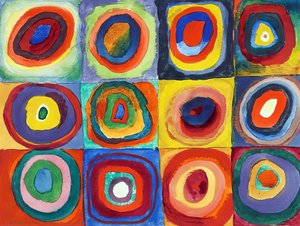 Color Study of Squares and Circles - Wassily Wassilyevich Kandinsky
In Color Study of Squares and Circles by Wassily Kandinsky, a deep, resonant blue anchors the composition, instilling a sense of profound cosmic calm amidst a whirlwind of geometric energy. This masterpiece earns its place among the top 25 artworks of Wassily Wasslyevich Kandinsky through its revolutionary use of color as a musical score; each concentric ring of pigment acts as a visual note, vibrating with what the artist called "inner necessity." The palette is a masterful dialogue between warm yellows and cool, receding blues, creating a rhythmic tension that transcends mere decoration.
For the discerning collector, integrating this work into a modern interior offers a unique opportunity to curate emotional atmosphere. The painting’s vibrant, multi-tonal scheme can serve as the focal point for a dining room, where its energetic circles stimulate conversation, or within a contemporary living space to introduce a sophisticated, intellectual light. Whether you choose a hand-painted oil reproduction to capture the tactile impasto of these geometric layers or a high-quality print, this work brings the dawn of abstraction directly into your home.
Spannung nach oben (Tension in height) - Wassily Wassilyevich Kandinsky
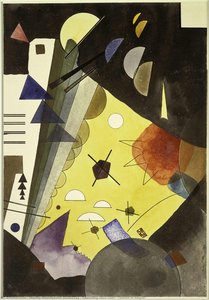 Spannung nach oben (Tension in height) - Wassily Wassilyevich Kandinsky
In Spannung nach oben (Tension in Height) , the eye is immediately drawn to the rhythmic interplay of pigment and form. To witness this 1924 masterpiece is to feel the palpable energy of Kandinsky’s brushwork, where vibrant yellows and deep blues collide against a dark, grounding void. The texture of the original work reveals a sophisticated tension; the sharp, decisive edges of geometric triangles contrast beautifully with the soft, pulsating weight of overlapping circles. This piece stands as a cornerstone in the top 25 artworks of Wassily Wassilyevich Kandinsky because it captures the precise moment his Bauhaus-era discipline met his spiritual obsession with color's emotional resonance.
At ArtsDot.com, we strive to preserve this exact tactile, three-dimensional quality. Our handmade oil reproductions are meticulously layered on cotton canvas to recreate the visible brushstrokes and impasto depth that a mere print cannot capture. For the true connoisseur, owning a reproduction of Spannung nach oben means bringing the movement, light, and historical soul of Kandinsky’s abstract revolution directly into your private collection.
Thirty - Wassily Wassilyevich Kandinsky
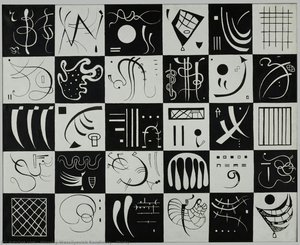 Thirty - Wassily Wassilyevich Kandinsky
Step into a silent, monochrome concerto where the air feels charged with mathematical precision. In 1937, Wassily Kandinsky composed “Thirty,” a work that strips away the vibrant chaos of his earlier years to reveal a rhythmic, skeletal beauty. The piece presents a stark, sixteen-square grid, acting as a visual staff where each cell holds a solitary, dancing note of black ink against a pristine white void. There is a profound, meditative stillness here; the bold, graphic lines and geometric motifs—circles, curves, and sharp angles—create a pulse that feels both structural and deeply spiritual.
This masterpiece transcends mere abstraction, offering a window into the artist's quest to harmonize the soul with geometry. The stark contrast of the black-and-white composition brings a sophisticated, architectural energy to any modern interior, providing a focal point of quiet prestige and intellectual depth. Whether you are seeking to inspire creative reflection or add a touch of Bauhaus-inspired elegance to your home, a hand-painted oil reproduction of this work captures the essential tension between order and chaos, making the profound legacy of Kandinsky’s abstract revolution a tangible part of your daily environment.
An Intimate Party - Wassily Wassilyevich Kandinsky
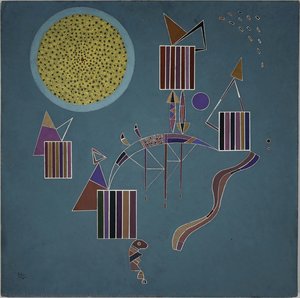 An Intimate Party - Wassily Wassilyevich Kandinsky
To encounter An Intimate Party by Wassily Kandinsky is to step into a private, celestial ritual, a work that stands as a profound testament to the artist's late-period mastery. As one of the most captivating entries in our collection of the top 25 artworks of Wassily Wassilyevich Kandinsky, this 1942 masterpiece transcends mere abstraction to become a visual symphony of the soul. The canvas is anchored by a luminous, golden orb—a sun or moon—suspended within a deep, nocturnal sea of cerulean and indigo. This cosmic center radiates energy through a rhythmic dance of sharp triangles and sturdy rectangles, suggesting a festive gathering not of figures, but of pure, geometric spirit.
The painting’s influence on modernism is undeniable, echoing the disciplined elegance of the Bauhaus movement while maintaining an intense emotional intelligence. For the sophisticated collector, this piece offers more than just aesthetic beauty; it provides a focal point of intellectual depth and timeless luxury. Whether rendered as a large-scale museum-grade oil reproduction or a delicate study, its interplay of cool blues and warm ochre brings a sense of structured serenity and historical prestige to any refined interior.
Cercle and Square - Wassily Wassilyevich Kandinsky
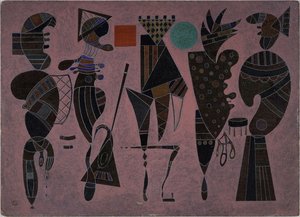 Cercle and Square - Wassily Wassilyevich Kandinsky
In Cercle and Square , Wassily Kandinsky achieves a masterful command of luminosity that transcends traditional chiaroscuro. Rather than using light to define volume through shadow, he utilizes a radiant, ethereal glow emanating from the soft pink expanse to unify his geometric figures. This internal illumination creates a sense of weightlessness, where the interplay between the circular forms and stable squares feels less like a physical arrangement and more like a celestial event. The way the light seems to permeate the very pigment ensures this work remains a cornerstone in any collection of the top 25 artworks of Wassily Kandinsky .
For the modern collector, bringing this piece into a home offers a unique opportunity to introduce a sense of spiritual lightness and sophisticated calm. When rendered as a handmade oil reproduction , the subtle textures of the brushwork capture that delicate, pulsing energy, adding profound depth and a luxurious, contemplative atmosphere to a contemporary interior. It is a timeless study in how light can transform simple geometry into a window to the infinite.
Impression III (Concert) - Wassily Wassilyevich Kandinsky
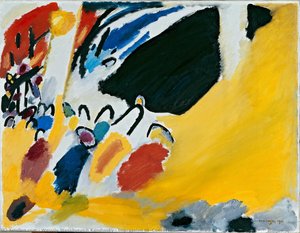 Impression III (Concert) - Wassily Wassilyevich Kandinsky
In Impression III (Concert) , Wassily Kandinsky achieves a breathtaking feat of synesthesia, translating the auditory vibrations of a musical performance into a visceral, visual language. This 1911 masterpiece stands as a cornerstone among the top 25 artworks of Wassily Wassilyevich Kandinsky because it captures the precise moment where painting broke free from the burden of representation to embrace pure emotion. The composition is anchored by a dark, stylized piano that radiates energetic arcs of yellow, blue, and red, mimicking the swell of an orchestra.
Kandinsky utilizes color not as a descriptive tool, but as a psychological force, much like the notes in Arnold Schoenberg’s compositions. This rhythmic interplay of form and hue creates a sense of spiritual movement that remains profoundly relevant in today's sensory-driven culture. For collectors seeking to bring this avant-garde energy into a modern interior, our hand-painted oil reproductions capture every spontaneous brushstroke and vibrant layer of pigment. Owning such a piece allows the dynamic, musical soul of Kandinsky’s abstraction to resonate within your own curated space.
Im Kreis (In the Circle) - Wassily Wassilyevich Kandinsky
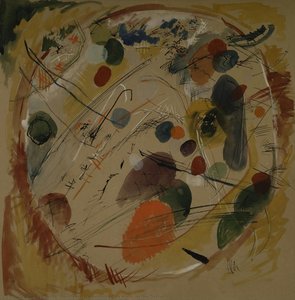 Im Kreis (In the Circle) - Wassily Wassilyevich Kandinsky
Imagine standing before a window that opens not onto a landscape, but into the very soul of color. In 1914, Wassily Kandinsky captured this ethereal threshold in Im Kreis (In the Circle) . As you gaze upon this watercolor, the heavy weight of the material world dissolves, replaced by a rhythmic dance of vibrant red circles that pulse against a luminous, airy expanse. There is no horizon line here, only a joyous explosion of blues, yellows, and oranges that seem to vibrate with the same spiritual intensity found in Wagner’s operas.
This masterpiece represents a pivotal moment in the top 25 artworks of Wassily Kandinsky, marking his definitive departure from representational forms toward pure, non-objective expression. The way the pigments overlap creates an intricate, breathing network of energy that invites deep contemplation. Bringing such a piece into a modern home offers more than mere decoration; it introduces a focal point of boundless creativity and spiritual light, transforming a quiet corner of your space into a sanctuary of abstract wonder.
Conclusion
To walk through the visual universe of Wassily Kandinsky is to witness the moment art broke free from the constraints of the physical world and began to speak directly to the soul. His masterpieces do not merely sit upon a wall; they vibrate with an eternal energy, acting as windows into a realm where color is music and form is emotion. As we reflect on these twenty-five seminal works, we see that his legacy is far more than a historical milestone in the movement of abstraction—it is a living, breathing dialogue that continues to resonate within our modern lives.
In our contemporary homes, a Kandinsky reproduction serves as more than mere decoration; it acts as a rhythmic pulse, bringing a sense of intellectual depth and spiritual movement to a quiet room. These paintings remind us that even in a world of concrete structures and digital noise, there is a profound necessity for the inner necessity that Kandinsky so passionately championed. They invite us to pause, to listen to the silent symphony of hues, and to find beauty in the non-objective, the spontaneous, and the transcendent.
Whether through the bold, geometric tensions of his later compositions or the fluid, expressive bursts of his early years, Kandinsky’s work remains a testament to the human spirit's desire to explore the unseen. We invite you to continue this journey of discovery and bring a piece of this revolutionary light into your own sanctuary by exploring our full collection . In every brushstroke of our hand-painted oils, we strive to preserve that same sense of wonder, ensuring that the cosmic dance of color and form continues to inspire generations to come.