The Allure of the Exotic: Defining the Orientalist Movement
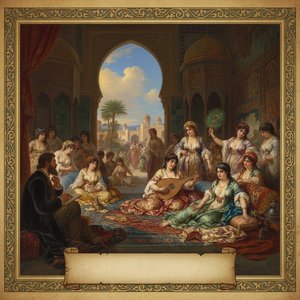
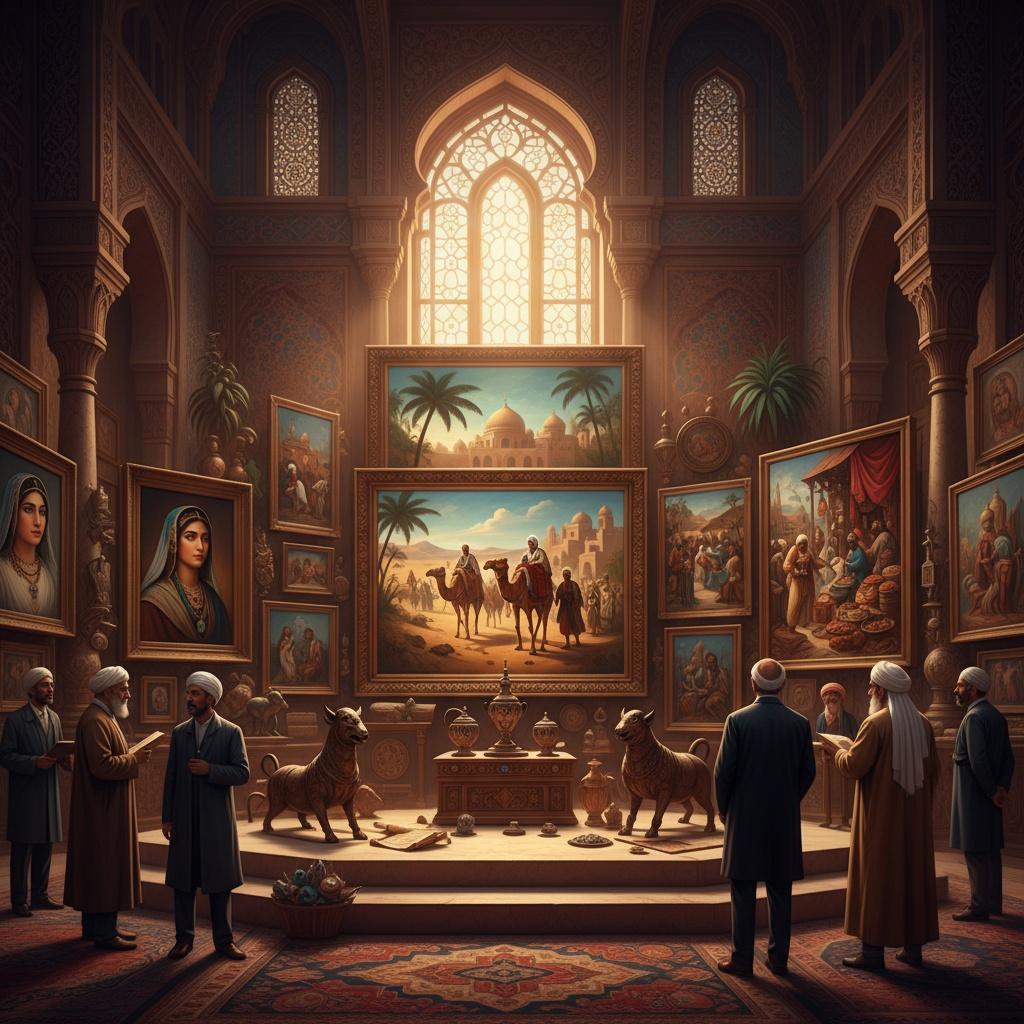
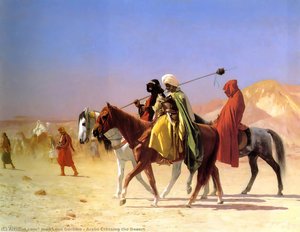
To step into the world of Orientalist painting is to wander through a dreamscape of sun-drenched marketplaces, silken draperies, and the mysterious shadows of ancient architecture. Emerging primarily in the nineteenth century, this movement was far more than a mere fascination with distant lands; it was an evocative attempt by Western artists to capture the essence of the "Orient"—a term that broadly encompassed the Middle East, North Africa, and parts of Asia. For the European eye, these regions represented a realm of timelessness, standing in stark contrast to the rapid industrialization and soot-covered landscapes of their own era. The movement was fueled by an intense curiosity about the customs, religions, and daily rhythms of cultures that felt profoundly different from the Western tradition.
This fascination was often characterized by a sense of exoticism, where the familiar elements of European life were replaced by the vibrant colors of spices, the intricate patterns of Islamic geometry, and the dramatic lighting of desert landscapes. While some viewed these depictions as windows into another world, others recognized them as highly curated fantasies. The movement thrived on the tension between reality and imagination, creating a visual language that was both deeply researched and romantically embellished. It was an era where the brushstroke served as a bridge between the known and the unknown, inviting viewers to lose themselves in a tapestry of cultural splendor.
Visions of the Orient: Key Artists and Their Masterpieces
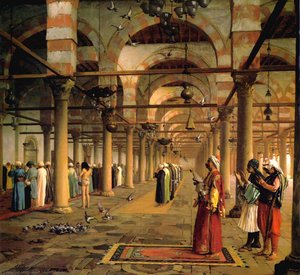
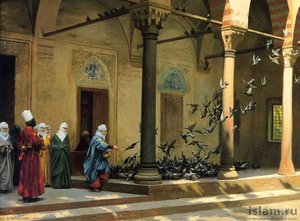
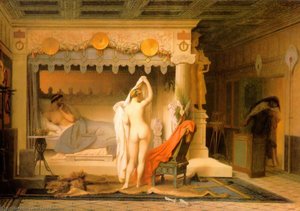
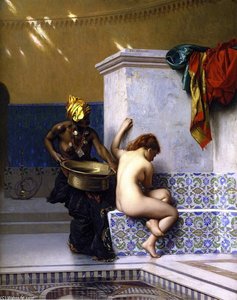
The pantheon of Orientalist masters is populated by artists who possessed an extraordinary ability to translate atmospheric light and intricate detail onto canvas. Among the most prominent was Jean-Léon Gérôme, whose academic precision brought a startling sense of realism to his scenes of much-coveted bazaars and historical vignettes. His works often possess a photographic clarity that makes the viewer feel as though they are standing amidst the dust and heat of an Egyptian street. Similarly, the works of artists like Stanislaus von Chlebowski offered profound glimpses into cultural life, capturing the dignity of subjects in scenes such as "The Circassian Guards" or the quiet solemnity of a "Mendicant at the Mosque Door."
Even the great masters of other movements were not immune to this allure. One might find traces of Orientalist influence in the dramatic chiaroscuro of Rembrandt’s self-portraits in Eastern attire, or in the vibrant, impressionistic experiments of Pierre-Auguste Renoir, whose "The Harem" reimagines Algerian themes through a soft, Parisian lens. These artists utilized different techniques—from the meticulous, smooth finish of the Academic style to the loose, light-drenched brushwork of Impressionism—to convey a shared fascination with the textures and tones of the East. Each master contributed a unique layer to this grand visual narrative, ensuring that the movement remained as diverse as the landscapes it sought to portray.
Beyond the Canvas: The Cultural and Political Nuances of Orientalism
To truly appreciate Orientalist art, one must look beneath the surface of its beautiful aesthetics to understand the complex socio-political currents that shaped it. While the paintings are undeniably captivating, they were often produced within the context of European colonial expansion. This historical reality introduces a layer of complexity that modern scholars, such as Edward Said in his seminal critique, have highlighted. The "Orient" depicted in these works was frequently a construction—a way for the West to define itself by creating an "Other" that was perceived as sensual, mysterious, or even stagnant.
This duality is what makes the study of Orientalism so intellectually stimulating for the contemporary art enthusiast. On one hand, there is the genuine artistic endeavor to document and celebrate the beauty of diverse cultures; on the other, there is the undeniable presence of a colonial gaze that often romanticized or stereotyped the subjects. Recognizing this nuance does not diminish the aesthetic power of the paintings but rather enriches our understanding of them. It allows us to view these masterpieces as historical documents that reflect both the profound human capacity for wonder and the complicated legacies of power and perception that define our shared history.
Light, Texture, and Detail: The Technical Brilliance of Orientalist Painting
The enduring impact of Orientalist art lies heavily in its technical execution. The movement demanded an unparalleled mastery of light, as artists sought to replicate the harsh, brilliant glare of the desert sun and the soft, diffused glow of twilight in a courtyard. This required a sophisticated understanding of color temperature and value. Artists employed impasto techniques to create tactile textures, allowing the viewer to almost feel the roughness of stone walls or the delicate smoothness of silk garments. The use of layered glazes allowed for a depth of color that made jewel-toned fabrics appear to glow from within.
The meticulous attention to detail was another hallmark of the genre. A single painting might contain hundreds of individual elements—from the intricate weave of a Persian rug to the subtle reflections in a brass ewer. This level of precision required immense patience and an academic foundation in drawing and composition. By focusing on these minute details, the artists were able to build immersive environments that felt lived-in and authentic. It is this technical brilliance—the marriage of light, texture, and detail—that continues to captivate collectors and art lovers today, as each brushstroke serves as a testament to the artist's dedication to capturing the ephemeral beauty of a vanishing world.
The Enduring Legacy: How Orientalism Shaped Modern Visual Narratives
Though the height of the Orientalist movement has passed, its influence remains deeply embedded in the fabric of modern visual culture. The way we perceive "exotic" landscapes in film, photography, and even contemporary digital art owes a significant debt to the visual vocabulary established by these nineteenth-century masters. The themes of discovery, the romanticization of distant lands, and the use of dramatic lighting to evoke mood are all legacies of this era. Furthermore, the movement paved the way for more nuanced cross-cultural dialogues in art, as later generations of artists moved away from colonial tropes toward a more authentic representation of global identities.
Today, we revisit these works not just as relics of a bygone era, but as profound explorations of human curiosity. They remind us of the power of art to bridge distances and to invite us into spaces far beyond our own experience. Whether through the preservation of museum masterpieces or the creation of high-quality reproductions that bring this history into modern homes, the spirit of Orientalism continues to inspire awe, reflection, and a deep appreciation for the intricate beauty of our diverse world.
At ArtsDot.com, we are dedicated to preserving this magnificent legacy. As a global leader in fine art reproduction, we specialize in bringing the "Old Masters" to life through meticulous, hand-painted oil recreations and museum-quality Giclée prints. Our artists, trained in the finest academic traditions, use premium pigments and heavy-duty cotton canvases to ensure that every brushstroke and texture of these historical masterpieces is captured with unparalleled accuracy. Whether you are looking to transform a personal memory into a classical masterpiece or wish to adorn your space with the grandeur of an Orientalist landscape, ArtsDot offers a bridge to the past, ensuring that the captivating allure of art history remains accessible to all.