Early Life and European Foundations: A Prussian Beginning
German Romanticism (German: Deutsche Romantik) was the dominant intellectual movement of German-speaking countries in the late 18th and early 19th centuries, influencing philosophy, aesthetics, literature, and criticism. Compared to English Romantici...
Julius Oskar Blümner, later known as Oscar Florianus Bluemner, emerged from the artistic landscape of late 19th-century Prussia – a world steeped in tradition yet subtly shifting towards the currents of modern thought. Born in Prenzlau in 1867, his early exposure to art wasn’t one of privileged studios but rather the practical realities of his father’s profession as a master mason. This upbringing proved surprisingly formative; the textures of stone, the play of light on architectural surfaces, and an inherent understanding of structure would later become defining characteristics of his artistic vision. Though formally trained in sketching from a young age, and even exhibiting promising watercolors by eighteen, Blümner initially pursued architecture at Berlin’s Königliche Technische Hochschule. This period instilled within him a rigorous discipline and a fascination with form that would underpin his eventual transition to painting.
However, the conservative artistic climate of Germany began to feel constricting. A desire for greater creative freedom, coupled with dissatisfaction over perceived neglect of his work, prompted a pivotal decision: immigration to America in 1892. This wasn’t merely a geographical shift; it was a symbolic departure from established norms and an embrace of the unknown – a foreshadowing of the artistic path he would forge.
The American Journey: From Architecture to Artistic Expression
Bluemner's arrival in America marked the beginning of a restless search for artistic identity. Initial years were characterized by practical necessity; he worked as a draftsman, even contributing to the ambitious World’s Columbian Exposition in Chicago. Yet, the pull towards painting remained strong. He frequented Alfred Stieglitz’s groundbreaking 291 gallery in New York, immersing himself in the burgeoning avant-garde scene and encountering works that challenged conventional aesthetics. This exposure proved transformative, igniting a passion for neoimpressionism and setting him on a course toward a uniquely personal style.
The turning point came in 1908 with his introduction to Stieglitz, who became not only a mentor but also a crucial advocate. By 1910, Bluemner had fully committed himself to painting, driven by a desire to “bring the colors of things to enormous splendor.” This wasn’t simply about replicating visual reality; it was about capturing emotional resonance through color – a belief that hues could stir feelings as powerfully as music. His early American landscapes, though influenced by European techniques, began to reflect a distinctly American sensibility, characterized by bold palettes and a raw energy.
A Symphony of Color: Bluemner’s Unique Aesthetic Language
 friedrich julius oskar blümner
Explore the vibrant landscapes & bold colors of Oscar Bluemner (1867-1938), a key American Modernist bridging European art with uniquely American themes.
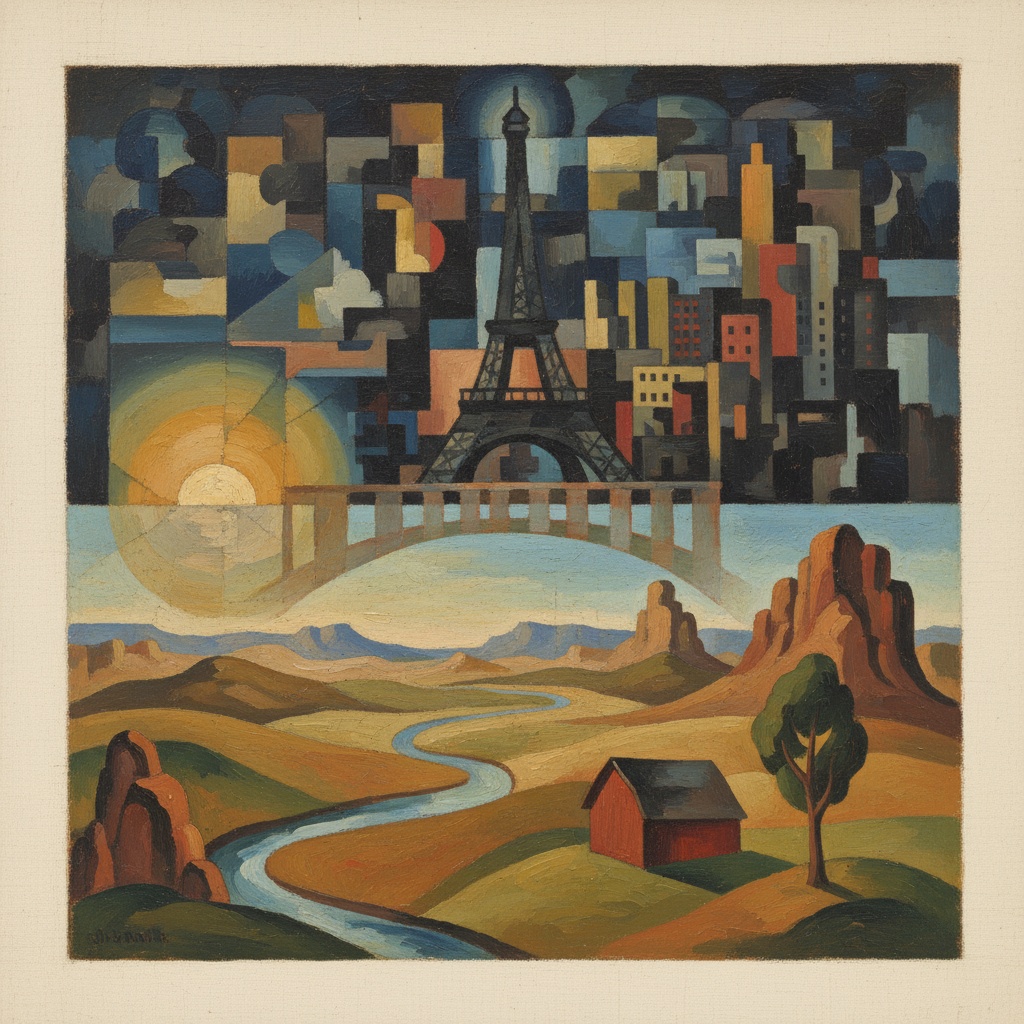
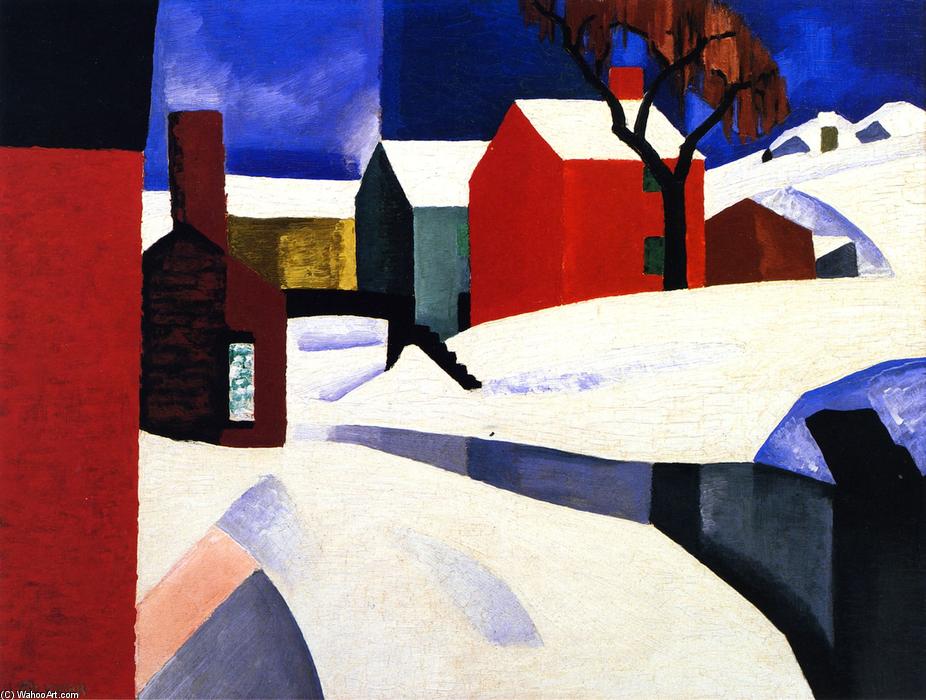
Bluemner's artistic language was profoundly idiosyncratic, blending elements of Cubism, Expressionism, and Impressionism into something wholly his own. He wasn’t bound by the strictures of any single movement; instead, he synthesized them to create a visual vocabulary that prioritized emotional impact over precise representation. His paintings are often characterized by prismatic forms, architectonic structures, and intensely saturated colors – a testament to his architectural background and his fascination with color theory.
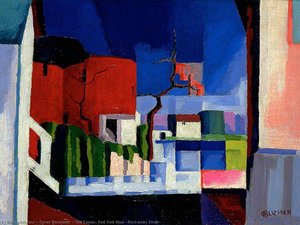
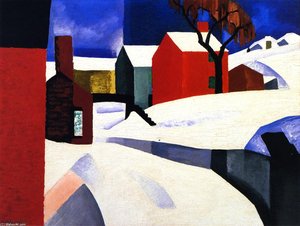
He developed a personal system of symbolism, associating specific colors with psychological states. This wasn’t arbitrary; it was rooted in a deep understanding of the emotional power of hue. For Bluemner, red represented vitality and passion, while blues evoked introspection and melancholy. Works like “Rosy Light” (1927) exemplify this approach, using vibrant sunset tones to illuminate not just a charming house and landscape but also a sense of warmth and nostalgia. Similarly, “South Peterson Snow” (1927), with its Cubist-inspired geometry and bold color contrasts, evokes isolation and a unique perspective on the stark beauty of winter.
Navigating Isolation and Innovation: Themes in Bluemner's Work
 South Peterson Snow
Experience the stark beauty of winter with Friedrich Blümner's 'South Peterson Snow.' This Cubist-inspired landscape uses bold colors & geometric shapes to evoke isolation and a unique perspective.
Despite his artistic vision, Bluemner’s path was often marked by struggle. For nearly a decade after his 1915 exhibition at Stieglitz’s gallery, he faced financial hardship and critical indifference. This isolation profoundly influenced his work, leading him to explore themes of duality, loneliness, and the search for meaning in a rapidly changing world.
His paintings frequently feature houses and trees as symbolic representations of opposing forces – “Ego” versus “Altera,” or self versus other. “Sunset, Gutenberg” (1927) captures this sense of contemplation, depicting a radiant sunset over a rural scene that feels both idyllic and melancholic. Even in his later works, such as those created after the death of his wife in 1926, Bluemner continued to grapple with these themes, using color and form to express grief, loss, and the enduring power of memory. He adopted the pseudonym “Florianus” – meaning ‘flower’ or ‘blossom’ – a poignant attempt to find beauty amidst sorrow.
Bluemner's Legacy: Influence and Recognition in Modern Art
Though largely overlooked during his lifetime, Oscar Bluemner is now recognized as a pivotal figure in American Modernism. His unique synthesis of European influences with distinctly American themes paved the way for subsequent generations of artists. He bridged the gap between abstraction and representation, creating works that are both visually striking and emotionally resonant.
His influence can be seen in the work of numerous contemporary painters who share his fascination with color, form, and symbolism. Bluemner’s commitment to expressing personal emotion through art continues to inspire artists today. His paintings offer a powerful glimpse into the complexities of the human experience – a testament to his enduring artistic vision.
Exploring Bluemner's Works Today: A Contemporary Perspective
Today, Oscar Bluemner’s works are held in major museum collections across the United States, including the National Gallery of Art and the Whitney Museum of American Art. Viewing these paintings through a contemporary lens reveals their remarkable prescience and enduring relevance. His exploration of isolation, duality, and the search for meaning resonates deeply with modern audiences grappling with similar themes.
ArtsDot.com offers a unique opportunity to experience the beauty and power of Bluemner’s art firsthand. Through high-quality reproductions, you can bring his vibrant landscapes and bold colors into your own home, allowing you to connect with this remarkable artist on a personal level. Explore our collection today and discover the captivating world of Oscar Bluemner – a true pioneer of American Modernism.