

The Historical Roots of Self-Portraiture: From Renaissance Masters to Early Photography
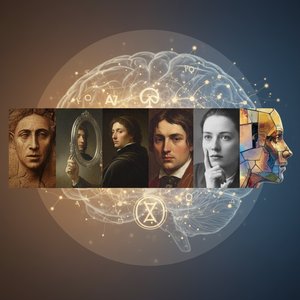
For centuries, the human face has been a canvas for self-understanding, a mirror reflecting not just physical likeness but also the intricate landscapes of the inner world. While depictions of humanity stretch back into the mists of prehistory – the haunting handprints in cave paintings at Lascaux being perhaps the earliest expressions of “I am here” – it was during the Renaissance that self-portraiture truly blossomed as a distinct genre. This wasn’t merely a technical evolution; it was a shift in consciousness, fueled by a burgeoning humanist spirit and the increasing availability of mirrors capable of offering more than fleeting glimpses. Artists like Jan van Eyck, with his meticulous detail and psychological acuity, began to incorporate self-likenesses into larger works, often subtly embedded within religious scenes or as witnesses to pivotal events. But it was in the 17th century that the practice truly took hold, propelled by masters such as Rembrandt van Rijn. His numerous self-portraits—nearly one hundred are attributed to him—are not simply studies of appearance; they are profound investigations into aging, emotion, and the very nature of artistic creation. Each brushstroke seems to carry a weight of introspection, revealing a man grappling with both his craft and the complexities of life. The quiet dignity found in Jean-Baptiste-Siméon Chardin’s 1775 self-portrait drawing offers a contrasting yet equally compelling perspective—a glimpse into the artist's life through masterful chiaroscuro and understated elegance. These early explorations laid the groundwork for everything that would follow, establishing self-portraiture as a powerful means of artistic expression and self-discovery.
Cindy Sherman and the Deconstruction of Identity Through Photographic Performance
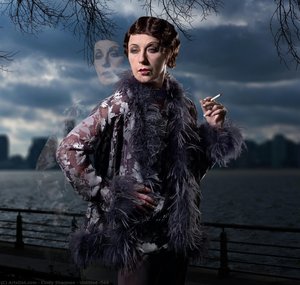
The 20th century witnessed a radical upheaval in artistic conventions, and no figure challenged traditional notions of identity more profoundly than Cindy Sherman. Her groundbreaking ‘Untitled Film Stills’ series, begun in the late 1970s, wasn't about *being* herself; it was about *becoming* characters—archetypes culled from the vast archive of cinematic history. Sherman meticulously constructed personas, adopting different guises and settings to explore the constructed nature of female stereotypes as presented in media. These weren’t self-portraits in the traditional sense; they were performances, carefully staged photographs that questioned the authenticity of images and the very idea of a fixed identity. She didn't seek to reveal her “true” self but rather to expose the performative aspects of being female in a society saturated with visual representations. Sherman’s work is pivotal because it highlighted how images are not neutral reflections of reality but actively shape our perceptions, influencing how we see ourselves and others. This deconstruction paved the way for a broader acceptance of artistic manipulation and self-insertion as legitimate forms of expression, challenging the very foundations of portraiture.
Digital Manipulation & The Rise of Self-Insertion: Tools, Techniques, and Accessibility
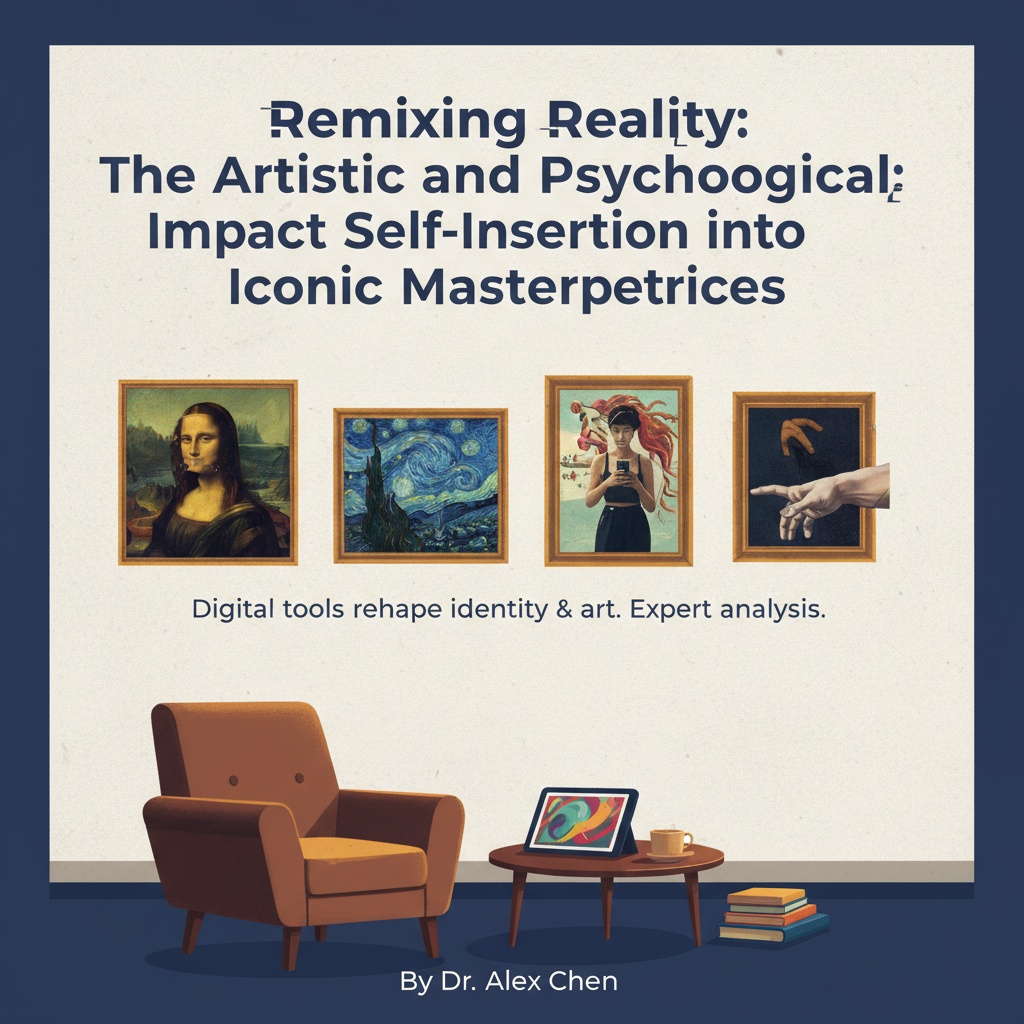
The advent of digital art tools has irrevocably altered the landscape of image creation, democratizing access to techniques once reserved for a select few. Software like Adobe Photoshop, initially a tool for professional photographers and graphic designers, is now widely accessible, empowering anyone with a computer and an internet connection to seamlessly alter photographs and insert themselves into existing imagery. This accessibility has led to a proliferation of self-insertion projects, ranging from playful personal experiments—a whimsical addition to a famous painting—to more ambitious artistic endeavors that explore complex themes of identity and belonging. The techniques employed vary in complexity, from simple layering and masking to sophisticated color correction and blending modes designed to create convincing illusions. While some manipulations are purely aesthetic, others involve intricate digital painting or 3D modeling to achieve a seamless integration with the original artwork. However, this ease of manipulation also raises critical questions about authenticity and the blurring lines between reality and fabrication—a concern that has been debated extensively in art circles (as explored in discussions surrounding photograph alteration).
Psychological Motivations: Why We Insert Ourselves into Iconic Artworks
The impulse to insert oneself into a masterpiece is rarely a purely aesthetic one. Beneath the surface lies a complex web of psychological motivations, rooted in our deepest desires and aspirations. At its core, self-insertion can be interpreted as a yearning for agency—a desire to rewrite history, to claim a place within narratives that have traditionally excluded us. It’s an act of self-empowerment, a way of asserting one's presence and challenging established hierarchies. For many, it’s about connection—a longing to commune with artists they admire, to inhabit the worlds they created, or to participate in moments of cultural significance. The act also speaks to our inherent need for recognition and validation—a desire to be seen, remembered, and celebrated. By placing ourselves within iconic artworks, we are not simply altering images; we are constructing narratives about who we are and who we aspire to be.
The Selfie as a Modern Self-Portrait: Continuity and Change in an Age of Social Media
In the digital age, the selfie has emerged as the dominant form of self-portraiture—a ubiquitous practice that permeates every corner of social media. With 93 million selfies reportedly taken each day, it’s easy to dismiss this phenomenon as a superficial expression of narcissism. However, to do so would be to overlook its deep historical roots. The act of capturing one's own image, of presenting oneself to the world, is an impulse that stretches back centuries—to Rembrandt’s introspective studies and beyond. What distinguishes the selfie is not the act itself but rather its scale, speed, and accessibility. Unlike traditional self-portraits, which required time, skill, and often significant resources, selfies can be created and shared instantly with a global audience. This immediacy has democratized the practice, allowing anyone to become an artist and curator of their own image. Yet, this ease also comes with its challenges—the pressure to conform to unrealistic beauty standards, the constant pursuit of validation through likes and comments, and the potential for manipulation and misrepresentation.
Beyond the Filter: Contemporary Artists Challenging Norms with Digital Manipulation
While selfies often represent a more mainstream expression of self-portraiture, contemporary artists are pushing the boundaries of digital manipulation in increasingly innovative and thought-provoking ways. Artists like Veronika Bromová utilize Photoshop to create striking images that explore themes of feminism, identity, and desire, challenging conventional notions of beauty and sexuality. Her work is often provocative and unsettling, forcing viewers to confront uncomfortable truths about power dynamics and societal expectations. Cindy Sherman continues to evolve her practice, experimenting with new technologies and formats to deconstruct the image in ever more complex ways. These artists are not simply creating visually arresting images; they are engaging in a critical dialogue with the medium itself—questioning its limitations, exposing its biases, and reimagining its possibilities. They remind us that digital manipulation is not merely a tool for self-enhancement but also a powerful means of artistic expression, social commentary, and cultural critique. At ArtsDot.com, we celebrate this spirit of innovation by offering both meticulously crafted reproductions of classic masterpieces and the opportunity to create your own unique artworks—whether through custom paintings from your personal photos or explorations of digital art techniques.