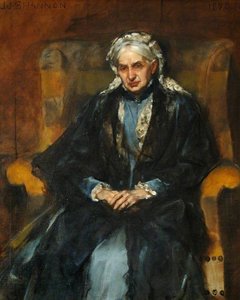
Early Life & Training: The Foundations of Shannon’s Artistic Vision
Sir James Jebusa Shannon (3 February 1862 – 6 March 1923) was an Anglo-American artist. In 1886 he married Florence Mary Cartwright (d. 1948), with whom he had an only child, the illustrator Kitty Shannon (1887–1974). == Life == Shannon was born i...
Sir James Jebusa Shannon, a name synonymous with the refined elegance of late Victorian portraiture, embarked on an artistic journey that spanned continents and styles. Born in Auburn, New York, in 1862, his early life was marked by a familial encouragement of creativity – a foundation crucial to his later success. However, it wasn’t long before the family relocated to St. Catharines, Ontario, Canada, setting the stage for a formative period that would ultimately propel him towards the artistic heart of Europe. At sixteen, Shannon made the pivotal decision to journey to England, seeking formal training at South Kensington – now the Royal College of Art – a prestigious institution brimming with burgeoning talent and steeped in academic tradition. This move wasn’t merely geographical; it was a deliberate immersion into a world where classical techniques reigned supreme. After three years of dedicated study, Shannon distinguished himself by winning the gold medal for figure painting, an early indication of his exceptional skill and potential. His initial success with a portrait of Hon. Horatia Stopford at the Royal Academy in 1881 served as a powerful catalyst, solidifying his ambition to establish himself within London’s competitive art scene.
The Rise to Prominence: Capturing Victorian Society's Elegance
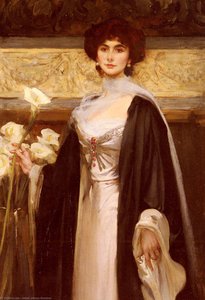
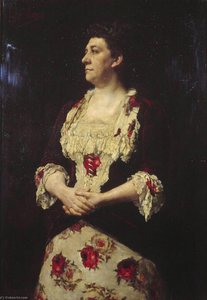 Untitled (AQRCP4)
Exquisite portrait by Sir James Jebusa Shannon (1884). Admire this classical, romantic academic realism featuring a dignified woman in warm tones. A stunning example of Victorian art.
Shannon’s ascent within the Victorian art world was remarkably swift. He quickly became sought after for his ability to not only capture a likeness but also to convey the personality and social standing of his sitters – qualities highly valued by the upper echelons of British society. The late 19th century witnessed a burgeoning middle class eager to emulate aristocratic traditions, and portraiture served as a powerful symbol of status and refinement. His breakthrough work, “Miss Kitty” (1887), garnered significant acclaim, securing his place in the Chantrey Bequest Collection – a prestigious honor that opened doors to numerous commissions. This period saw Shannon become intimately connected with influential circles like ‘The Souls’, a group known for their aesthetic sensibilities and patronage of the arts. Violet Manners, Marchioness of Granby, became a particularly enthusiastic supporter, commissioning multiple portraits and introducing him to her network of discerning clients. By 1891, he was among the founding members of the Society of Portrait Painters, further cementing his position as a leading figure in the London art establishment.
Technique & Style: Realism, Romanticism, and the Aesthetic Movement Influence
Aestheticism (also known as the aesthetic movement) was an art movement in the late 19th century that valued the appearance of literature, music, fonts, and the arts over their functions. According to Aestheticism, art should be produced to be beauti...
Shannon’s artistic style wasn't easily categorized; it represented a compelling synthesis of realism and romanticism, deeply rooted in his classical training yet infused with contemporary influences. His admiration for 17th-century Dutch and Flemish masters – Rembrandt and Vermeer foremost among them – is evident in his masterful use of light and shadow, creating depth and drama within his compositions. He skillfully employed *chiaroscuro*, a technique that lent his portraits a timeless quality, drawing the viewer’s eye to the subject's face and inner life. However, Shannon wasn’t solely focused on technical precision. He was profoundly affected by the Aesthetic Movement, which championed “art for art’s sake,” prioritizing beauty and harmony over moral or didactic purposes. This ethos is particularly visible in his portraits of women and children, where delicate brushwork and soft color palettes evoke a dreamlike atmosphere. His attention to detail extended beyond the figures themselves; he meticulously rendered textures – silk, velvet, lace – and intricate patterns within settings, enriching the overall visual experience.
Portraits as Social Commentary: Decoding Shannon’s Depictions of Character
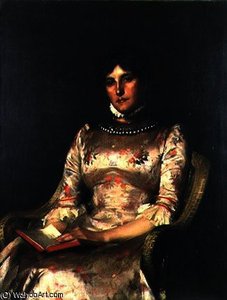
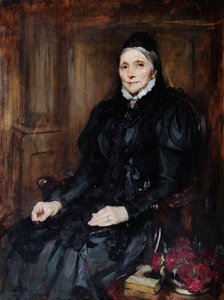 Emilie Michaelis
Elegant portrait by Sir James Jebusa Shannon of Emilie Michaelis, a pioneering educator. Realistic brushwork & rich textures depict an elderly woman in dignified repose. Victorian art.
While celebrated for their beauty and technical skill, Shannon's portraits offer more than mere aesthetic pleasure. They provide a fascinating glimpse into Victorian society, subtly revealing its values, aspirations, and complexities. His subjects weren’t simply posed; they were *presented* – carefully constructed representations designed to convey specific messages about status, intellect, and character. Consider his portrait of Emilie Michaelis, a pioneering educator. The realistic brushwork and rich textures depict an elderly woman in dignified repose, but the painting also celebrates her intellectual achievements and independent spirit—a progressive portrayal for its time. Even seemingly straightforward portraits like “The Floral Dress” reveal nuances; the muted browns and reds create a sense of intimacy and quiet contemplation, suggesting a depth beyond surface appearances. Shannon’s ability to capture these subtle layers of meaning elevated his work from simple representation to insightful social commentary.
Shannon’s Circle & Legacy: Holland Park and a Lasting Impact on Portraiture
Shannon's life wasn’t confined solely to the studio; he was an integral part of a vibrant artistic community centered around Holland Park in Kensington. Living next door to Lord Leighton, whose opulent home served as a hub for artists and intellectuals, Shannon fostered close relationships with fellow painters like George Prinsep and Valerian Fildes. His own house, designed by W.E.F Brown, became renowned for its luxurious interiors and convivial atmosphere – a space where art, music, and conversation flourished. He was known as the “life and soul” of any gathering, his sociable personality attracting commissions and solidifying his reputation. Though he faced personal challenges later in life—including being named as co-respondent in a divorce case—his artistic legacy remains secure. Shannon’s influence can be seen in the work of subsequent portrait painters who sought to balance technical mastery with psychological insight. His paintings continue to captivate audiences today, offering a window into a bygone era and reminding us of the enduring power of art to capture not just appearances but also the essence of the human spirit. Explore the timeless beauty of Sir James Jebusa Shannon’s work at ArtsDot.com, where high-quality reproductions allow you to bring his masterpieces into your own home.