The Rise of Aestheticism: A Cultural Context
Aestheticism (also known as the aesthetic movement) was an art movement in the late 19th century that valued the appearance of literature, music, fonts, and the arts over their functions. According to Aestheticism, art should be produced to be beauti...
The late nineteenth century, a period often romanticized as the Fin de Siècle, was one of profound societal shifts and artistic rebellion. A reaction against the utilitarian pragmatism of the Victorian era, Aestheticism emerged not merely as an art movement but as a philosophy – a deliberate embrace of beauty for its own sake, divorced from moral or didactic concerns. This wasn’t simply about rejecting ugliness; it was a radical assertion that art needed no justification beyond its inherent loveliness. The Industrial Revolution had brought unprecedented material wealth, yet also a sense of spiritual emptiness and alienation. In this climate, artists and writers sought refuge in the sensual pleasures of form, color, and texture, creating a world of refined escapism. The movement’s core tenet – “art for art's sake” – became a rallying cry, challenging the established norms that demanded art serve a purpose beyond aesthetic contemplation. This intellectual ferment provided fertile ground for artists like Charles Haslewood Shannon, who would become synonymous with the elegance and enigmatic allure of the era.
Shannon's Early Influences & Artistic Formation
Charles Haslewood Shannon (1863-1937) was a product of this burgeoning aesthetic sensibility. Born in Lincolnshire, his artistic journey began with formal training at the City and Guilds of London Art School, but it was his enduring partnership with Charles Ricketts that truly shaped his vision. Ricketts, a painter, illustrator, and designer, shared Shannon’s passion for classical form and meticulous craftsmanship. Together, they immersed themselves in the study of Venetian masters – Giorgione, Titian, and Veronese – whose luminous colors and evocative compositions profoundly influenced Shannon's style. This Italianate influence is readily apparent in his early work, characterized by a rich, low tonality that gradually evolved into a brighter, more transparent palette. Shannon’s dedication to draughtsmanship was unwavering; he believed in the fundamental importance of line and form as the foundation for all artistic expression. He wasn't merely copying styles but absorbing principles – the subtle gradations of light, the delicate rendering of textures, and the ability to convey a sense of atmosphere through paint.
Portraiture as Symbol: Capturing Identity and Mood
While Shannon excelled in various mediums, it is his portraits that remain his most celebrated achievement. However, these were not conventional likenesses; they were carefully constructed symbols, designed to reveal the inner life of the sitter rather than simply record their physical appearance. He sought to capture a fleeting moment of psychological insight, often employing dramatic lighting and layered textures to create an air of mystery and introspection. Consider his portrait of Robert Gregory, a somber depiction of the artist at work, where the interplay of light and shadow emphasizes the weight of creative endeavor. Or examine works like “Nymphe Dormant”, which transcends mere representation to become an embodiment of mythological beauty and languid sensuality. Shannon’s portraits weren't about social status or outward appearance; they were explorations of character, mood, and the ephemeral nature of human experience. He imbued his subjects with a quiet dignity and a sense of timelessness, elevating portraiture from a mere commission to an art form capable of profound emotional resonance.
Lithography and the Exploration of Form and Texture
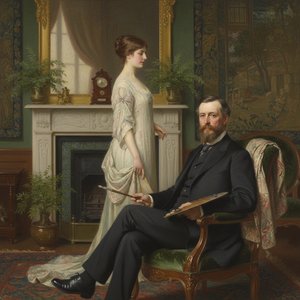
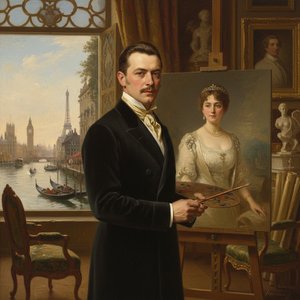
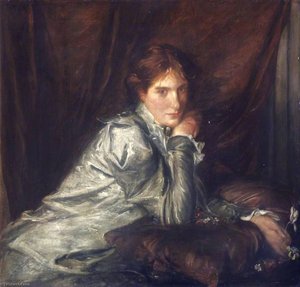
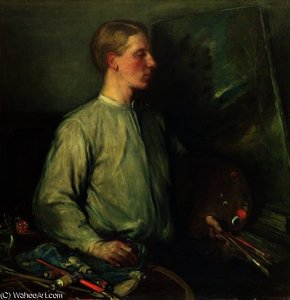 Robert gregory
A somber portrait by Charles Haslewood Shannon (1863-1937) captures an artist at work. Explore this realistic oil painting's dramatic lighting & layered textures – a glimpse into late 19th-century British art.
Beyond oil painting, Shannon demonstrated exceptional skill in lithography, a medium that allowed him to explore his fascination with form and texture in new ways. He became one of the finest lithographic artists of his generation, producing over 109 works that showcase his mastery of tonal values and delicate line work. His lithographs often depict figures on the seashore, bathers, or women preparing for the day – intimate scenes imbued with a romantic and enigmatic quality. He frequently experimented with different colored inks—red-browns and dark greens alongside black—to create subtle variations in mood and atmosphere. Shannon’s use of lithography wasn't simply about replicating paintings; it was about exploiting the unique qualities of the medium to achieve effects that were impossible with other techniques. The process allowed for a greater degree of nuance and control, enabling him to capture the delicate play of light on skin or the subtle folds of fabric with remarkable precision.
Shannon’s Circle: Ricketts, Pater, and the Fin-de-Siècle Salon
Charles Haslewood Shannon did not operate in isolation. His artistic development was deeply intertwined with a vibrant circle of intellectuals and aesthetes, most notably his lifelong partner Charles Ricketts and the influential critic Walter Pater. Together, Shannon and Ricketts founded “The Dial,” an art journal that became a crucial platform for promoting Aesthetic ideas and showcasing new talent. They also established The Vale Press, renowned for its beautifully illustrated books – including a celebrated edition of Daphnis and Chloe—that exemplified their commitment to craftsmanship and refined design. Their salon in Chelsea attracted leading figures from the artistic and literary worlds, fostering a stimulating exchange of ideas and challenging conventional norms. Pater’s writings on Renaissance art profoundly influenced Shannon's aesthetic sensibility, encouraging him to seek beauty in all its forms and to embrace the subjective experience of art. This network of collaborators and admirers helped shape Shannon’s career and solidify his position as a leading voice within the Fin-de-Siècle movement.
Legacy and Enduring Appeal of a Master Portraitist
Charles Haslewood Shannon's work continues to captivate audiences today, not only for its technical brilliance but also for its enduring emotional resonance. His portraits offer a glimpse into a bygone era—a world of refined elegance, subtle sensuality, and quiet introspection. His influence can be seen in the works of subsequent generations of artists who sought to capture the inner life of their subjects with similar sensitivity and nuance. While his career was tragically cut short by illness in 1928, leaving him unable to continue painting due to neurological damage, his legacy remains secure. His lithographs and etchings are held in major collections worldwide, including the British Museum and the Berlin print rooms, while his portraits grace the walls of prestigious institutions like the Tate Gallery. At ArtsDot.com, we are proud to offer high-quality reproductions of Shannon’s masterpieces, allowing art enthusiasts to experience the beauty and sophistication of his work firsthand. Explore our collection today and discover the timeless allure of a true master portraitist.