Early Life & Artistic Foundations: From Legal Aspirations to Royal Academy Promise
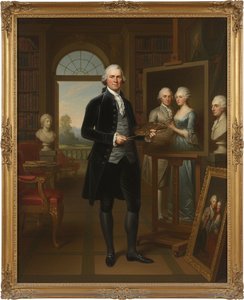
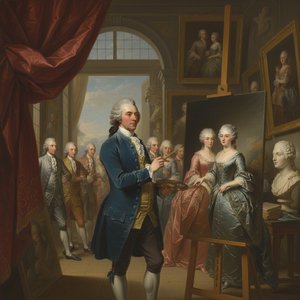
The story of Sir William Beechey is, at first glance, a conventional tale of artistic ambition overcoming societal expectations. Born in 1753 in the quaint Oxfordshire village of Burford, young William was initially destined for a life amongst legal documents rather than palettes and brushes. His parents’ early deaths cast him into the care of his uncle Samuel, a solicitor determined to see the boy follow in his footsteps. For a time, Beechey dutifully apprenticed himself to conveyancing, but fate – or perhaps an irrepressible creative spirit – had other plans. The seeds of artistic inclination were sown early, nurtured by a quiet rebellion against the pragmatic world laid out for him. He possessed an innate visual sensitivity that found little outlet in the precise language of law. This nascent talent eventually led him to London in 1772 and the hallowed halls of the Royal Academy Schools, where he began formal training under Johan Zoffany, a painter known for his lively conversation pieces and refined technique.
Beechey’s early works reflect this formative period. Small-scale full-length portraits and intimate group scenes bear the unmistakable influence of Zoffany – delicate compositions, careful attention to detail, and a generally lighthearted approach. These initial efforts, while not yet possessing the distinctive character that would later define his style, demonstrated a promising aptitude for capturing likeness and conveying personality. His admission to the Royal Academy in 1776 marked a pivotal moment, signaling a commitment to a life dedicated to art and setting him on a path toward establishing himself within the competitive London art world.
The Rise of a Portraitist: Establishing a Style in Norwich and London
Before achieving widespread recognition in London, Beechey embarked on a period of provincial practice in Norwich. This sojourn proved invaluable, allowing him to hone his skills through consistent commissions and cultivate a local clientele. He secured portraits of prominent figures like John Wodehouse, demonstrating an ability to capture the dignity and status of his sitters. More significantly, he undertook a series of civic portraits for St. Andrew’s Hall in Norwich – works that not only provided financial stability but also allowed him to experiment with larger-scale compositions and develop a more confident handling of form and color.
By 1787, Beechey returned to London, armed with increased experience and a growing reputation. The following years witnessed the gradual emergence of his signature style – a refined Neoclassical approach characterized by elegant poses, subtle lighting, and a restrained palette. His 1789 portrait of John Douglas, Bishop of Carlisle, now residing in Lambeth Palace, proved to be a watershed moment. It showcased a mastery of technique that aligned perfectly with the prevailing aesthetic sensibilities of the time – a blend of Reynoldsian grace and a growing emphasis on psychological realism. This marked Beechey’s transition from a promising talent to a sought-after portraitist capable of capturing not just appearance, but also character.
Royal Patronage & the Height of Beechey’s Career: Painting for Queen Charlotte and Beyond
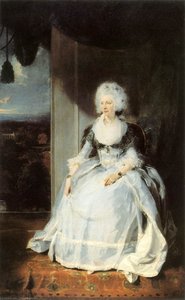
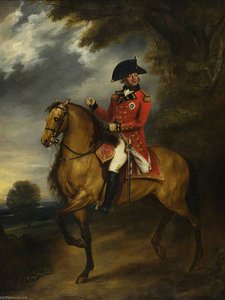
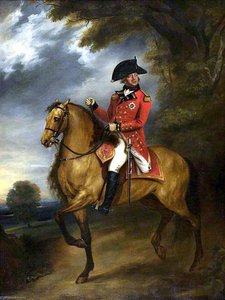
The year 1793 proved transformative. Beechey received the prestigious commission to paint a full-length portrait of Queen Charlotte, an event that catapulted him into the inner circles of royal patronage. This appointment not only secured his financial future but also established him as *the* official portrait painter to Her Majesty. The queen’s favor opened doors to a flood of commissions from other members of the royal family and the aristocracy – a testament to Beechey's ability to flatter, impress, and capture the essence of power and privilege.
His election as an associate member of the Royal Academy that same year further solidified his position within the artistic establishment. The subsequent years were marked by a relentless stream of royal portraits exhibited annually at the Academy – each one meticulously crafted to convey status, dignity, and refined taste. Beechey’s ability to navigate the complex demands of royal portraiture – balancing accuracy with idealization, formality with personality – was exceptional. He understood that these paintings weren't merely representations of individuals; they were carefully constructed symbols of power, lineage, and national identity.
Beyond Royalty: Capturing the Nobility, Naval Heroes, and Intellectual Elite
While royal commissions formed the cornerstone of Beechey’s success, his talent extended far beyond the confines of the palace. He skillfully captured the likenesses of a diverse array of sitters – from prominent members of the nobility to celebrated naval heroes like John Jervis, 1st Earl St Vincent, and influential intellectuals. His portrait of Lord St Vincent, painted in 1807, exemplifies his ability to convey strength, authority, and unwavering determination. The composition is masterful, utilizing dramatic lighting and a carefully chosen background to emphasize the admiral’s military prowess.
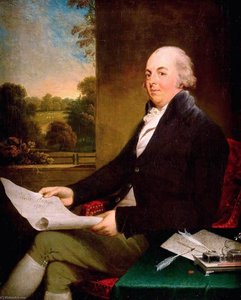
Beechey wasn't simply a recorder of appearances; he was an interpreter of character. His portraits of Henry Halford, 1st Bt, for example, reveal a man of intellect and gravitas – a neoclassical masterpiece showcasing dramatic chiaroscuro and symbolic details that hint at the sitter’s profession and personality. He possessed a remarkable ability to imbue his subjects with a sense of presence, capturing not just their physical features but also their inner lives. This talent made him a favorite amongst those seeking portraits that transcended mere representation.
Beechey's Artistic Legacy: Technique, Influence, and a Lasting Impression
Sir William Beechey’s career spanned half a century, leaving behind a substantial body of work that continues to captivate audiences today. His technique – characterized by elegant brushwork, subtle color harmonies, and a refined attention to detail – reflects the influence of Reynolds and Zoffany, yet possesses a distinctive character all its own. He excelled at capturing the textures of fabrics, the sheen of skin, and the nuances of expression.
While perhaps overshadowed by some of his more flamboyant contemporaries like Lawrence and Hoppner, Beechey’s influence was nonetheless significant. His portraits served as models for aspiring artists, and his commitment to classical principles helped shape the aesthetic landscape of Georgian England. His later works, dating from around 1813 onwards – following appointments as portrait painter to Prince William Frederick, Duke of Gloucester and Edinburgh, and ultimately principal portrait painter to William IV – demonstrate a renewed vibrancy in color and technique. Though he faced periods of fluctuating favor with George III, his dedication to his craft never wavered. Beechey’s legacy lies not only in the exquisite beauty of his paintings but also in his ability to capture the spirit of an era – a testament to the enduring power of portraiture.
Explore the timeless elegance and historical significance of Sir William Beechey's masterpieces with ArtsDot.com, where each reproduction is meticulously handcrafted to preserve the artistry and detail of the original works. Discover your own connection to this celebrated British painter and bring a touch of Georgian sophistication into your home.