Early Life and Danish Roots: Forming an Artistic Foundation
 Wikipedia: Emil Carlsen
Soren Emil Carlsen (October 19, 1848, Copenhagen, Denmark – January 2, 1932, New York City, U.S.) was an American Impressionist painter who emigrated to the United States from Denmark. He became known for his still lifes. Later in his career, Carlsen...
Søren Emil Carlsen’s artistic journey began not amidst the burgeoning art scenes of America, but within the established traditions of Copenhagen, Denmark. Born in 1848, he was immersed in a culture steeped in artistic heritage – though perhaps not one immediately destined for him. His initial path led towards architecture at the Royal Danish Academy, a pursuit that instilled in him a keen understanding of form, structure, and spatial relationships, qualities that would later profoundly influence his paintings. However, it was within the studios of his cousin, a prominent figure in the Danish art world, that Carlsen first truly encountered the allure of paint and canvas. This familial connection proved pivotal, nurturing an early fascination with capturing light and shadow – a nascent talent that hinted at the artist he would become.
The Denmark of Carlsen’s youth was undergoing a period of artistic awakening, yet it remained largely tethered to established European styles. While the seeds of Impressionism were beginning to sprout across the continent, Danish art retained a strong sense of realism and meticulous detail. This early exposure to rigorous technique would become a defining characteristic of Carlsen's work, even as he embraced more expressive approaches later in his career. The Nordic landscape itself – its subtle shifts in light, its muted color palettes, and its inherent melancholic beauty – also left an indelible mark on the young artist’s sensibility.
The Transition to American Shores: Carlsen’s Arrival and Initial Struggles
--- title: Biographical Note | A Finding Aid to the Emil Carlsen and Carlsen family photographs, circa 1885-circa 1930, bulk 1910-1930 | Archives of American Art, Smithsonian Institution url: https://www.aaa.si.edu/collections/emil-carlsen-and-carlse...
In 1872, a significant decision altered the course of Carlsen's life. He immigrated to the United States, settling in Chicago at a time when the city was rapidly rebuilding after the Great Fire. This move wasn’t simply a geographical shift; it represented a leap into an entirely new artistic ecosystem. Initially, he found work as an architectural assistant, but his passion for painting remained undeterred. He quickly sought mentorship from Lauritz Holst, another Danish marine painter who had established himself in Chicago, further honing his skills and absorbing the nuances of American landscape traditions.
However, the path to recognition was far from smooth. Despite possessing a clear talent and diligent work ethic, Carlsen faced considerable challenges establishing himself as an artist in America. The art market proved fickle, and early attempts to sell his paintings met with limited success. This period of struggle led him to Paris in 1875, seeking further training and inspiration. It was there, under the influence of Jean-Baptiste-Siméon Chardin – a master of still life painting – that Carlsen began to refine his signature style, embracing a quiet intimacy and meticulous realism that would become his hallmark.
Mastering Still Life: A Pursuit of Realism and Impressionistic Flair
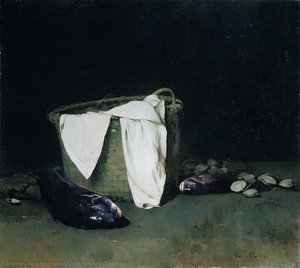
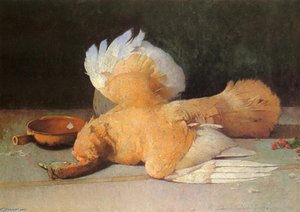 Still Life with Dead Game
Explore Soren Emil Carlsen’s "Still Life with Dead Game" (1895). A poignant oil painting of mortality & decay, blending realism & impressionism. Discover this unique artwork's beauty.
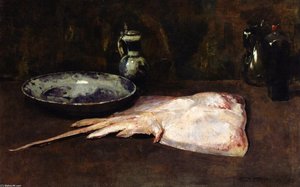
Upon returning from Paris, Carlsen dedicated himself to the genre of still life. This wasn’t merely a pragmatic choice dictated by market demands; it was a deliberate exploration of form, texture, and light. His early New York studio became a laboratory where he meticulously rendered everyday objects – flowers, fruit, game, porcelain – with an almost obsessive attention to detail. Yet, Carlsen's still lifes were far from mere copies of reality. He infused them with a subtle impressionistic flair, employing delicate brushwork and nuanced color palettes to create a sense of atmosphere and depth.
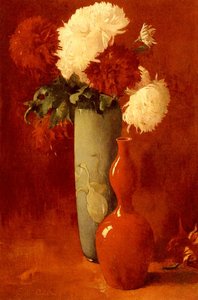
Works like “Still Life of Chrysanthemums in a Canton Vase” (1893) exemplify this approach. The vibrant blooms are rendered with remarkable realism, yet the painting transcends simple representation through its masterful use of light and shadow. A similar sensitivity is evident in “Still Life of Chrysanthemums,” where lush white roses are dramatically illuminated against a dark background, showcasing an impasto texture that adds tactile richness to the composition. These paintings weren’t simply depictions of flowers; they were meditations on beauty, mortality, and the fleeting nature of existence.
Beyond the Bloom: Exploring Landscapes and Marine Paintings
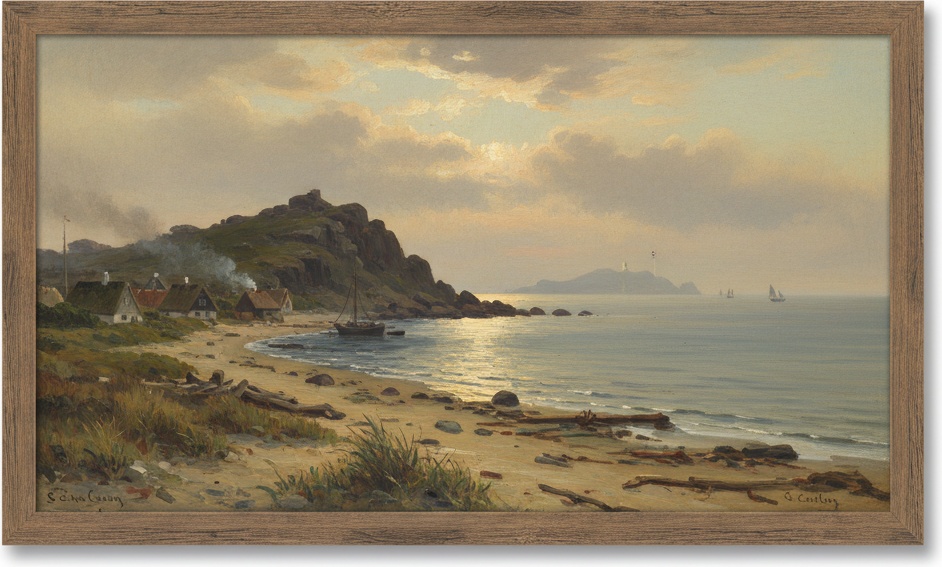
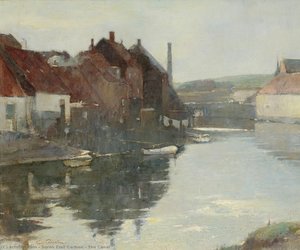
While Carlsen achieved considerable success with his still lifes, he never abandoned his earlier fascination with landscapes and marine scenes. As his career progressed, these subjects gradually gained prominence in his oeuvre. This shift wasn’t abrupt; it was a natural evolution driven by a desire to explore new artistic challenges and reconnect with his Nordic roots. He began sketching extensively in the Connecticut countryside, drawn to the subtle beauty of the rural landscape.
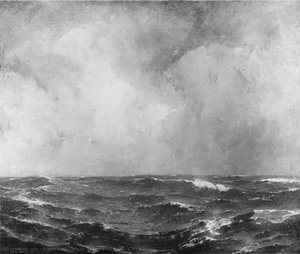
Paintings like “Still Life with Dead Game” (1895) reveal a poignant exploration of mortality and decay, blending realism and impressionism in a uniquely compelling way. This work demonstrates Carlsen’s ability to imbue even seemingly mundane subjects with profound emotional resonance. Later landscapes and marine paintings often feature open skies, wide expanses of water, and muted color palettes – echoes of his Danish heritage and a testament to the enduring influence of Nordic light. He found himself increasingly drawn to painting coastal scenes, capturing the quiet rhythms of nature with remarkable sensitivity.
Carlsen's Legacy: Influence, Technique, and Lasting Appeal
Søren Emil Carlsen’s legacy extends beyond his exquisite paintings. For over four decades, he was a respected teacher in Chicago, San Francisco, and New York, shaping the artistic sensibilities of countless students. His emphasis on meticulous technique, coupled with his embrace of impressionistic principles, instilled in his pupils a deep appreciation for both realism and atmospheric perspective. He earned numerous accolades throughout his career, including election to the National Academy of Design – a testament to his enduring contribution to American art.
Carlsen’s influence can be seen in the work of many subsequent artists, particularly those who sought to capture the quiet beauty of everyday life. His paintings continue to captivate audiences today, not only for their technical brilliance but also for their emotional depth and enduring sense of tranquility. He was often referred to as “The American Chardin,” a fitting tribute to his mastery of still life and his ability to elevate ordinary subjects into works of profound artistic significance. Discover the timeless beauty of Søren Emil Carlsen’s art with ArtsDot.com, where museum-quality reproductions bring these masterpieces to life in your home.
- Free Art Consultation – Personalized guidance from art experts
- Custom Paintings from Photos – Handmade oil paintings or digital reproductions from any famous works