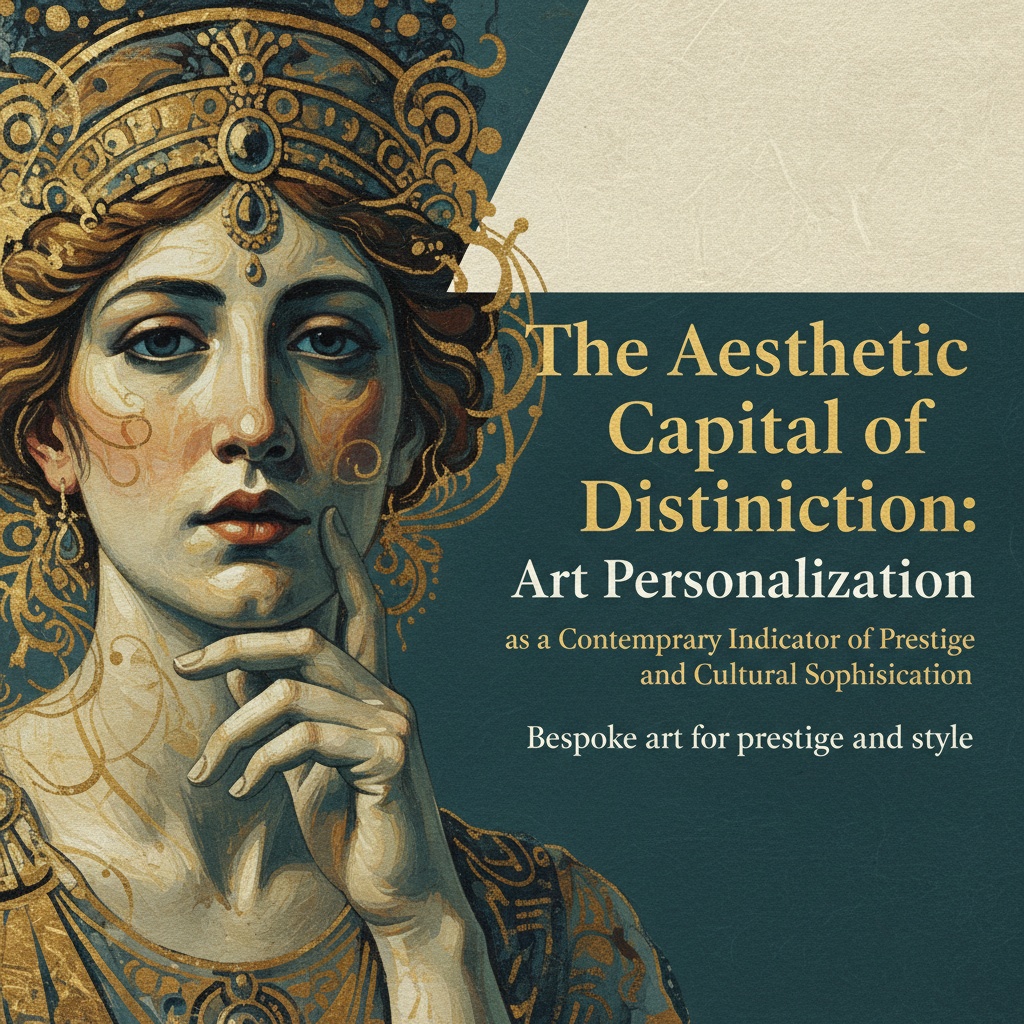





The Evolving Landscape of Aesthetic Capital: From Conspicuous Consumption to Personalized Expression
In sociology and in economics, the term conspicuous consumption describes and explains the consumer practice of buying and using goods of a higher quality, price, or in greater quantity than practical. In 1899, the sociologist Thorstein Veblen coined...
For centuries, the acquisition and display of art have served as potent symbols of status, taste, and cultural capital. Yet, in our contemporary moment, mere possession feels… insufficient. The discerning collector now seeks a deeper engagement—a resonance that reflects individual identity, nuanced understanding, and a commitment to personalized aesthetics. This shift represents a profound evolution from the overt displays of wealth that characterized earlier eras, moving beyond what Thorstein Veblen termed “conspicuous consumption” towards a more subtle articulation of prestige. The grand salon filled with masters, once a declaration of financial power, now yields to spaces thoughtfully curated with pieces that speak not just *to* an audience but *with* the individual who inhabits them.
Historically, patronage dictated artistic production; commissions were overt displays of wealth and power. Portraits themselves, meticulously documented in scholarly works like ‘The Patron’s Gaze: Art Collectors in Western Painting – A Renaissance to Modern History,’ reveal not only the likeness of the sitter but also their social standing and aspirations. This tradition continued through the 19th century, often manifesting as a desire for the most celebrated names—a signal of belonging within an elite circle. Today, however, a fundamental change has occurred. While financial investment remains important, the emphasis is increasingly on *how* art is acquired and integrated into one’s life. Personalization transcends simple acquisition; it involves tailoring artworks to specific spaces, tastes, and even emotional resonances. René Magritte’s ‘Personal Values’ (1952) offers a compelling visual metaphor for this concept: the seemingly ordinary objects within an extraordinary context suggest that value is not inherent but rather assigned through individual perception and arrangement.
The Philosophy of Taste: Understanding Aesthetics and Subjective Value in Art Acquisition
Aesthetics is the branch of philosophy that studies beauty, taste, and related phenomena. In a broad sense, it includes the philosophy of art, which examines the nature of art, artistic creativity, the meanings of artworks, and audience appreciation....
The philosophical underpinnings of art personalization lie within the realm of aesthetics itself—the study of beauty, taste, and subjective experience. Understanding these principles is crucial for appreciating the motivations behind this trend. Aesthetics, as defined by scholars, explores whether aesthetic properties are objective or dependent on individual perception. This subjectivity is central to personalization. What one person finds beautiful or meaningful another may not, and it’s precisely this difference in taste that drives the desire for customized art experiences. The ‘disinterested pleasure’ associated with aesthetic appreciation—detachment from practical concerns—is often heightened through personalization. When an artwork resonates deeply with personal memories, values, or intellectual interests, the emotional connection intensifies.
Furthermore, the act of commissioning a piece allows collectors to actively participate in the creative process, shaping the final outcome and imbuing it with unique significance. This contrasts sharply with simply purchasing a pre-existing work; personalization transforms the collector from passive consumer to active collaborator. The ‘Aesthetic Turn in Strategy’ highlights how style—a key element of aesthetics—can create value, suggesting that even within business contexts, aesthetic considerations are paramount. It's not merely about owning something beautiful but about possessing something imbued with personal meaning and intellectual weight.
Digital Technologies & the Democratization of Personalization: Customization at Your Fingertips
Personalization (broadly known as customization) consists of tailoring a service or product to accommodate specific individuals. It is sometimes tied to groups or segments of individuals. Personalization involves collecting data on individuals, inclu...
The rise of digital technology has profoundly impacted the personalization of art, offering unprecedented opportunities for customization and access. Personalization, as understood in broader societal contexts, involves collecting data on individuals to tailor services. In the art world, this translates into sophisticated algorithms that recommend artworks based on browsing history, purchase patterns, and even social media activity. However, digital personalization extends beyond mere recommendations.
Online platforms now offer tools for virtually ‘placing’ artwork in one’s home using augmented reality, allowing collectors to visualize how a piece will look before committing to a purchase. Furthermore, the ease of communication with artists through online marketplaces facilitates bespoke commissions and collaborative projects. The ability to upload personal photos for reproduction or request specific alterations has democratized the commissioning process, making it accessible to a wider audience. This digital accessibility also fosters a sense of community among collectors, allowing them to share their personalized art experiences and inspire others.
The Bespoke Commission: A Deep Dive into Collaborative Creation and Artistic Partnership
 The Patron's Gaze: Art Collectors in Western Painting – A Renaissance to Modern History
Explore the fascinating history of art collectors in Western painting, from Renaissance patrons to modern museum founders. Discover how portraits revealed status, shaped artistic movements & built lasting legacies. Expert insights at ArtsDot.
Commissioning an artwork represents the pinnacle of art personalization. It’s inherently personal—a direct expression of individual taste, narrative, or emotional connection. Unlike purchasing a pre-existing work, it allows collectors to actively participate in the creative process, shaping the final outcome and imbuing it with unique significance. The process typically begins with a detailed consultation between the collector and artist, discussing themes, style preferences, dimensions, and budget.
Artists often create preliminary sketches or mockups for approval before commencing the actual painting. This collaborative approach ensures that the final piece aligns perfectly with the collector’s vision. Furthermore, commissioning an artwork can be a deeply meaningful experience—a testament to personal relationships, cherished memories, or intellectual pursuits. The resulting piece is not merely an object of beauty but also a tangible representation of a unique creative partnership.
Art as Spatial Harmony: Integrating Personalized Collections with Interior Design
The integration of art into interior design is increasingly sophisticated, with collectors seeking pieces that complement their spaces and reflect their overall aesthetic vision. Collectors now prioritize pieces that harmonize with their existing décor, architectural style, and personal lifestyle. This requires careful consideration of color palettes, scale, composition, and even lighting.
Professional interior designers often play a crucial role in this process, offering expert guidance on selecting artworks that complement the overall aesthetic vision. The trend towards personalized art experiences also extends to curated gallery walls—carefully arranged collections that tell a story or reflect specific themes. This approach requires a deep understanding of art history, composition principles, and visual storytelling. Furthermore, collectors are increasingly seeking pieces that evoke specific emotions or create a desired atmosphere within their spaces.
Beyond Investment: Art as a Reflection of Cultural Identity and Long-Term Value
The concept of ‘art as investment’ has evolved beyond purely financial considerations. Today, collectors often view art as a long-term asset that reflects their personal values and cultural capital. While the monetary value of an artwork remains important, contemporary collectors increasingly prioritize pieces that align with their intellectual pursuits, emotional connections, and overall aesthetic vision.
This shift in perspective transforms art from a mere commodity to a form of self-expression and cultural identity. Furthermore, the act of commissioning bespoke pieces or meticulously curating collections demonstrates a level of engagement beyond the superficial—a willingness to invest time, thought, and often significant resources into creating a uniquely meaningful environment. This investment extends beyond financial capital to encompass intellectual capital, emotional capital, and social capital. The resulting collection serves as a tangible representation of the collector’s personal values and cultural sophistication.